Havell, Octavo and Bien: The Editions of Audubon’s Birds of America
Three editions of The Birds of America were printed in the nineteenth century, and the word "original" covers all three. They differ in size, in the printing method and in price by a factor of a hundred.
The Havell edition (1827-1838)
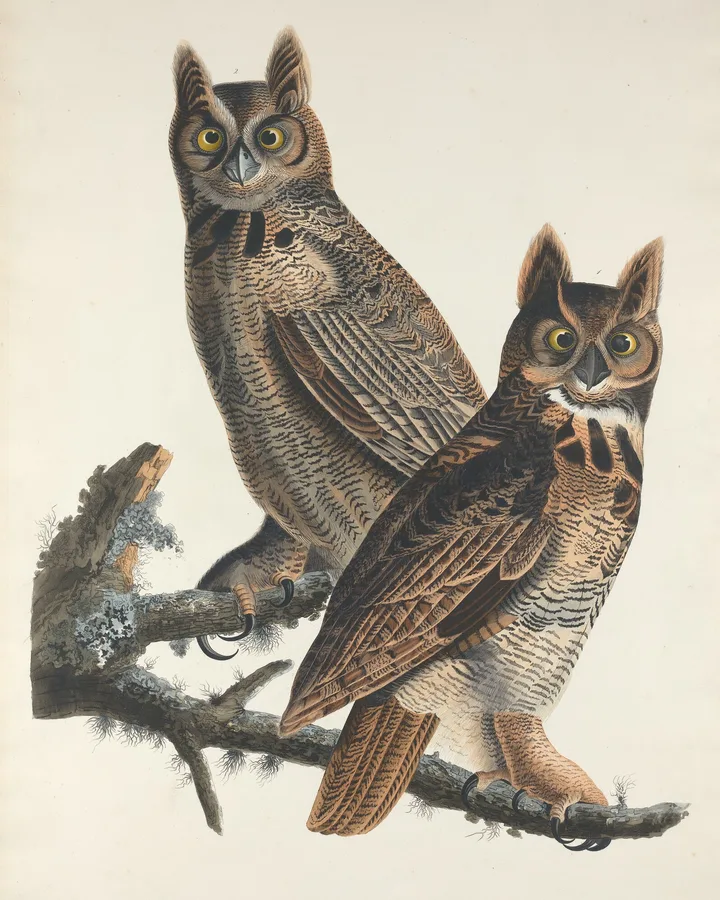
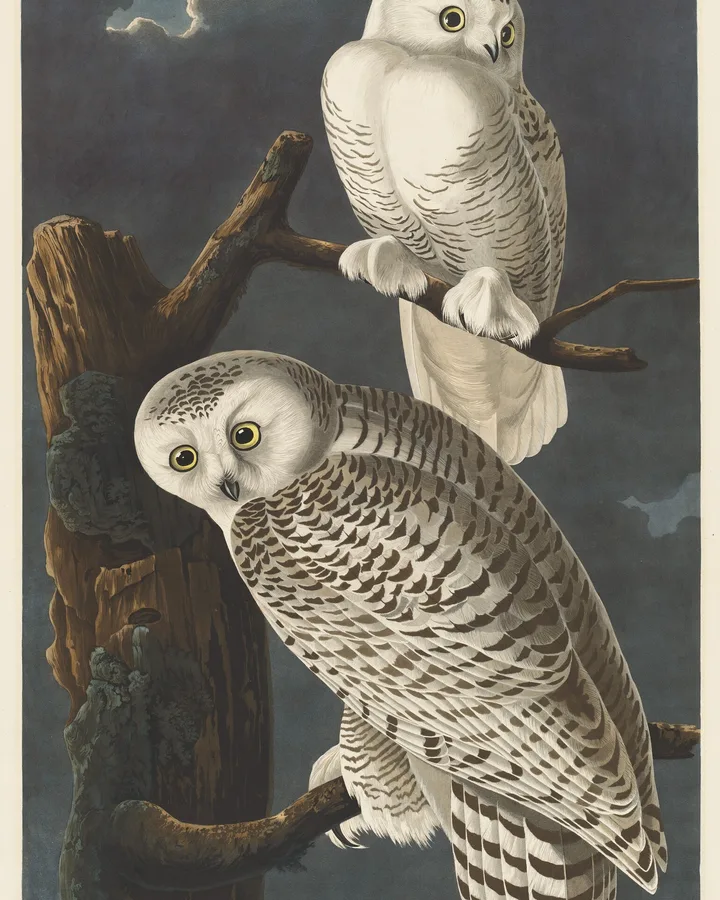
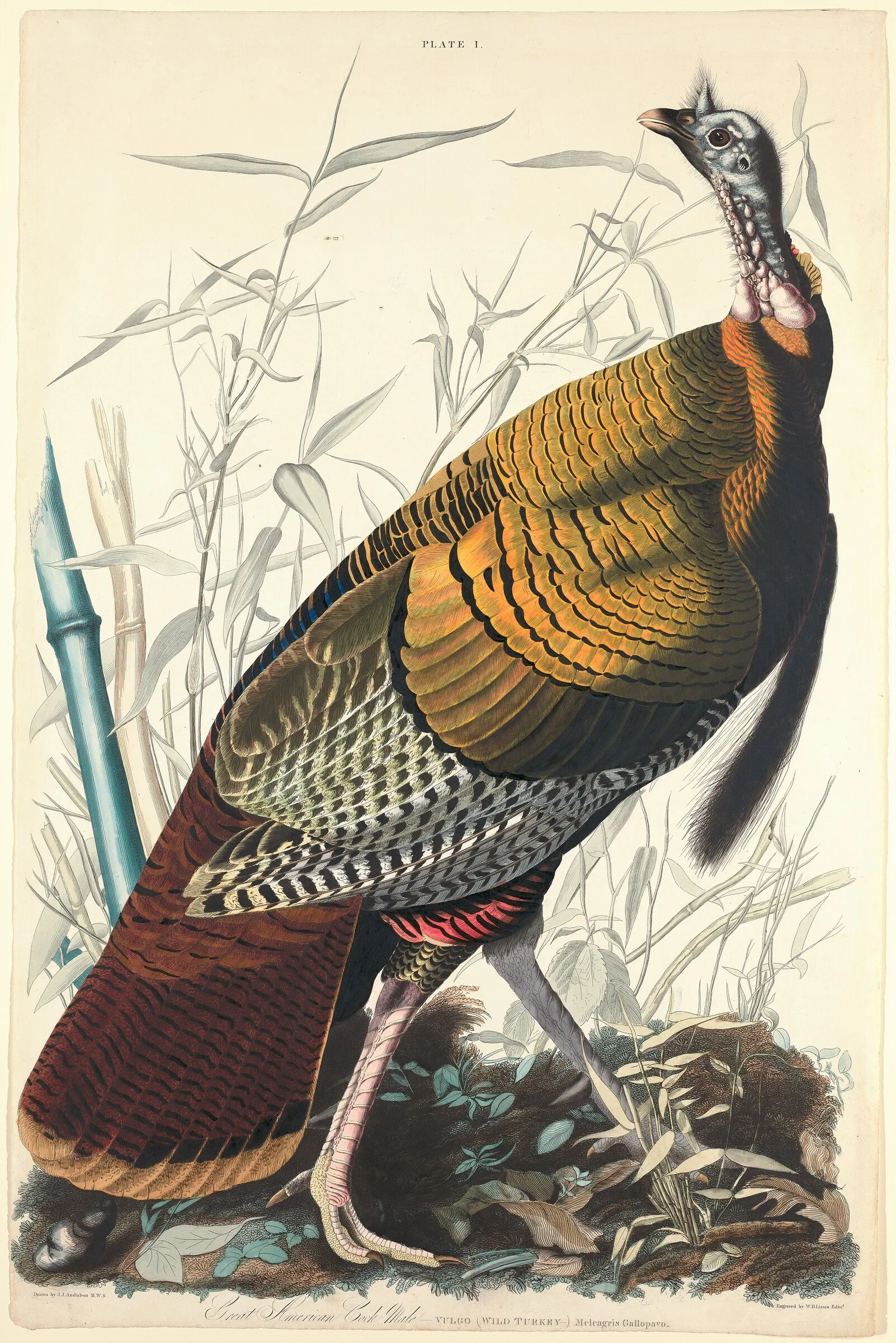
This is the edition people mean when they speak of The Birds of America. William Home Lizars of Edinburgh engraved the first ten plates in 1826 and 1827; Robert Havell Jr. and his shop in London re-worked those and made the other 425. Each plate was etched and engraved on copper, with aquatint for the tones, printed in black or a single color, and then colored by hand with watercolor by a team of colorists working from Audubon's originals.
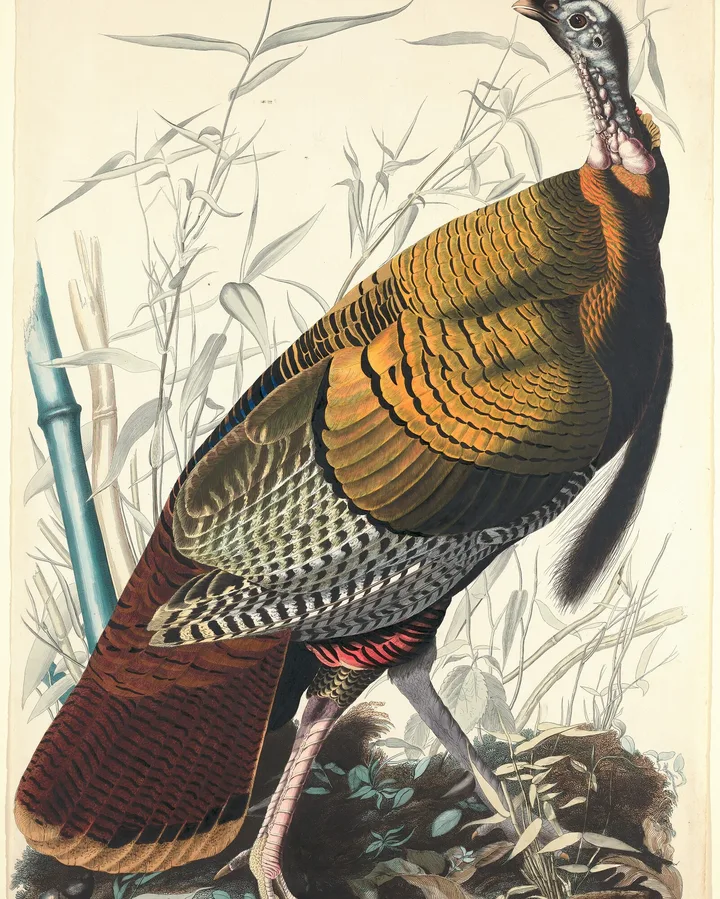
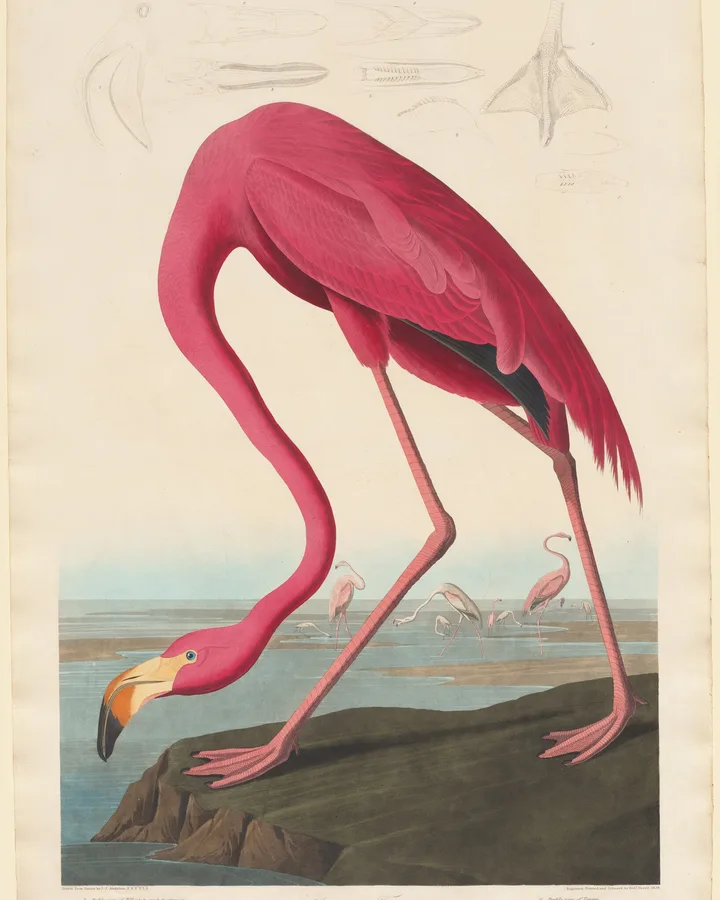
The sheets are "double elephant" size, about 39 1/2 by 26 1/2 inches (100 by 67 cm), on Whatman paper whose watermark carries a date between 1827 and 1838. They were issued in 87 parts of five plates each: one large bird, one medium and three small. Fewer than 200 complete sets were made, and about 120 survive, most in libraries. Single Havell plates sell for a few thousand dollars for small songbirds up to six figures for the most famous subjects, such as the American Flamingo and the Wild Turkey.
The royal octavo edition (1840-1844)
Back in America, Audubon published a smaller edition that ordinary households could afford. His son John Woodhouse Audubon reduced the images with a camera lucida, and J. T. Bowen of Philadelphia printed them as hand-colored lithographs. The octavo has 500 plates, 65 more than the Havell, because Audubon added species and gave many birds a plate of their own. It was sold in 100 parts and bound in seven volumes of text and plates.
Octavo plates are about 10 by 6 1/2 inches, numbered in Arabic numerals, and carry Bowen's lithographic imprint. The first edition was followed by several later printings into the 1870s, which collectors date from the title pages and small changes in the plates. Single first-edition octavo plates usually sell for one hundred to a few thousand dollars.
The Bien edition (1858-1860)
In 1858 John Woodhouse Audubon set out to reissue the birds at full double elephant size, using the new technique of chromolithography. Julius Bien of New York printed the plates in color from lithographic stones, sometimes with hand finishing. The Civil War ended the project in 1861, after 105 plates of Havell subjects (on 150 sheets) had been printed. Few sets were sold, so Bien plates are scarce; they usually sell for several thousand dollars.
Later reproductions
Every edition since has been a photographic reproduction. The best known are the Amsterdam edition of 1971-72, printed in offset lithography at full size from a set of Havell plates; the Abbeville Press edition of 1985; and the Princeton Audubon Limited Editions and Oppenheimer Editions of the 1980s onward. Some are fine prints and some are posters, but none is an original Audubon print in the sense collectors use. The next guide explains how to tell them apart.
At a glance
| Havell | Octavo | Bien | |
|---|---|---|---|
| Dates | 1827-1838 | 1840-1844 (later printings to 1871) | 1858-1860 |
| Plates | 435 | 500 | 105 subjects on 150 sheets |
| Sheet size | about 39 x 26 in | about 10 x 6 1/2 in | about 39 x 26 in |
| Method | Engraving, etching and aquatint, hand-colored | Lithograph, hand-colored | Chromolithograph |
| Printer | Robert Havell Jr., London | J. T. Bowen, Philadelphia | Julius Bien, New York |
| Plate numbers | Roman numerals | Arabic numerals | Havell numbers |
Questions
Which Audubon edition is the most valuable?
The Havell edition. A complete set sold at Sotheby's in London in December 2010 for about $11.5 million, at the time a record for a printed book.
Why does the octavo have 500 plates and the Havell only 435?
In the octavo Audubon split many crowded Havell plates so that each species had its own plate, and he added birds discovered after 1838.
Are the images on this site from the Havell edition?
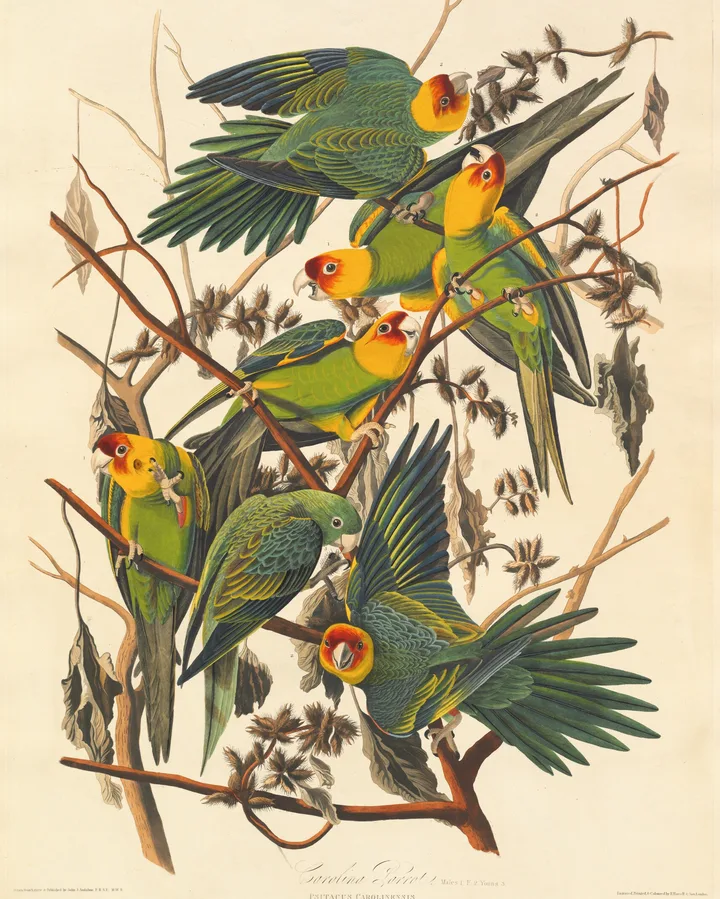
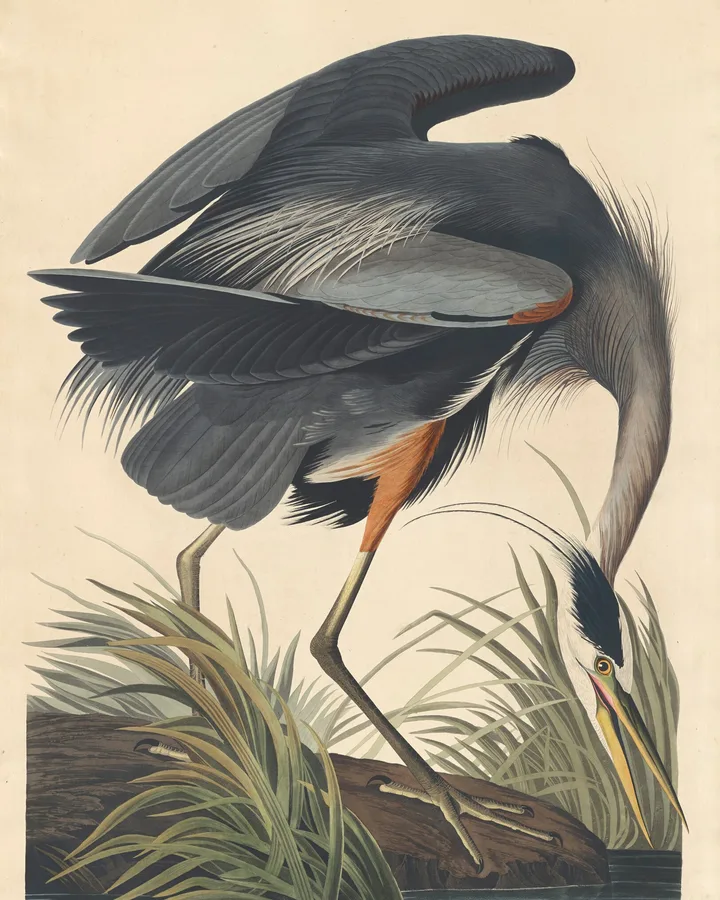
Yes. All 435 plates here are Havell impressions in the National Gallery of Art (and, for plate 46, the Boston Public Library).