Famous Audubon Plates
Audubon's The Birds of America was issued in 87 parts between 1827 and 1838, five plates at a time, and ran to 435 hand-colored engravings. A few of those plates have become far better known than the rest, because of the bird, the story behind the drawing, or both. These pages tell how each of 17 such plates was made, what Audubon wrote about the bird, and what has happened to the species since.
Each page also covers what a buyer will meet in the market for that subject: original Havell engravings, the smaller octavo lithographs, and modern reproductions. For the full set, browse all 435 plates or the topics, and see the collector guides for the differences between editions.
-
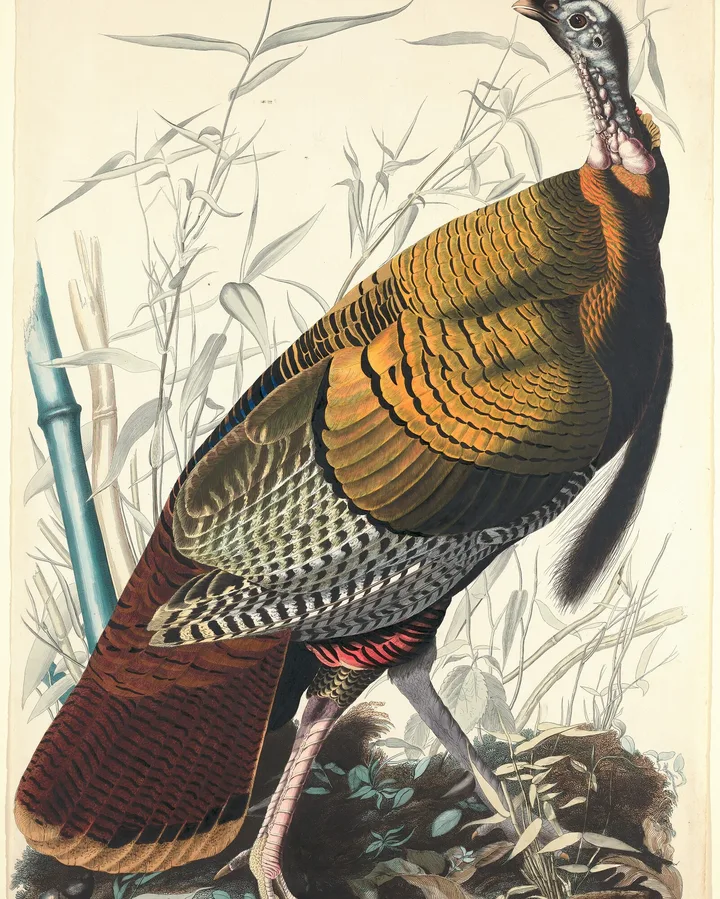
Wild Turkey (Plate 1) (1827)
Plate 1 of The Birds of America is a life-size Wild Turkey cock walking through cane, the first image subscribers received in 1827. It was engraved in Edinburgh by William Home Lizars, then retouched by Robert Havell when production moved to London.
The story behind it → -
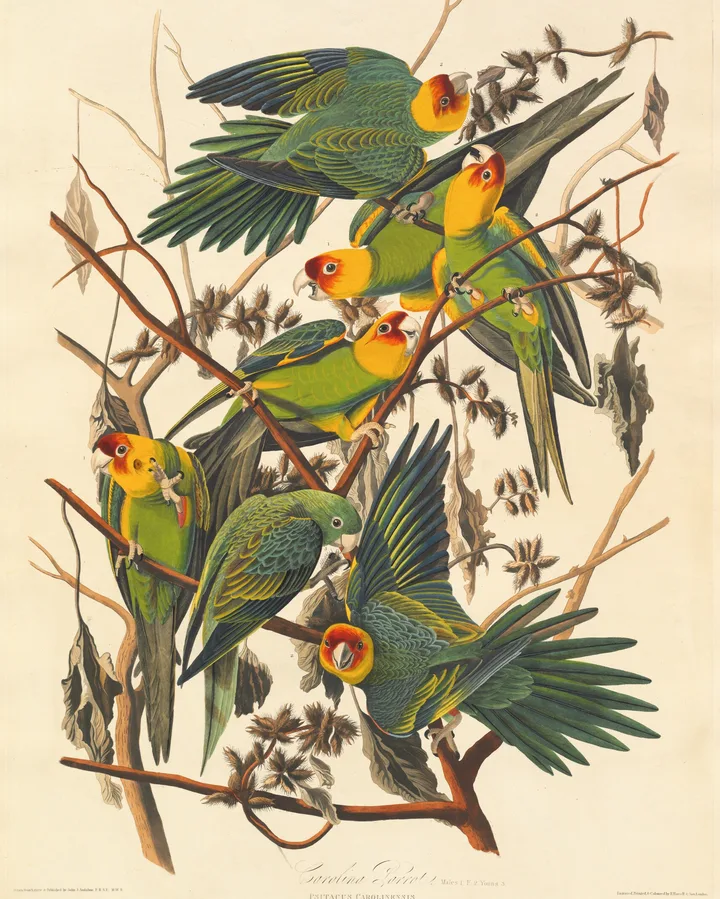
Carolina Parakeet (Plate 26) (1827)
Plate 26 shows seven Carolina Parakeets feeding on cockle-bur, the only parrot native to the eastern United States. Audubon picked his models from a basketful of birds he shot, and the species was extinct less than a century later.
The story behind it → -
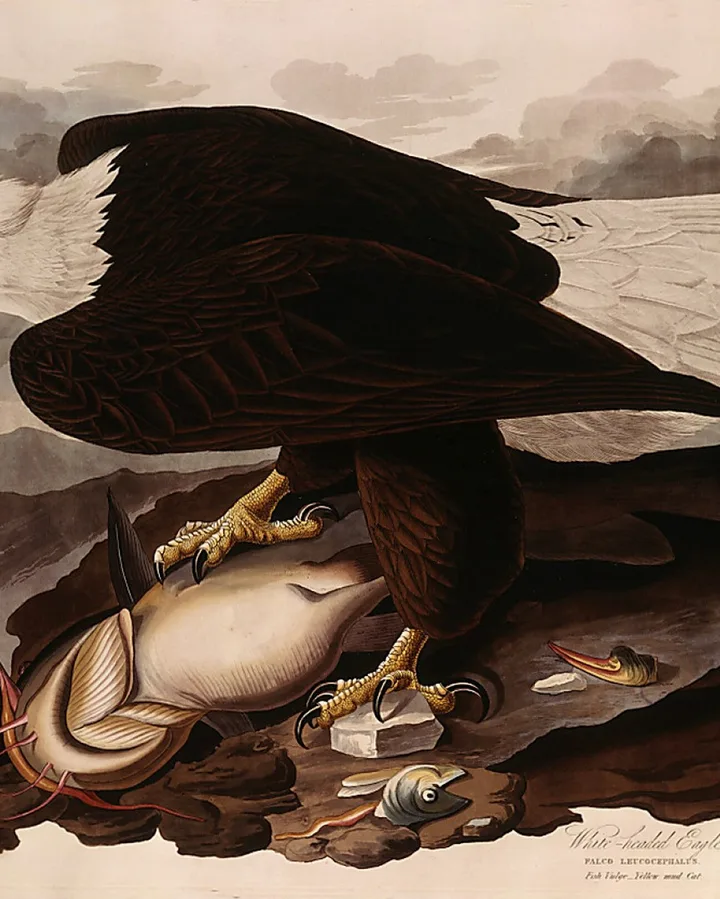
Bald Eagle (Plate 31) (1828)
Plate 31 shows an adult Bald Eagle, which Audubon called the White-headed Eagle, standing on a catfish. Audubon admired the bird's power but agreed with Benjamin Franklin that it was a poor choice for the national emblem.
The story behind it → -
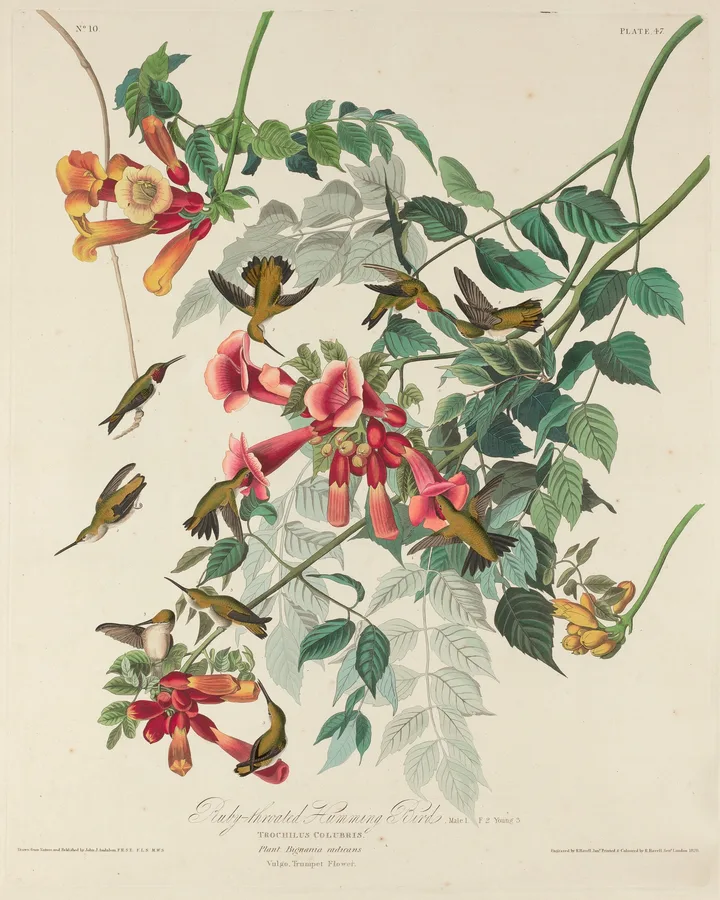
Ruby-throated Hummingbird (Plate 47) (1828)
Plate 47 shows a group of Ruby-throated Hummingbirds feeding and displaying around a vine of trumpet creeper. Audubon called the bird a glittering fragment of the rainbow, and the plate is one of the most reproduced small subjects in the work.
The story behind it → -
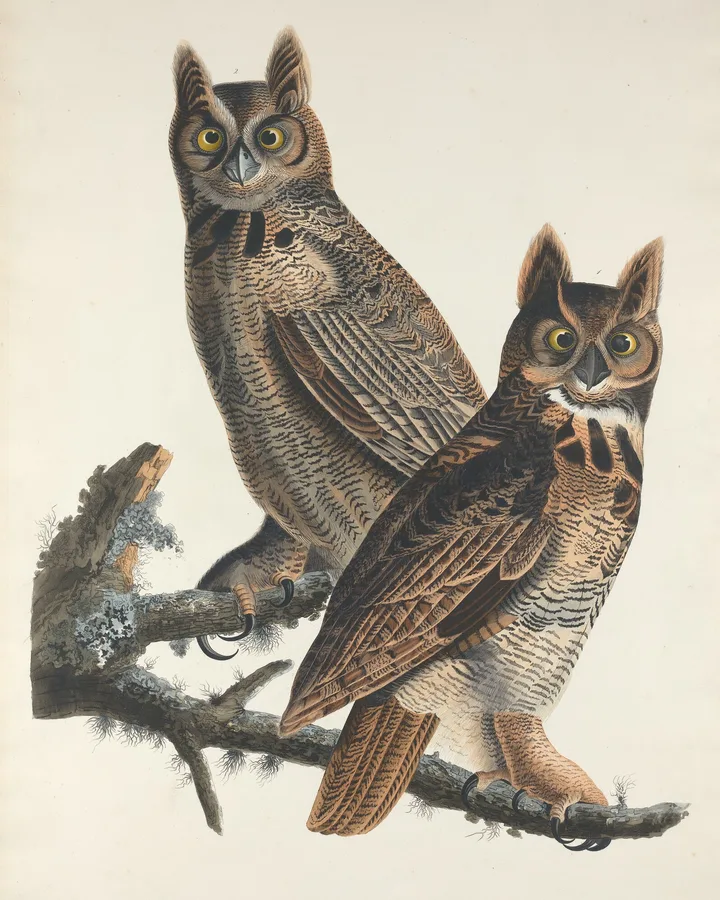
Great Horned Owl (Plate 61) (1829)
Plate 61 shows a male and female Great Horned Owl, the large eared owl of the Americas. Audubon's chapter includes a raid on a settler's poultry yard and his own near drowning in quicksand while retrieving an owl he had shot.
The story behind it → -
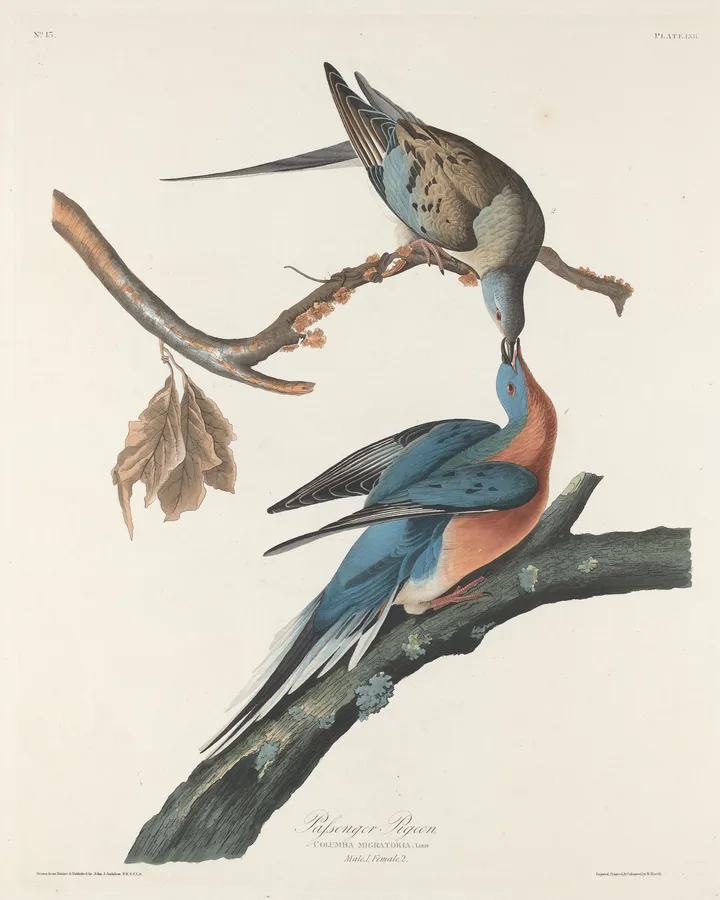
Passenger Pigeon (Plate 62) (1829)
Plate 62 shows a pair of Passenger Pigeons touching bills on a branch. Audubon's text holds the most famous eyewitness account of the species' numbers, written less than a century before the last bird died in 1914.
The story behind it → -
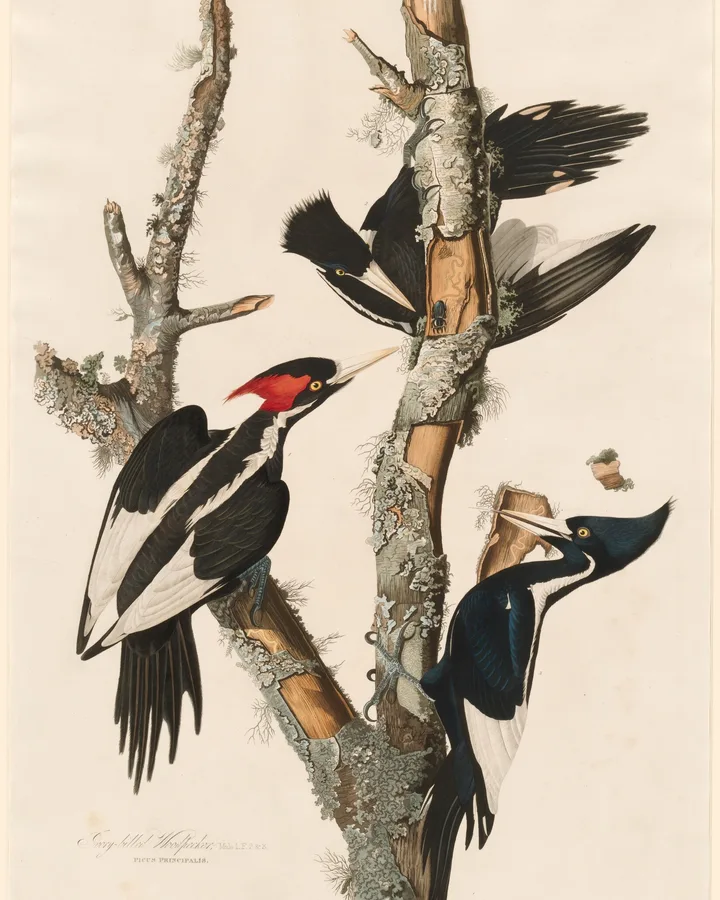
Ivory-billed Woodpecker (Plate 66) (1829)
Plate 66 shows Ivory-billed Woodpeckers working over a dead tree, the male with a scarlet crest and the female with a black one. Audubon compared the bird's colors to the paintings of Van Dyck, and the species has not been reliably seen since the 1940s.
The story behind it → -
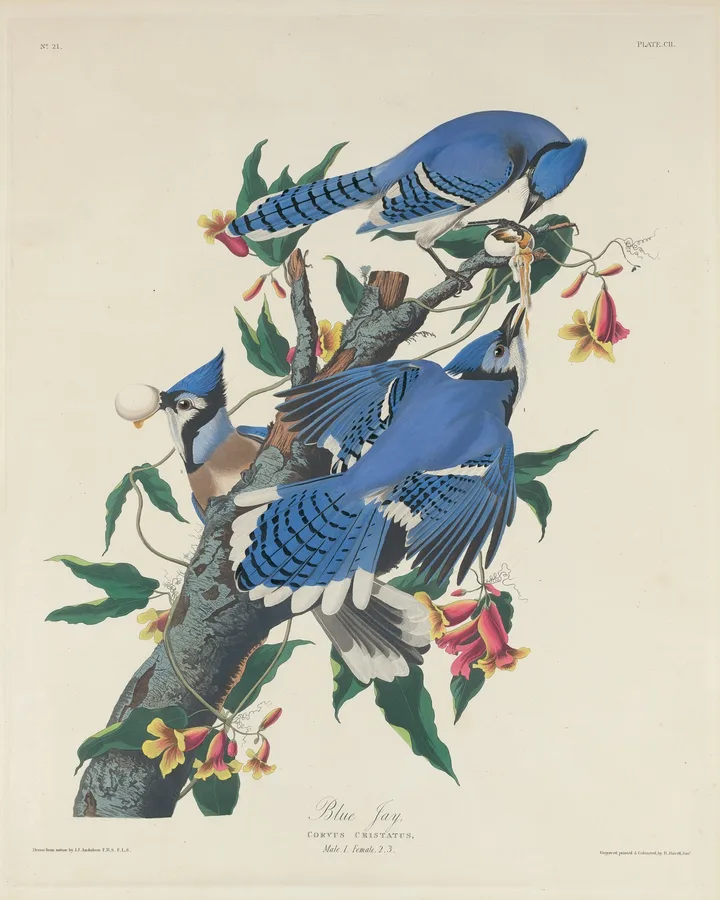
Blue Jay (Plate 102) (1831)
Plate 102 shows three Blue Jays, each eating an egg stolen from another bird's nest. Audubon chose an unflattering moment on purpose and invited readers to look at the plate and see the thieves enjoying their plunder.
The story behind it → -
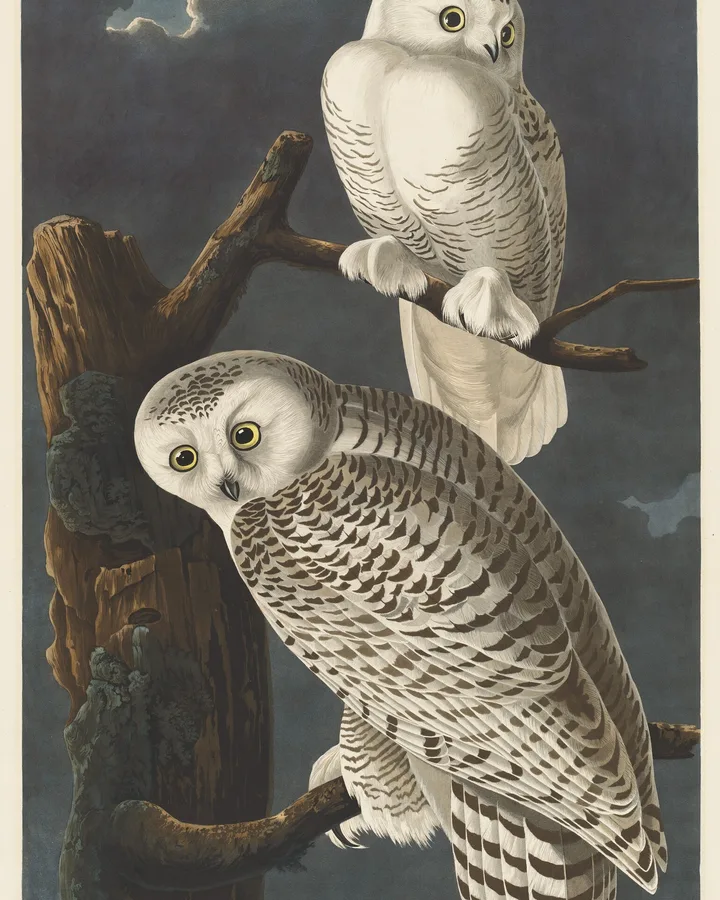
Snowy Owl (Plate 121) (1831)
Plate 121 shows a male and female Snowy Owl on a dead tree against a dark night sky. The white male and the barred female are set against one of the few night backgrounds in the work, which is why the plate stands out on a wall.
The story behind it → -
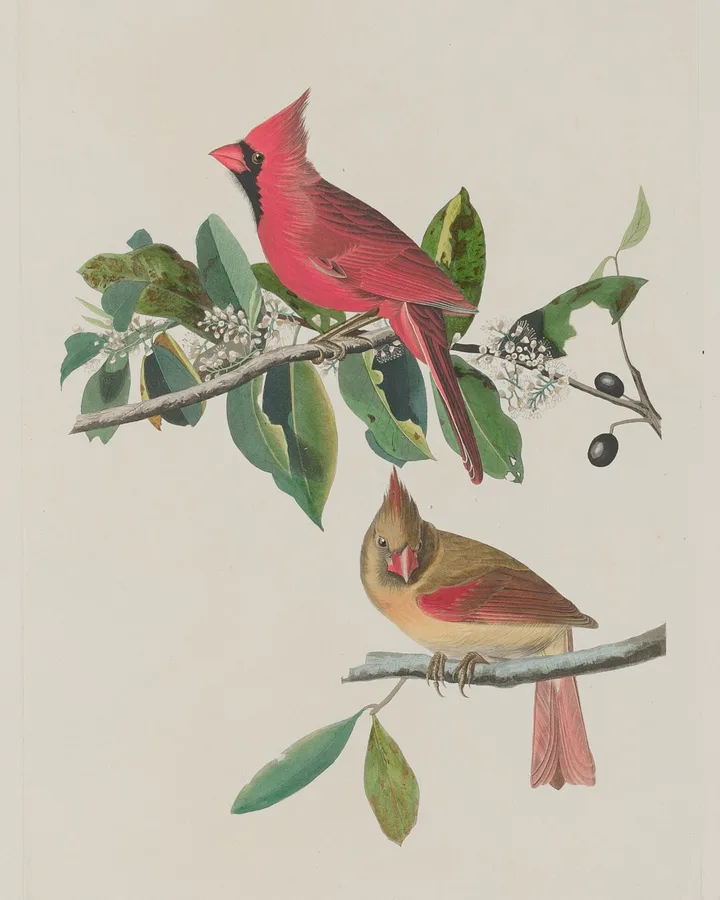
Northern Cardinal (Plate 159) (1833)
Plate 159 shows a male and female Northern Cardinal, which Audubon called the Cardinal Grosbeak. In his day it was a southern bird, and his notes on its range are now a useful record of how far north it has spread.
The story behind it → -
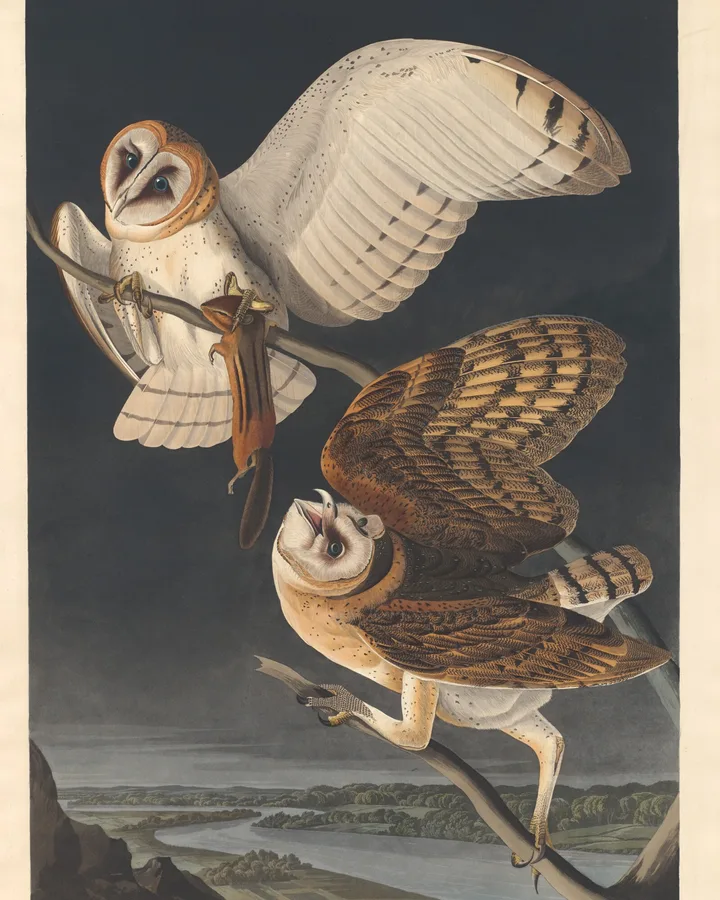
Barn Owl (Plate 171) (1833)
Plate 171 shows a male and female Barn Owl with pale heart-shaped faces. Audubon said earlier writers knew nothing of the bird's habits, and he built his chapter from his own journals in Florida and South Carolina.
The story behind it → -
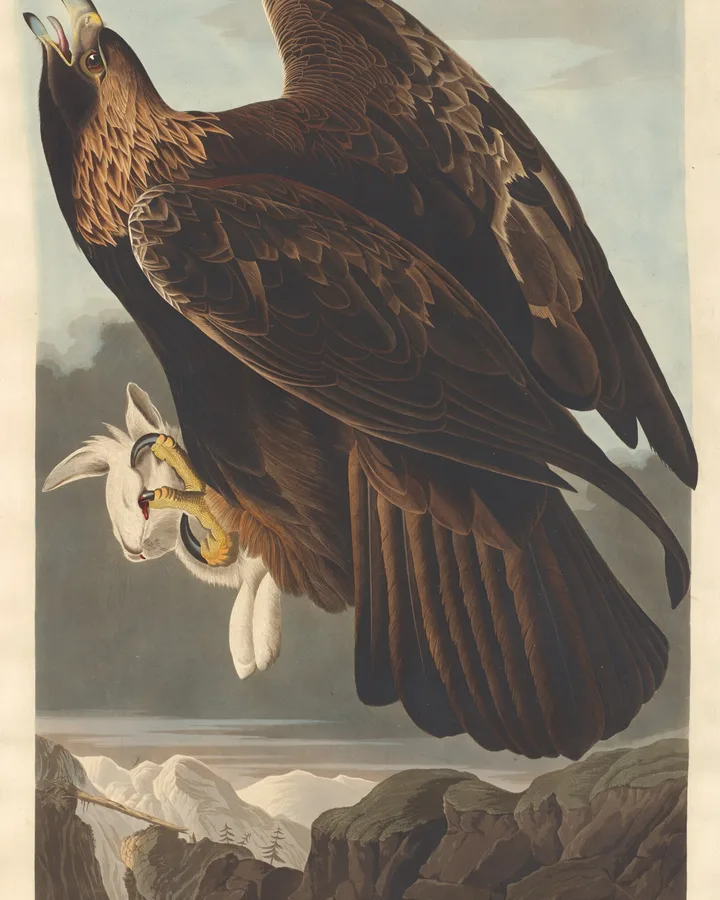
Golden Eagle (Plate 181) (1833)
Plate 181 shows a Golden Eagle lifting off a mountain ledge with a hare in its talons, above a tiny hunter crossing a ravine. Audubon drew it in Boston in 1833 from a captive bird he bought and killed, and the work left him ill for days.
The story behind it → -
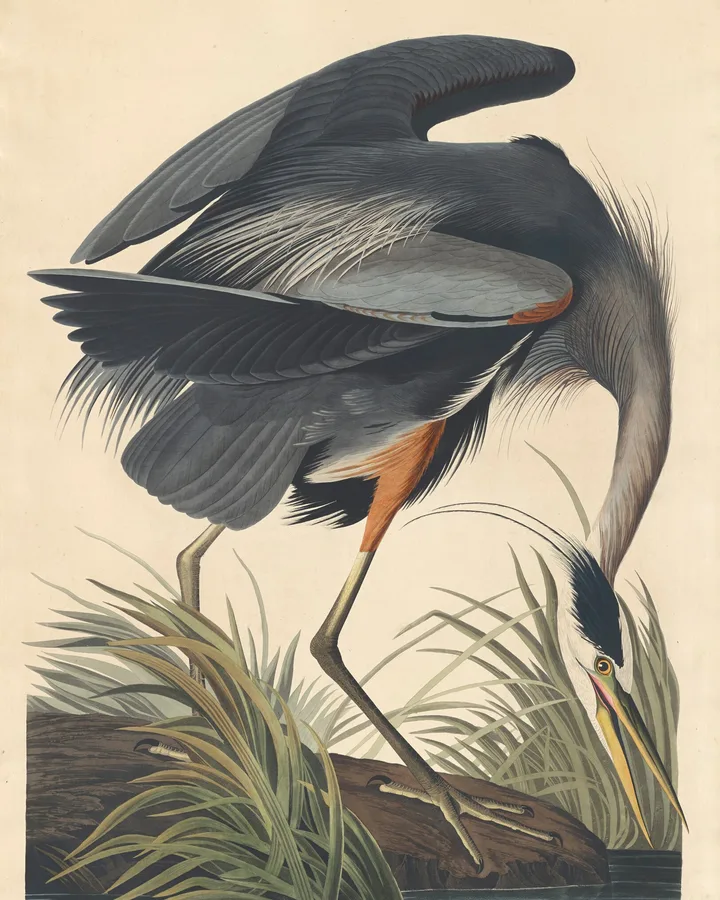
Great Blue Heron (Plate 211) (1834)
Plate 211 shows a single adult Great Blue Heron at life size, stalking at the water's edge. It appears early in the third volume and is one of the plates where Audubon's rule of drawing every bird at full size forced a carefully planned pose.
The story behind it → -
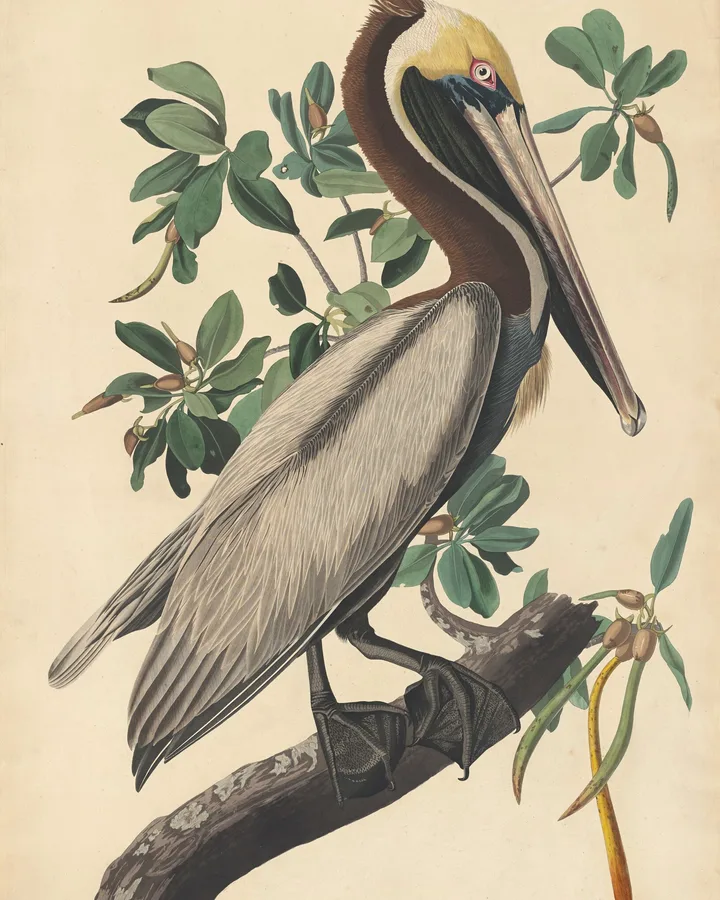
Brown Pelican (Plate 251) (1835)
Plate 251 shows an adult male Brown Pelican in breeding plumage perched on a mangrove branch. Audubon studied the species in Florida in 1832, and his later plate of a young bird, Plate 421, completes the pair.
The story behind it → -
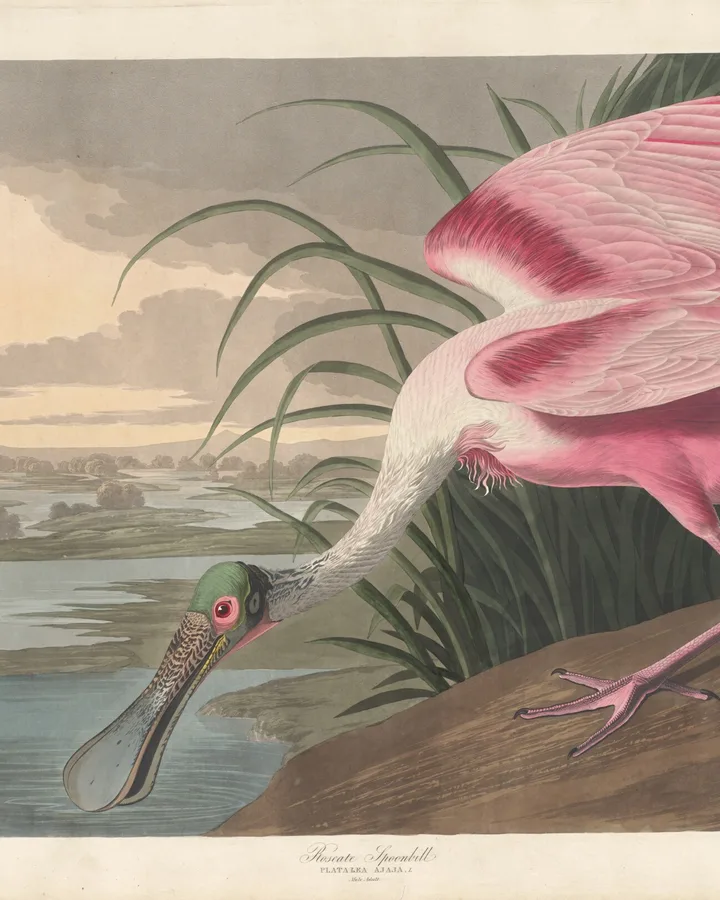
Roseate Spoonbill (Plate 321) (1836)
Plate 321 shows a single adult Roseate Spoonbill, pink with carmine shoulders and the flat spoon-tipped bill. Audubon found it in the Florida Keys and later on Galveston Bay, and plume hunters nearly wiped it out in Florida after his time.
The story behind it → -
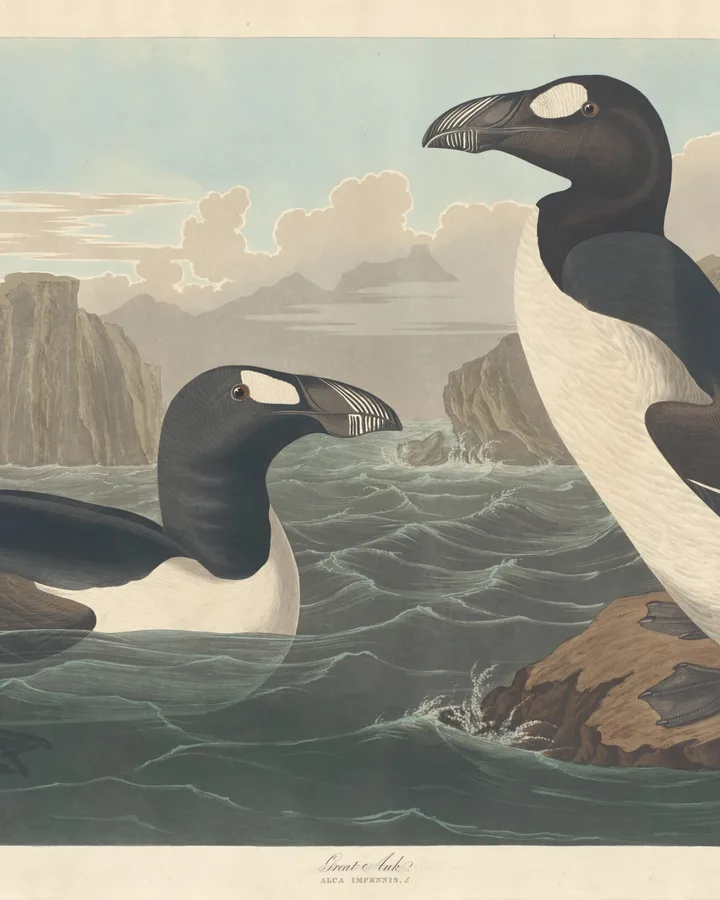
Great Auk (Plate 341) (1836)
Plate 341 shows two Great Auks, the flightless seabird of the North Atlantic. Audubon never saw one alive, and the last known pair was killed off Iceland in 1844, only eight years after the plate was issued.
The story behind it → -
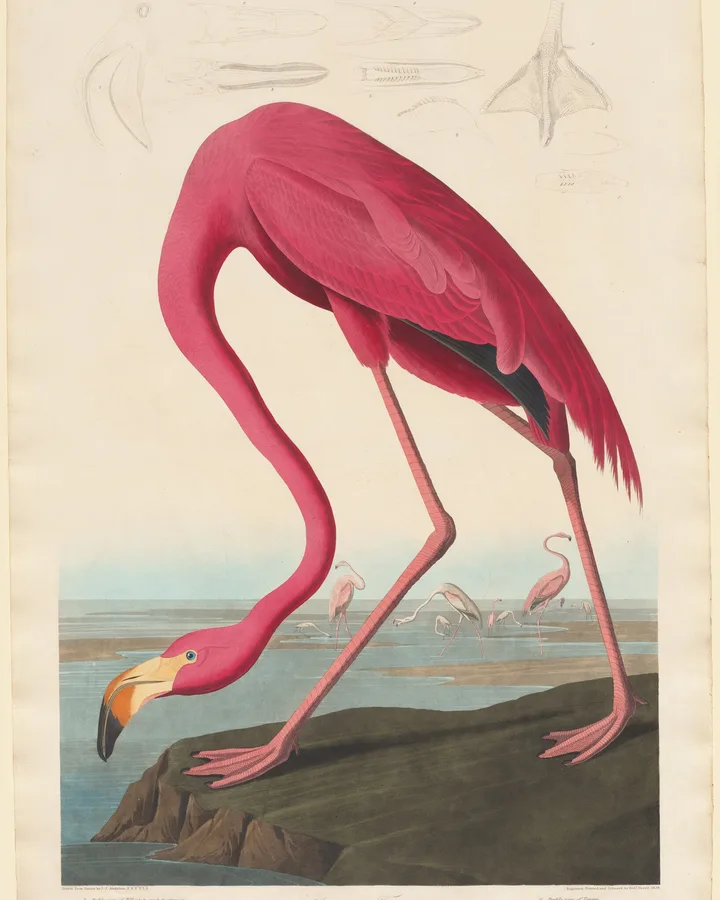
American Flamingo (Plate 431) (1838)
Plate 431 shows an adult male American Flamingo, its neck bent low so the life-size bird fits the sheet. It was one of the last plates issued, in 1838, and Audubon admitted he never managed to shoot a flamingo himself.
The story behind it →