How to Tell an Original Audubon Print
Most Audubon prints in circulation are reproductions made in the twentieth century. A few physical checks separate them from the Havell, octavo and Bien originals.
1. Measure the sheet
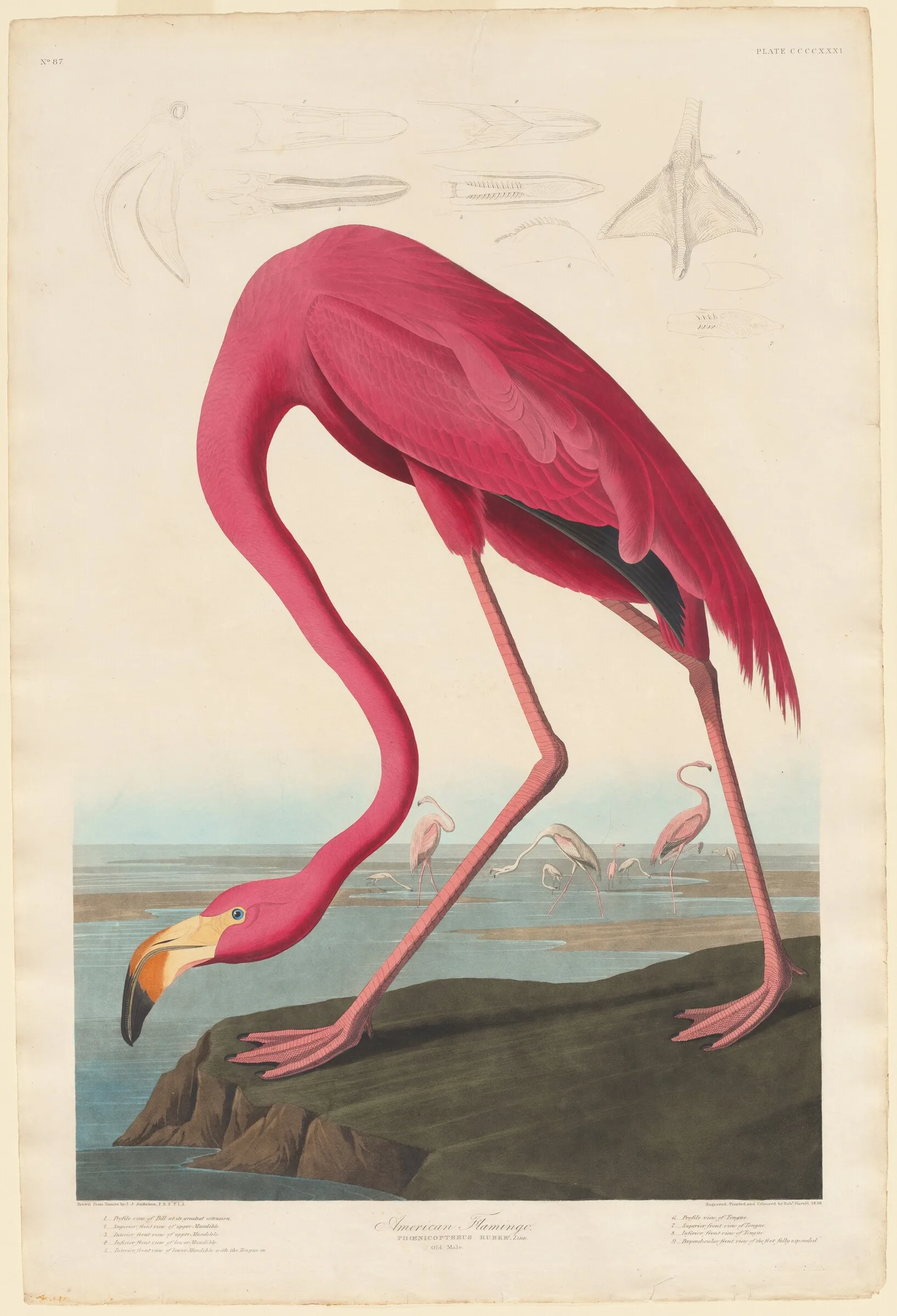
A Havell or Bien sheet is about 39 1/2 by 26 1/2 inches, though many were trimmed. An octavo plate is about 10 by 6 1/2 inches. A print anywhere in between, such as 16 by 20 or 24 by 36 inches, is almost certainly a reproduction.
2. Look for the plate mark
Havell plates were printed from copper plates under heavy pressure, which leaves a sunken rectangle, the plate mark, pressed into the paper around the image. You can feel its edge with a finger. Lithographs (octavo and Bien) have no plate mark, and offset reproductions are flat; some reproductions print a fake plate mark as a line.
3. Check the paper and watermark
Havell sheets are on heavy, soft wove paper by J. Whatman, and many show a watermark such as "J WHATMAN 1834" when held to the light. The paper has aged to a warm tone but should not be the bright white of modern paper. Octavo plates are on thinner wove paper without a dated watermark.
4. Read the imprint lines
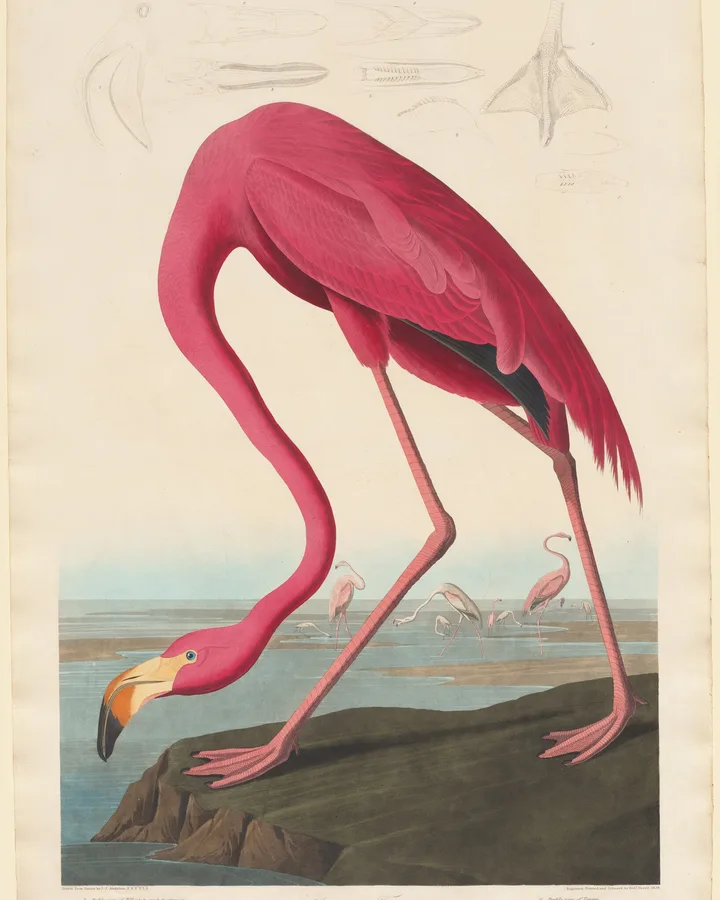
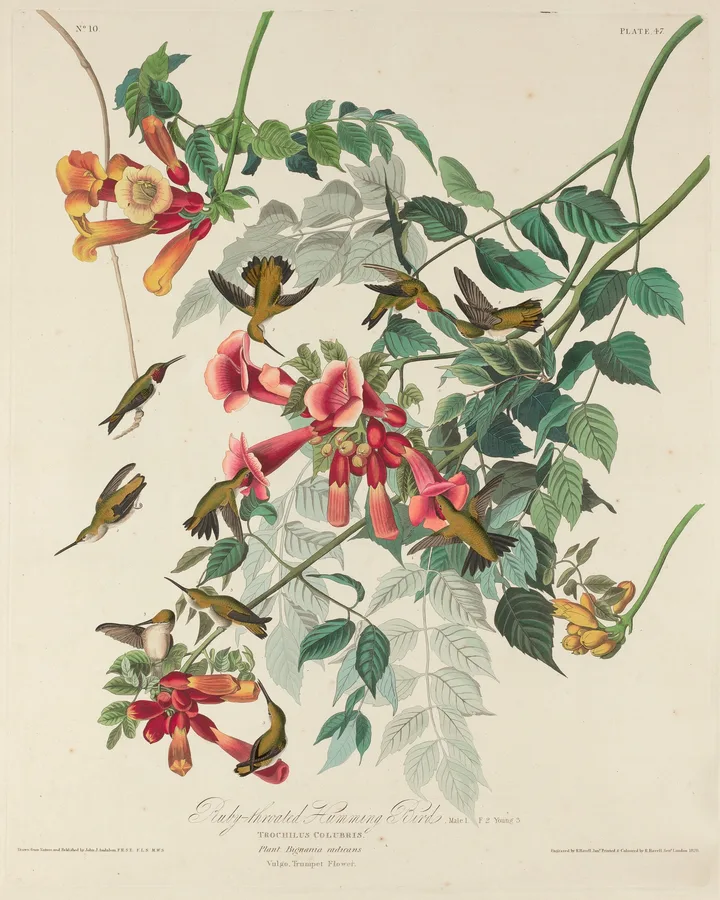
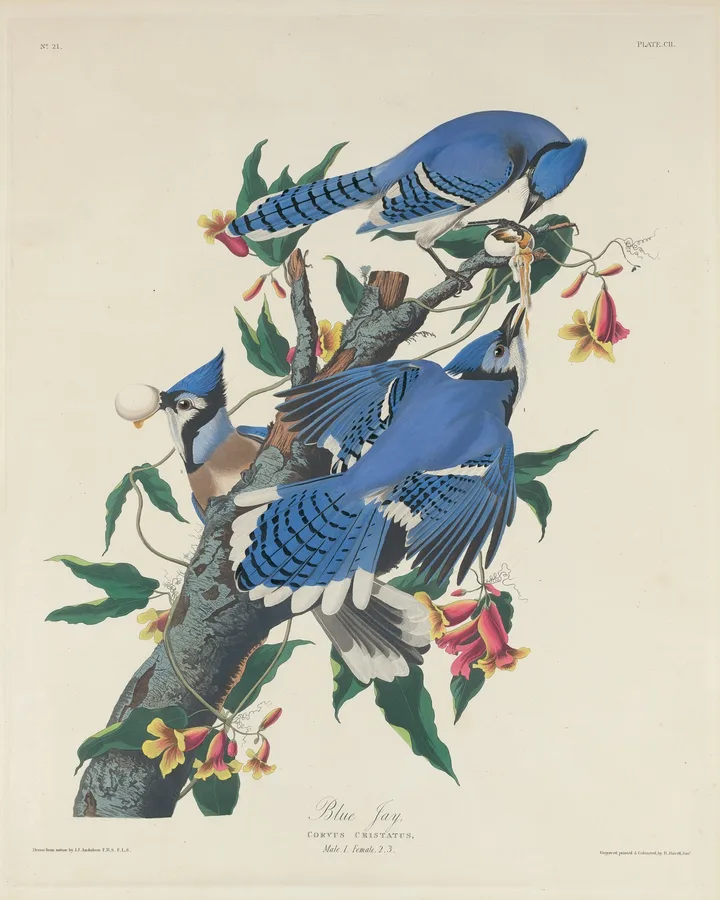
Below the image, a Havell plate names the bird and carries the lines "Drawn from Nature by J. J. Audubon, F.R.S. F.L.S." and "Engraved, Printed, & Coloured by R. Havell" (with "London" and the date on later plates). The plate number is in Roman numerals at top right, and the part number ("No. 1") at top left. Octavo plates read "Drawn from Nature by J. J. Audubon" and "Lith. Printed & Col'd by J. T. Bowen, Philada." with an Arabic plate number. Bien plates name Roe Lockwood & Son and "Chromolithy by J. Bien, New York, 1860".
5. Use a magnifying glass
Under a 10x loupe, an offset reproduction shows a regular pattern of tiny colored dots (a halftone rosette), and an inkjet or giclee print shows fine scattered dots. An original Havell shows engraved lines and the grainy pits of aquatint, with watercolor laid over them in washes that pool and vary. An octavo shows the chalky grain of a lithograph with hand coloring on top.
6. Look at the color
Hand coloring is never perfectly even. Look for brush strokes, color that stops short of a line or runs over it, and differences between impressions of the same plate. A reproduction reproduces the coloring of one particular original, including its stains, in flat ink.
7. Check the back
Originals often show the impression of the plate from behind, offsetting, old hinges and collectors' marks. A brand-new back, a printed copyright line or a publisher's name from the twentieth century settles the question.
8. Ask for provenance
Reputable dealers in Havell and octavo plates state the edition, the state of the plate and its condition in writing. A price that seems too good for a Havell plate means it is not one.
Questions
Are Audubon prints worth anything?
Original Havell plates are worth thousands to hundreds of thousands of dollars, first-edition octavo plates hundreds to a few thousand, and Bien plates several thousand. Twentieth-century reproductions are usually worth what a good decorative print costs: tens to a few hundred dollars, more for limited editions such as the Amsterdam and Princeton printings.
Is a print that says "Havell" an original?
Not necessarily. Every faithful reproduction of a Havell plate copies its imprint lines, including Havell's name. Size, plate mark, paper and the printing under magnification are what tell.
Can I print the images on this site?
Yes. The plates are in the public domain and the National Gallery of Art releases its scans under CC0, so you may download and print them for any purpose.