Carolina Parakeet (Plate 26) (1827)
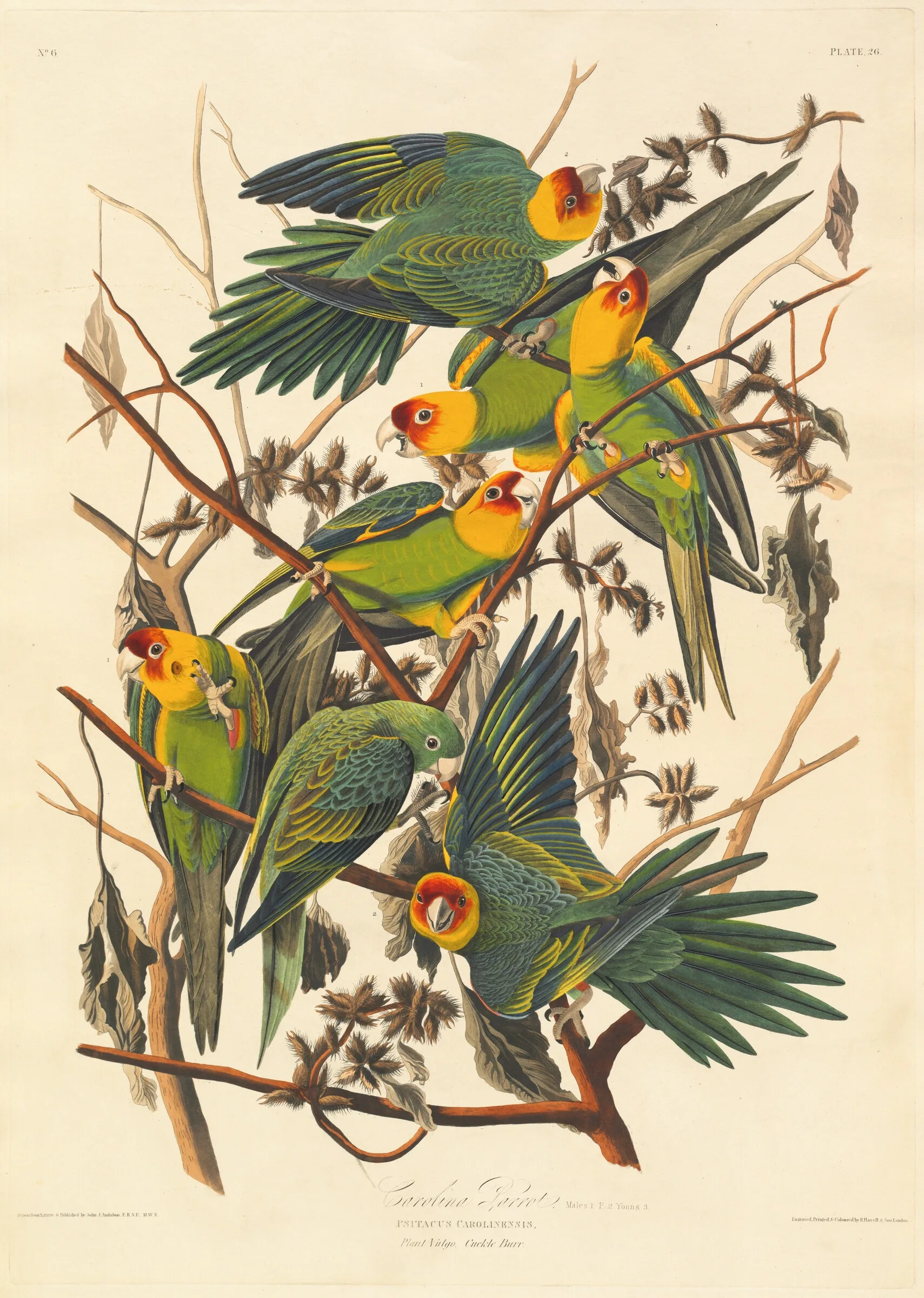
Plate 26 shows seven Carolina Parakeets feeding on cockle-bur, the only parrot native to the eastern United States. Audubon picked his models from a basketful of birds he shot, and the species was extinct less than a century later.
- Plate
- 26 (XXVI)
- Audubon's name
- Carolina Parrot
- Modern name
- Carolina Parakeet (Conuropsis carolinensis)
- Engraved by
- Robert Havell Jr., London
- Published
- 1827, Number 6, Volume I
- Watercolor
- New-York Historical Society
- Also known as
- Carolina Parrot; Audubon Carolina parrot print
What the plate shows
Seven parakeets climb over a cockle-bur plant. Adults have green bodies, yellow heads and orange-red faces. Young birds have green heads. Some hang upside down, some reach for burs, and one bird opens a seed pod with its bill. The figures fan across the sheet in a loose spiral, and the design works almost like a pattern. It is the large plate of Number 6.
Audubon described the feeding behavior the plate shows. A bird plucks a bur, turns it in one foot, splits it with its bill and drops the husk.
How Audubon made it
Audubon drew from freshly shot birds, wired into lifelike poses. In the Ornithological Biography he explained how he got these. Flocks raided grain stacks, and when farmers fired into them the survivors kept circling back to their dead. He wrote that he "procured a basketful of these birds at a few shots" in order to choose good specimens for the figures in the plate.
He also recorded that the birds stripped orchards, mulberries and pecans, which made them a target, and that their numbers were already falling fast. Districts once full of them now had very few.
Cockle-bur was a weed of fields and river bottoms, and the parakeets ate its seeds. Audubon chose it because it was the bird's real food, not for decoration. His botanical choices for Number 6 and the other early parts show him already pairing birds with the plants that mattered to them.
The bird today
The Carolina Parakeet once ranged from the Gulf coast north into the Ohio valley. Clearing of bottomland forest, shooting to protect crops, the feather trade and capture for cages all reduced it. Disease from poultry may also have played a part. The last known captive bird, a male named Incas, died at the Cincinnati Zoo in February 1918. Unconfirmed reports from Florida swamps continued for some years. The species is listed as Extinct.
That history explains much of the plate's fame. It is one of the most familiar images of an extinct North American bird.
Prints and value
Havell impressions of Plate 26 are among the more expensive plates in the set because of the subject and the strong design. Check for a full sheet of about 39 by 26 inches, a Whatman watermark, and the engraved Havell credit below the image. Trimmed margins and faded greens lower value.
The parakeet was also issued in the octavo edition of 1840 to 1844 as a small hand-colored lithograph. The image has been reproduced constantly, so most prints offered online are modern. See Havell, octavo and Bien editions and how to tell an original Audubon print.
More famous plates
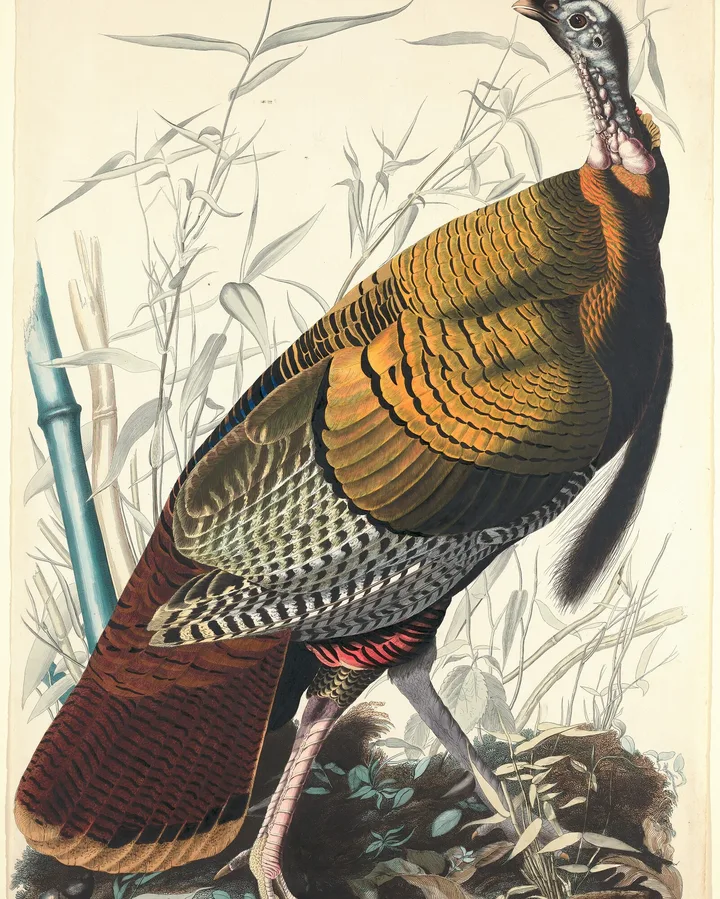
Wild Turkey (Plate 1)
1827
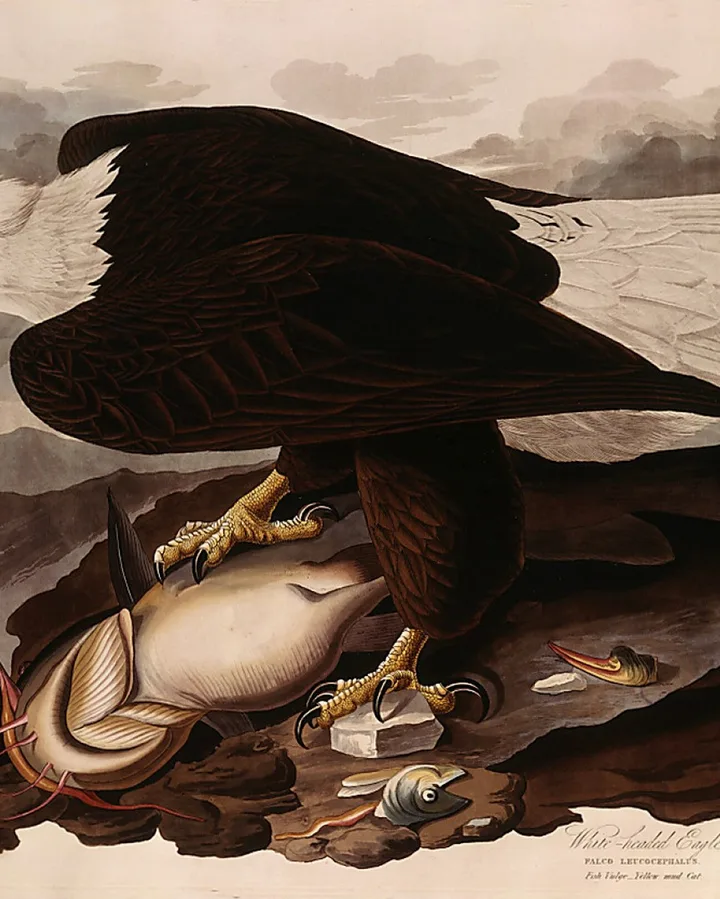
Bald Eagle (Plate 31)
1828
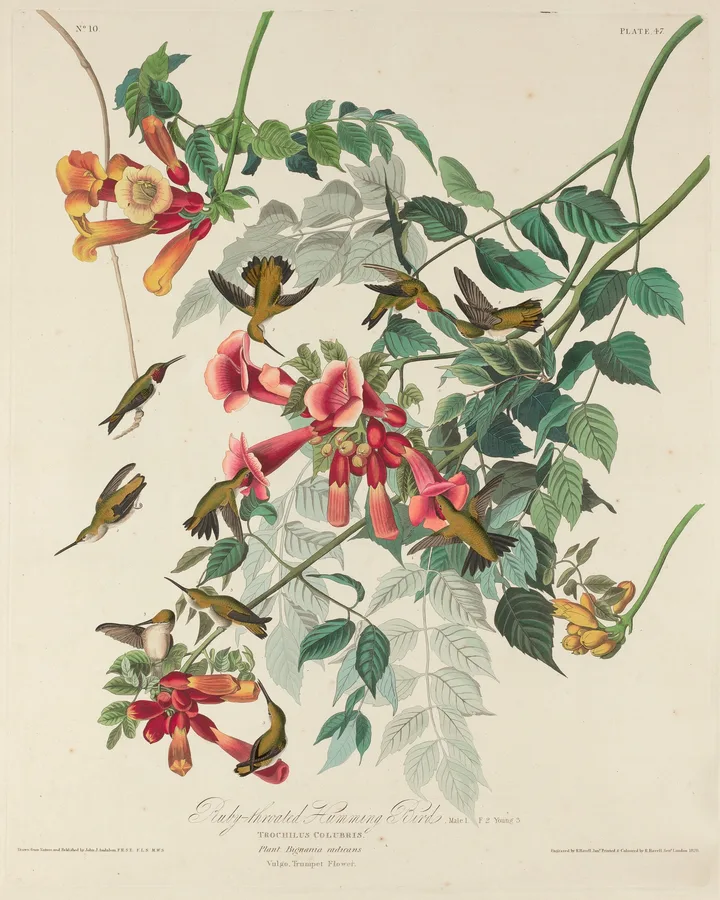
Ruby-throated Hummingbird (Plate 47)
1828
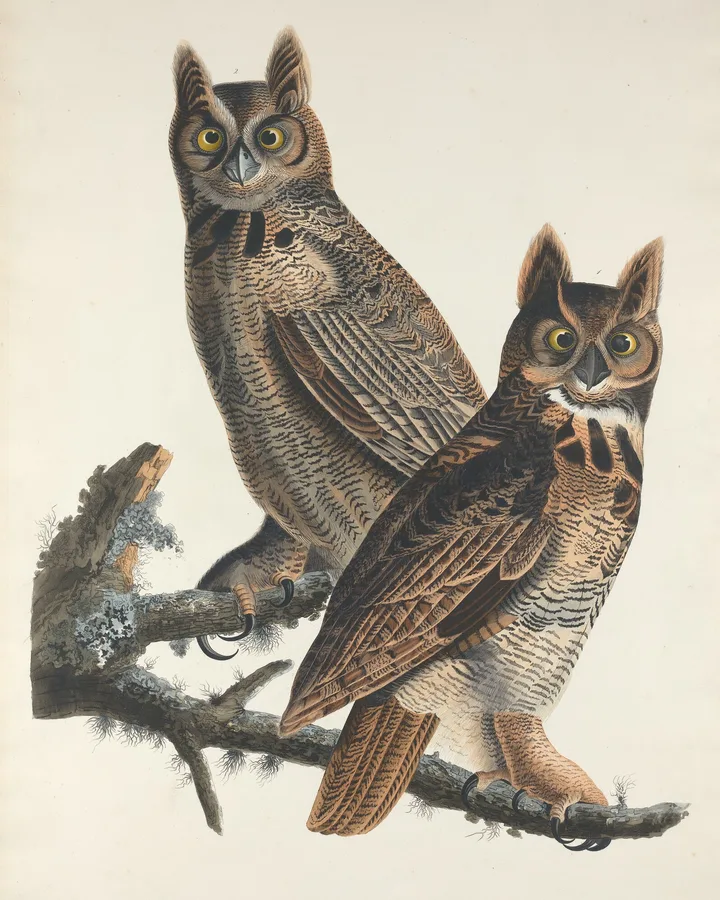
Great Horned Owl (Plate 61)
1829
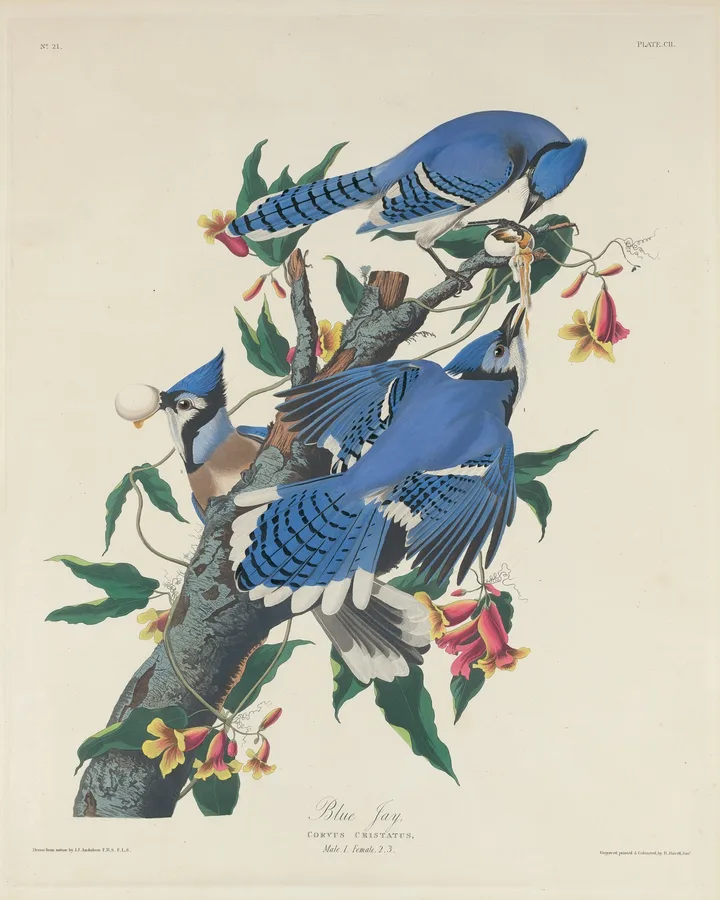
Blue Jay (Plate 102)
1831
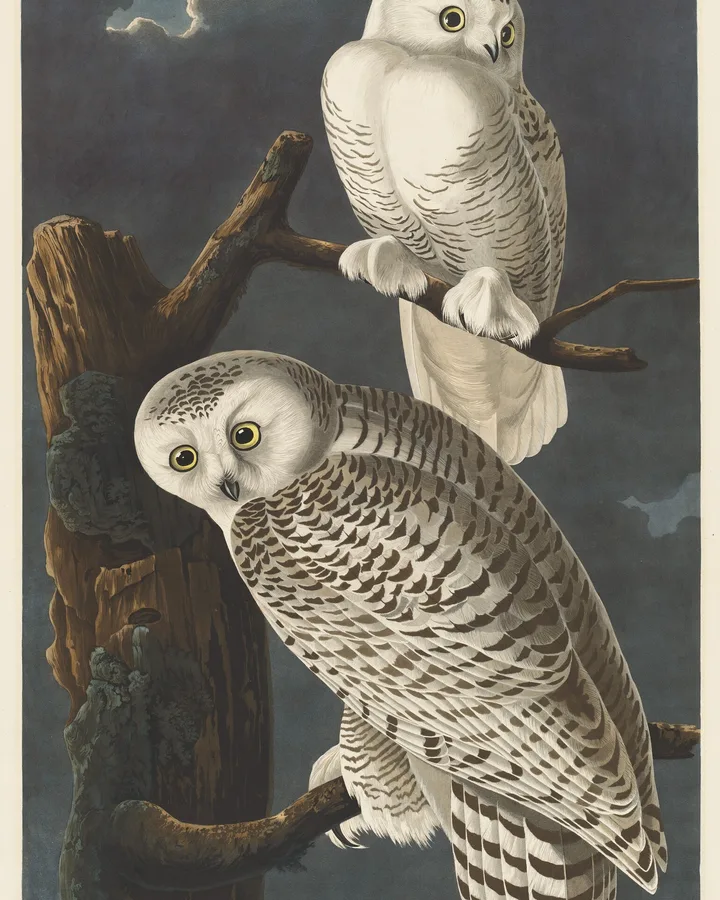
Snowy Owl (Plate 121)
1831
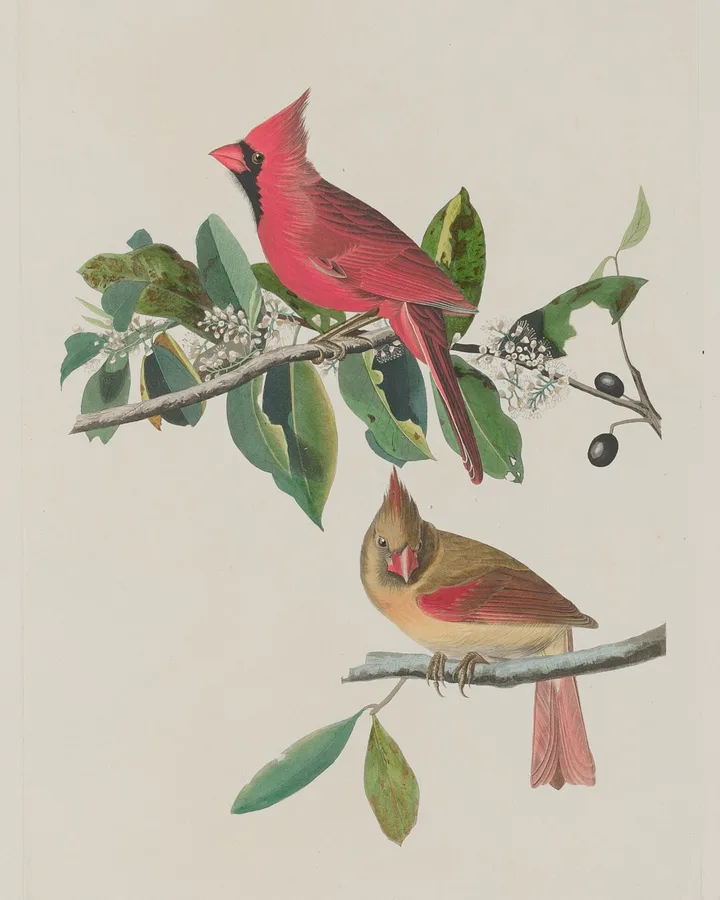
Northern Cardinal (Plate 159)
1833
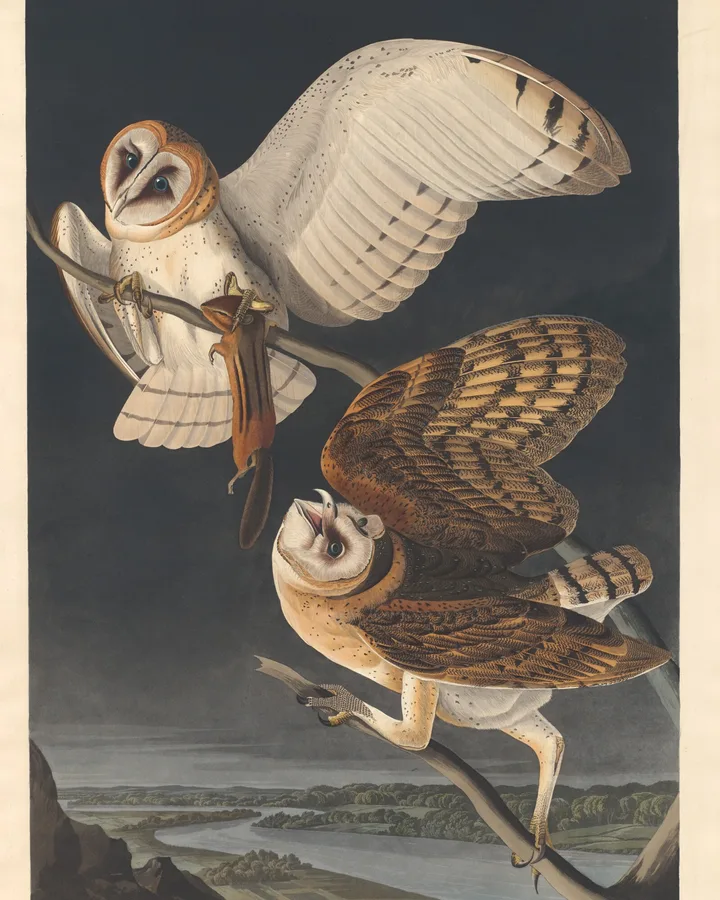
Barn Owl (Plate 171)
1833
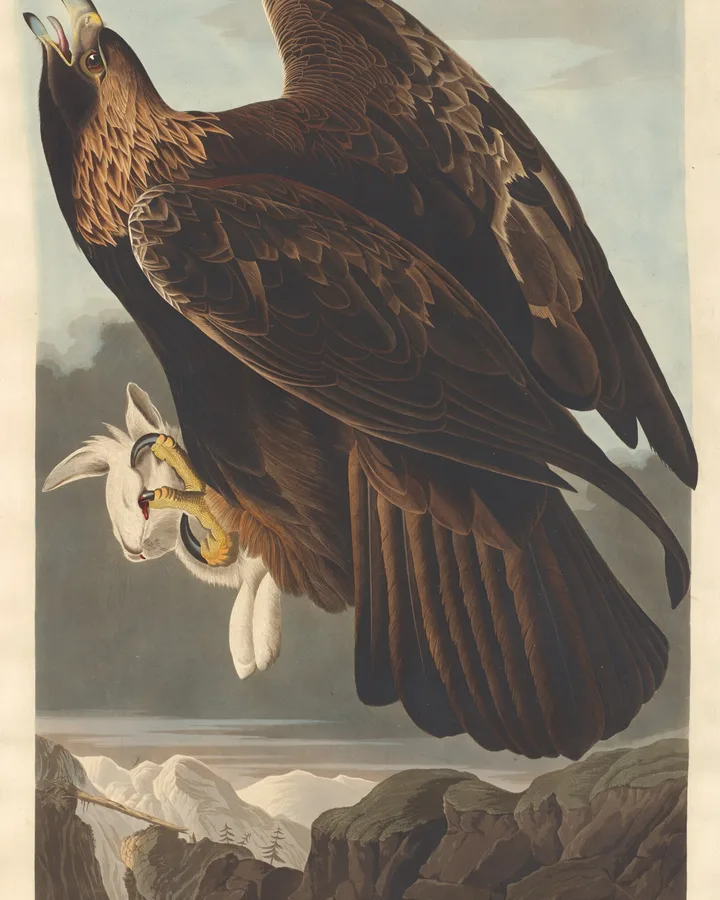
Golden Eagle (Plate 181)
1833
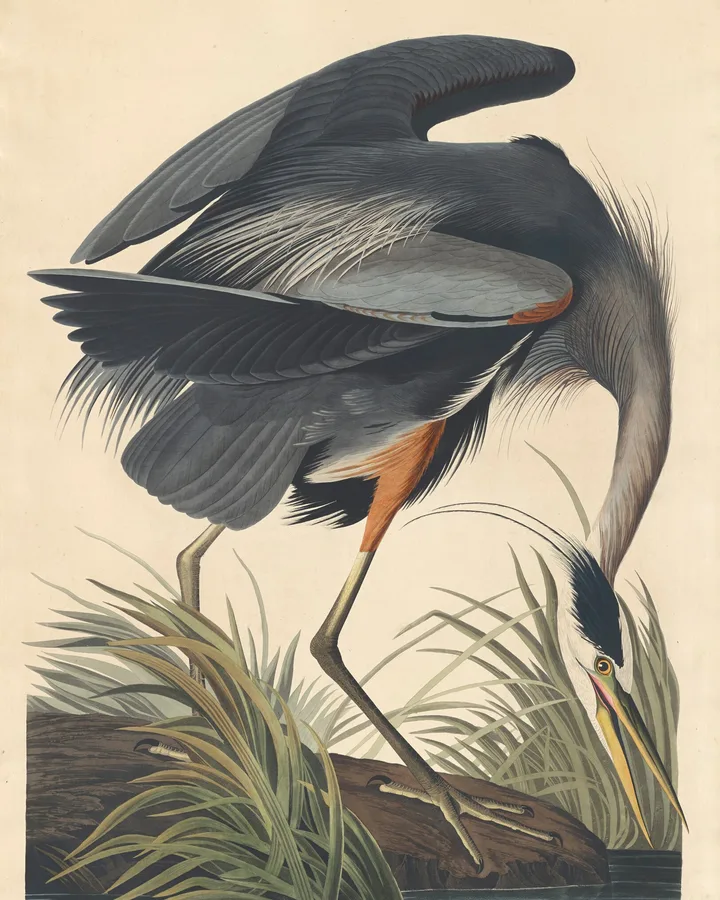
Great Blue Heron (Plate 211)
1834
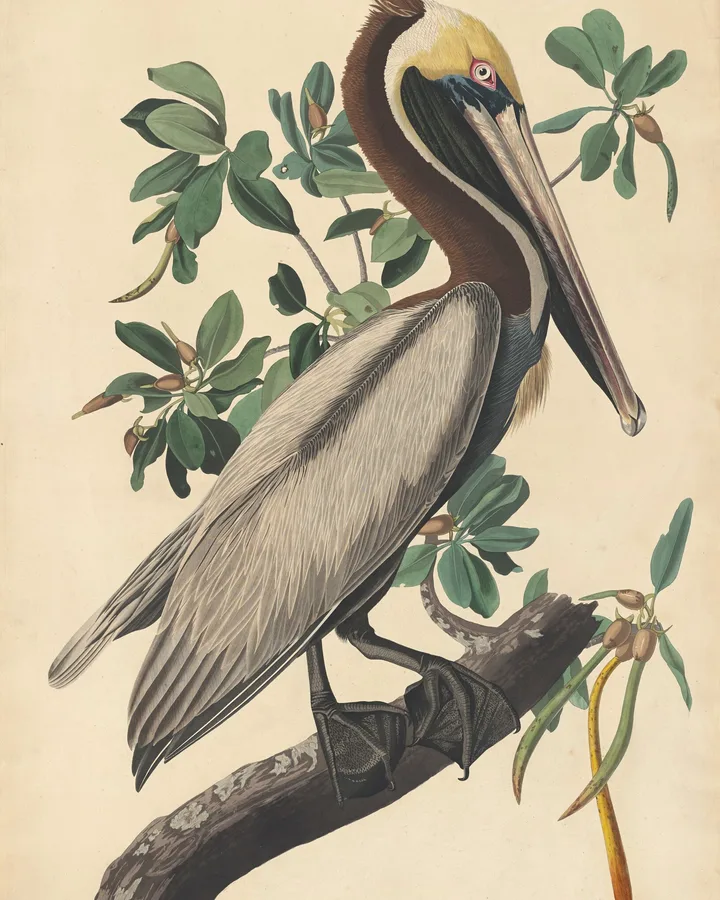
Brown Pelican (Plate 251)
1835
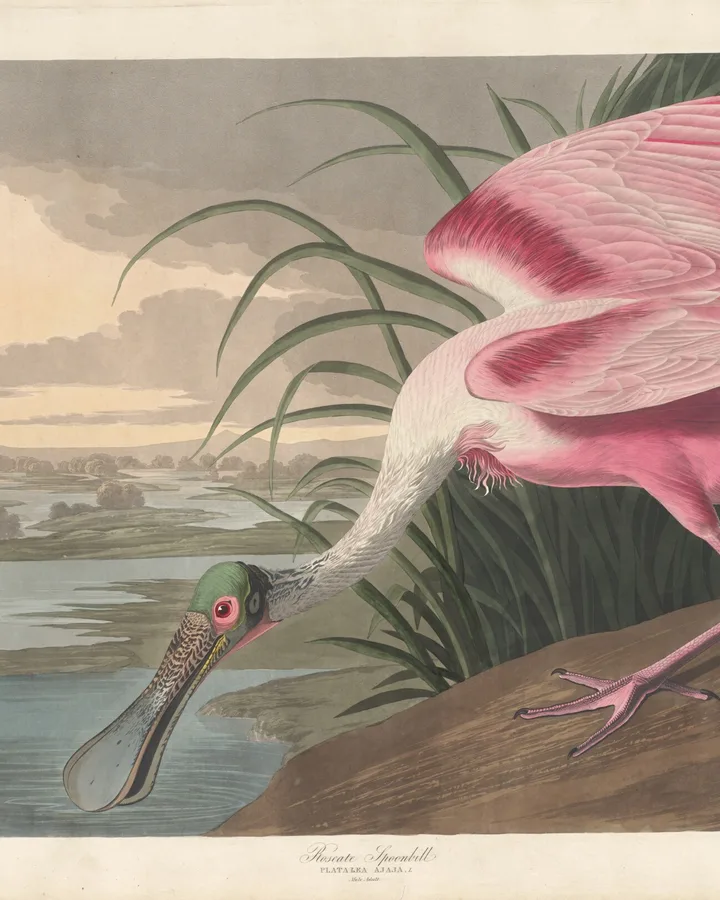
Roseate Spoonbill (Plate 321)
1836
American Flamingo (Plate 431)
1838