Golden Eagle (Plate 181) (1833)
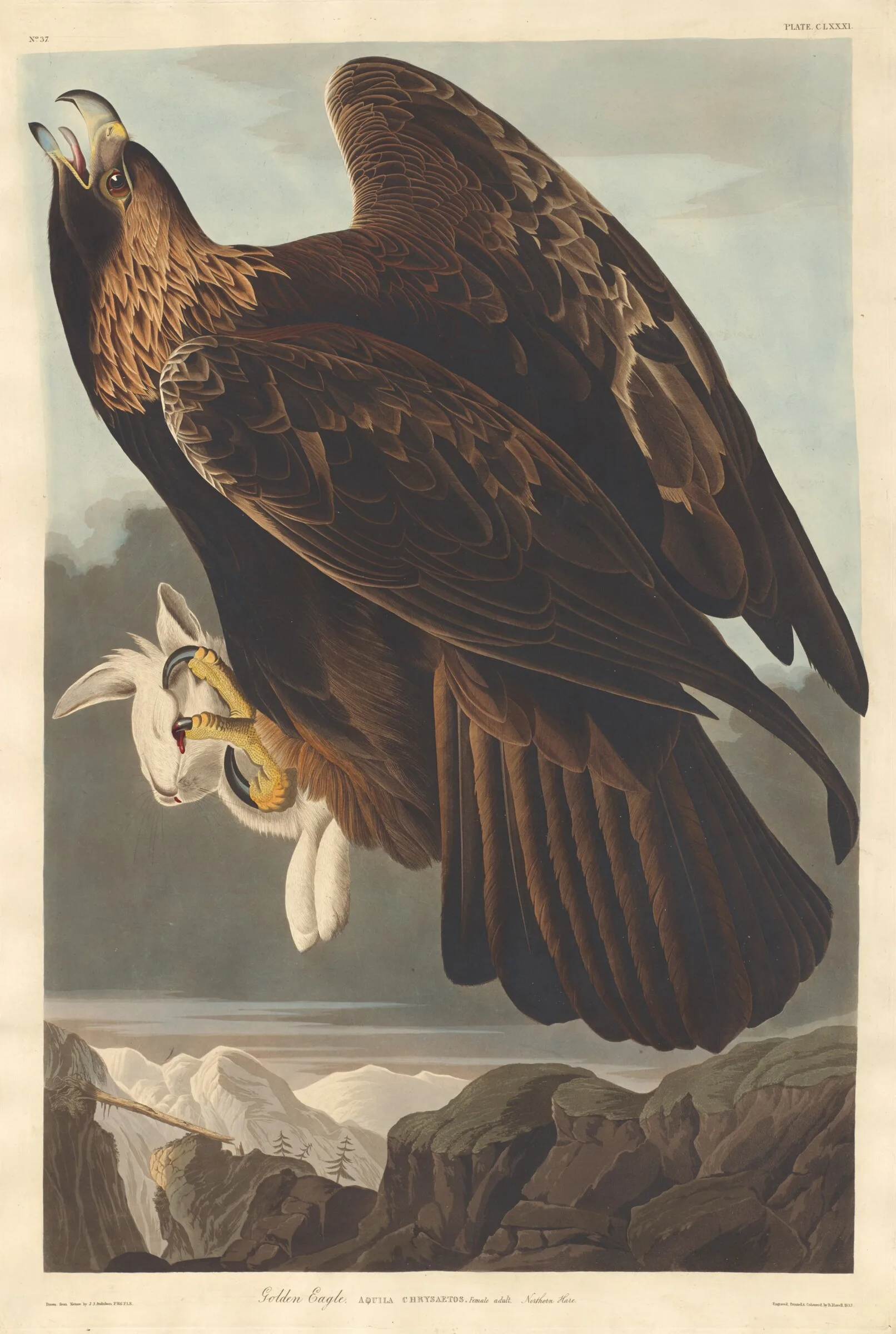
Plate 181 shows a Golden Eagle lifting off a mountain ledge with a hare in its talons, above a tiny hunter crossing a ravine. Audubon drew it in Boston in 1833 from a captive bird he bought and killed, and the work left him ill for days.
- Plate
- 181 (CLXXXI)
- Audubon's name
- Golden Eagle (Falco chrysaetos)
- Modern name
- Golden Eagle (Aquila chrysaetos)
- Engraved by
- Robert Havell Jr., London
- Published
- 1833, Number 37, Volume II
- Watercolor
- New-York Historical Society
- Also known as
- Audubon golden eagle print; Golden Eagle with hare
What the plate shows
A Golden Eagle rises from a rocky ledge with wings raised and a hare clamped in its talons. Far below, in a mountain gorge, a very small figure crosses a ravine on a fallen log with a dead eagle strapped to his back. The figure is generally read as Audubon himself, and it is one of the few places a person appears in the plates. The large bird, the steep drop and the human figure give this plate a drama most others lack.
How Audubon made it
In early February 1833 Audubon called on Mr Greenwood, owner of the museum in Boston, who had bought a live eagle caught by one toe in a fox trap in the White Mountains of New Hampshire. Audubon bought it and kept it caged and covered at his lodgings. He wrote that he was at times half inclined to free it.
Instead he decided to draw it. He tried to kill it with charcoal fumes, then with charcoal and sulphur, but the bird survived both, and in the end he killed it with a steel point through the heart. He sat up most of a night to outline it and worked so hard that he suffered a seizure that laid him up for days. He wrote: "The drawing of this Eagle took me fourteen days, and I had never before laboured so incessantly excepting at that of the Wild Turkey."
The bird today
The Golden Eagle is the most widespread eagle in the world, found across North America, Europe, Asia and North Africa. In North America it is mainly a bird of the West and of Canada, with small numbers in the East, mostly in winter. It hunts rabbits, hares and ground squirrels in open and mountain country. Audubon noted that it nests on cliff ledges, never in trees as far as he knew. It is listed as Least Concern.
Prints and value
Plate 181 is one of the most valued large plates, and Havell impressions are among the most expensive raptor subjects in the work. The detailed landscape and the small hunter figure are good places to compare a print against a known original, since reproductions often lose fine line work there. Check the full sheet, the Whatman watermark and the Havell imprint.
The octavo edition of 1840 to 1844 reduces the image to a small lithograph. See Havell, octavo and Bien editions and how to tell an original Audubon print.
The hunter crossing the log is easy to miss at a distance, and in a framed print it is a good test of quality. In a Havell impression the figure and the log are crisp engraved lines. In poor reproductions they blur into the background. The Bien edition of 1858 to 1860 was cut short by the Civil War, so confirm that a Bien version of this subject exists before paying for one.
More famous plates
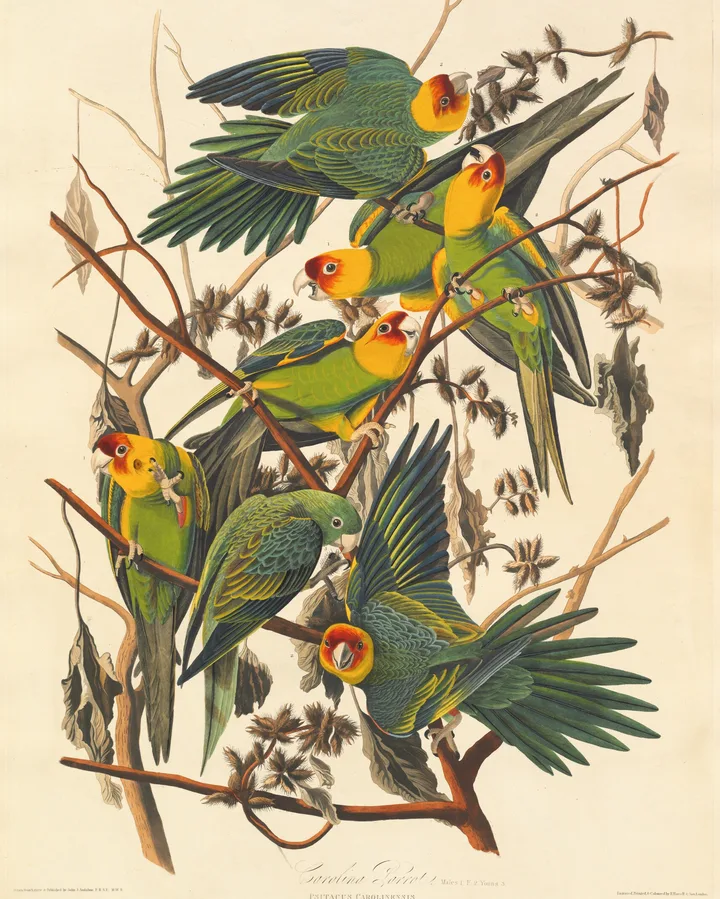
Carolina Parakeet (Plate 26)
1827
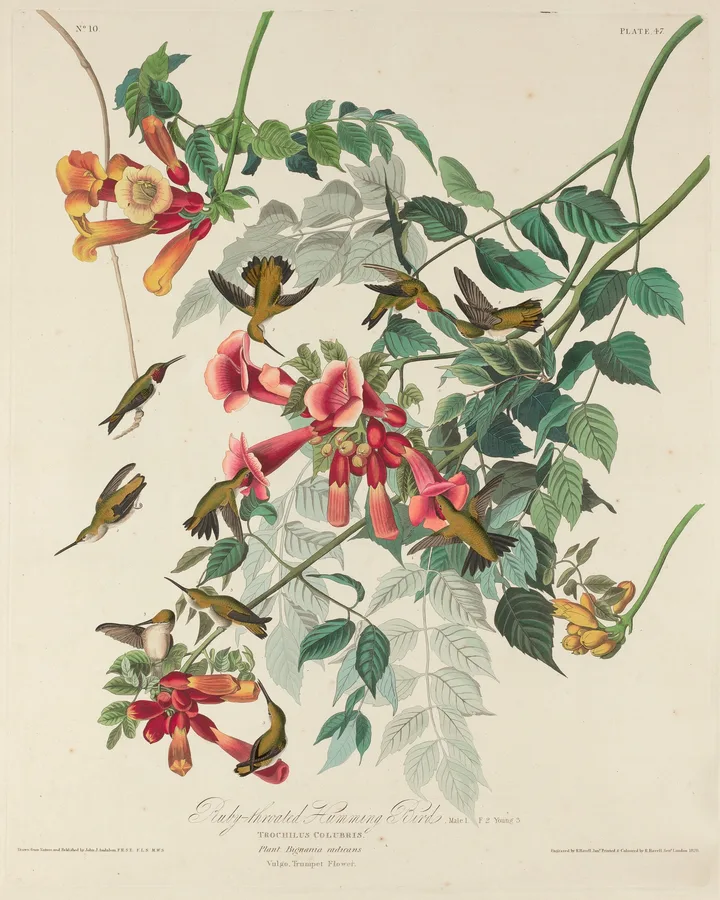
Ruby-throated Hummingbird (Plate 47)
1828
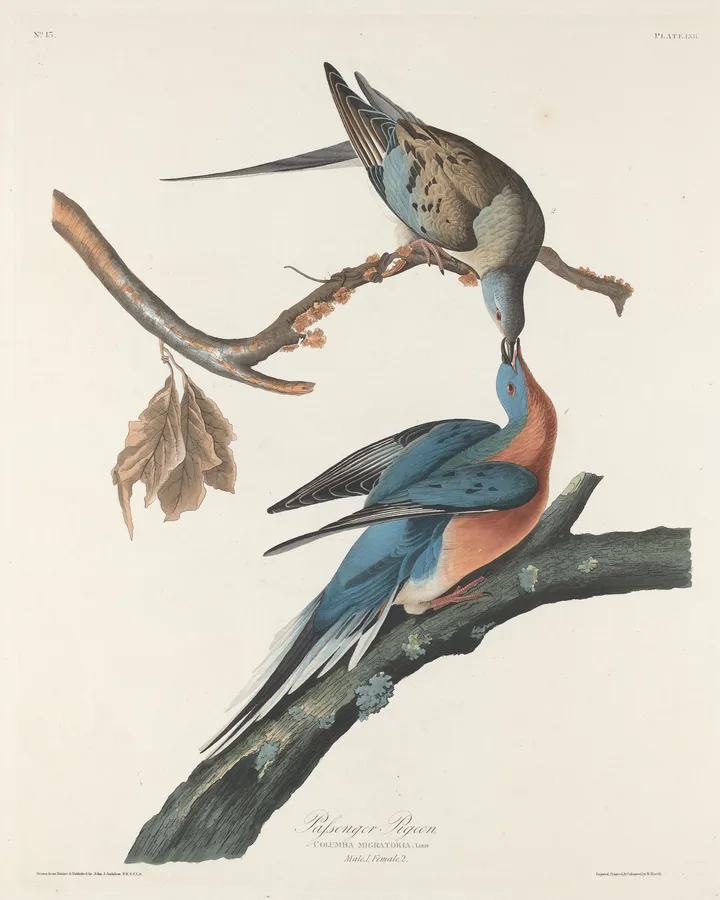
Passenger Pigeon (Plate 62)
1829
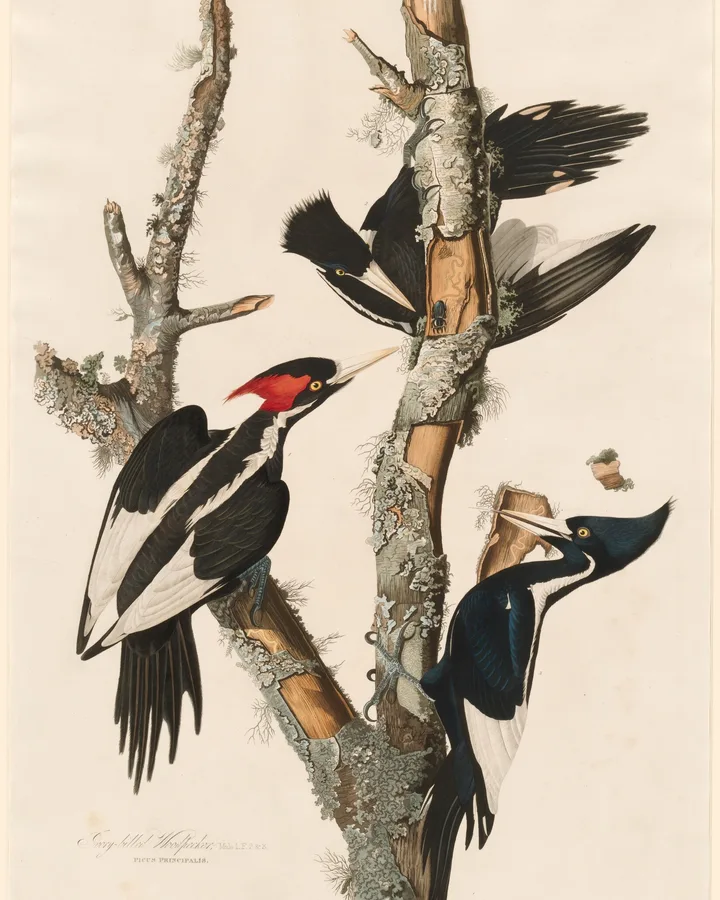
Ivory-billed Woodpecker (Plate 66)
1829
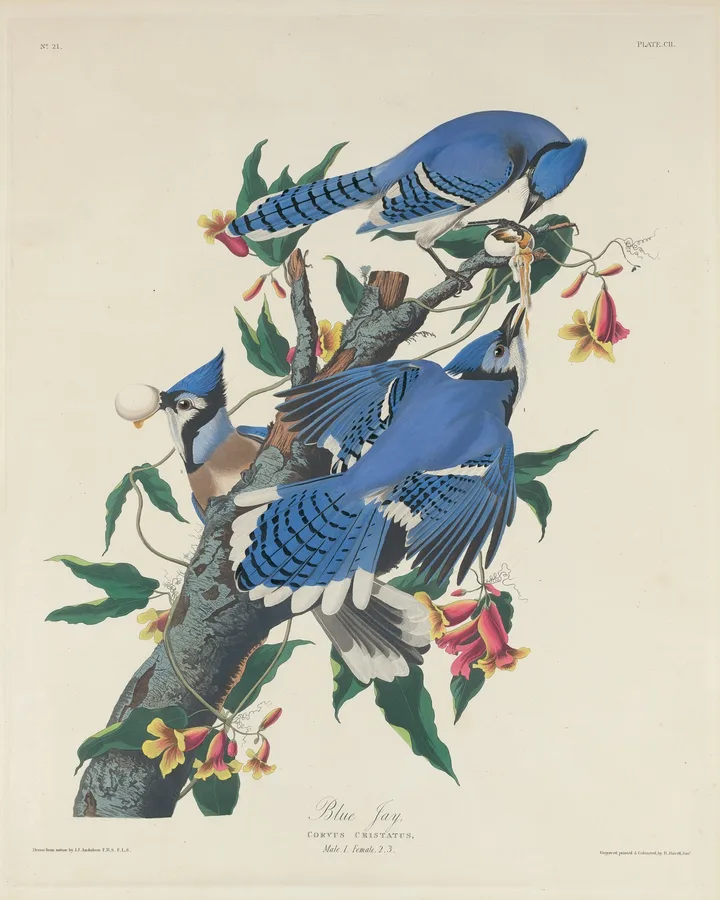
Blue Jay (Plate 102)
1831
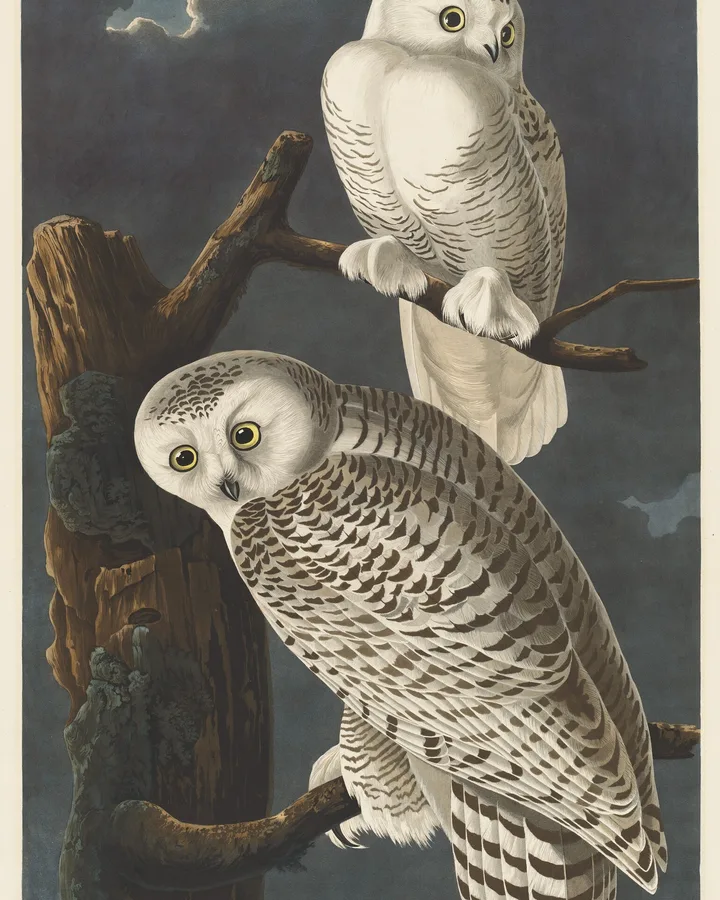
Snowy Owl (Plate 121)
1831
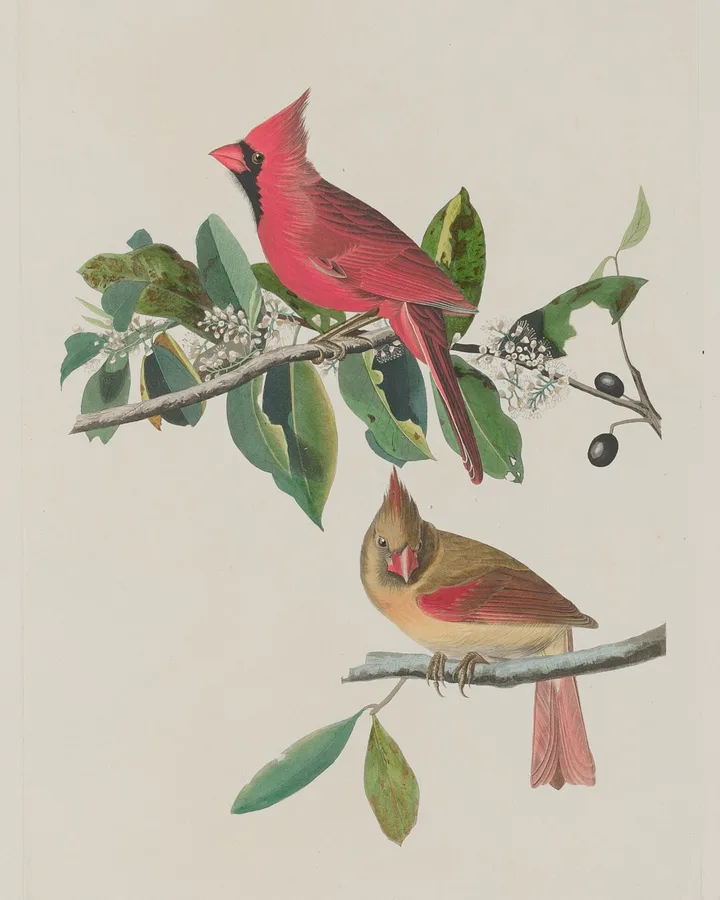
Northern Cardinal (Plate 159)
1833
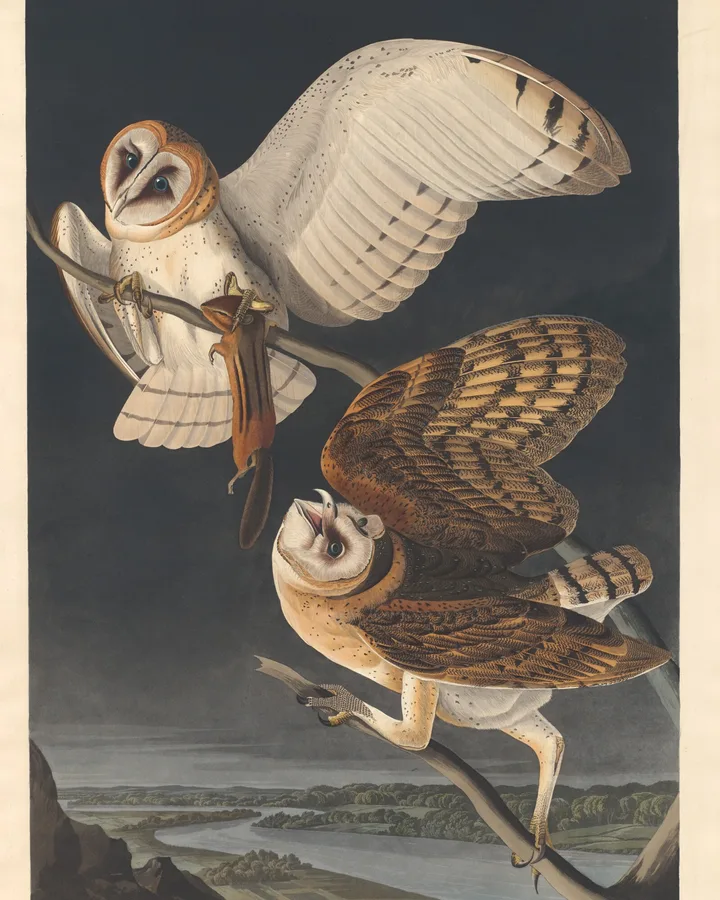
Barn Owl (Plate 171)
1833
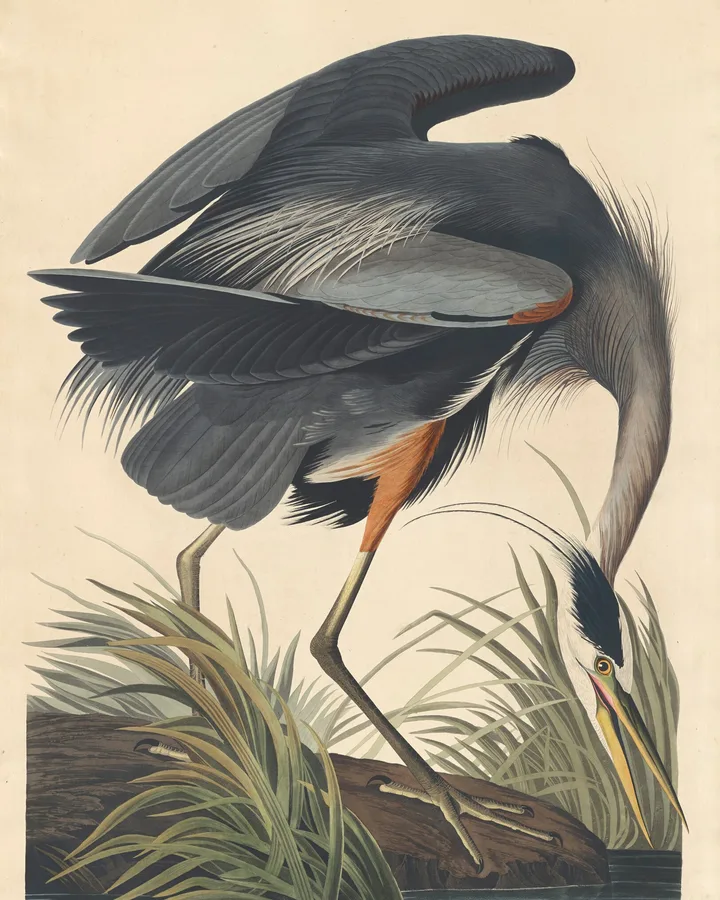
Great Blue Heron (Plate 211)
1834
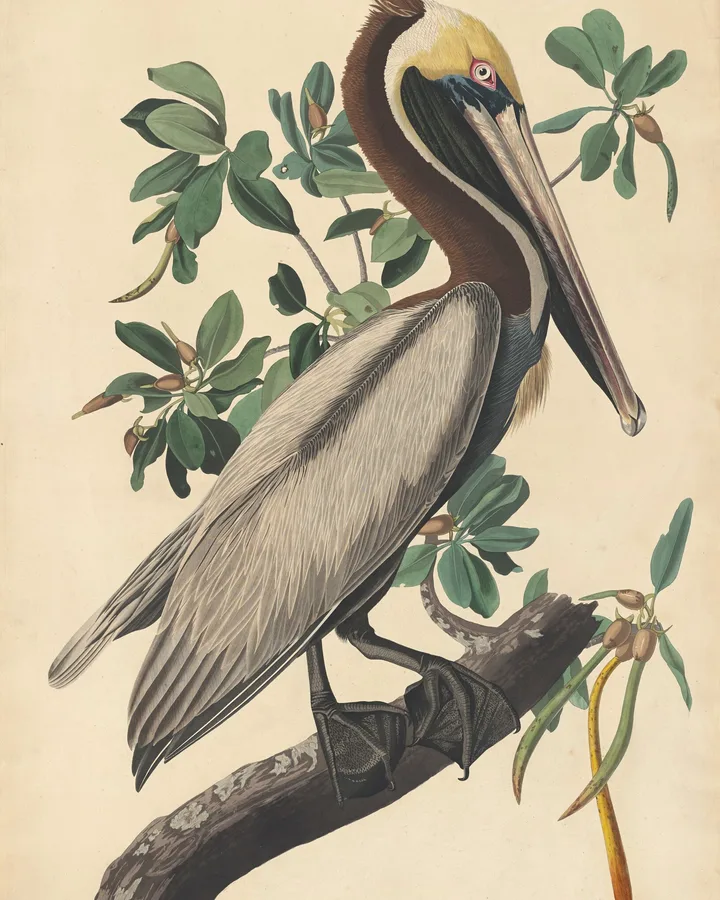
Brown Pelican (Plate 251)
1835
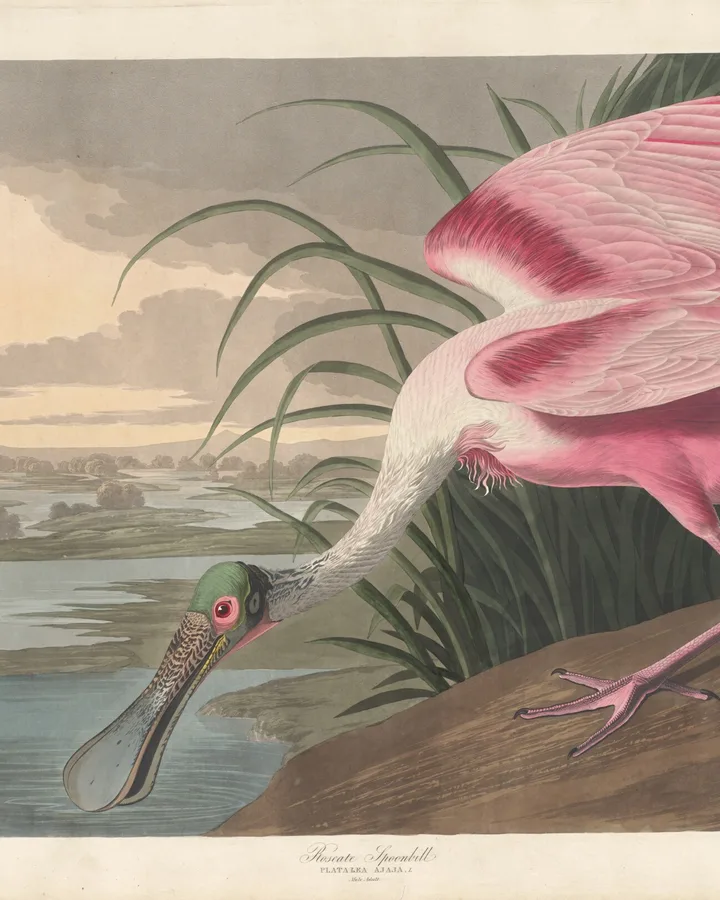
Roseate Spoonbill (Plate 321)
1836
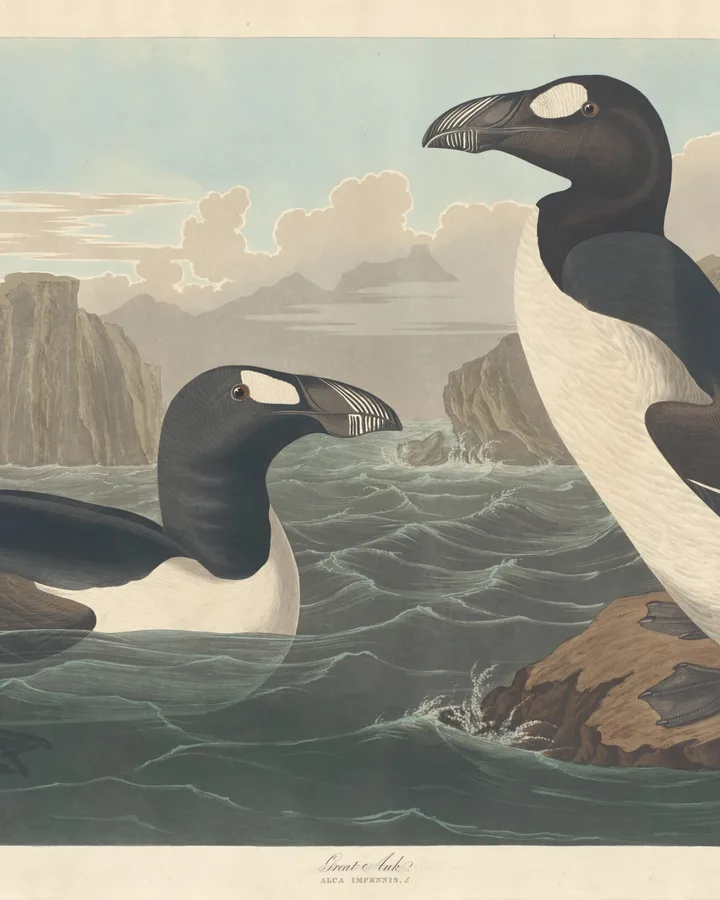
Great Auk (Plate 341)
1836
American Flamingo (Plate 431)
1838