Great Horned Owl (Plate 61) (1829)
Plate 61 shows a male and female Great Horned Owl, the large eared owl of the Americas. Audubon's chapter includes a raid on a settler's poultry yard and his own near drowning in quicksand while retrieving an owl he had shot.
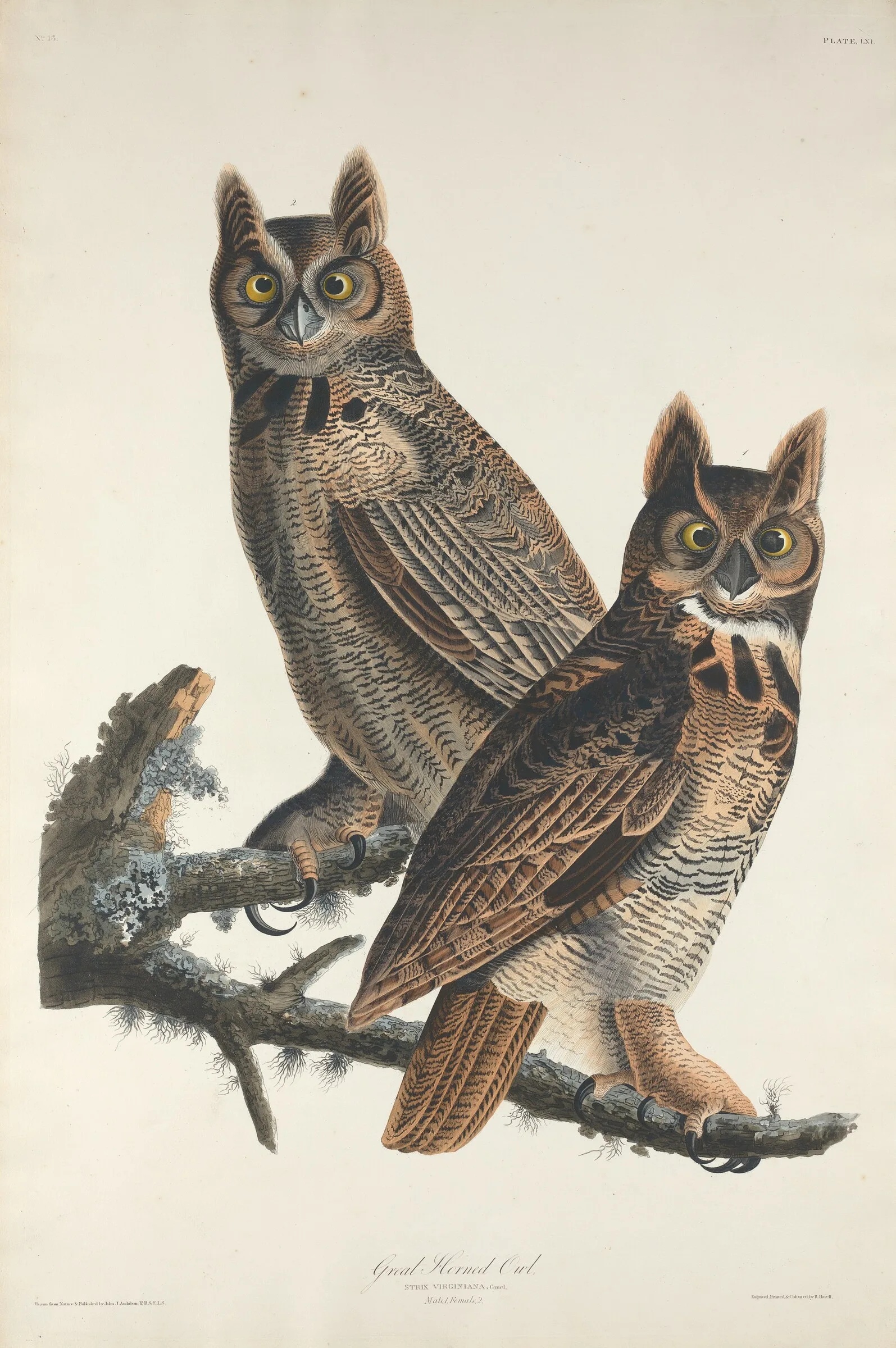
- Plate
- 61 (LXI)
- Audubon's name
- Great Horned Owl (Strix virginiana)
- Modern name
- Great Horned Owl (Bubo virginianus)
- Engraved by
- Robert Havell Jr., London
- Published
- 1829, Number 13, Volume I
- Also known as
- Audubon great horned owl print
What the plate shows
Two adult Great Horned Owls, male and female, perch close together. The ear tufts, the barred underparts and the large yellow eyes are drawn at life size. It is the large plate of Number 13, so the birds have room on the double elephant sheet.
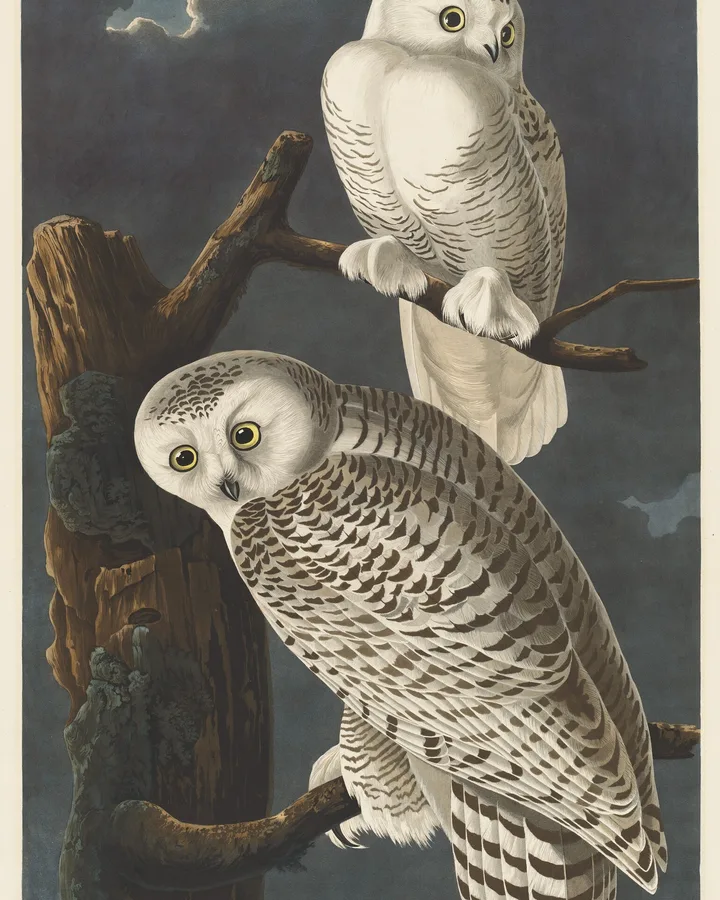
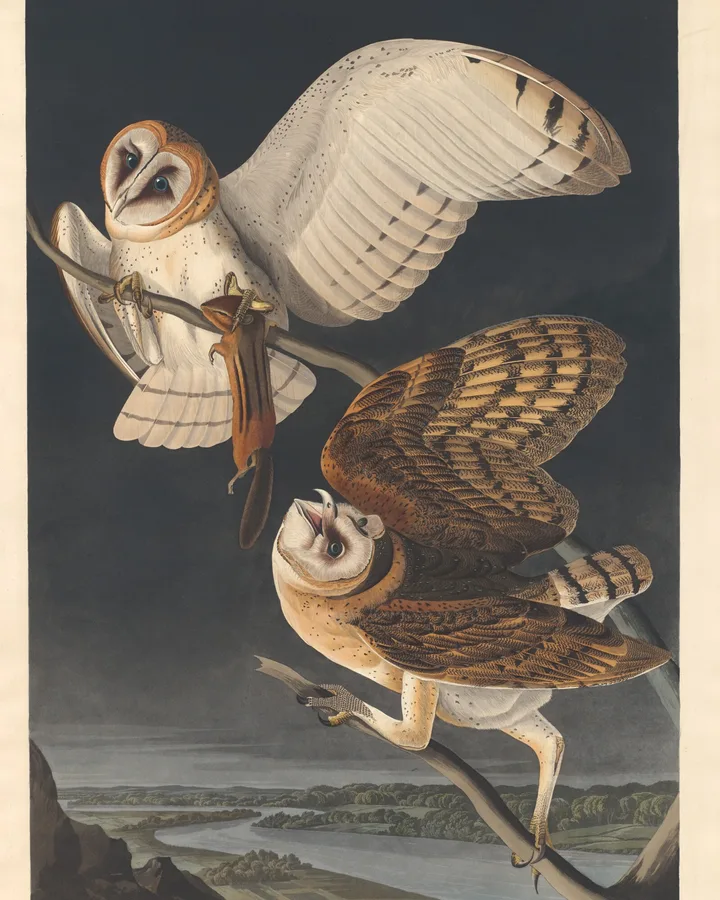
Audubon gave owls several plates. This is the earliest of the well-known ones, followed by the Snowy Owl at Plate 121 and the Barn Owl at Plate 171.
How Audubon made it
The chapter opens with a night scene on a western river. A squatter's poultry yard sits by the water, an owl circles overhead, and a Turkey hen with young spreads her wings and wakes the yard. The settler comes out and shoots the owl from a dead branch.
The second story is about Audubon himself. Running to pick up an owl he had shot on a willow bar, he sank in quicksand up to his armpits. He had to keep still until his boatmen made a bridge of oars and driftwood and pulled him out. Episodes like this were part of how he presented the work to subscribers: the plates came with an author who had collected the birds himself.
He found these owls roosting by day in young cottonwoods and willows on river sandbars, and in cypress swamps hung with Spanish moss.
The bird today
The Great Horned Owl ranges from the Arctic treeline to southern South America and lives in nearly every habitat, from desert to city parks. It takes prey as large as skunks, rabbits and geese, and will kill other owls. Pairs nest very early, often in January or February, usually in an old hawk or crow nest. Audubon's name Strix virginiana records that the species was first described from Virginia. It is common and listed as Least Concern.
Prints and value
Owls have a steady collector market, and this plate is one of the most asked-for owl subjects. Havell impressions are valued as large plates. Condition is key, since dark plumage areas show rubbing and color loss clearly. Confirm the full sheet, the Whatman watermark and the Havell imprint.
The octavo edition of 1840 to 1844 includes the Great Horned Owl as a small lithograph. Many modern reproductions crop the image or change its colors. See Havell, octavo and Bien editions and how to tell an original Audubon print.
Havell plates were colored by hand in his London shop, one sheet at a time, so the tones vary from one impression to another. Small differences in the plumage color of the owls are normal and do not by themselves mean a print is later or false. The Bien edition of 1858 to 1860 stopped after about 105 sheets, so not every subject was reissued.
More famous plates
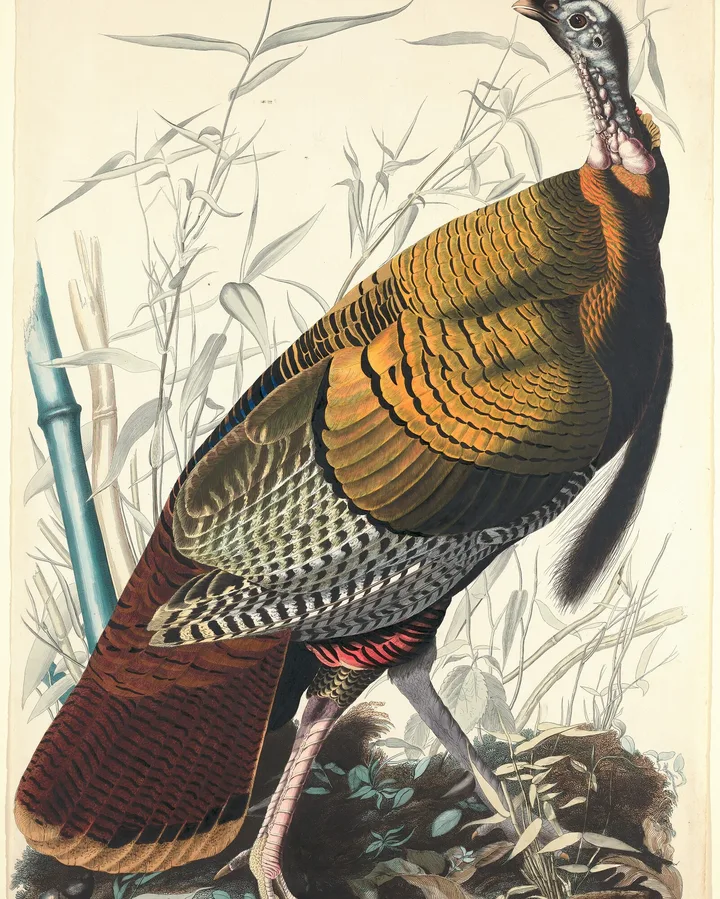
Wild Turkey (Plate 1)
1827
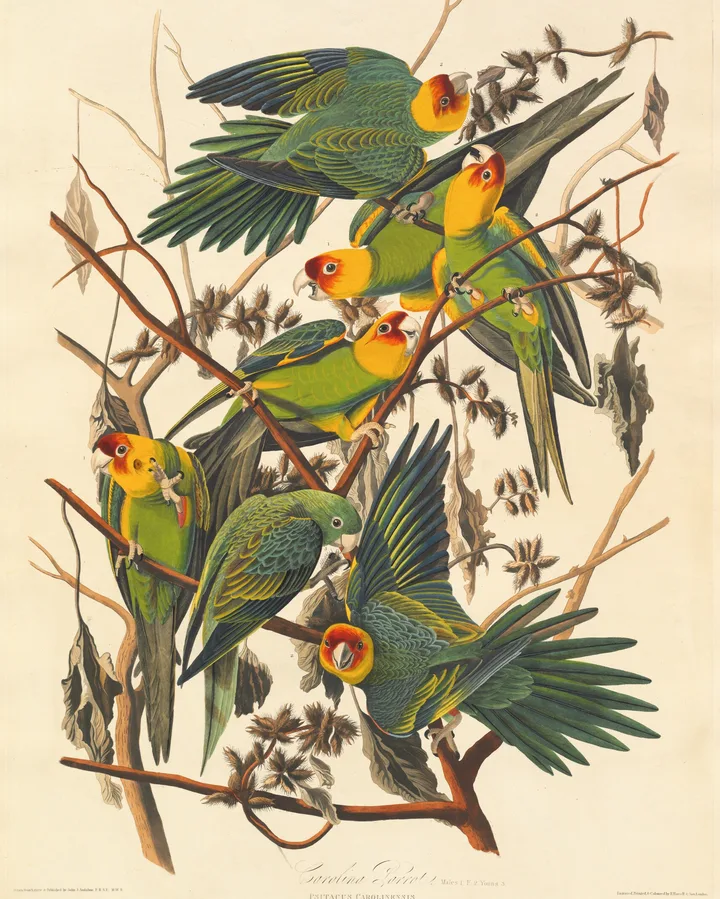
Carolina Parakeet (Plate 26)
1827
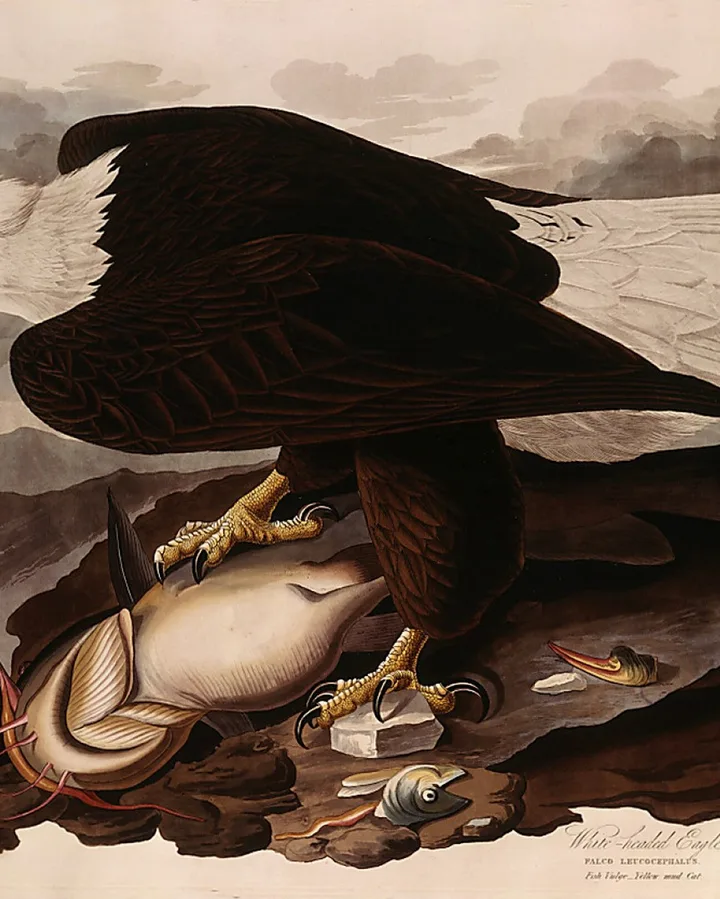
Bald Eagle (Plate 31)
1828
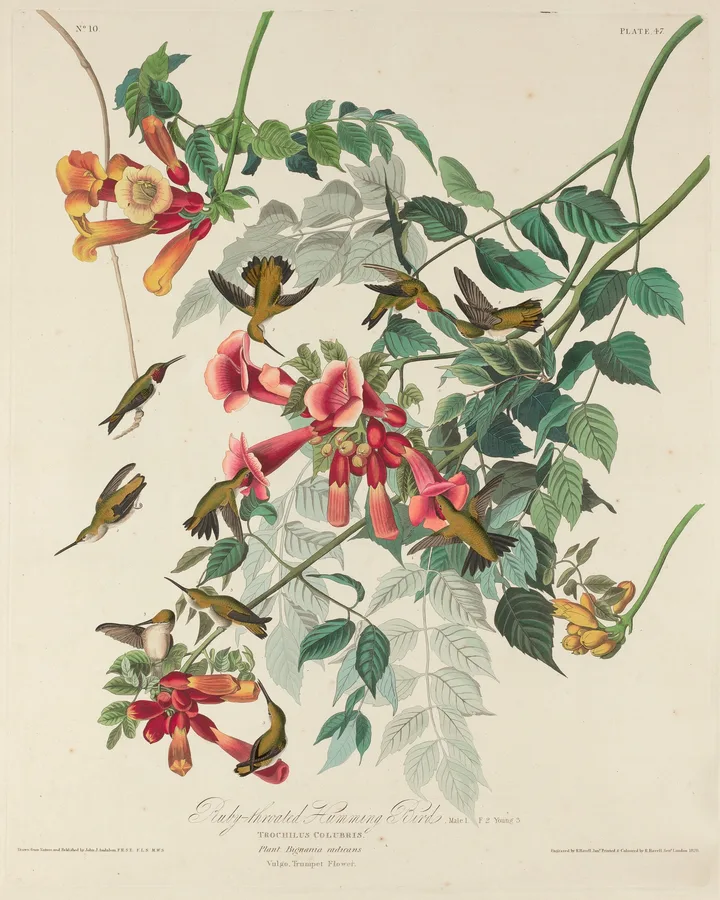
Ruby-throated Hummingbird (Plate 47)
1828
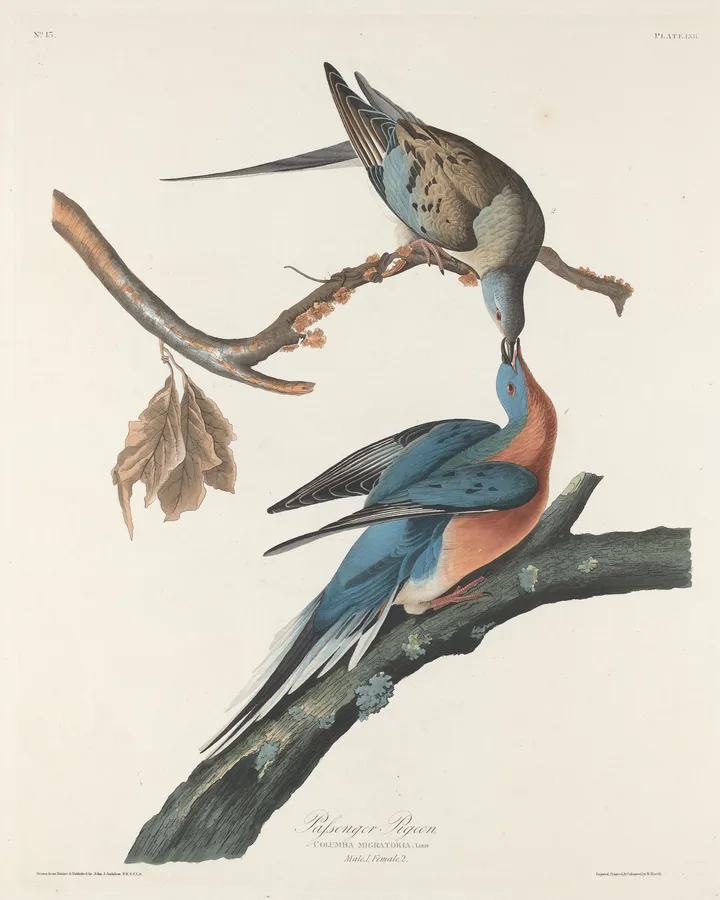
Passenger Pigeon (Plate 62)
1829
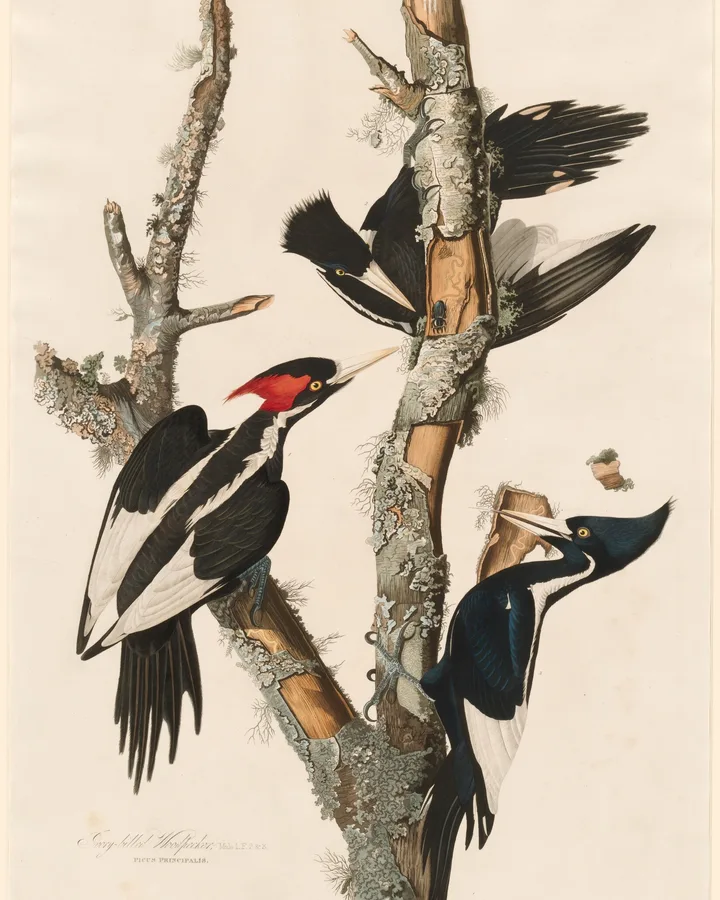
Ivory-billed Woodpecker (Plate 66)
1829
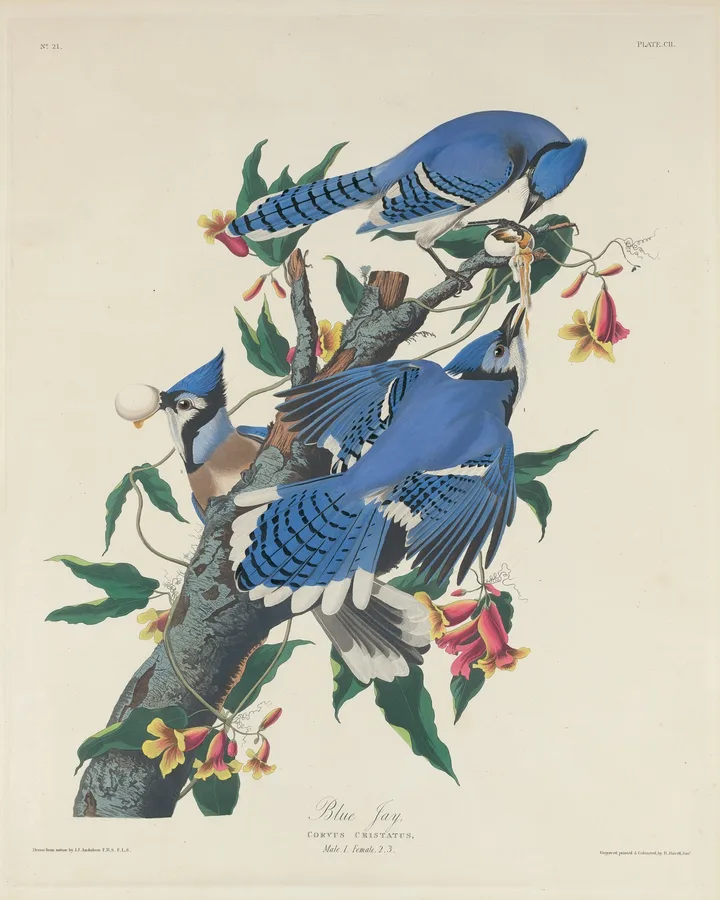
Blue Jay (Plate 102)
1831
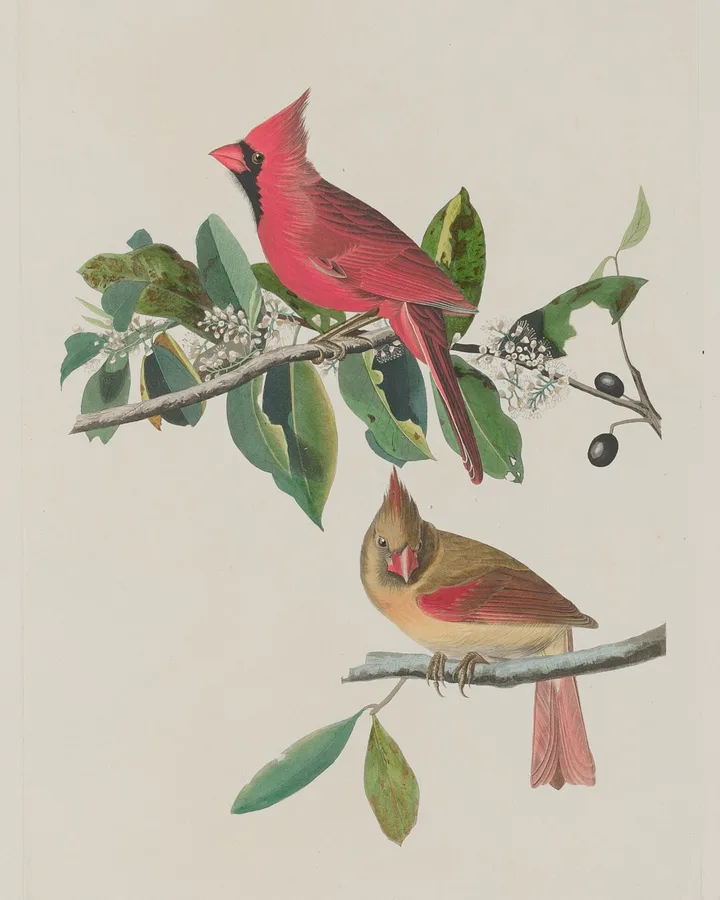
Northern Cardinal (Plate 159)
1833
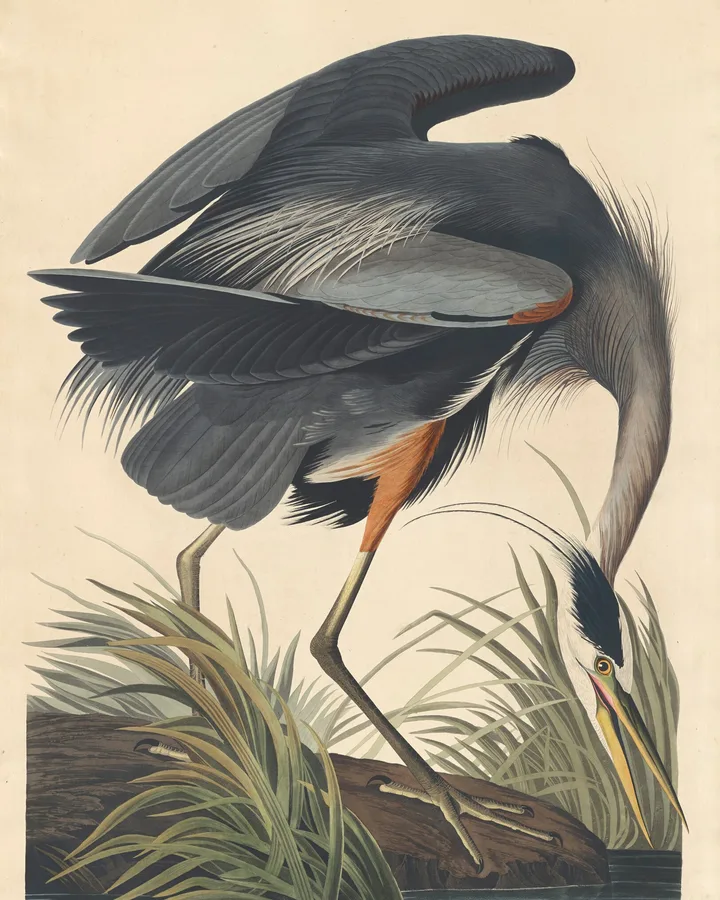
Great Blue Heron (Plate 211)
1834
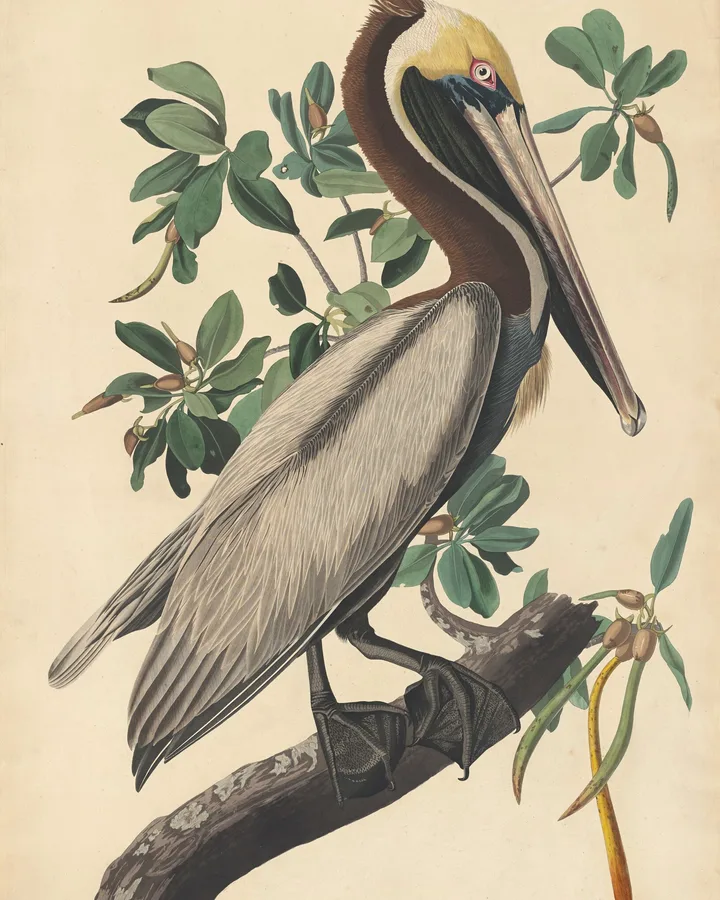
Brown Pelican (Plate 251)
1835
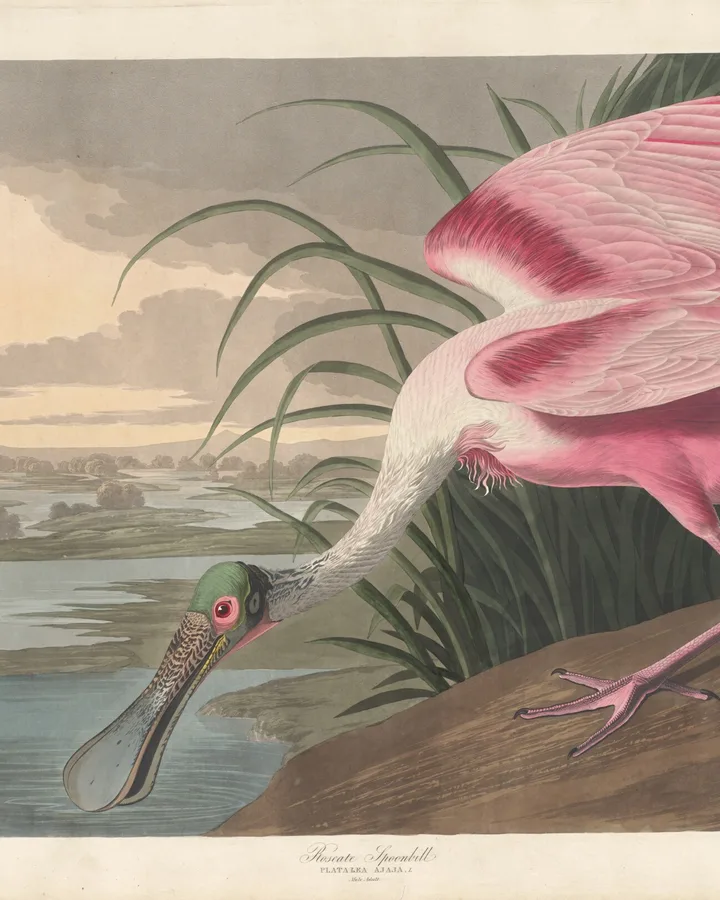
Roseate Spoonbill (Plate 321)
1836
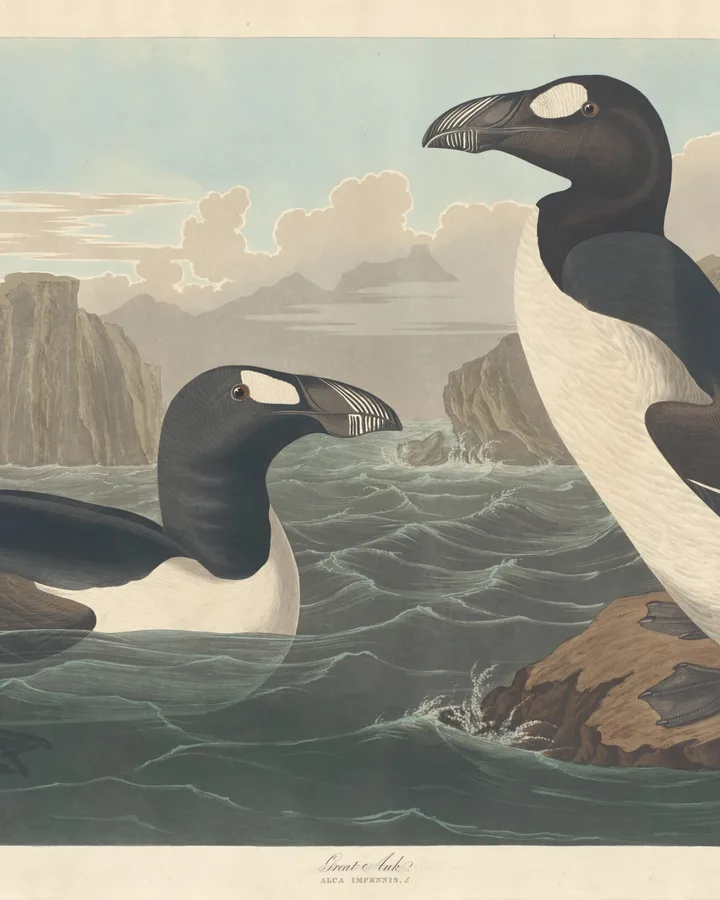
Great Auk (Plate 341)
1836
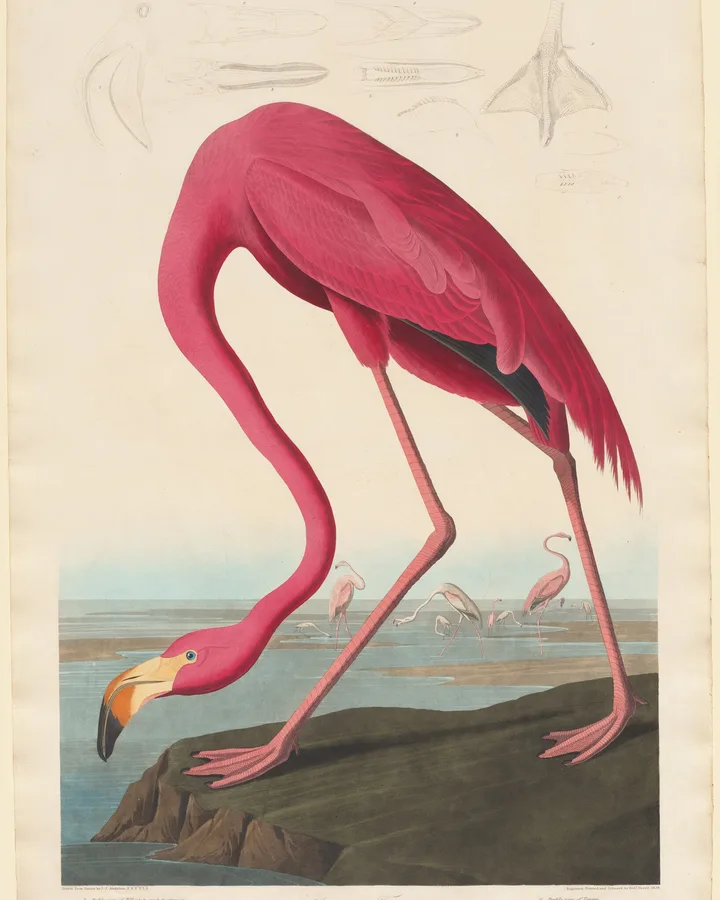
American Flamingo (Plate 431)
1838