American Flamingo (Plate 431) (1838)
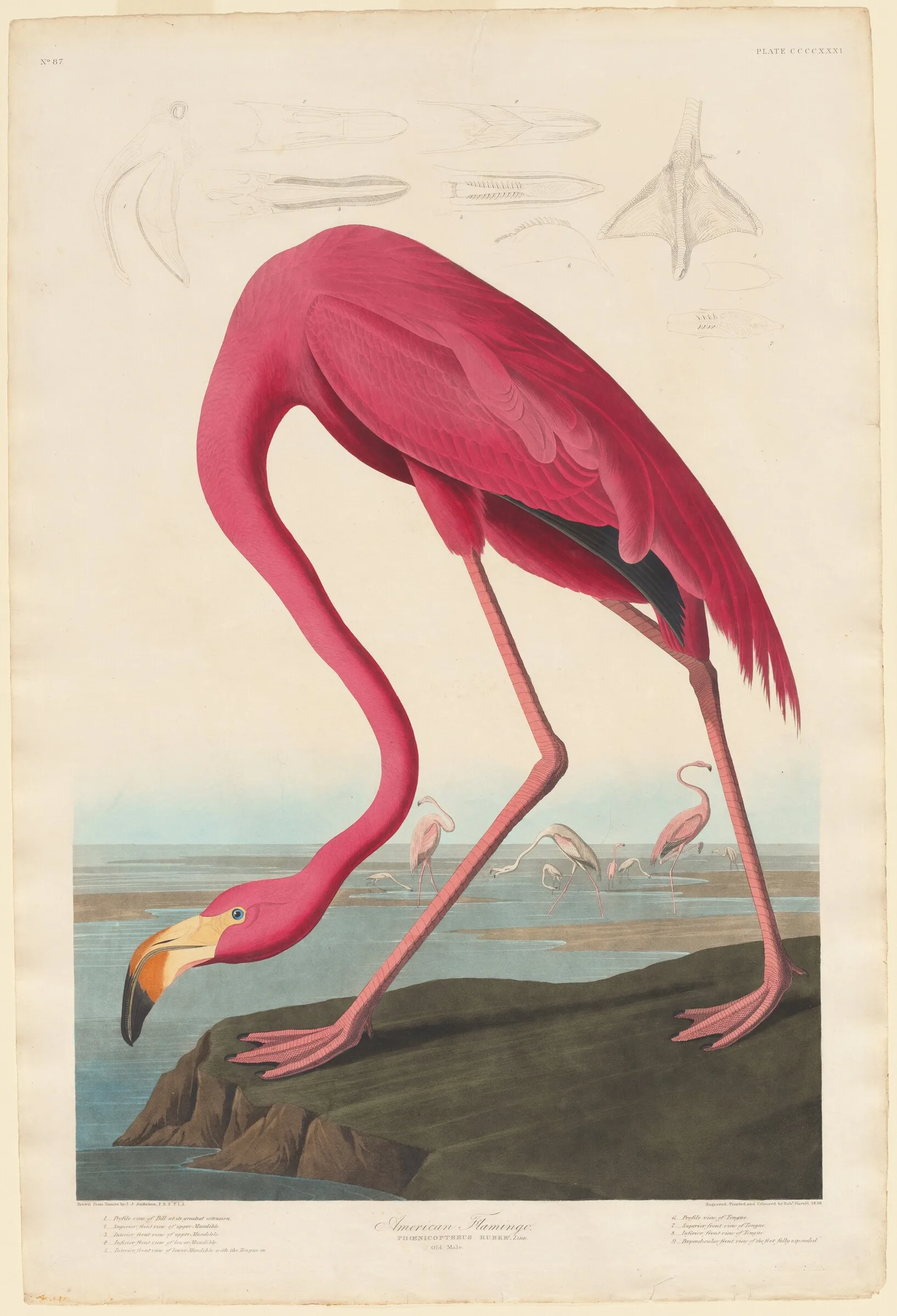
Plate 431 shows an adult male American Flamingo, its neck bent low so the life-size bird fits the sheet. It was one of the last plates issued, in 1838, and Audubon admitted he never managed to shoot a flamingo himself.
- Plate
- 431 (CCCCXXXI)
- Audubon's name
- American Flamingo (Phoenicopterus ruber)
- Modern name
- American Flamingo (Phoenicopterus ruber)
- Engraved by
- Robert Havell Jr., London
- Published
- 1838, Number 87, Volume IV
- Watercolor
- New-York Historical Society
- Also known as
- Audubon flamingo print; Red Flamingo; Phoenicopterus ruber
What the plate shows
A single adult male flamingo stands with its long neck curved down and its head near its feet. The red plumage, black flight feathers and bent bill are drawn at life size. In the distance, small flamingos feed and stand in the shallows. The large plate leads Number 87, the last part of the work.
The pose is a solution to a problem. A standing flamingo is taller than the double elephant sheet, so Audubon lowered the head to keep the whole bird at full size.
How Audubon made it
Audubon went to Florida in 1832 partly to study flamingos. On 7 May 1832, sailing from Indian Key, he saw his first flock coming in a line toward the boat. "Ah! Reader, could you but know the emotions that then agitated my breast!" he wrote. The birds veered away, circled the key and landed on a mud flat where no boat could reach them.
At Key West he tried again, without success. He wrote that although he saw many in that country, he could not "boast of having had the satisfaction of shooting a single individual." His scientific description was taken from specimens sent from Cuba, preserved in spirits, along with dried skins. Friends in Charleston and correspondents in Cuba sent him what they could learn of nesting: mud mounds in salt ponds, usually two white eggs, and young that took about two years to reach full color.
The bird today
The American Flamingo, Phoenicopterus ruber, breeds in the Caribbean, the Yucatan, the Bahamas, northern South America and the Galapagos. Audubon described it as a regular but shy visitor to the Florida Keys and western Florida. Hunting reduced it there in the nineteenth century, and for much of the twentieth century most Florida flamingos were thought to be escapes. Recent studies show wild birds do return to Florida in small numbers. It is listed as Least Concern.
Prints and value
The Flamingo is one of the most recognized plates in the work and among the most expensive Havell plates at auction, alongside the Wild Turkey. Because it is so valuable, it is also one of the most copied. Confirm a full sheet of about 39 by 26 inches, a Whatman watermark, the engraved Havell lettering and the plate number.
The octavo edition of 1840 to 1844 includes the flamingo as a small lithograph. Reproductions range from cheap posters to high-quality facsimiles. See Havell, octavo and Bien editions and how to tell an original Audubon print.
Number 87 was the last part delivered. Some early subscribers had dropped out by then, so the final parts reached fewer buyers than the first ones. The Bien edition of 1858 to 1860 stopped after about 105 sheets, so check whether a Bien version of this subject exists before trusting the label. Full-size facsimiles, such as the 1971 to 1972 Amsterdam edition, are the most common source of confusion with originals.
More famous plates
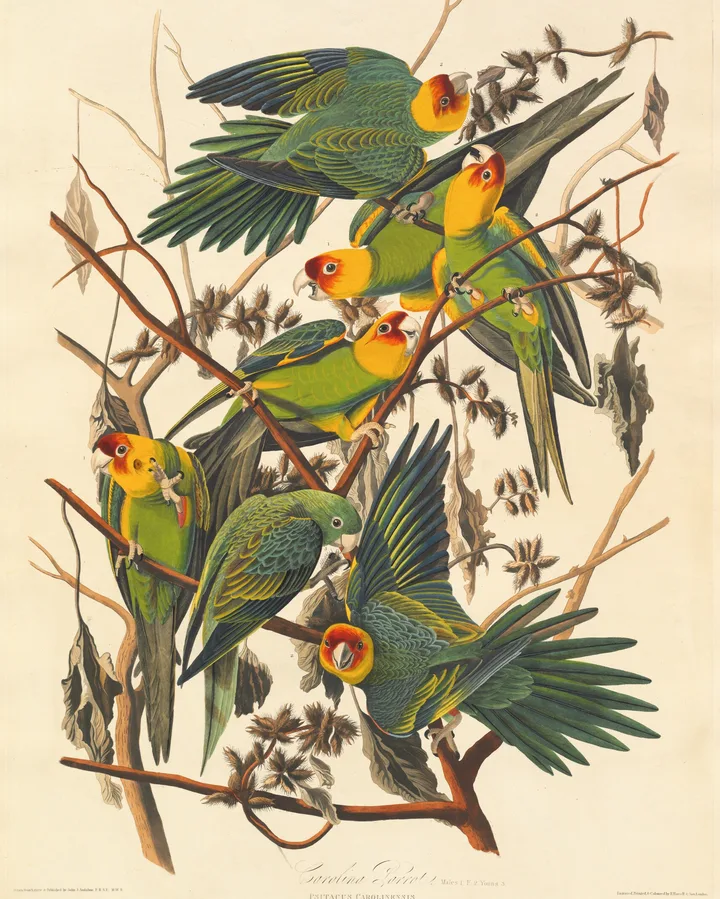
Carolina Parakeet (Plate 26)
1827
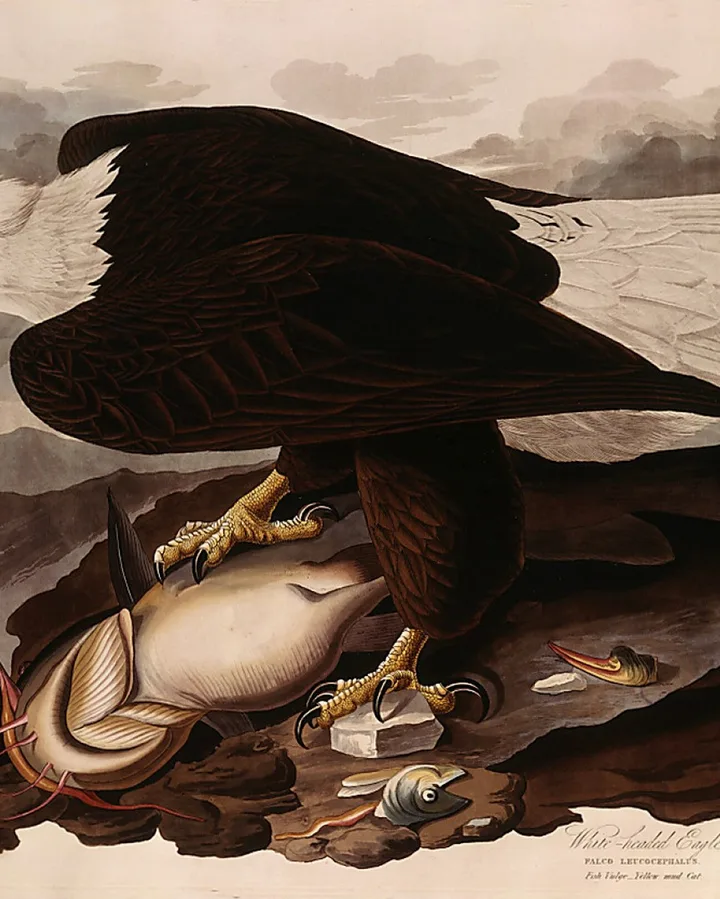
Bald Eagle (Plate 31)
1828
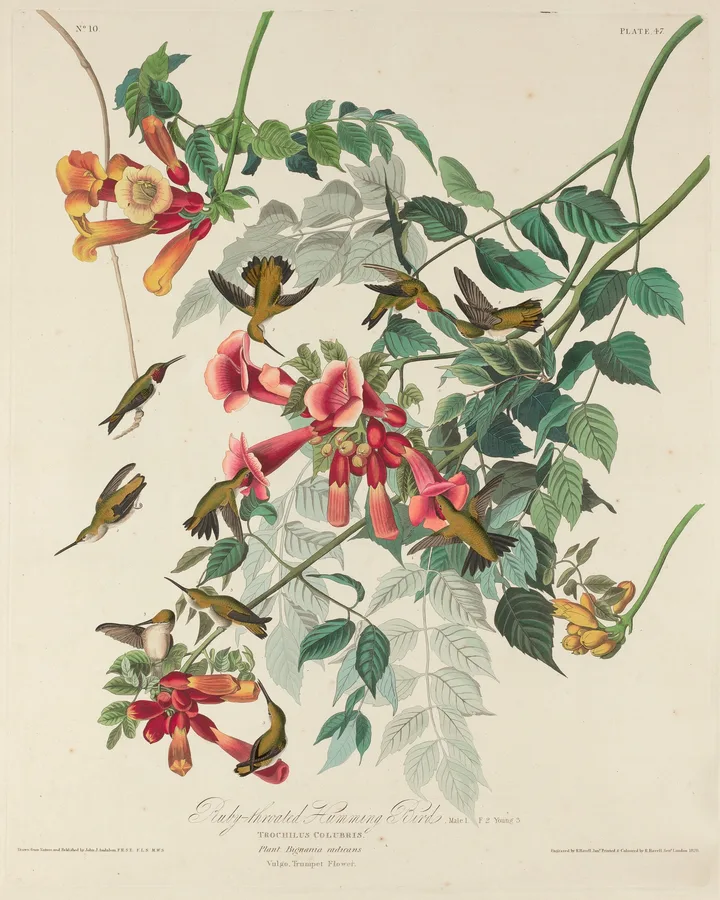
Ruby-throated Hummingbird (Plate 47)
1828
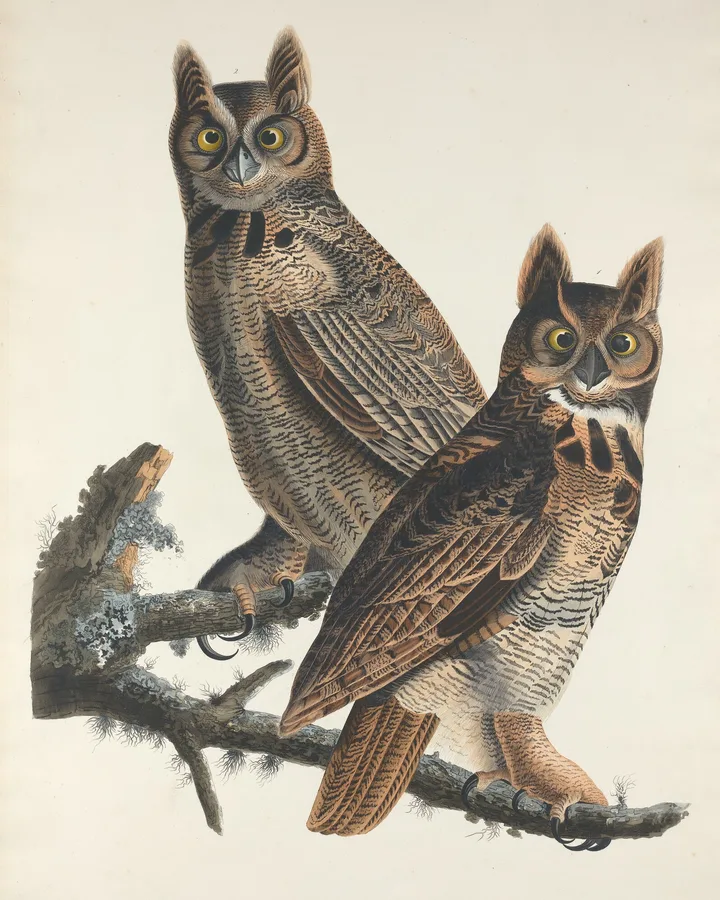
Great Horned Owl (Plate 61)
1829
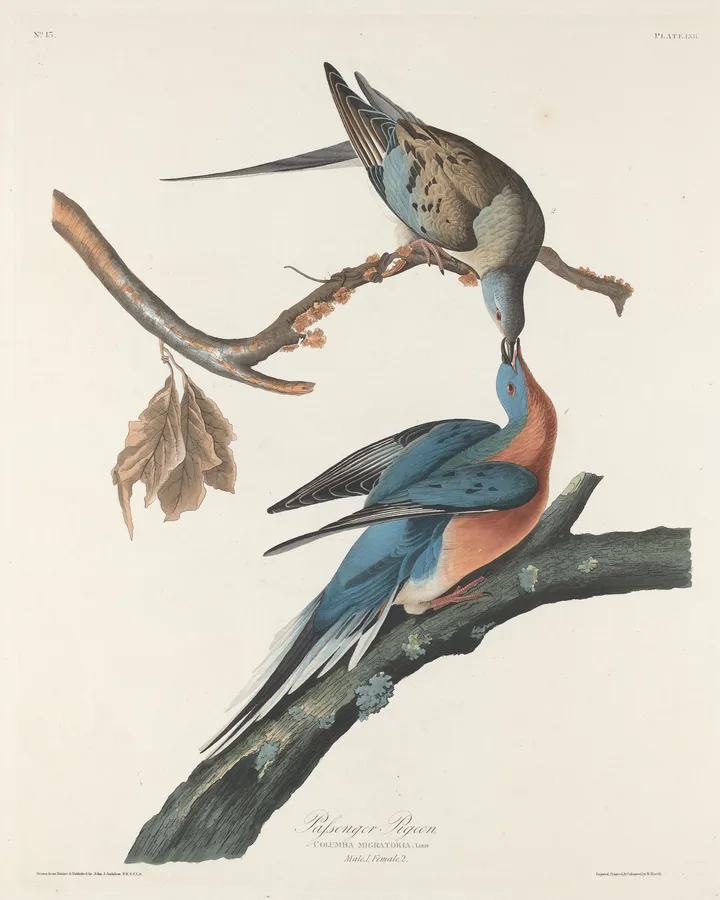
Passenger Pigeon (Plate 62)
1829
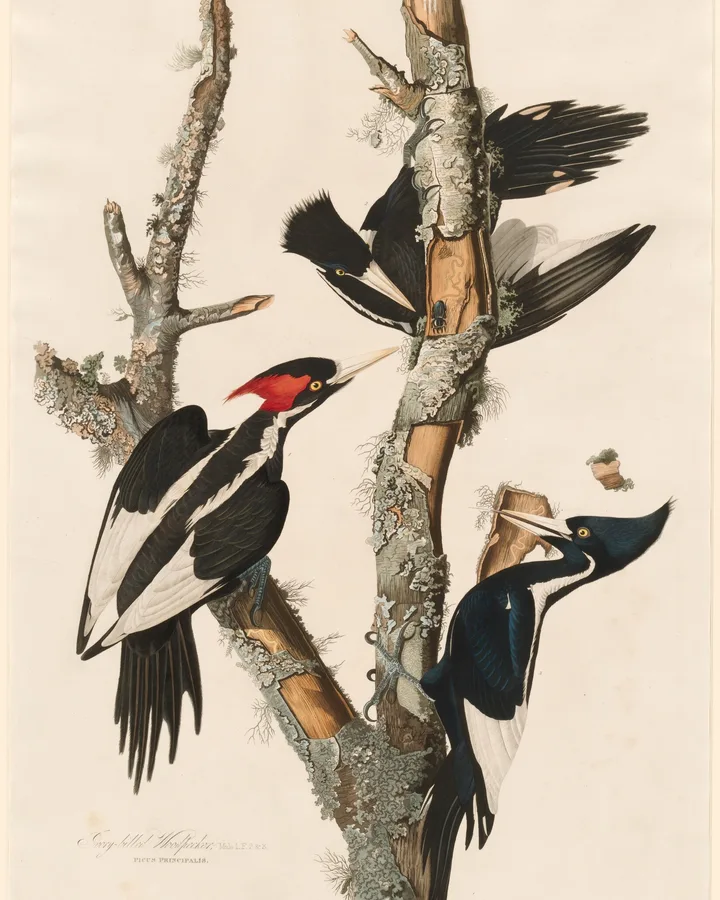
Ivory-billed Woodpecker (Plate 66)
1829
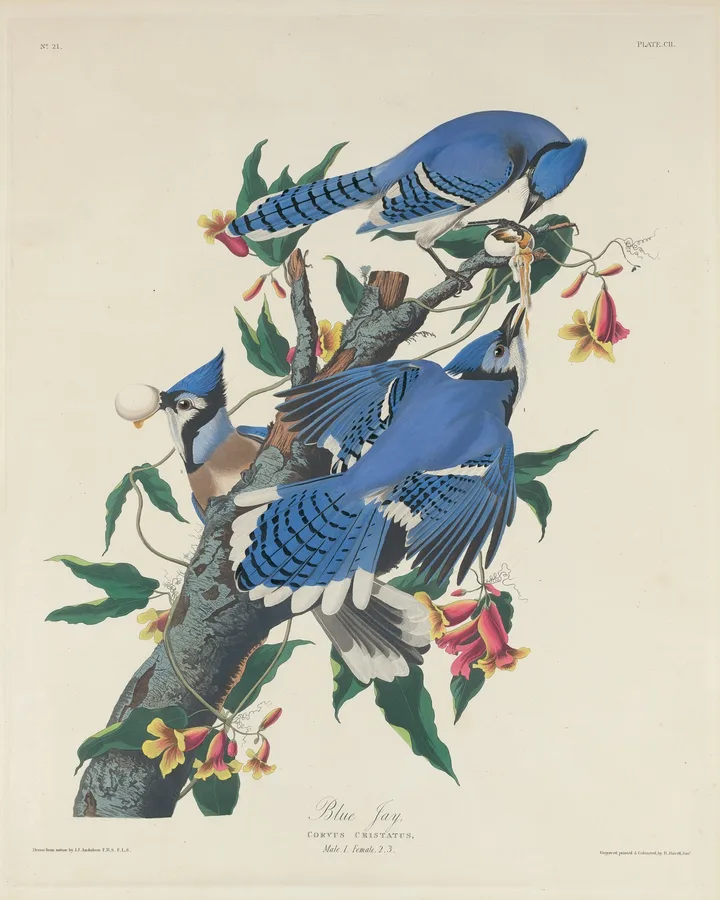
Blue Jay (Plate 102)
1831
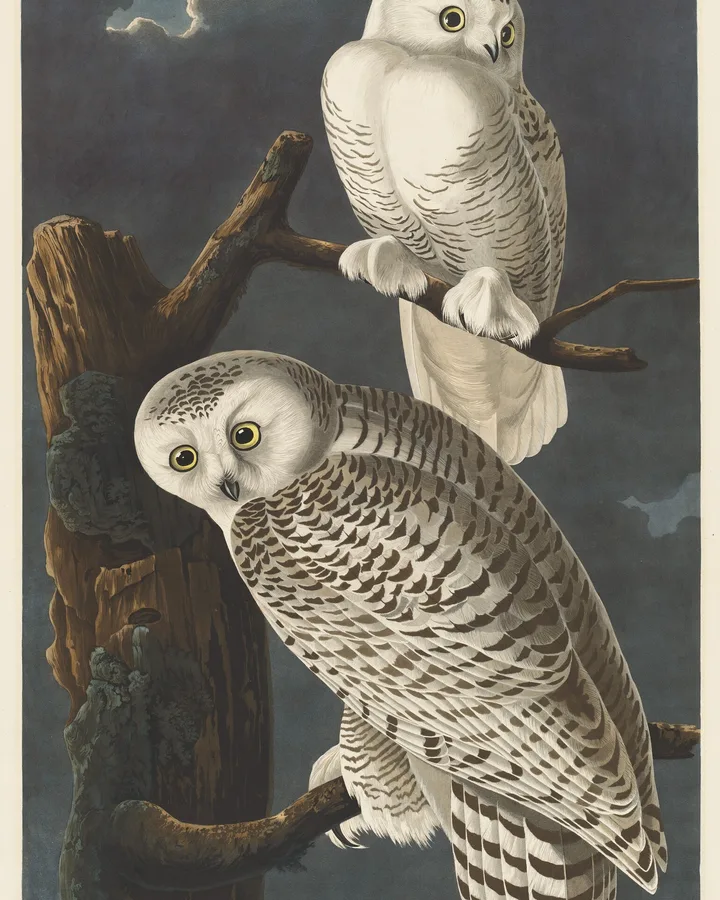
Snowy Owl (Plate 121)
1831
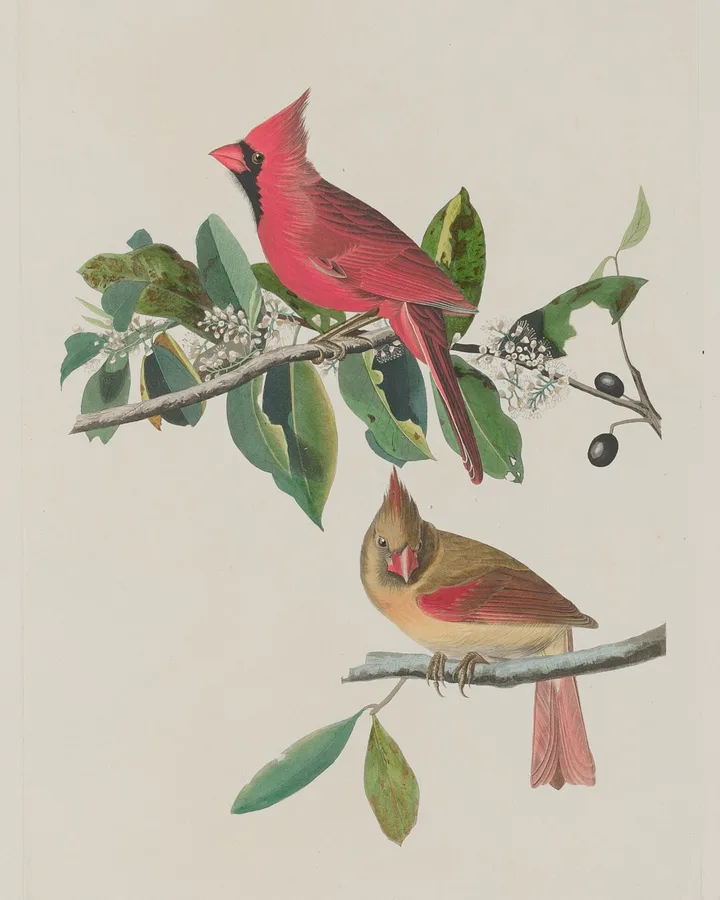
Northern Cardinal (Plate 159)
1833
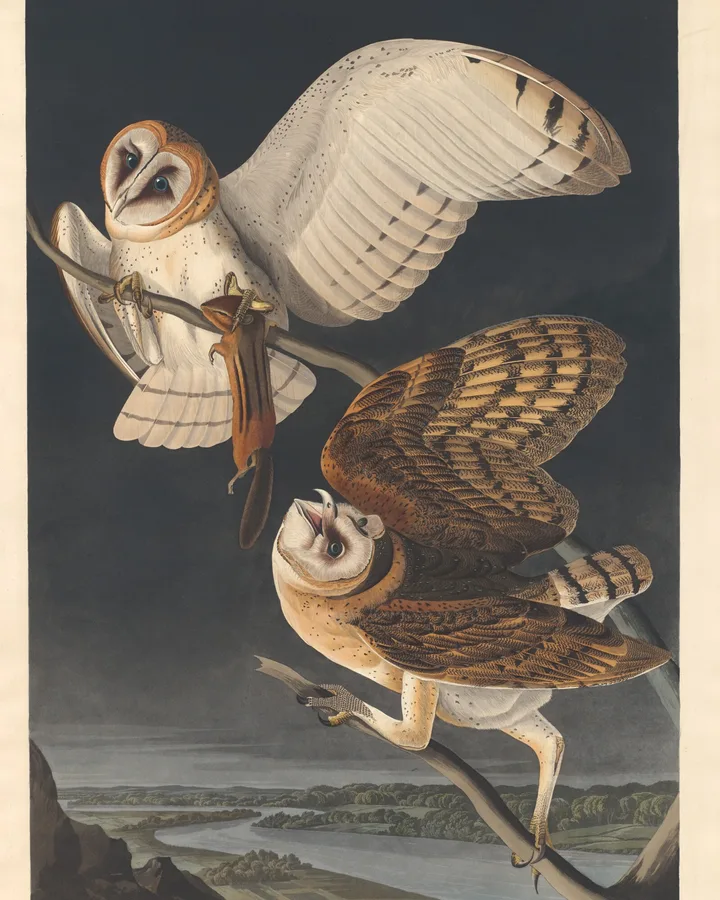
Barn Owl (Plate 171)
1833
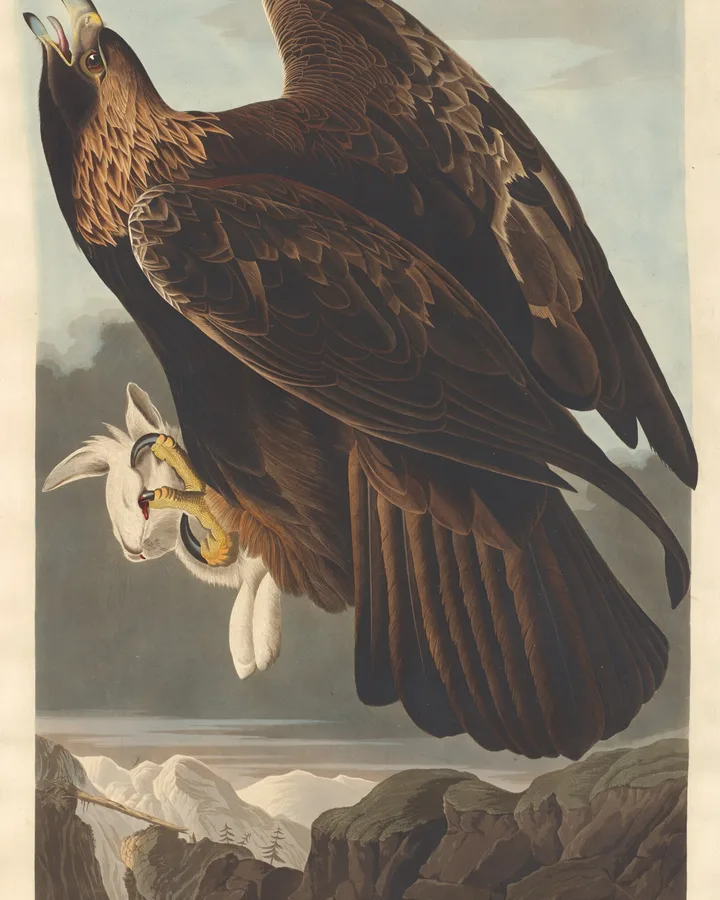
Golden Eagle (Plate 181)
1833
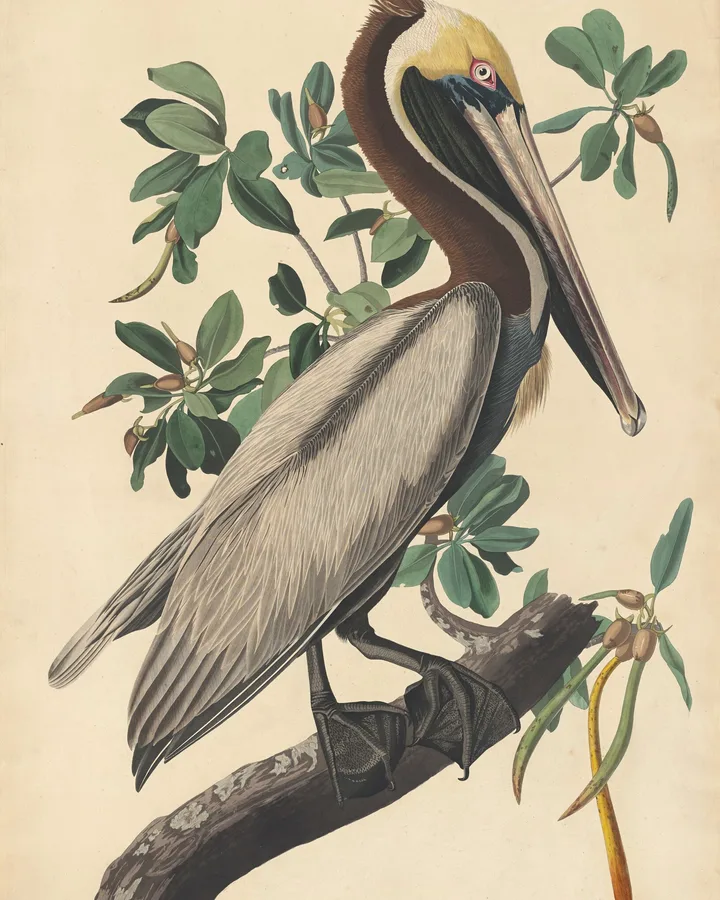
Brown Pelican (Plate 251)
1835
Great Auk (Plate 341)
1836