Blue Jay (Plate 102) (1831)
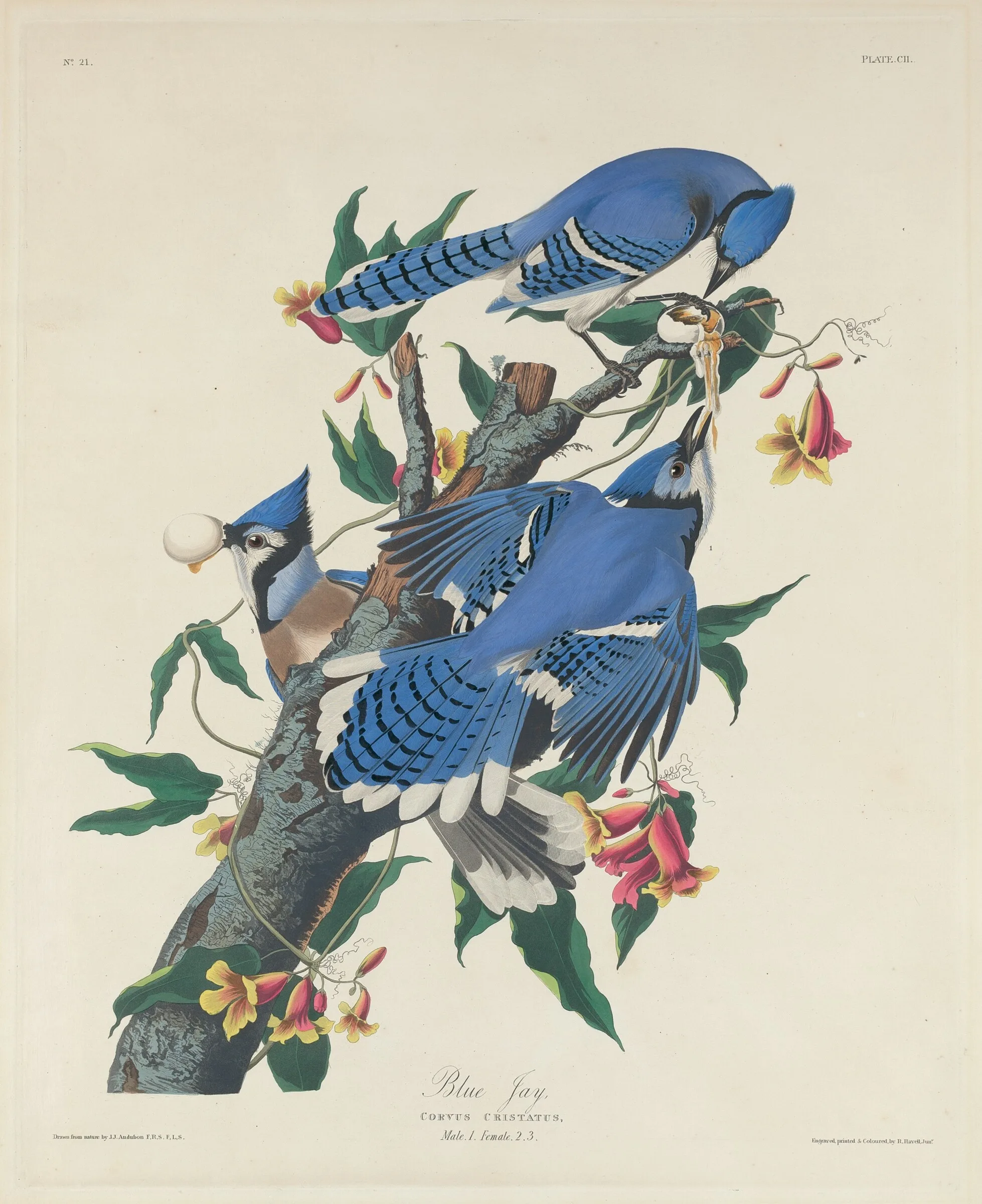
Plate 102 shows three Blue Jays, each eating an egg stolen from another bird's nest. Audubon chose an unflattering moment on purpose and invited readers to look at the plate and see the thieves enjoying their plunder.
- Plate
- 102 (CII)
- Audubon's name
- Blue Jay
- Modern name
- Blue Jay (Cyanocitta cristata)
- Engraved by
- Robert Havell Jr., London
- Published
- 1831, Number 21, Volume II
- Also known as
- Audubon blue jay print; Blue Jays stealing eggs
What the plate shows
Three Blue Jays crowd onto a branch, and each has an egg. One sucks at a broken shell, another holds an egg in its bill, and the poses twist so that the blue, white and black of the upperparts and wings are seen from several angles. It is the medium plate of Number 21, early in the second volume.
Audubon pointed the reader to the scene himself: "Reader, look at the plate in which are represented three individuals of this beautiful species," rogues and thieves though they were.
How Audubon made it
Many of Audubon's plates show birds hunting or feeding rather than posing, and this is one of the clearest examples of him using a plate to make a point about character. He wrote that the jay's beauty hid a selfish and mischievous nature.
His text adds detail from the field. Jays raided corn cribs, and in Louisiana planters soaked corn in poison to kill them. They imitated the cry of the Sparrow Hawk so well that small birds dived for cover. They mobbed foxes, raccoons and owls. In South Carolina he found them nesting by preference in live oaks, and in the Florida Keys he did not see one.
The bird today
The Blue Jay lives in forests, towns and suburbs across eastern and central North America. It does take eggs and nestlings, but most of its diet is acorns, nuts, seeds and insects. Each autumn it buries thousands of acorns, and the ones it does not recover help oak forests spread. Its blue is structural color, produced by feather structure rather than pigment. It is listed as Least Concern.
Prints and value
The Blue Jay is one of the most popular medium plates. Havell impressions command higher prices than most birds of the same size, but less than the large showpiece plates. The blues are a good test of condition, since they fade and tone easily. Check for the Whatman watermark and an untrimmed sheet.
The octavo edition of 1840 to 1844 includes the Blue Jay as a small lithograph. Most prints sold today are reproductions. See Havell, octavo and Bien editions and how to tell an original Audubon print.
The Havell edition was printed on Whatman paper, and many sheets carry a watermark reading J WHATMAN with a year between 1826 and 1838. A watermark dated later than the plate's issue, or a paper with no texture at all, needs explaining. The Bien edition of 1858 to 1860 was never completed, so a claimed Bien Blue Jay should be checked against a list of the Bien sheets.
More famous plates
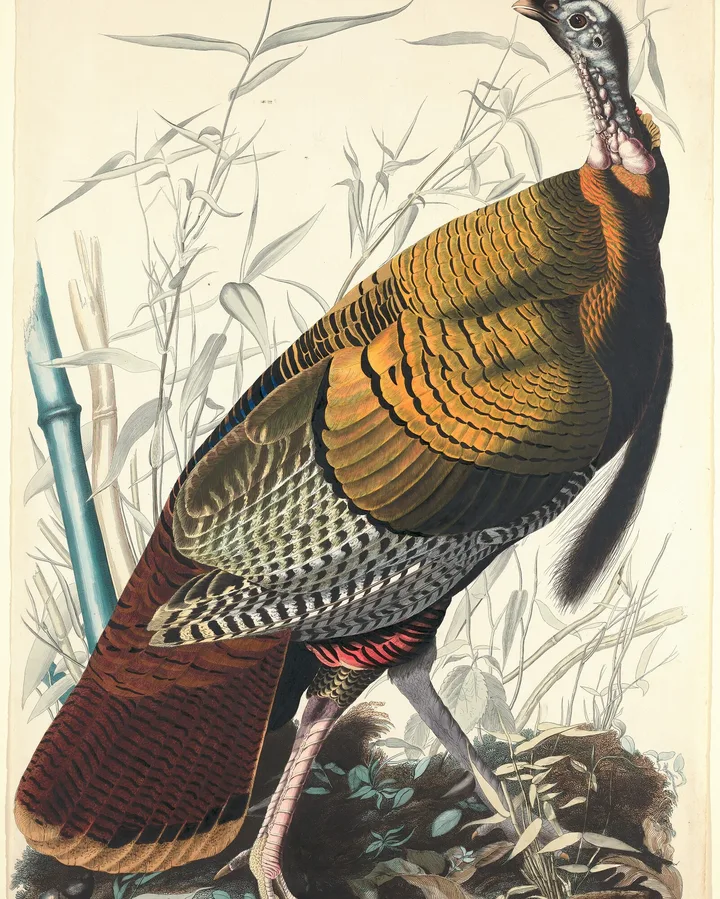
Wild Turkey (Plate 1)
1827
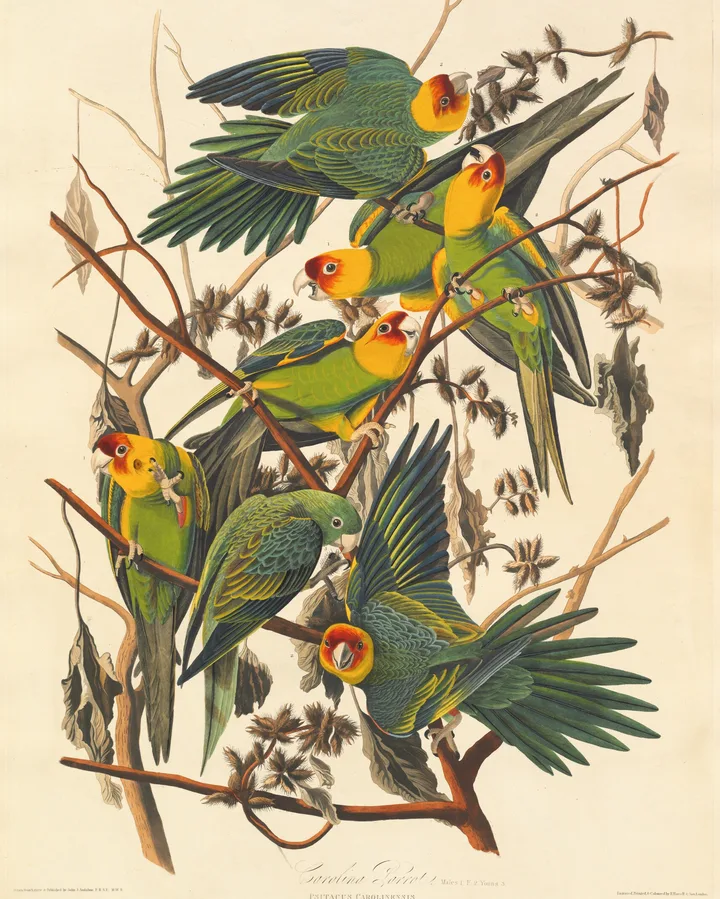
Carolina Parakeet (Plate 26)
1827
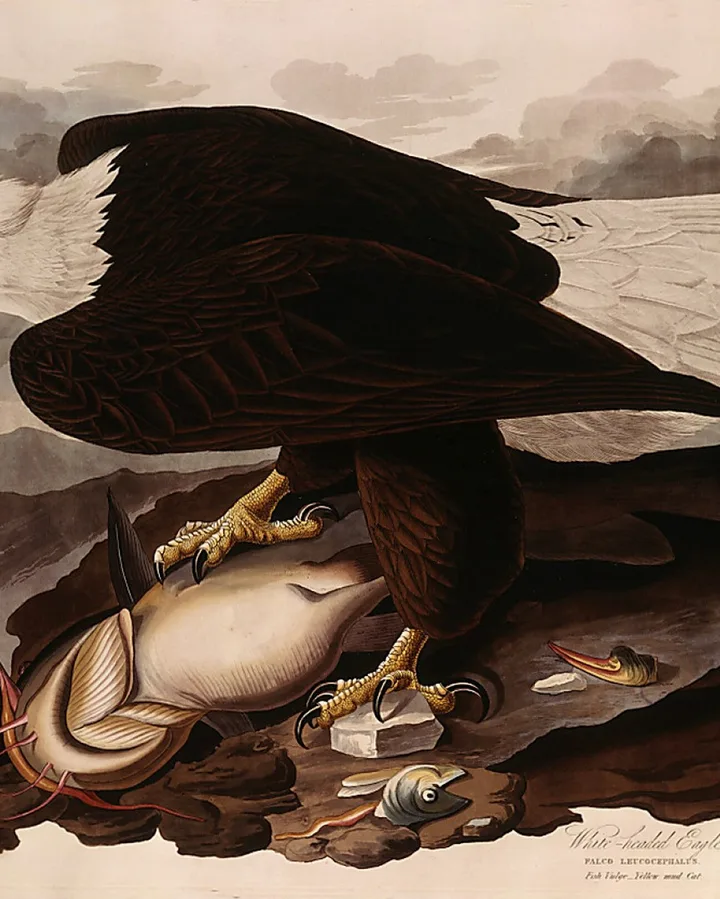
Bald Eagle (Plate 31)
1828
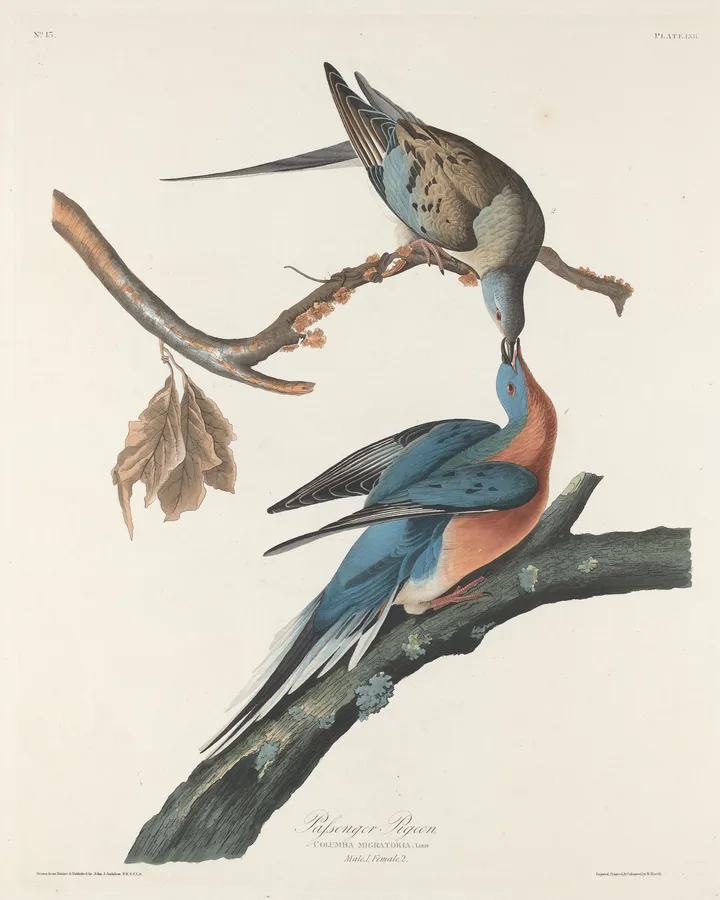
Passenger Pigeon (Plate 62)
1829
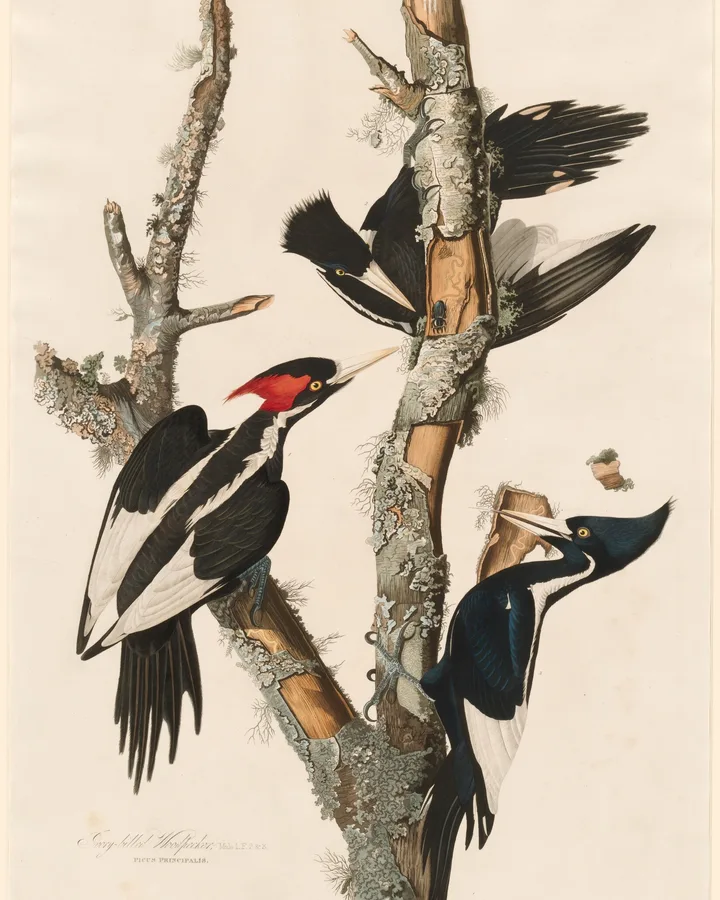
Ivory-billed Woodpecker (Plate 66)
1829
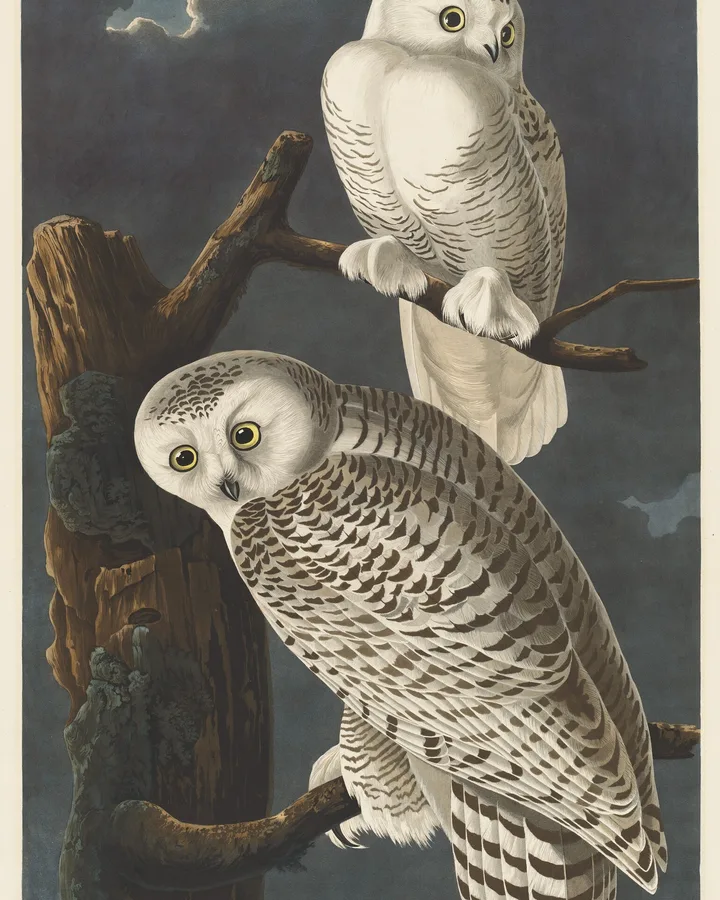
Snowy Owl (Plate 121)
1831
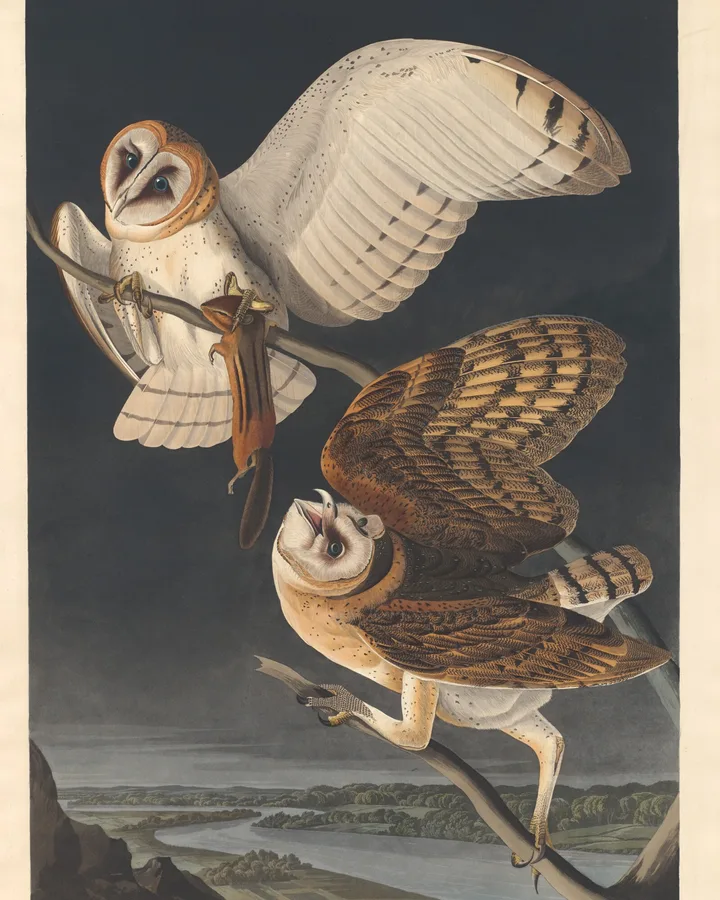
Barn Owl (Plate 171)
1833
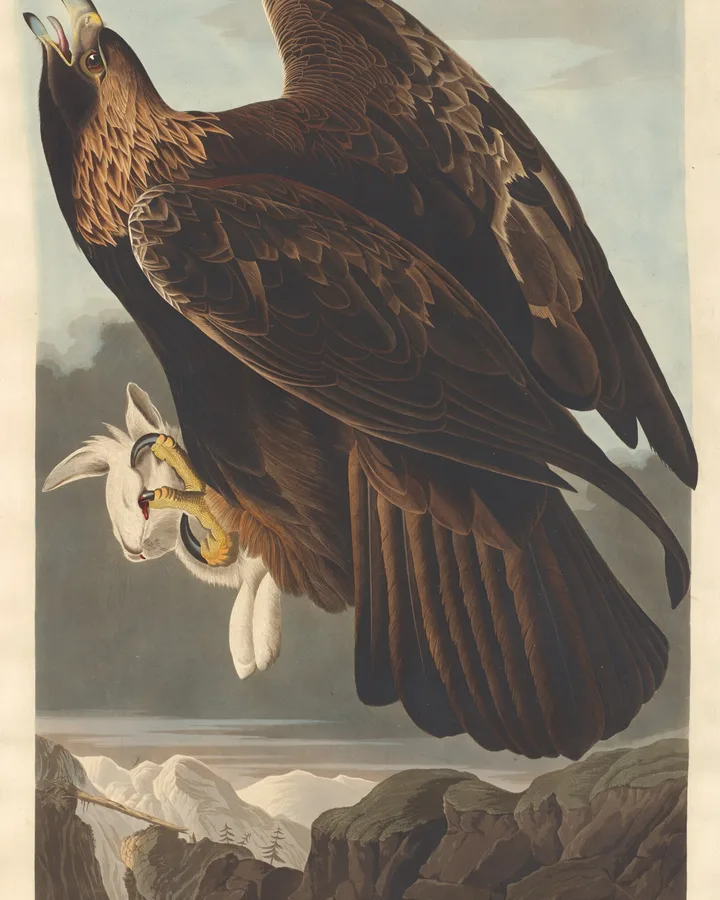
Golden Eagle (Plate 181)
1833
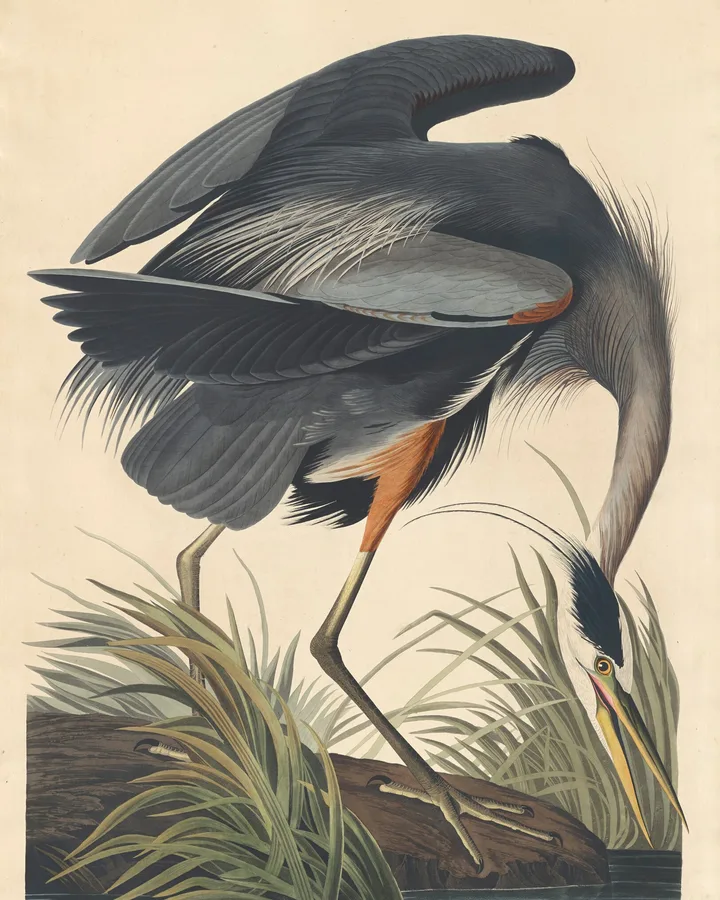
Great Blue Heron (Plate 211)
1834
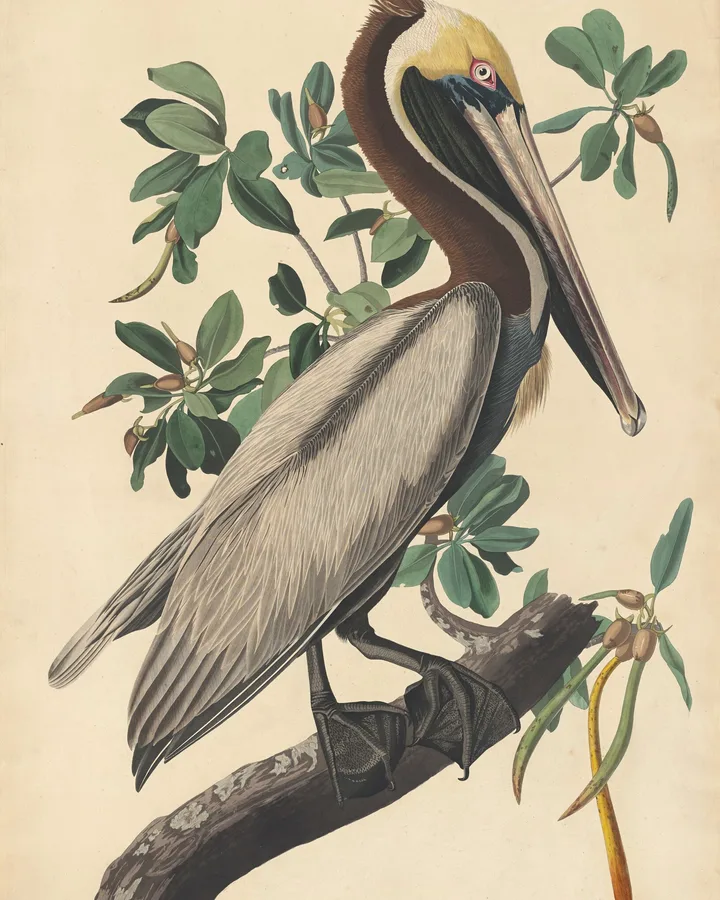
Brown Pelican (Plate 251)
1835
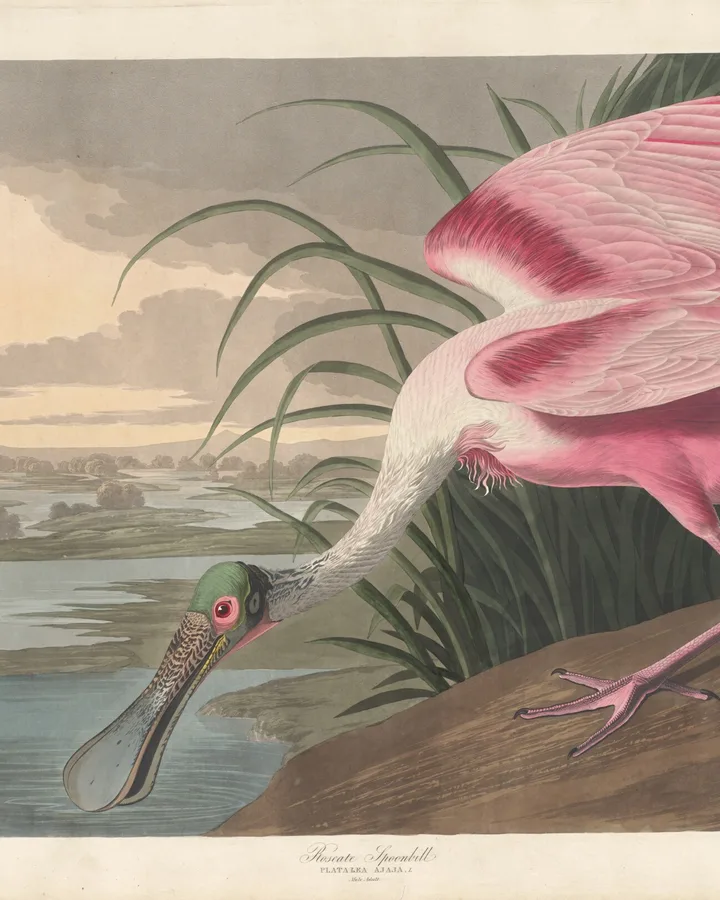
Roseate Spoonbill (Plate 321)
1836
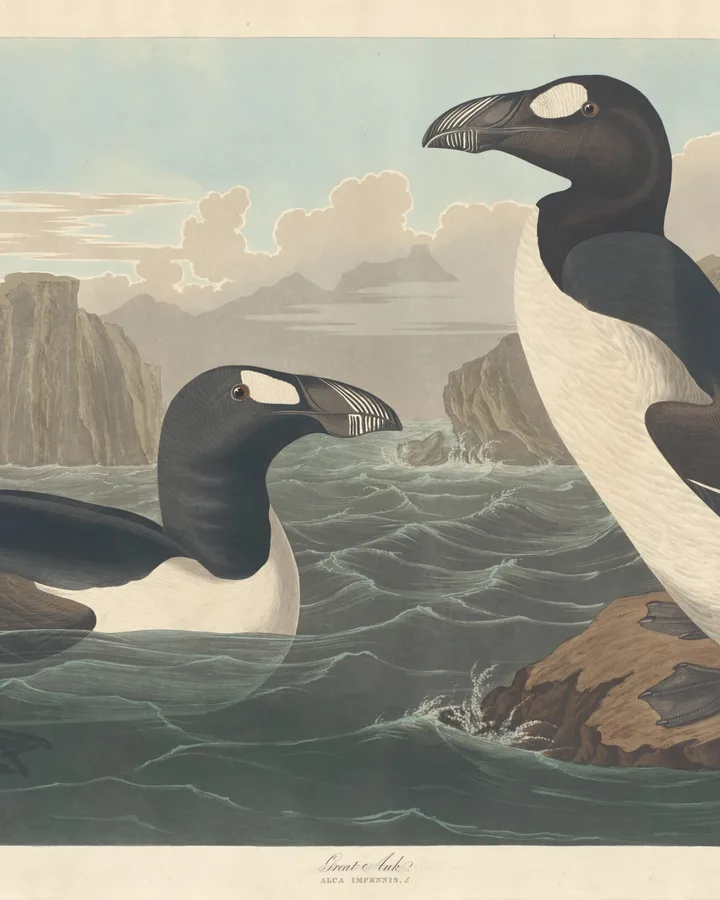
Great Auk (Plate 341)
1836
American Flamingo (Plate 431)
1838