Brown Pelican (Plate 251) (1835)
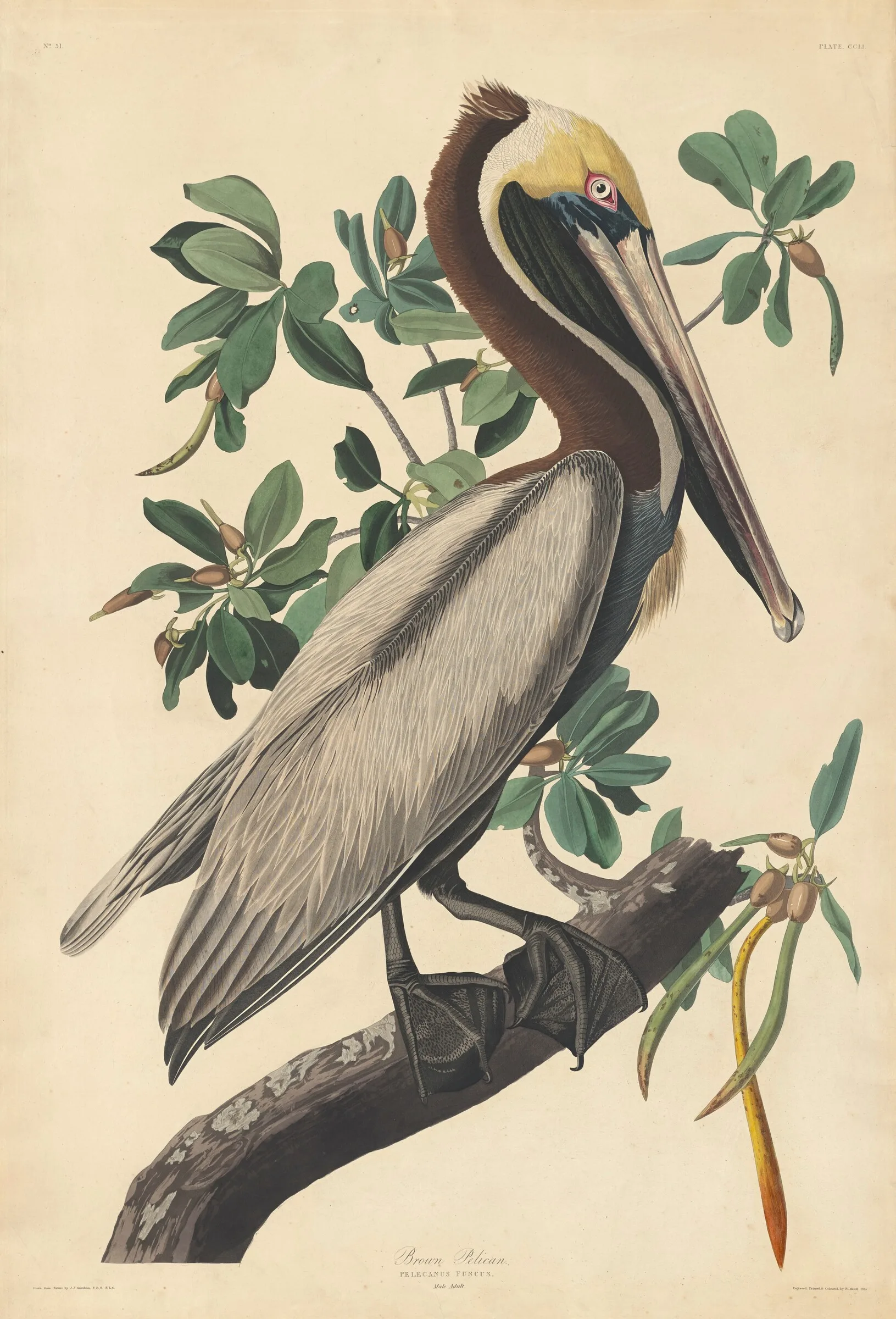
Plate 251 shows an adult male Brown Pelican in breeding plumage perched on a mangrove branch. Audubon studied the species in Florida in 1832, and his later plate of a young bird, Plate 421, completes the pair.
- Plate
- 251 (CCLI)
- Audubon's name
- Brown Pelican (Pelecanus fuscus)
- Modern name
- Brown Pelican (Pelecanus occidentalis)
- Engraved by
- Robert Havell Jr., London
- Published
- 1835, Number 51, Volume III
- Also known as
- Audubon brown pelican print; Pelecanus fuscus
What the plate shows
An adult male Brown Pelican stands on a mangrove branch. The head is white washed with yellow, the back of the neck dark chestnut, and the body silver-grey and brown. The long bill with its pouch runs down across the bird's breast. The bird almost fills the large sheet, the first plate of Number 51. Audubon later issued an immature Brown Pelican as Plate 421.
How Audubon made it
Audubon met the pelican on his 1832 trip to East Florida and the Keys. In his account, John Bulow took him by barge down the Halifax River to a former nesting island, which was empty. The next morning he found dozens asleep in the mangroves, but his second barrel failed because the shot had been loaded before the powder. Later, sailing on the revenue cutter Marion, he saw great numbers around Key West.
He described their flight in lines that follow the troughs of waves, and their high soaring over the Keys. He also explained his choice of plant: "The species of Mangrove represented in the plate is very abundant along the coast of Florida and on almost all the Keys." Botanical settings like this were part of what set his plates apart from earlier bird books.
The bird today
Audubon's Pelecanus fuscus is now Pelecanus occidentalis. It is the only pelican that catches fish by plunging from the air, and it lives along the Atlantic, Gulf and Pacific coasts of the Americas. In the 1960s DDT thinned its eggshells and caused nesting failures, and it vanished from Louisiana, the Pelican State. After DDT was banned the population recovered. It was removed from the federal endangered species list in 2009 and is listed as Least Concern.
Prints and value
Plate 251 is a strong coastal subject with steady demand, and Havell impressions are valued as large plates. Do not confuse it with Plate 421, the young Brown Pelican, which has a different look and is less often reproduced. Check the plate number and lettering, the full sheet and the Whatman watermark.
The octavo edition of 1840 to 1844 includes the adult pelican as a small lithograph. See Havell, octavo and Bien editions and how to tell an original Audubon print.
Audubon's Florida plates often have more developed plant or landscape settings than the early volumes, and the mangrove here is drawn with care, roots and leaves included. That detail is worth checking in any print offered as a Havell. The Bien edition of 1858 to 1860 was never completed, so confirm that a Bien version of this subject exists.
More famous plates
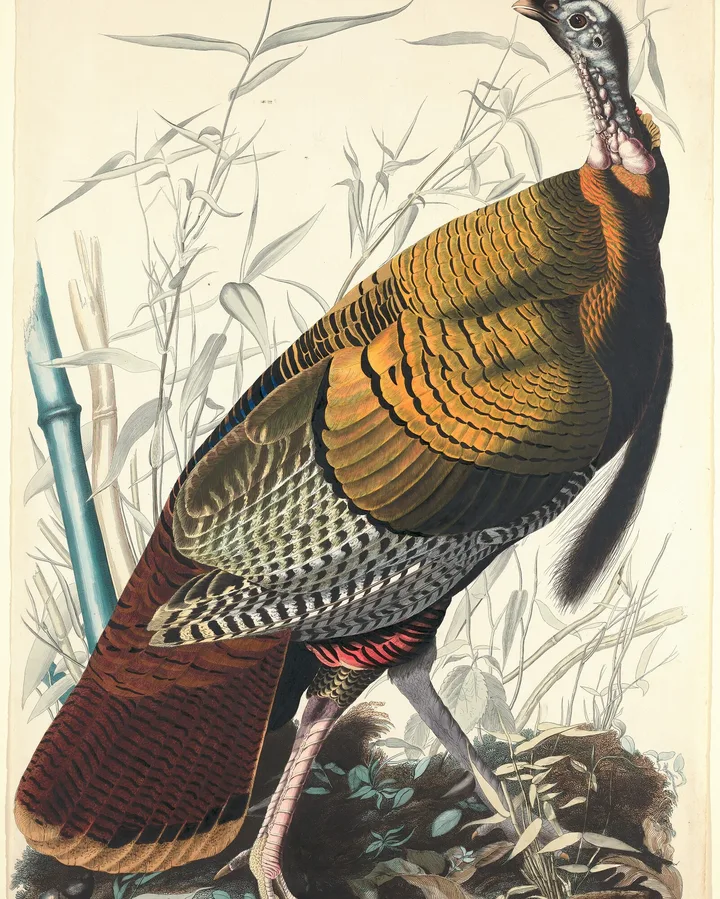
Wild Turkey (Plate 1)
1827
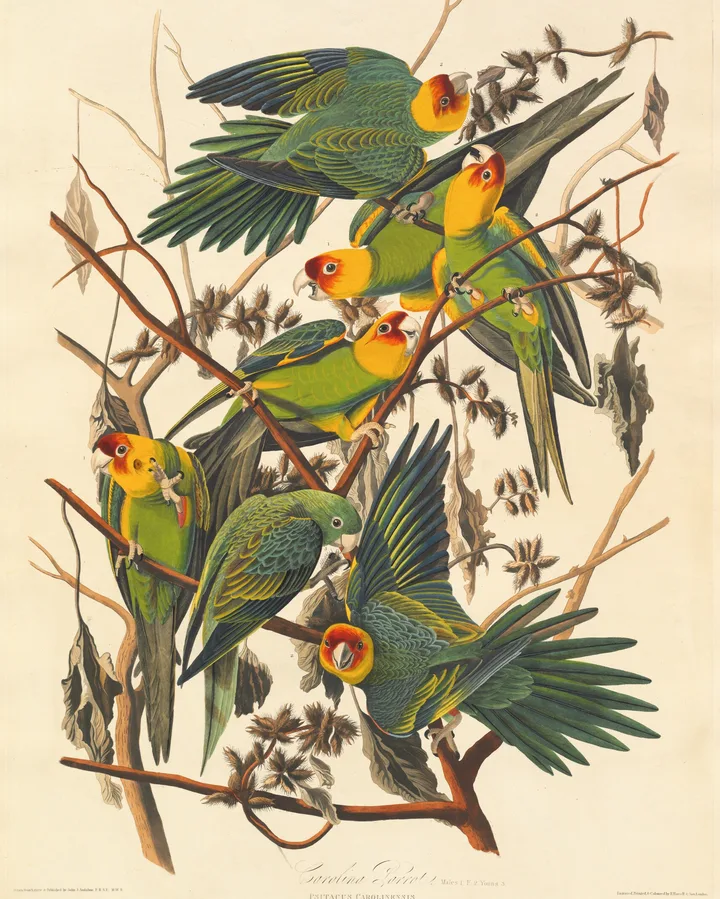
Carolina Parakeet (Plate 26)
1827
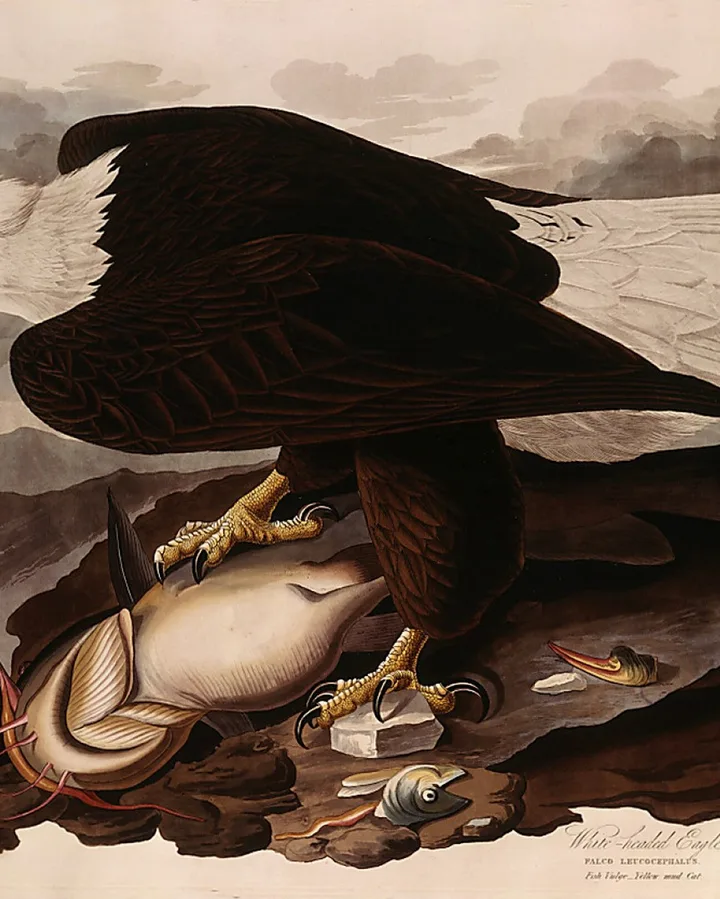
Bald Eagle (Plate 31)
1828
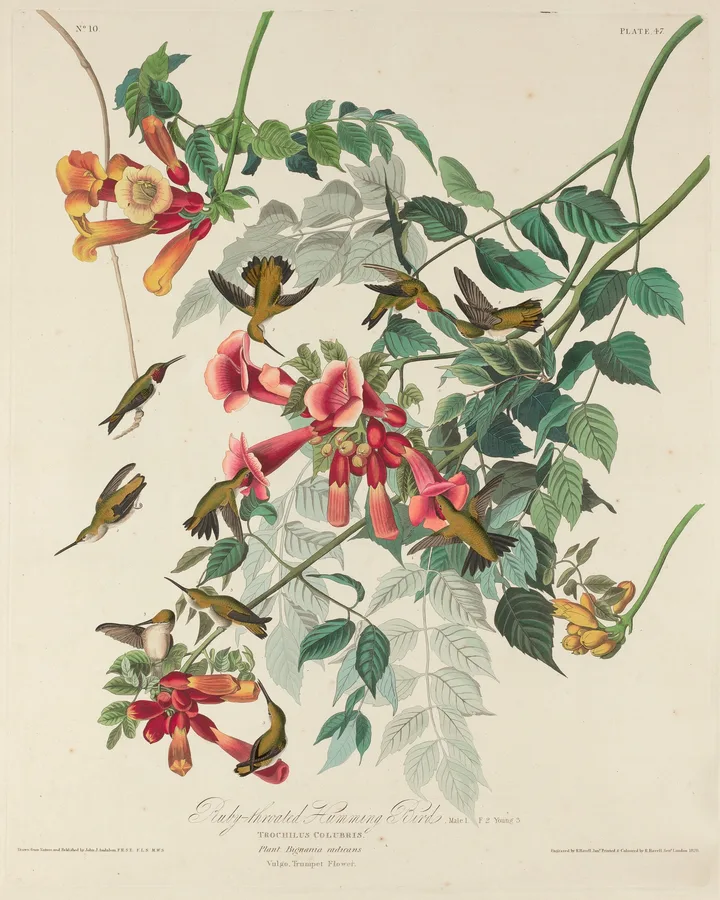
Ruby-throated Hummingbird (Plate 47)
1828
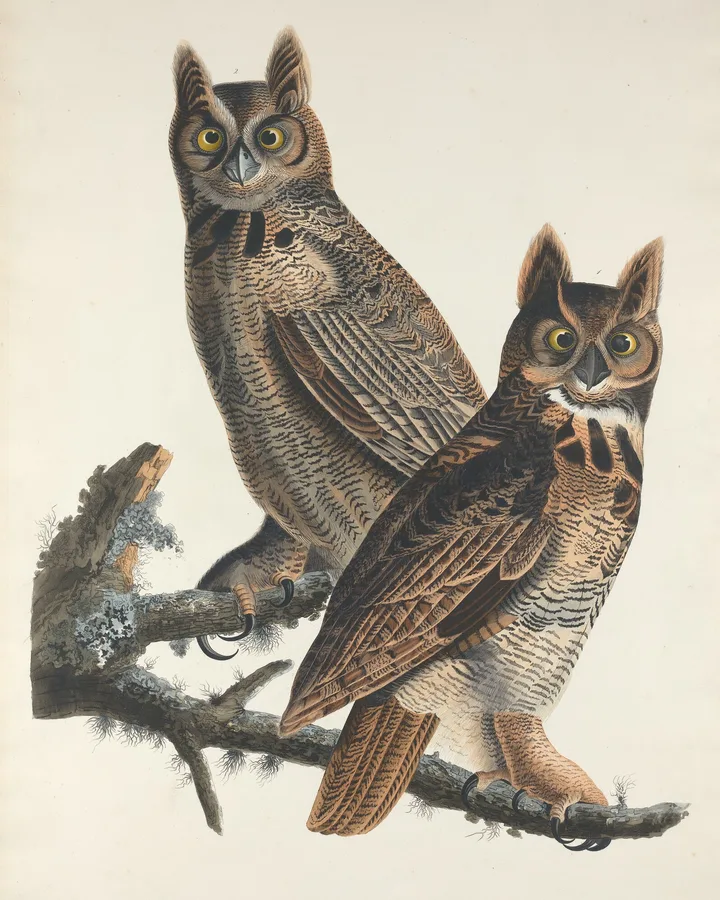
Great Horned Owl (Plate 61)
1829
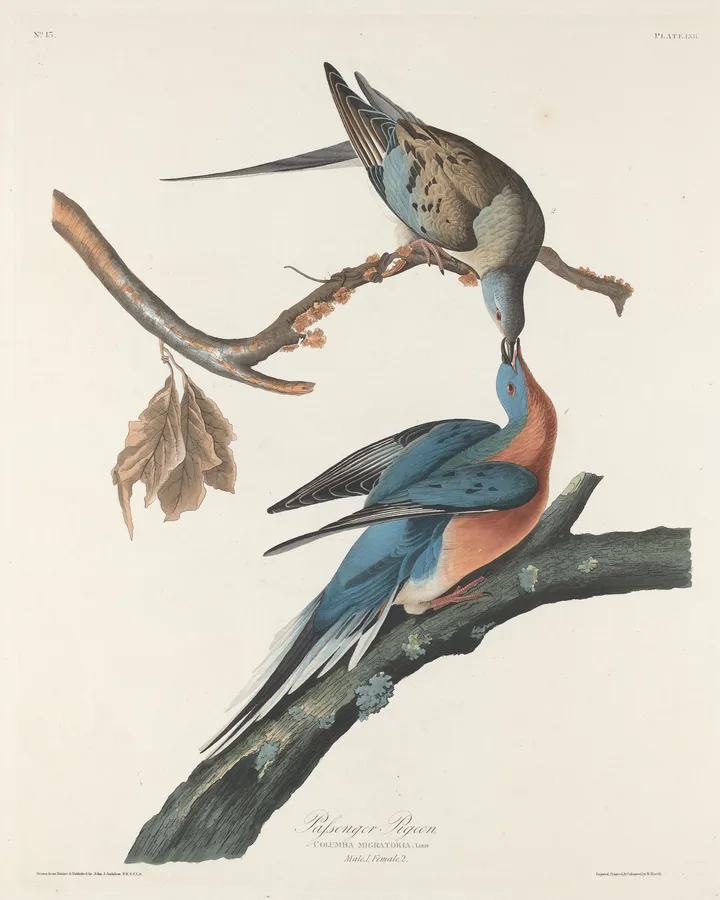
Passenger Pigeon (Plate 62)
1829
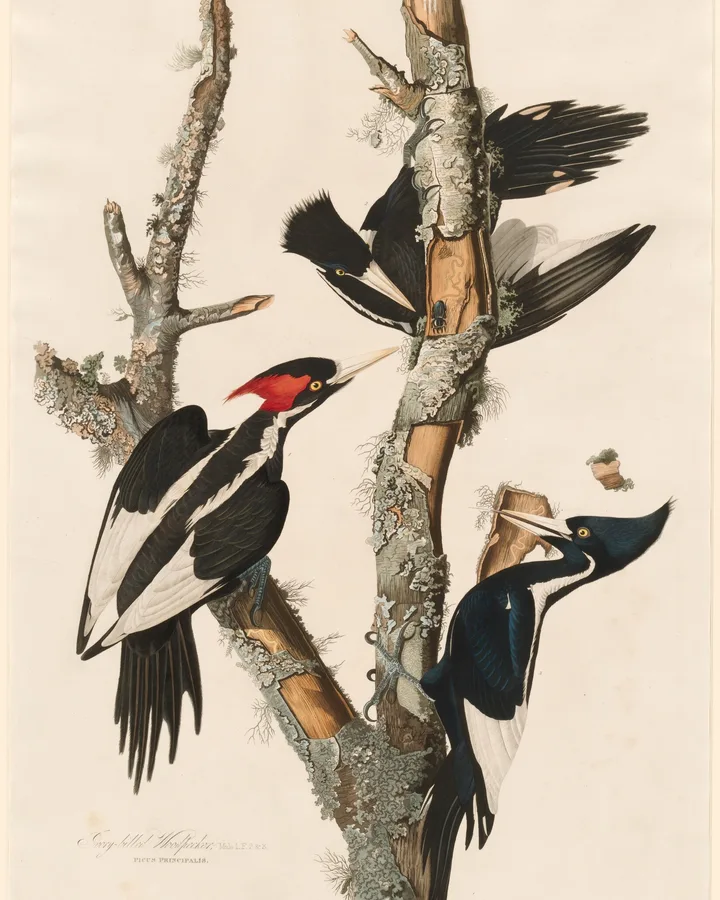
Ivory-billed Woodpecker (Plate 66)
1829
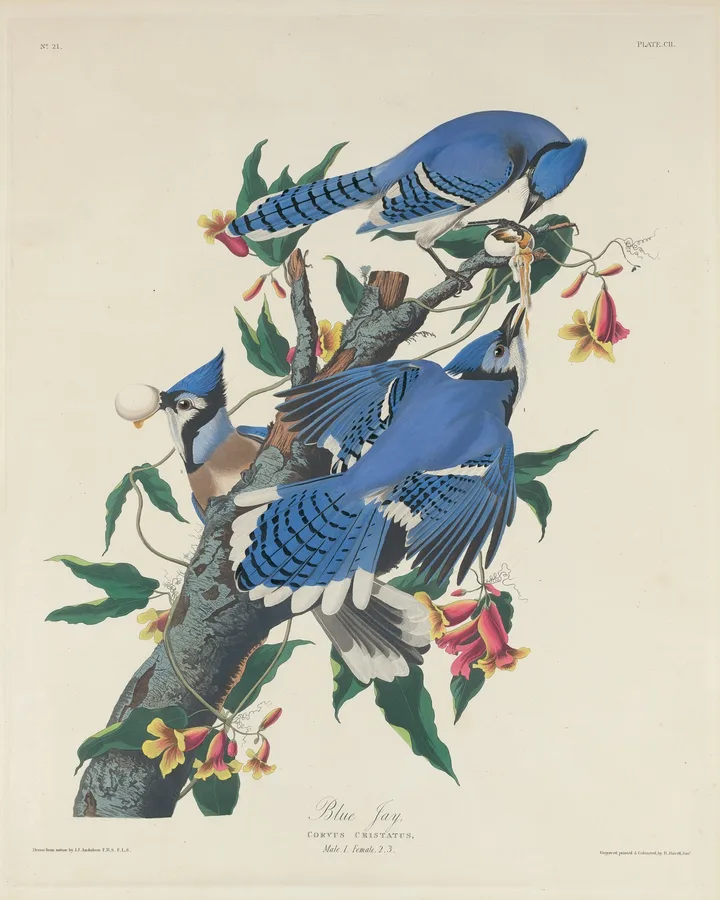
Blue Jay (Plate 102)
1831
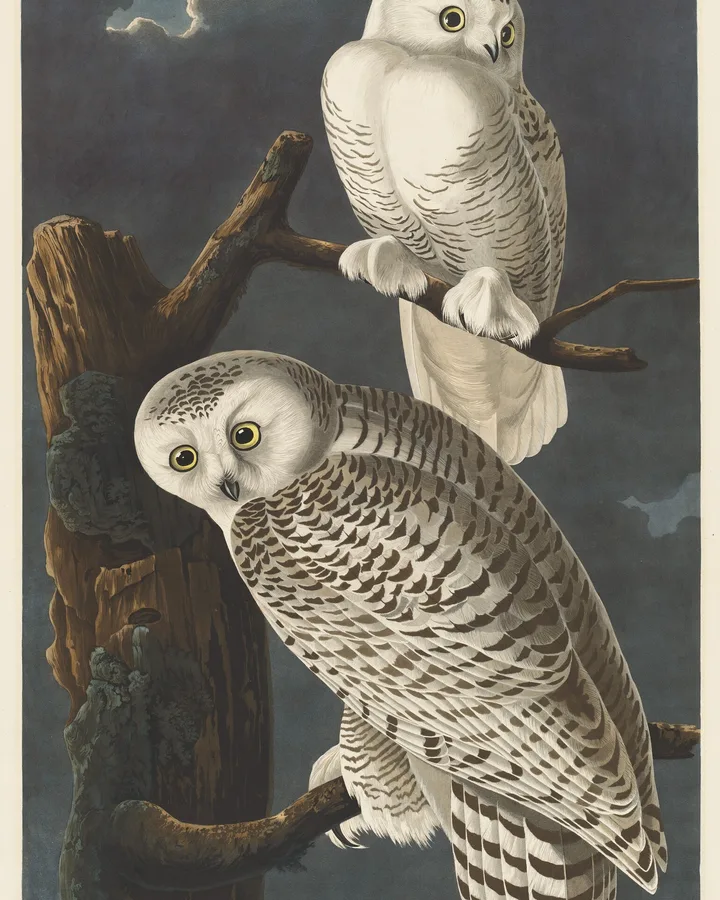
Snowy Owl (Plate 121)
1831
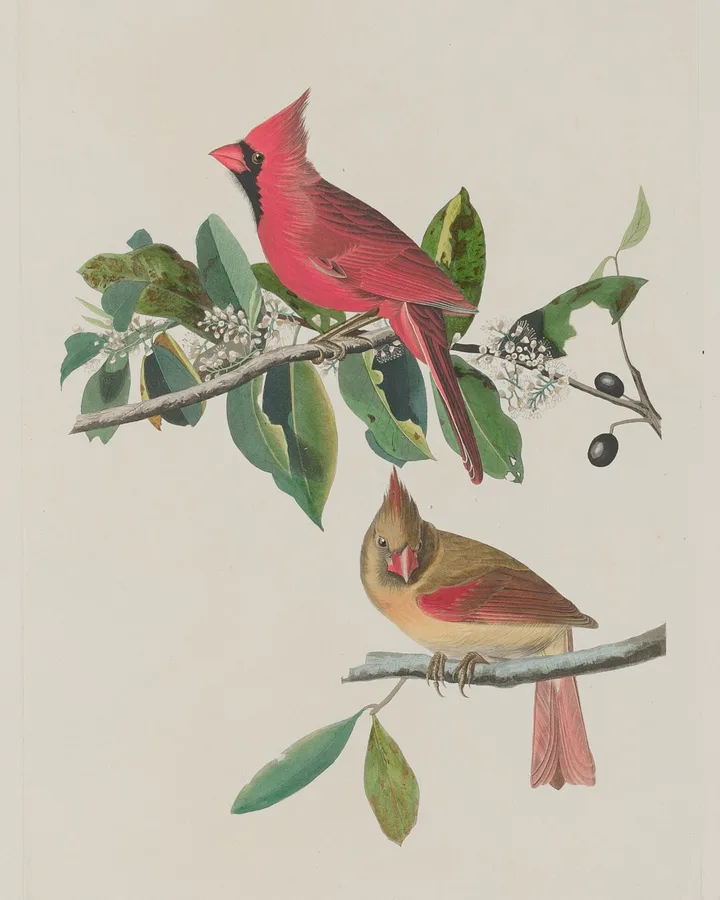
Northern Cardinal (Plate 159)
1833
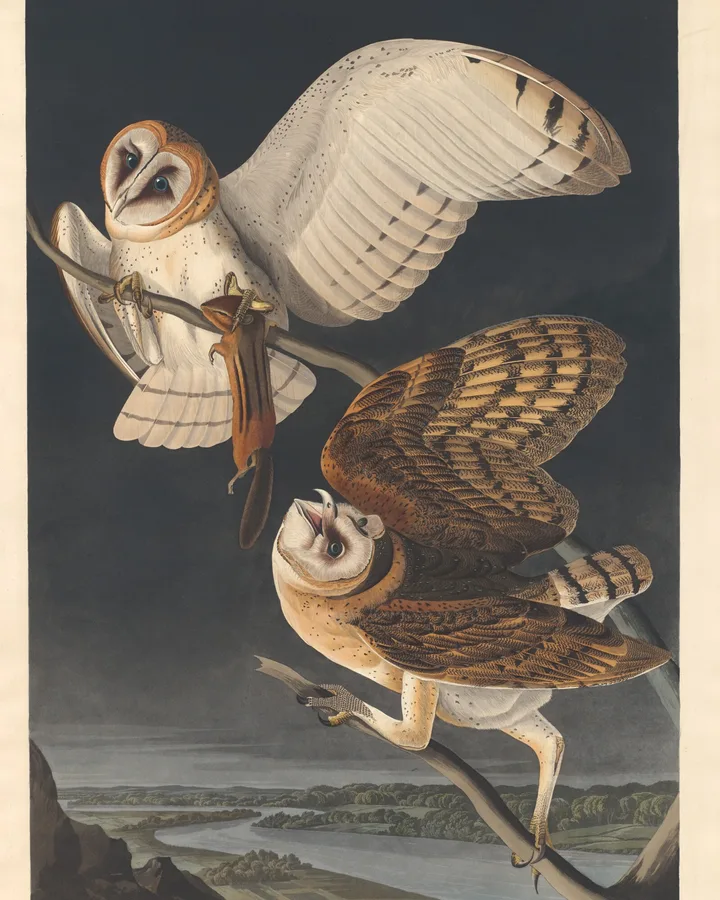
Barn Owl (Plate 171)
1833
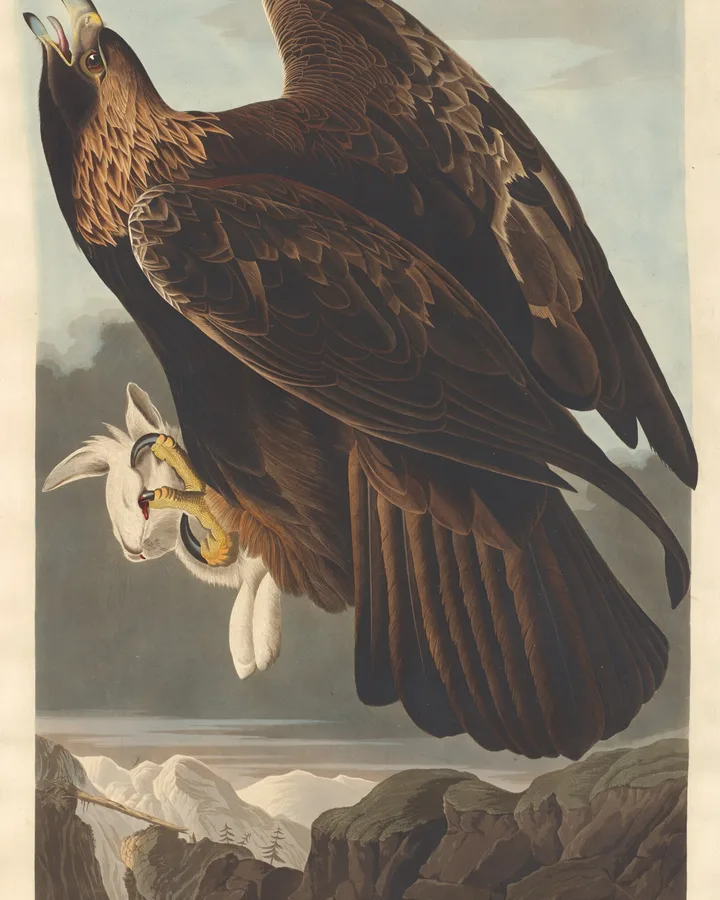
Golden Eagle (Plate 181)
1833
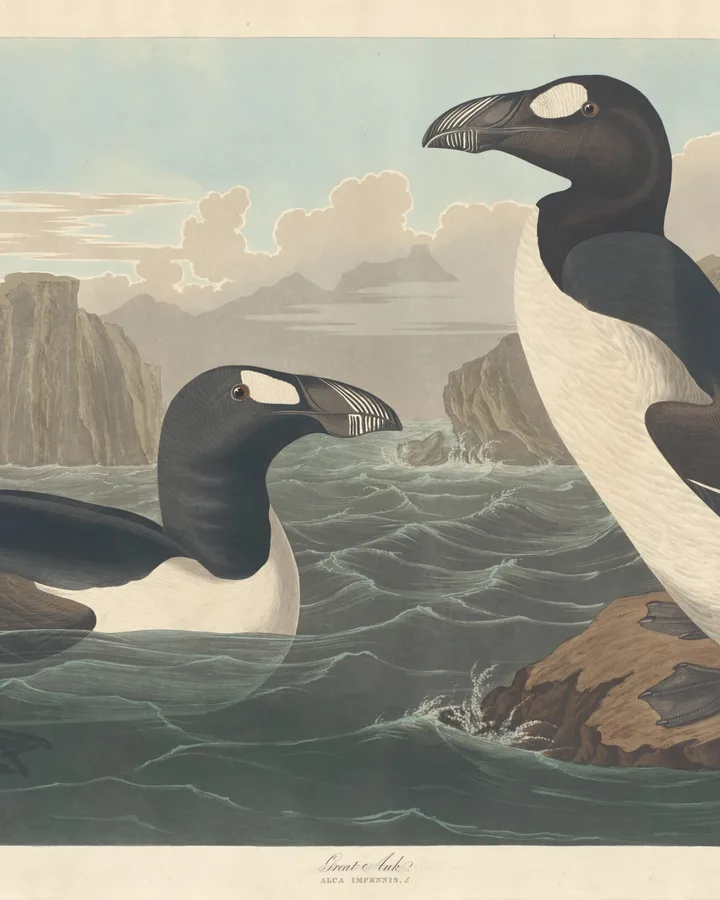
Great Auk (Plate 341)
1836