Great Blue Heron (Plate 211) (1834)
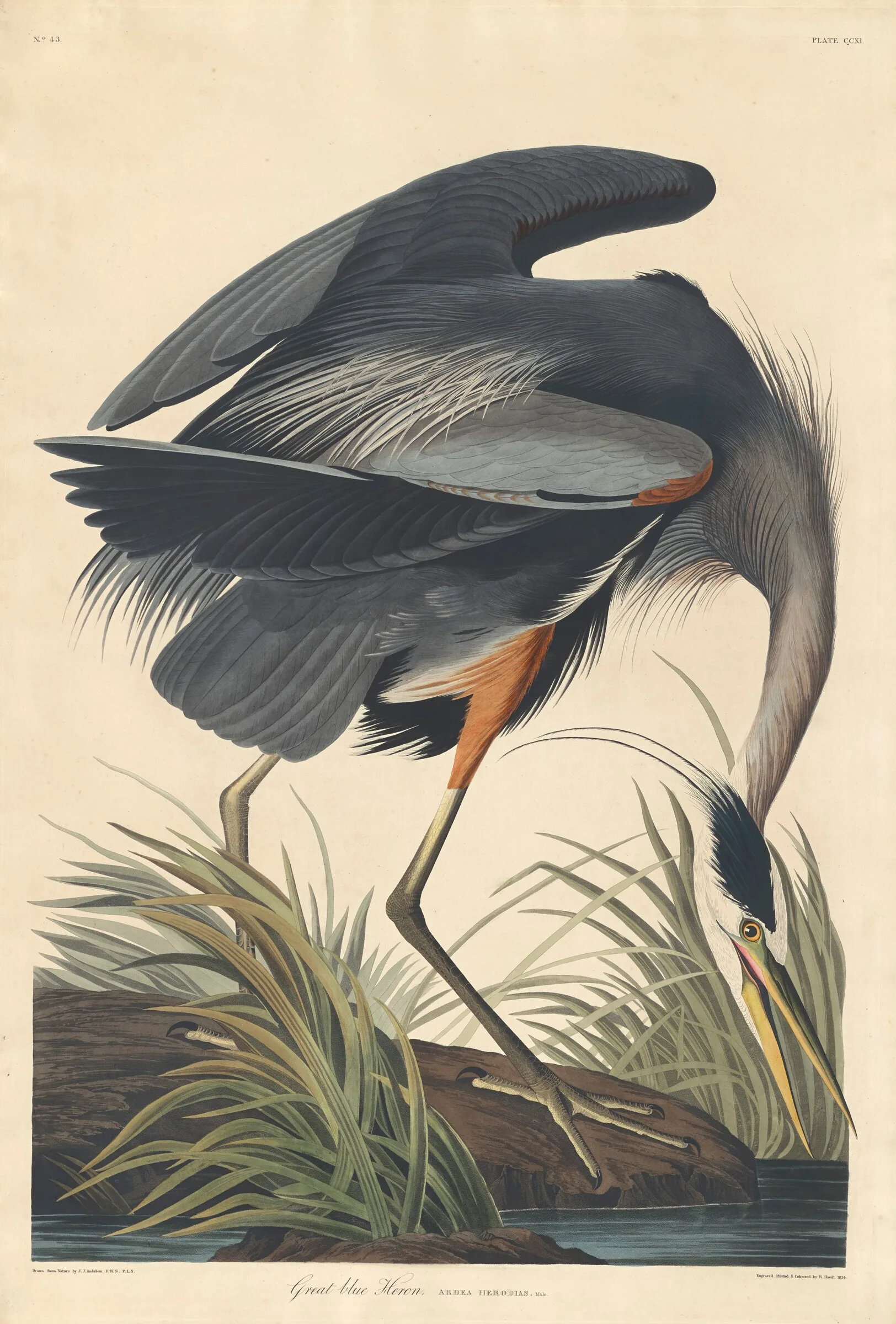
Plate 211 shows a single adult Great Blue Heron at life size, stalking at the water's edge. It appears early in the third volume and is one of the plates where Audubon's rule of drawing every bird at full size forced a carefully planned pose.
- Plate
- 211 (CCXI)
- Audubon's name
- Great Blue Heron (Ardea herodias)
- Modern name
- Great Blue Heron (Ardea herodias)
- Engraved by
- Robert Havell Jr., London
- Published
- 1834, Number 43, Volume III
- Watercolor
- New-York Historical Society
- Also known as
- Audubon great blue heron print; Blue Crane
What the plate shows
One adult male heron stands in profile at the edge of the water. It has the black plume over the eye, the grey-blue body and chestnut thighs of breeding plumage. The neck is stretched forward and the bill points at the water in a hunting stance. Behind it is a low landscape. It is the large plate of Number 43, early in the third volume.
How Audubon made it
Audubon drew every species at life size, and the double elephant sheet, about 39 by 26 inches, was chosen so that even big birds would fit. Large waders tested that limit. A heron of this size could not stand fully upright on the page, so the hunting pose, with the neck reaching forward, keeps the whole bird inside the plate while still looking natural.
His chapter begins on the Ohio. He invites the reader to watch a heron stand still as a statue, strike a perch, beat it to death on the ground and swallow it. He wrote that the bird was known across the country as the Blue Crane and that he had seen it in every state and territory he visited. He also described males fighting in the breeding season with open bills and spread wings, and said he never saw one killed in these fights. His text notes that in its third spring the bird reaches the plumage shown in the plate.
The bird today
The Great Blue Heron still carries the name Audubon used, Ardea herodias. It is the largest heron in North America and lives from southern Canada to Mexico, the Caribbean and the Galapagos. It hunts fish, frogs, rodents and other small animals in almost any shallow water, and nests in colonies in tall trees. It is common and listed as Least Concern.
Prints and value
This is one of the most popular large plates for decorators and collectors, and Havell impressions are priced among the better large plates. Make sure the sheet has not been trimmed to suit a frame, and check the Whatman watermark and the engraved lettering below the image.
The octavo edition of 1840 to 1844 has the heron as a small lithograph. Reproductions are very common. See Havell, octavo and Bien editions and how to tell an original Audubon print.
Life-size plates of large birds were the costliest to print and color, and they were the plates that gave the work its name for scale. The heron is often hung alone because of its height, so many copies have been framed for long periods, and light damage to the blue-grey plumage is common. The Bien edition of 1858 to 1860 stopped after about 105 sheets, so check any Bien attribution.
More famous plates
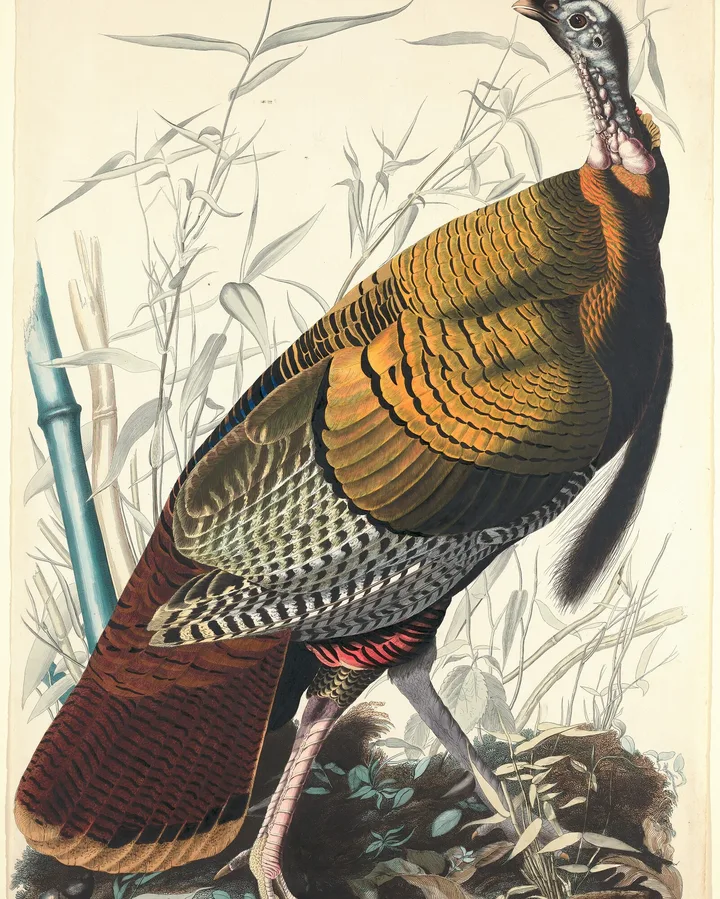
Wild Turkey (Plate 1)
1827
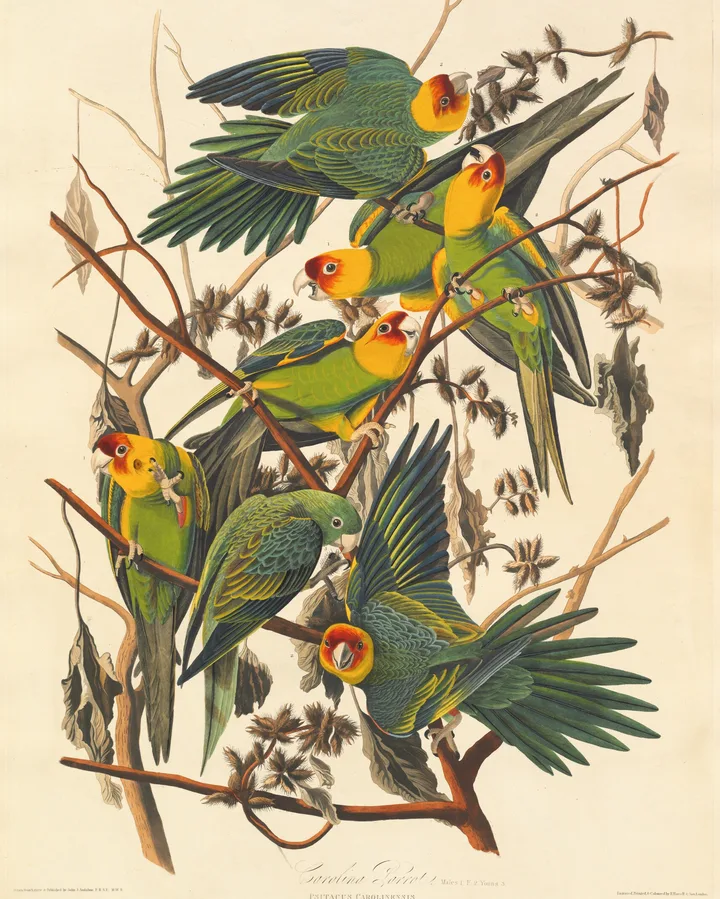
Carolina Parakeet (Plate 26)
1827
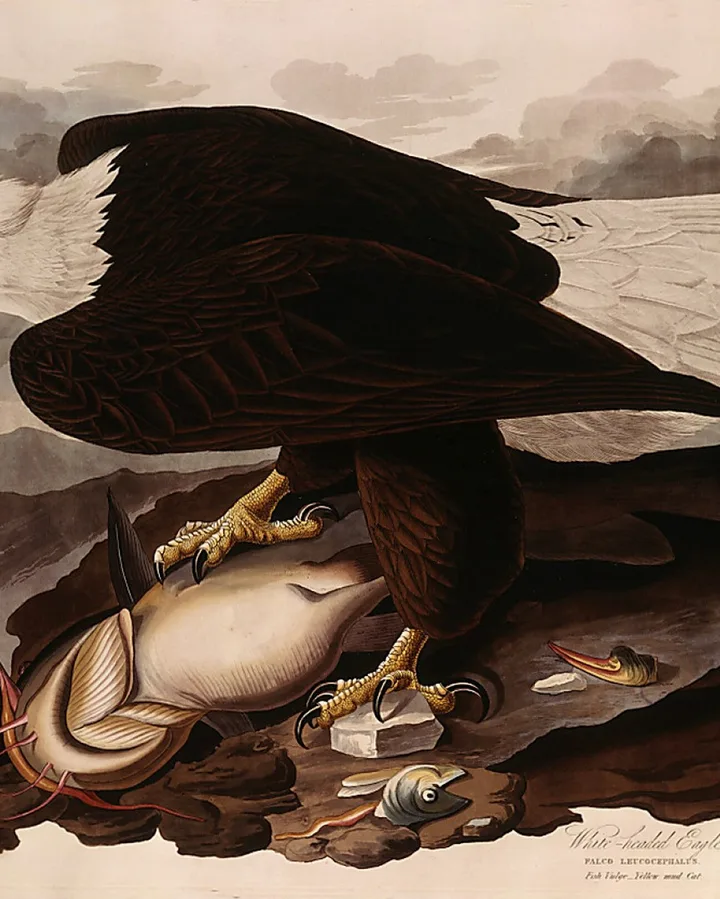
Bald Eagle (Plate 31)
1828
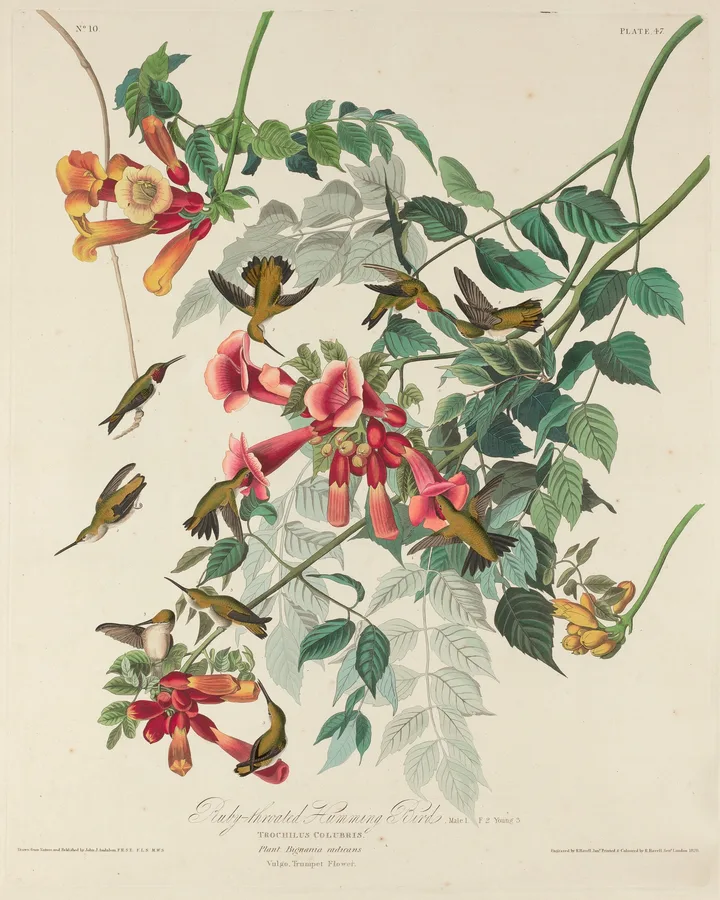
Ruby-throated Hummingbird (Plate 47)
1828
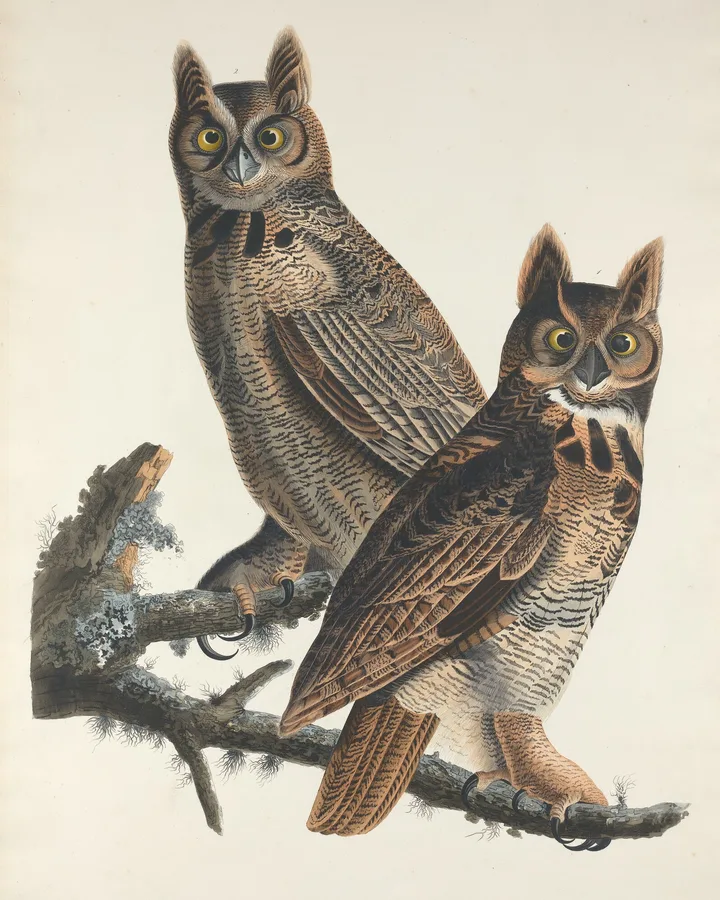
Great Horned Owl (Plate 61)
1829
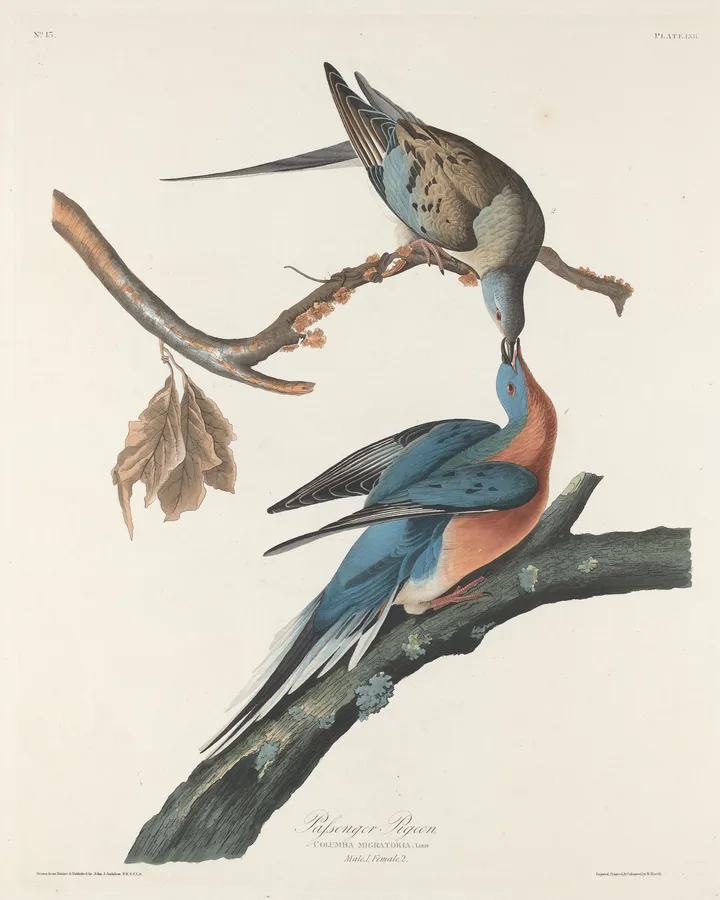
Passenger Pigeon (Plate 62)
1829
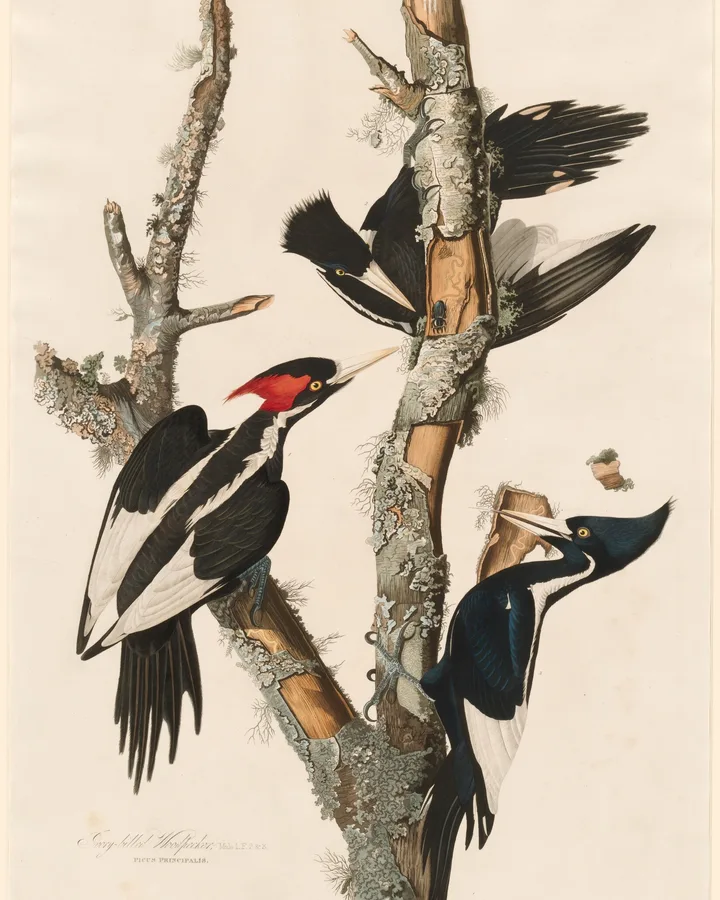
Ivory-billed Woodpecker (Plate 66)
1829
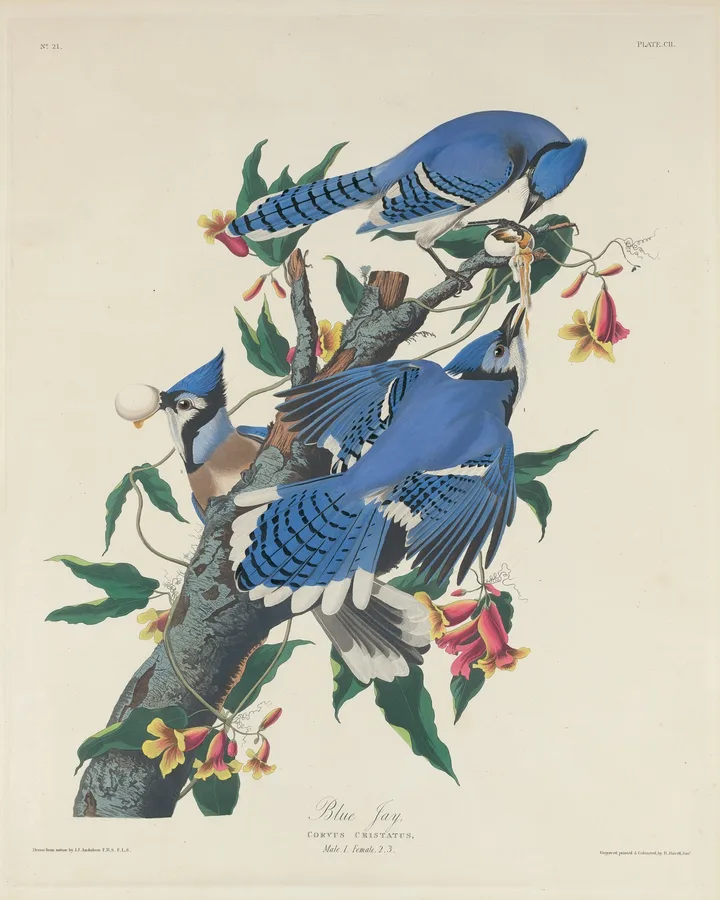
Blue Jay (Plate 102)
1831
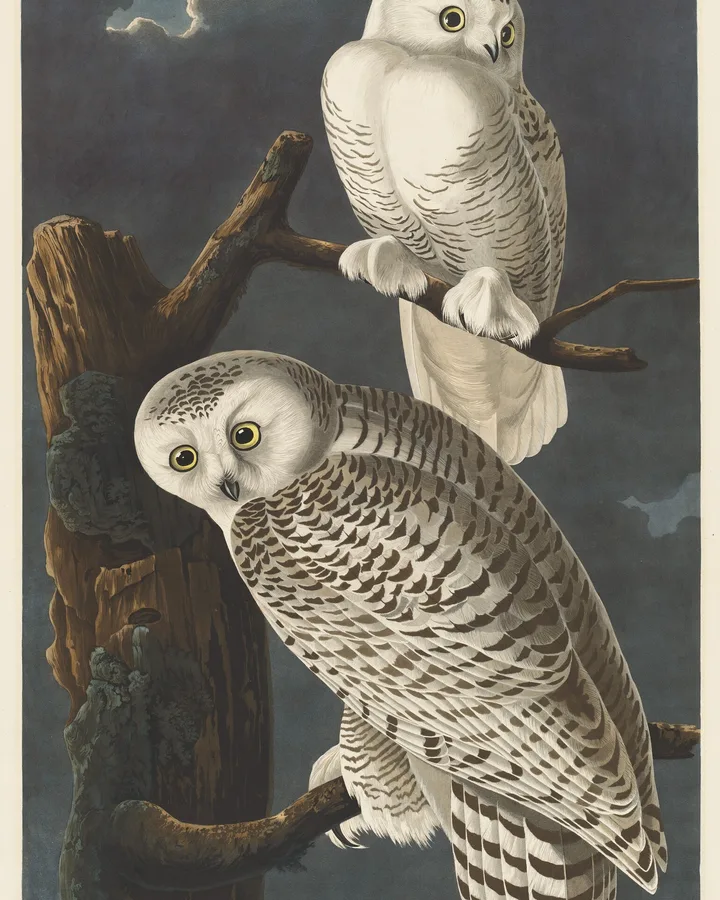
Snowy Owl (Plate 121)
1831
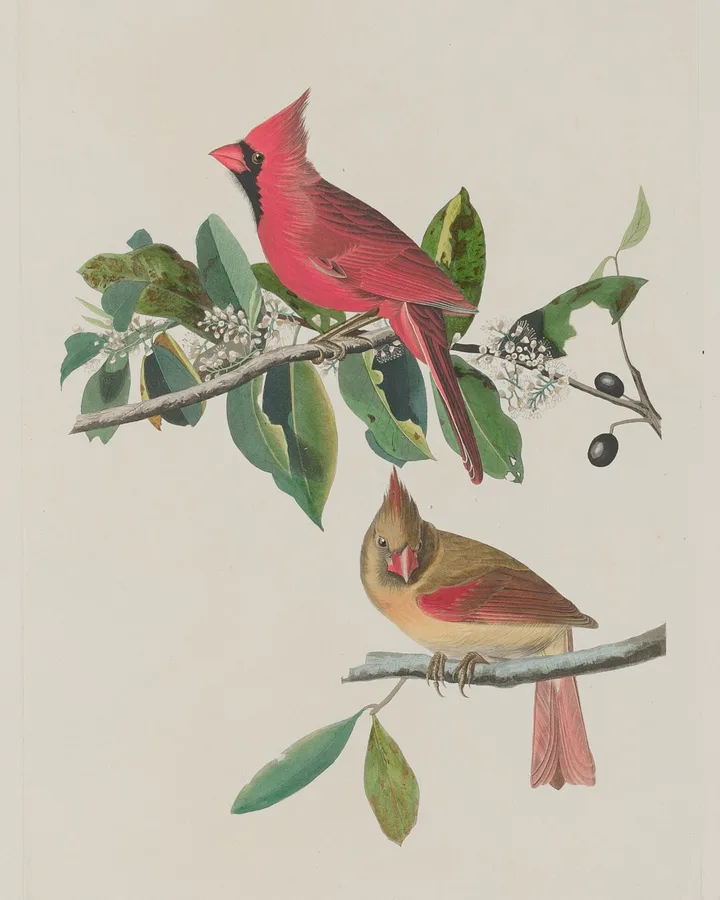
Northern Cardinal (Plate 159)
1833
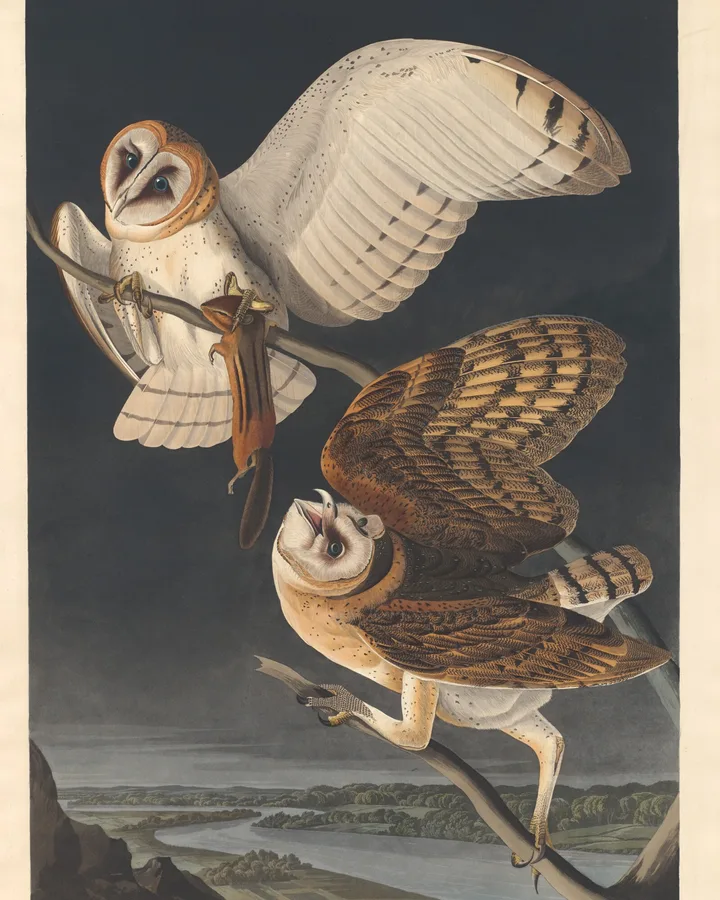
Barn Owl (Plate 171)
1833
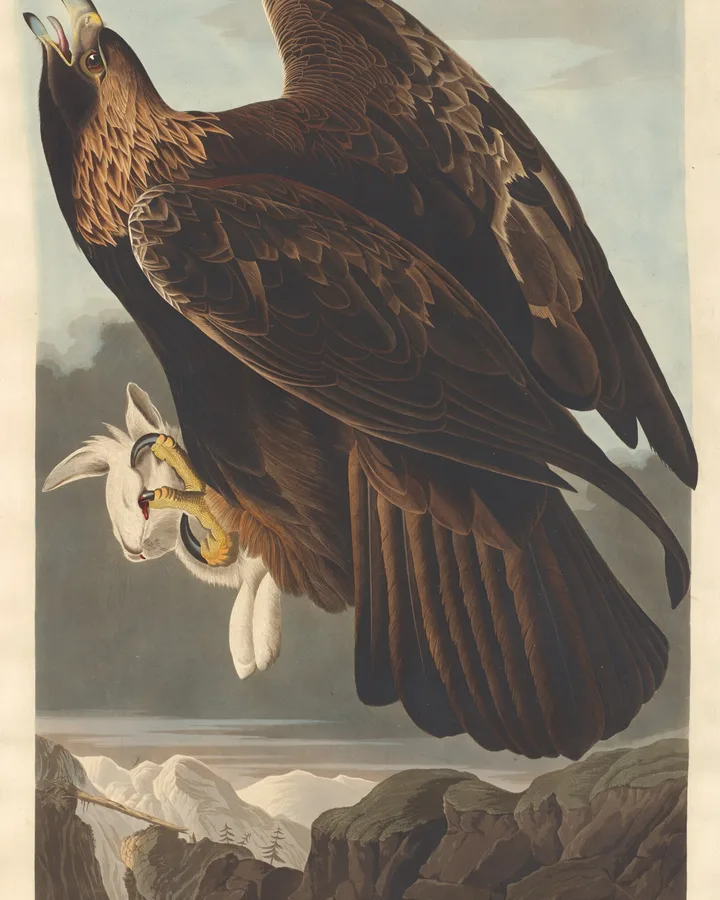
Golden Eagle (Plate 181)
1833
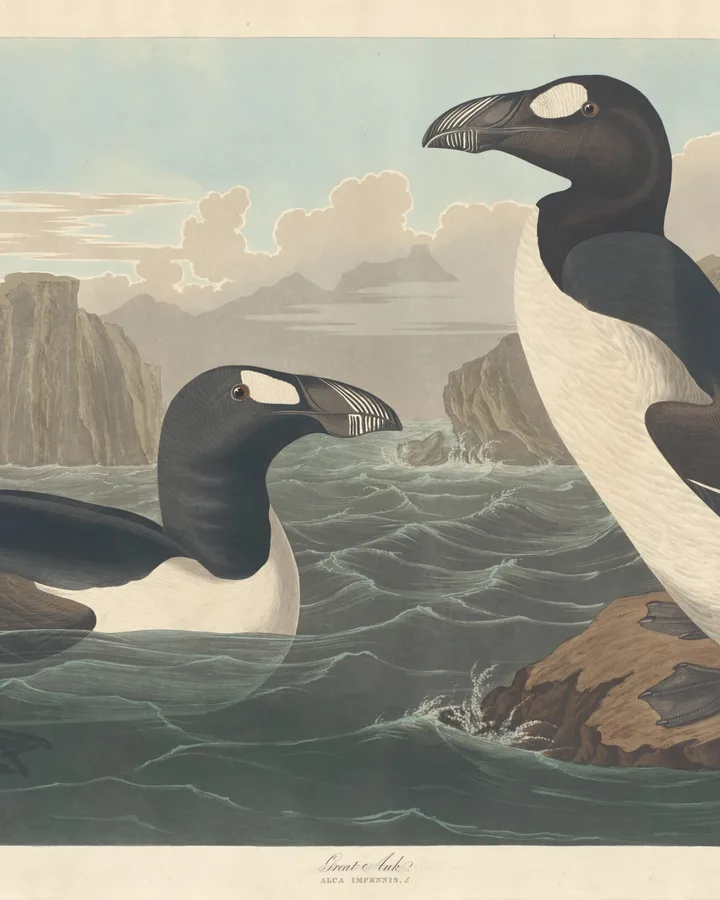
Great Auk (Plate 341)
1836