Ruby-throated Hummingbird (Plate 47) (1828)
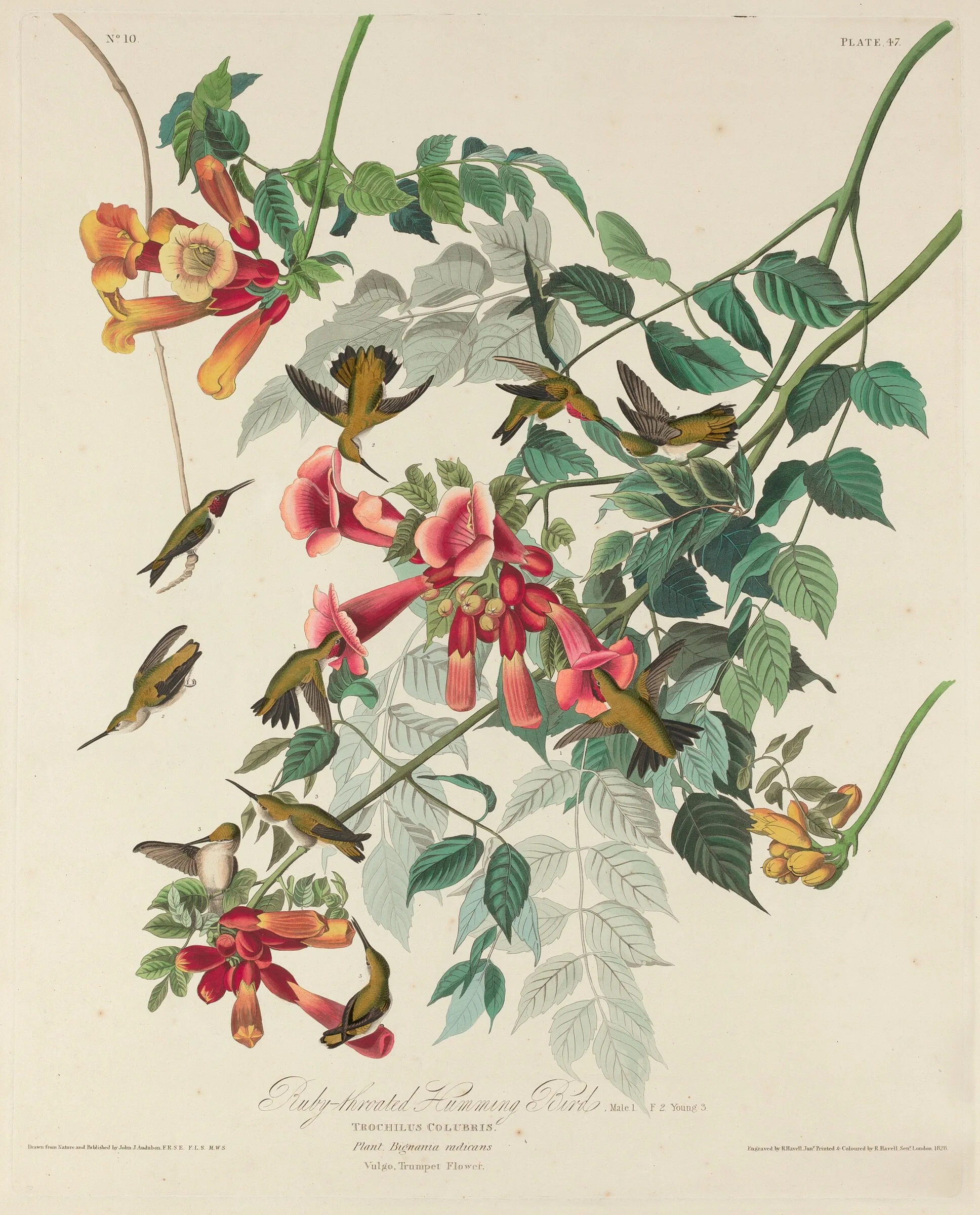
Plate 47 shows a group of Ruby-throated Hummingbirds feeding and displaying around a vine of trumpet creeper. Audubon called the bird a glittering fragment of the rainbow, and the plate is one of the most reproduced small subjects in the work.
- Plate
- 47 (XLVII)
- Audubon's name
- Ruby-throated Humming Bird
- Modern name
- Ruby-throated Hummingbird (Archilochus colubris)
- Engraved by
- Robert Havell Jr., London
- Published
- 1828, Number 10, Volume I
- Also known as
- Ruby-throated Humming Bird; Audubon hummingbird print
What the plate shows
Several hummingbirds move around a trailing stem of trumpet creeper, Campsis radicans, with orange tubular flowers and long seed pods. Adult males show the red throat. Females and young have white throats. Some birds hover with blurred wings while others probe the flowers or perch. The composition reads as a sequence of positions around one plant, a method Audubon used often for small birds.
The plate is a medium-size subject, the second plate of Number 10, so the image is smaller than the large-bird plates while the sheet is the same double elephant size.
How Audubon made it
Hummingbirds were hard to draw from life because they rarely stay still and their throat colors change with the angle of light. Audubon worked from specimens and from long watching. The trumpet creeper is one of his best botanical choices: it is a plant the bird does feed on, and its color sets off the green backs.
His chapter is one of the warmest in the Ornithological Biography. He asked who, "on observing this glittering fragment of the rainbow," would not stop to admire it. He described tiny naked young in the nest and parents flying within inches of his face. He noted that he saw the birds in Louisiana as early as 10 March but rarely before mid-April in the Middle States, and he guessed that they migrated by night.
The bird today
The Ruby-throated Hummingbird is the only hummingbird that breeds regularly in eastern North America. It ranges from the Gulf coast to southern Canada and winters from Mexico to Panama. Many cross the Gulf of Mexico in a single nonstop flight in spring, so Audubon's guess about long migration was partly right. It is common and listed as Least Concern, and trumpet creeper is still widely called hummingbird vine.
Prints and value
Because it is a popular subject with a smaller image, Havell impressions of Plate 47 sit in the upper range for medium plates but well below the large showpieces. Many sheets have been trimmed to suit smaller frames, so ask for the full sheet size and check that the Havell imprint survives below the image.
The octavo edition of 1840 to 1844 includes this subject as a small hand-colored lithograph, which is a sensible way to own a period print of it. Reproductions are everywhere. See Havell, octavo and Bien editions and how to tell an original Audubon print.
Prints of this plate are sometimes sold as Havell impressions when they are actually from the 1971 to 1972 Amsterdam facsimile, which reproduced the Havell plates at full size. A facsimile shows a printed dot or screen pattern under a magnifier, where a Havell shows engraved lines and aquatint grain with brushed color on top. The Bien edition of 1858 to 1860 was never completed, so check whether a Bien version of this subject exists before paying Bien prices.
More famous plates
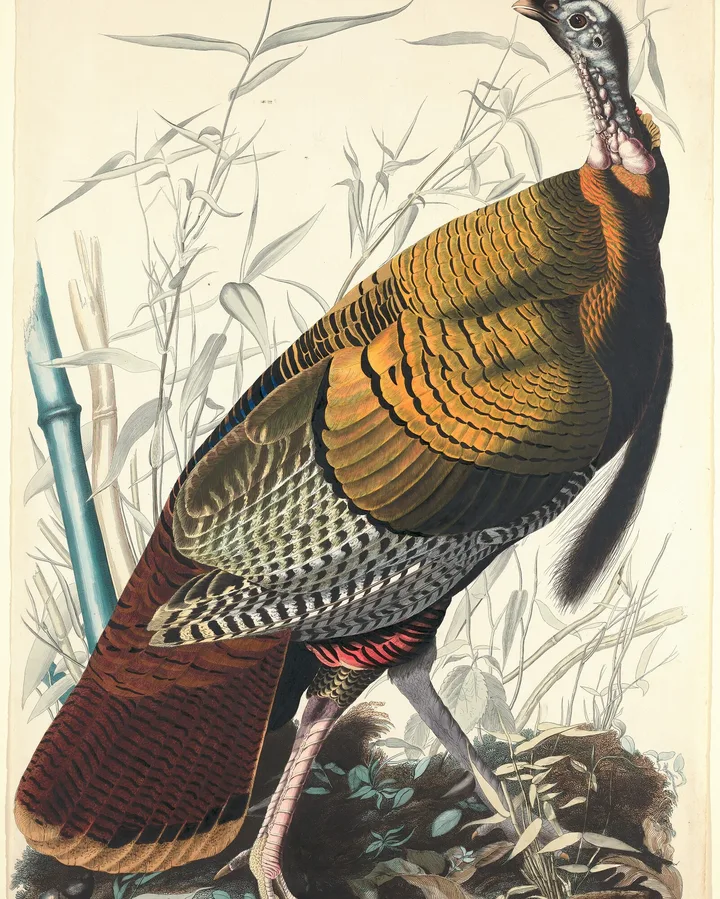
Wild Turkey (Plate 1)
1827
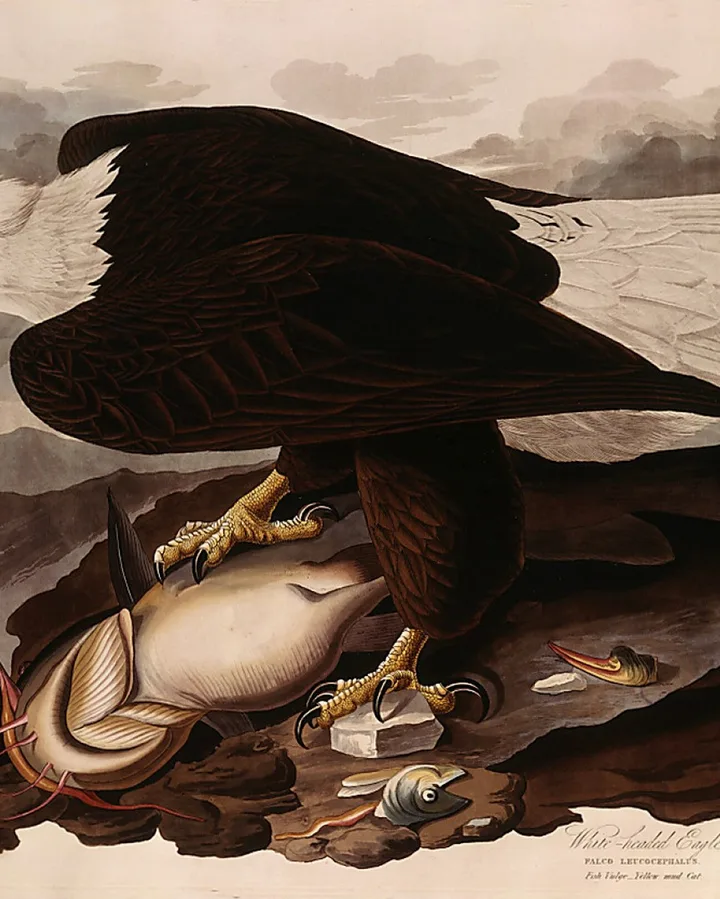
Bald Eagle (Plate 31)
1828
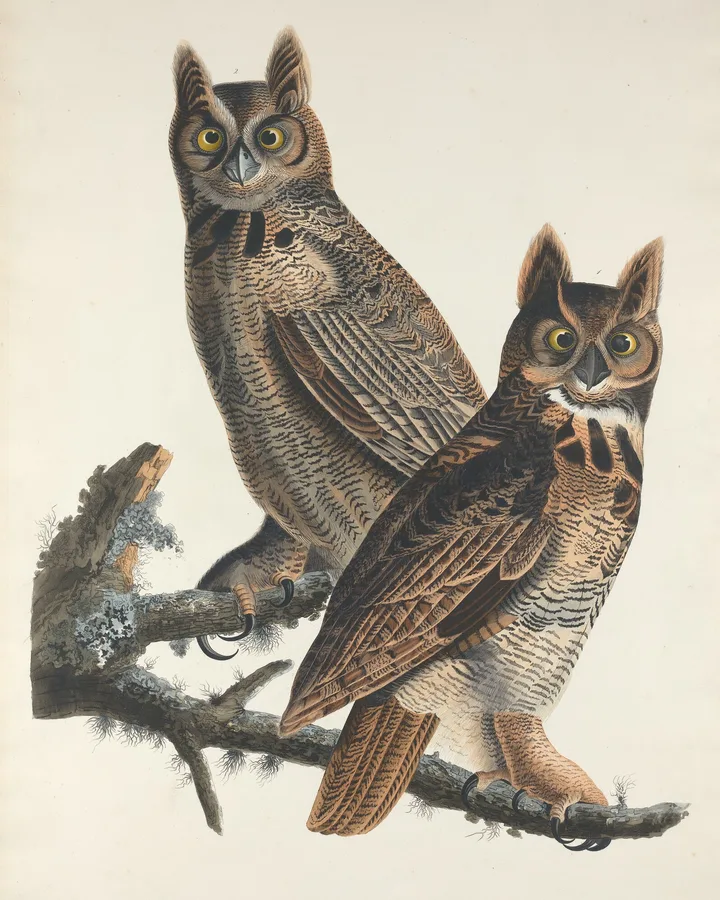
Great Horned Owl (Plate 61)
1829
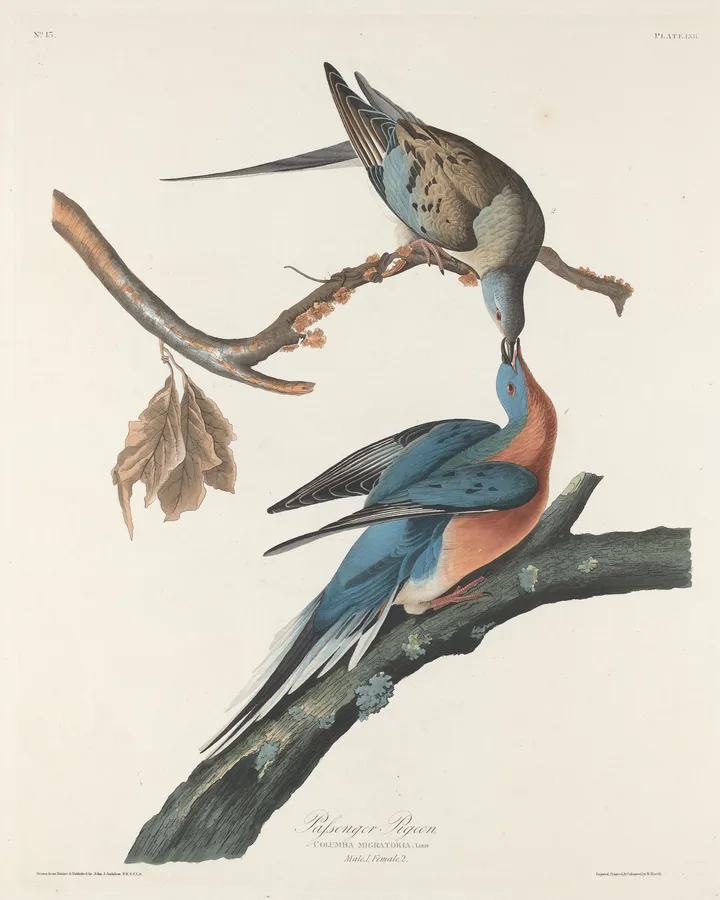
Passenger Pigeon (Plate 62)
1829
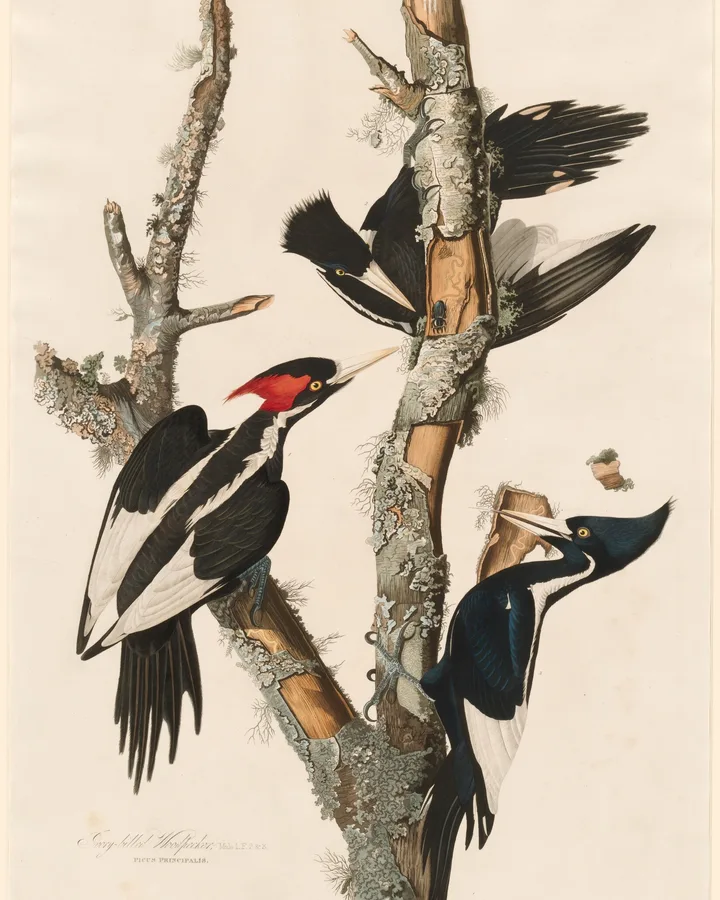
Ivory-billed Woodpecker (Plate 66)
1829
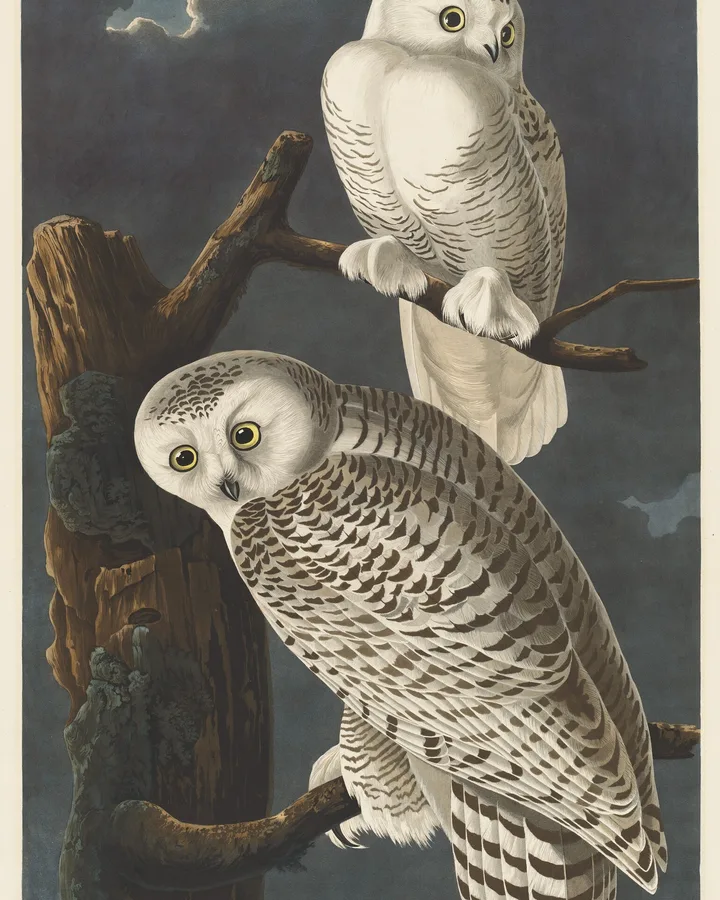
Snowy Owl (Plate 121)
1831
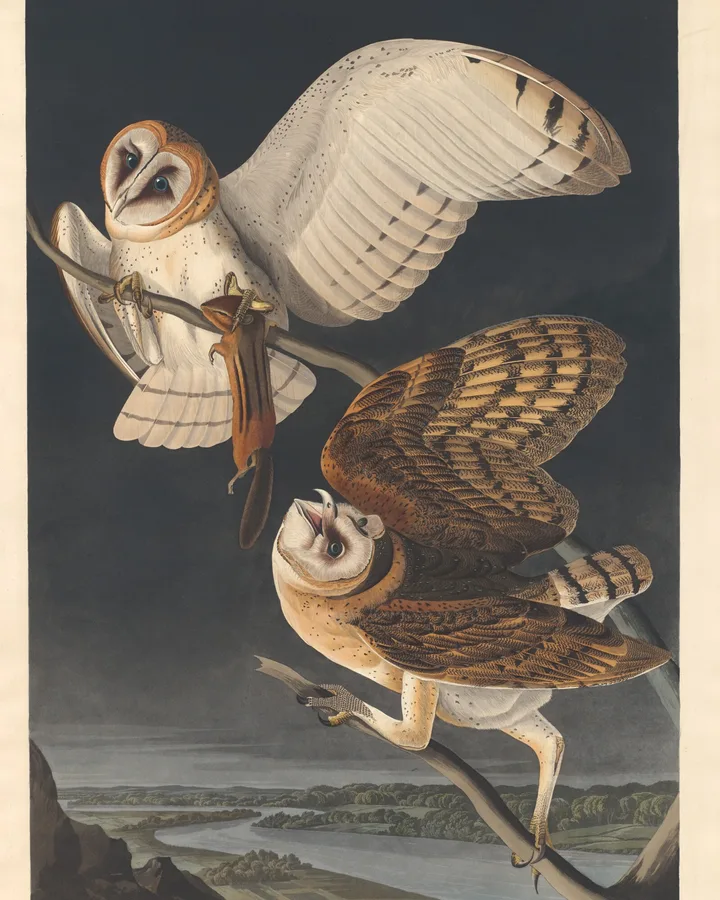
Barn Owl (Plate 171)
1833
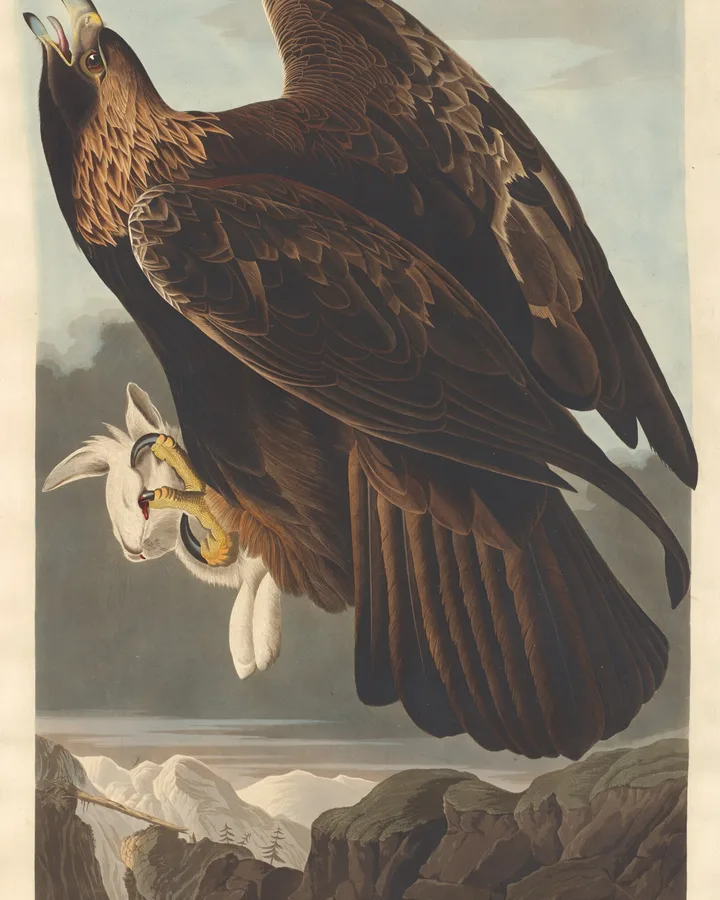
Golden Eagle (Plate 181)
1833
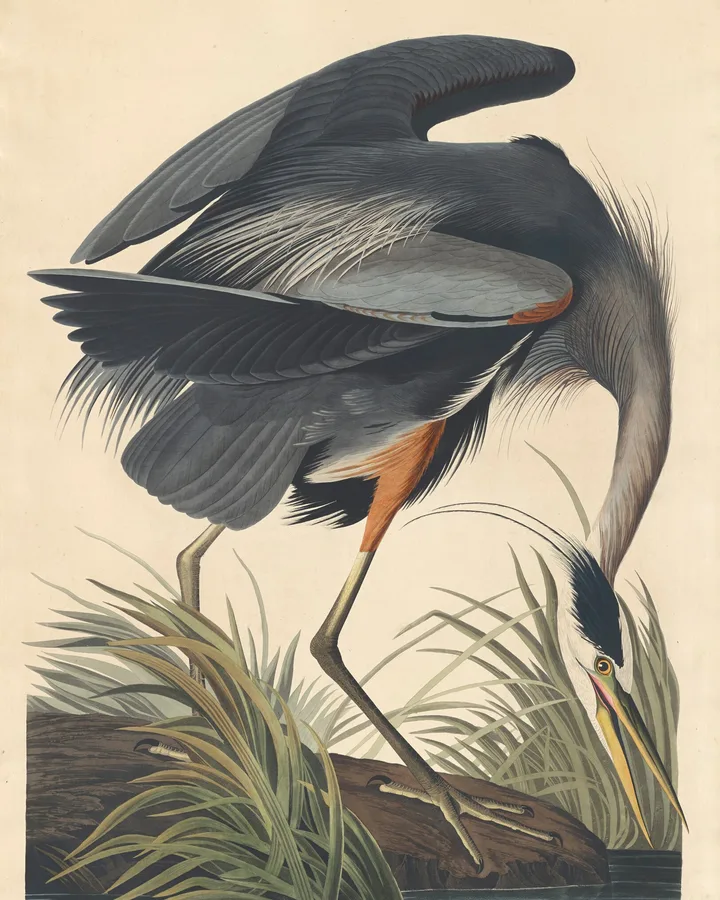
Great Blue Heron (Plate 211)
1834
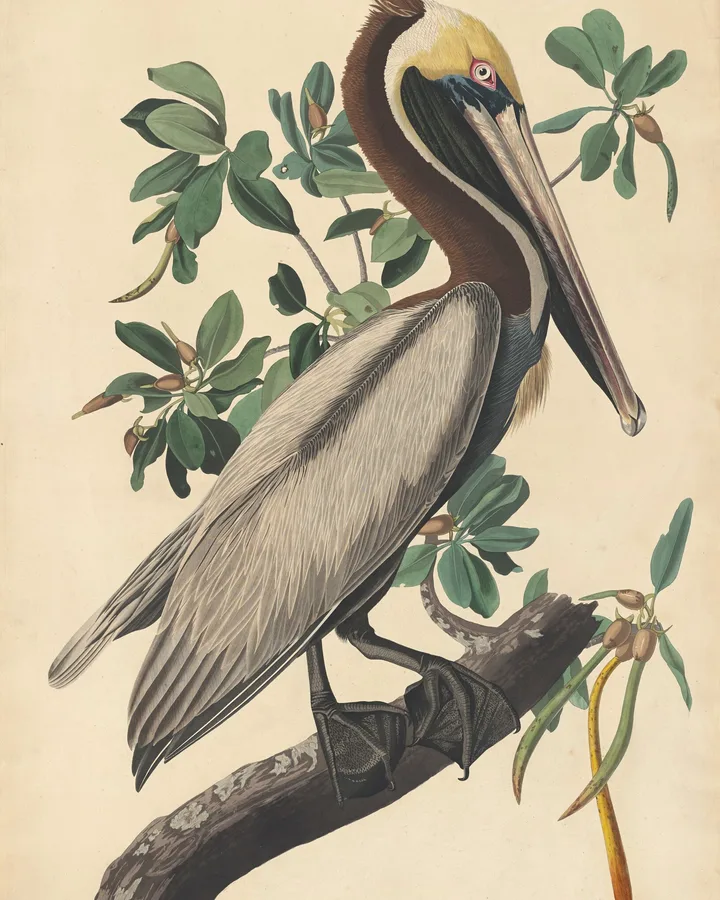
Brown Pelican (Plate 251)
1835
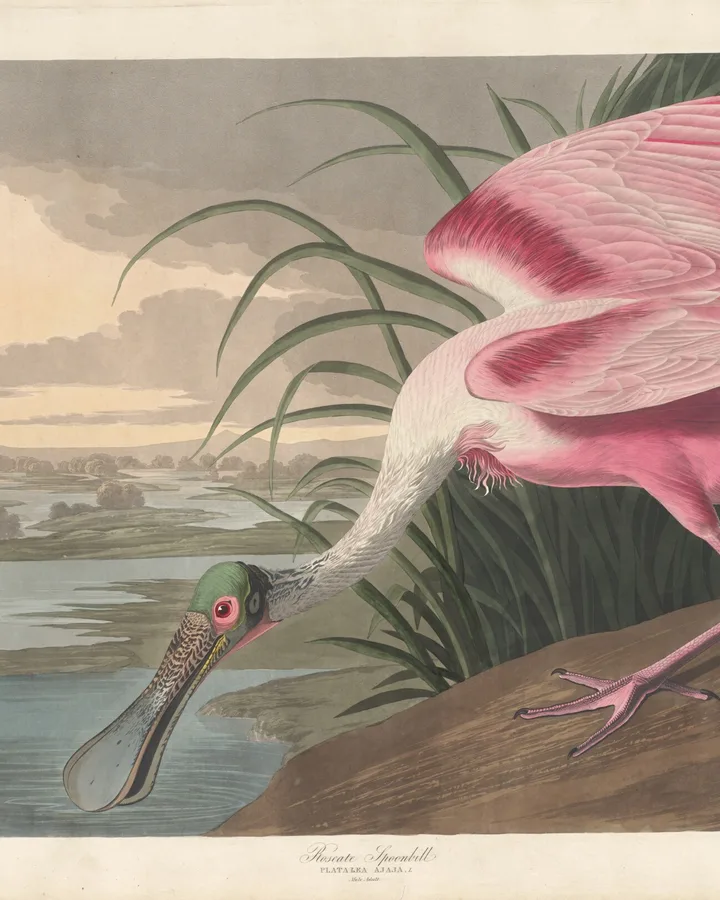
Roseate Spoonbill (Plate 321)
1836
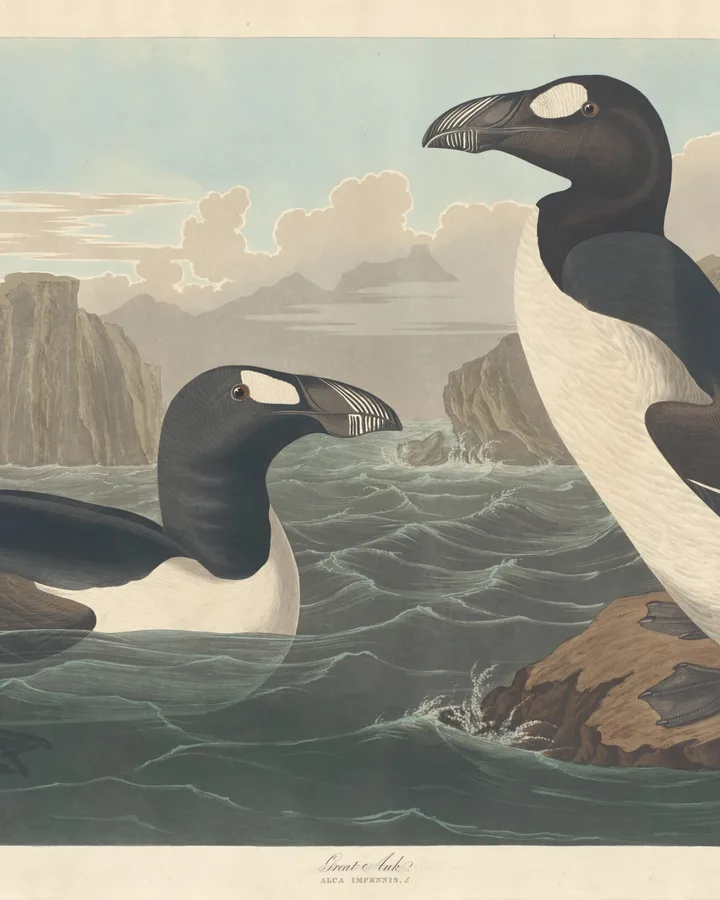
Great Auk (Plate 341)
1836
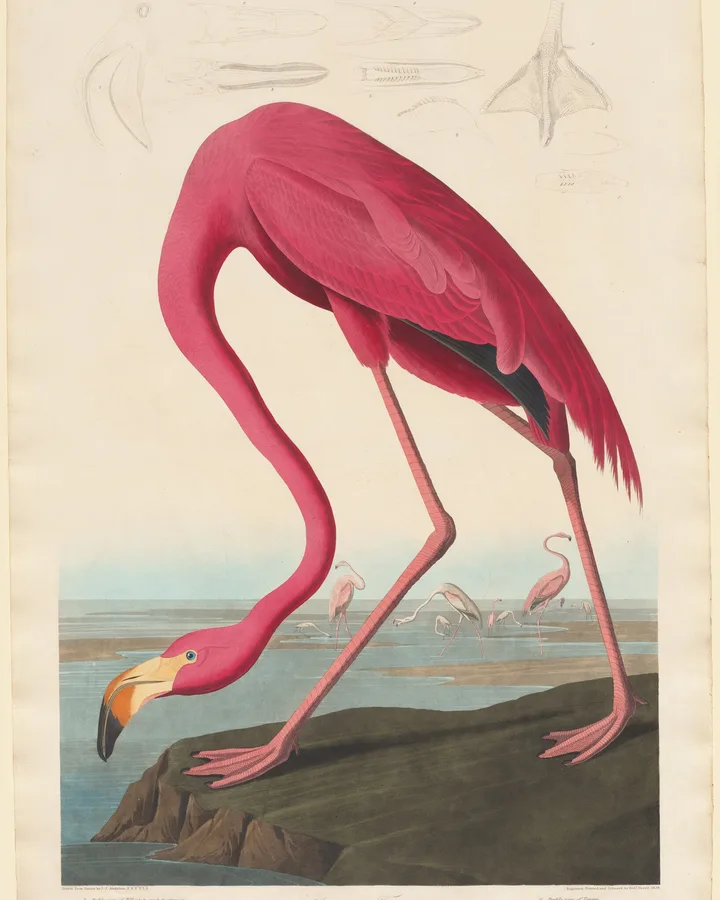
American Flamingo (Plate 431)
1838