Northern Cardinal (Plate 159) (1833)
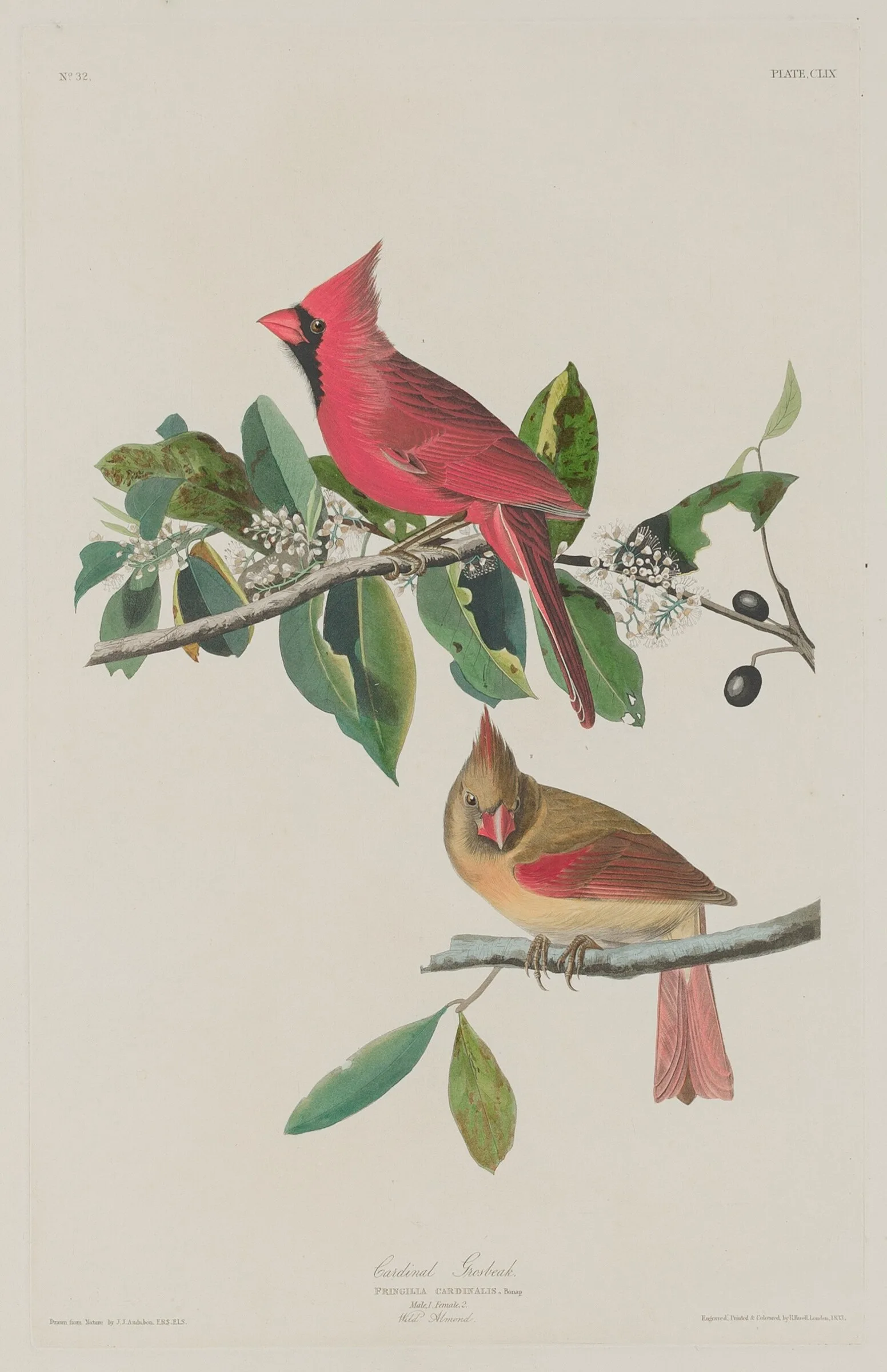
Plate 159 shows a male and female Northern Cardinal, which Audubon called the Cardinal Grosbeak. In his day it was a southern bird, and his notes on its range are now a useful record of how far north it has spread.
- Plate
- 159 (CLIX)
- Audubon's name
- Cardinal Grosbeak (Fringilla cardinalis)
- Modern name
- Northern Cardinal (Cardinalis cardinalis)
- Engraved by
- Robert Havell Jr., London
- Published
- 1833, Number 32, Volume II
- Also known as
- Cardinal Grosbeak; Red Bird; Audubon cardinal print
What the plate shows
A bright red male with black face and pointed crest perches with a warm brown female, whose crest, wings and tail are tinged with red. Both have the heavy red bill that the old name Grosbeak refers to. It is one of the small plates of Number 32, so the image is compact and sits in the middle of a large sheet with wide margins.
How Audubon made it
Audubon used Bonaparte's name Fringilla cardinalis and gave several common names in use at the time: the Red Bird, the Virginia Nightingale and the Cardinal Bird. He praised it as surpassing all its relatives in the United States in plumage, movement and song.
His text places the bird everywhere in the South, from the depth of cane-brakes to town streets. He wrote that "it is rare that one goes into a planter's yard without observing the Red Bird" and that he found pairs already formed in Florida at the start of March. He also set its northern limit. It reached the coastal parts of Pennsylvania and New Jersey, stragglers got to Massachusetts, and none had been seen farther east.
The bird today
Since Audubon's time the cardinal has spread north into New England and southeastern Canada, helped by milder winters, forest edges and bird feeders. It now ranges from southern Canada to Mexico and Belize. It is the state bird of seven states, more than any other species, and is listed as Least Concern.
Prints and value
The cardinal is one of the most popular subjects in the work with buyers, even though it is a small plate. Havell impressions sell well above other small plates. Since the image is small on a big sheet, some copies have been cut down, which lowers value. Check sheet size, the Whatman watermark and the Havell imprint, and look for strong original reds.
The octavo edition of 1840 to 1844 includes the cardinal and is an affordable period print. Reproductions are very common. See Havell, octavo and Bien editions and how to tell an original Audubon print.
Audubon's cardinal is often confused in the market with later cardinal prints by other artists, and with the cardinal in Alexander Wilson's American Ornithology, which came earlier and is much smaller. A Havell sheet is far larger than either and carries Havell's engraved credit. The octavo version carries the name of the Philadelphia lithographer J. T. Bowen and a different plate number. Small plates like this one are also a good place to start a collection, since a period octavo print costs far less than a Havell. The Bien edition of 1858 to 1860 was never completed, so not every subject exists in it.
More famous plates
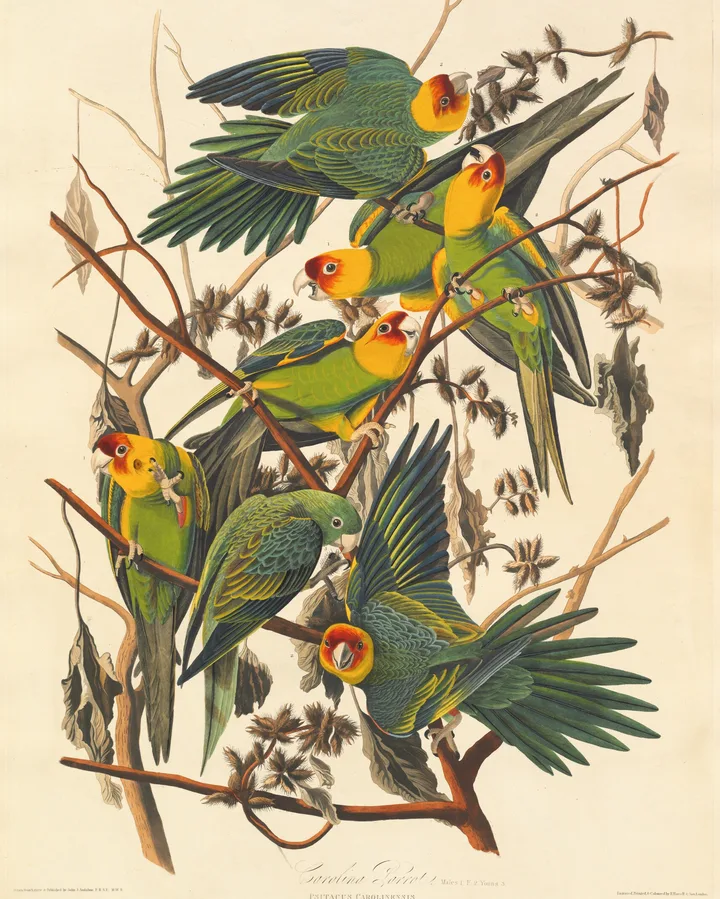
Carolina Parakeet (Plate 26)
1827
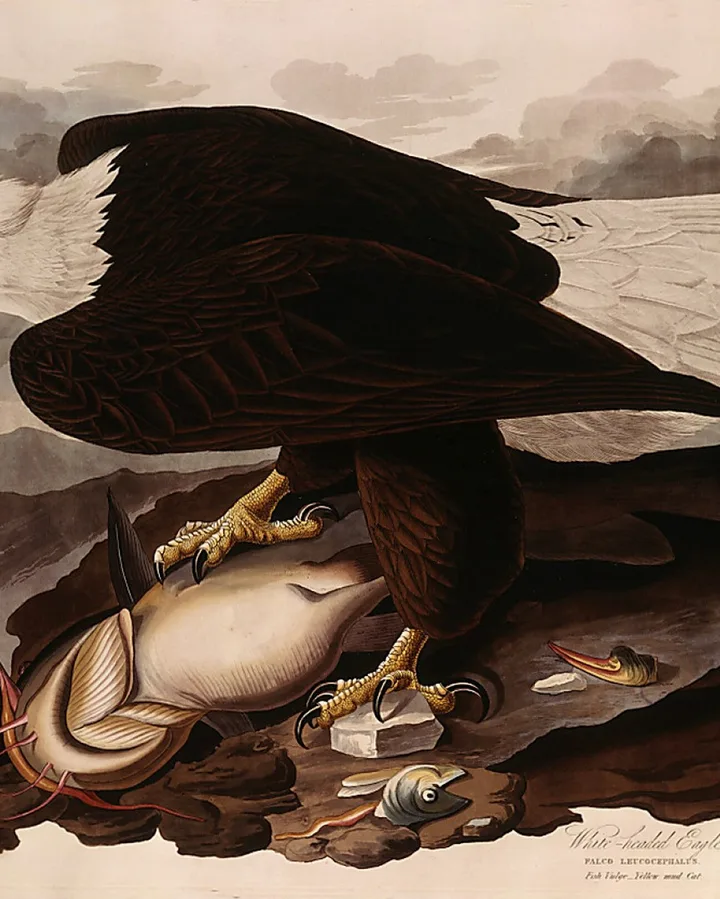
Bald Eagle (Plate 31)
1828
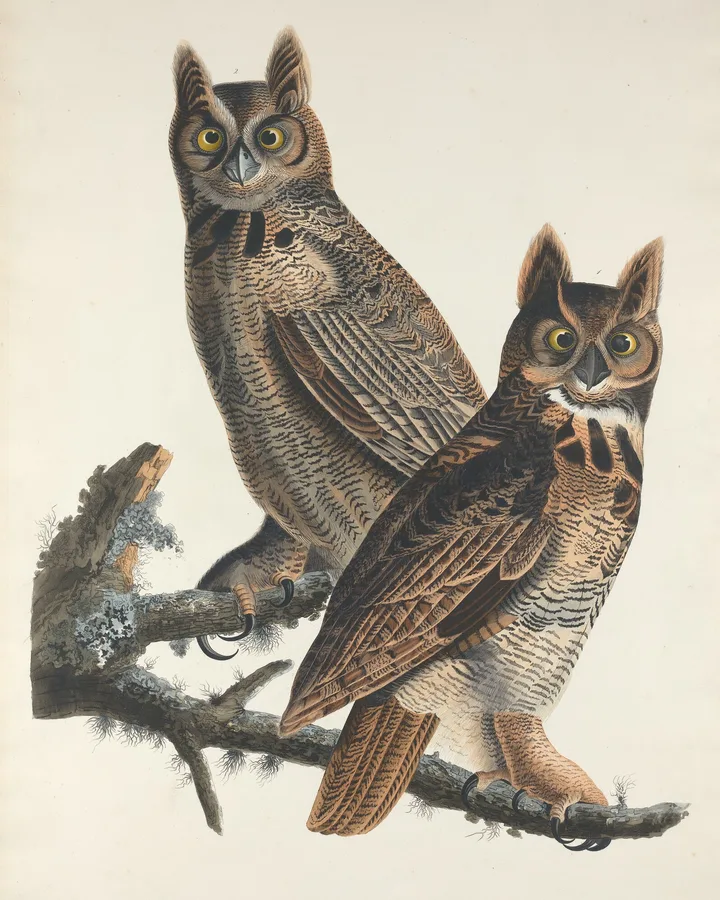
Great Horned Owl (Plate 61)
1829
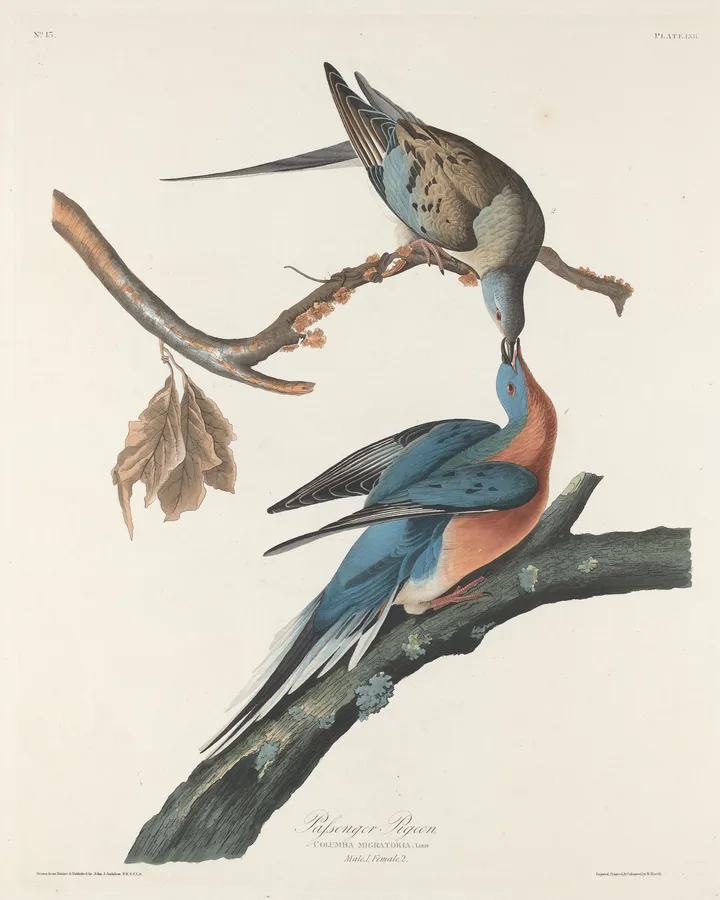
Passenger Pigeon (Plate 62)
1829
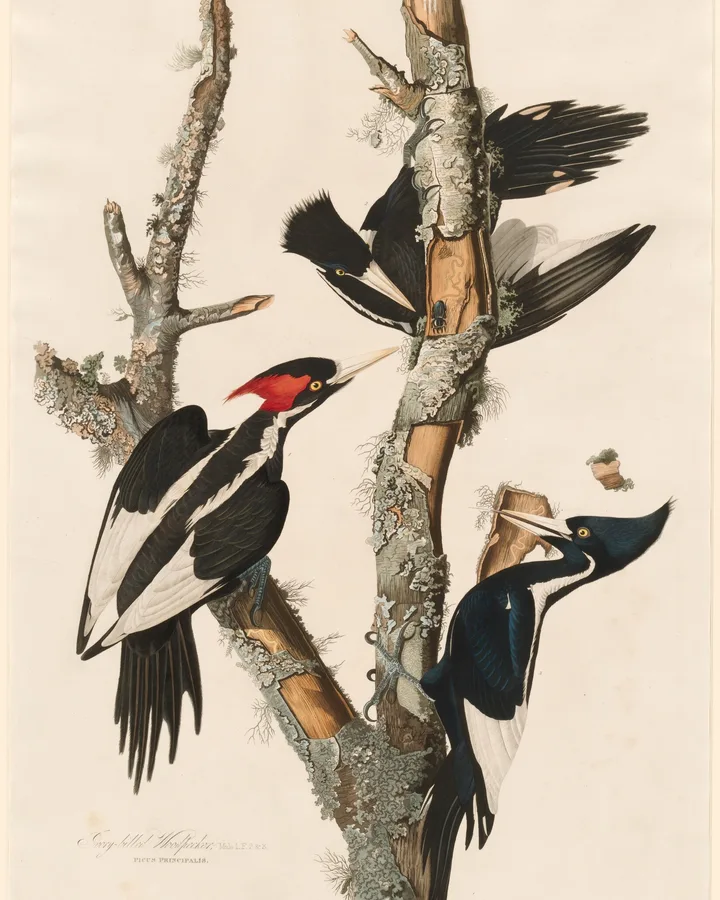
Ivory-billed Woodpecker (Plate 66)
1829
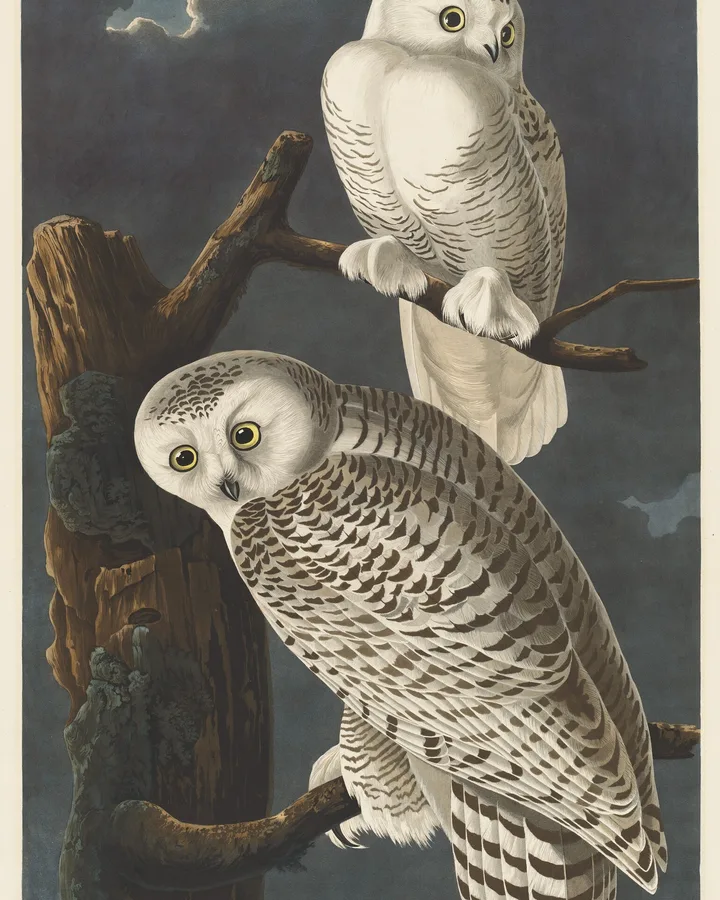
Snowy Owl (Plate 121)
1831
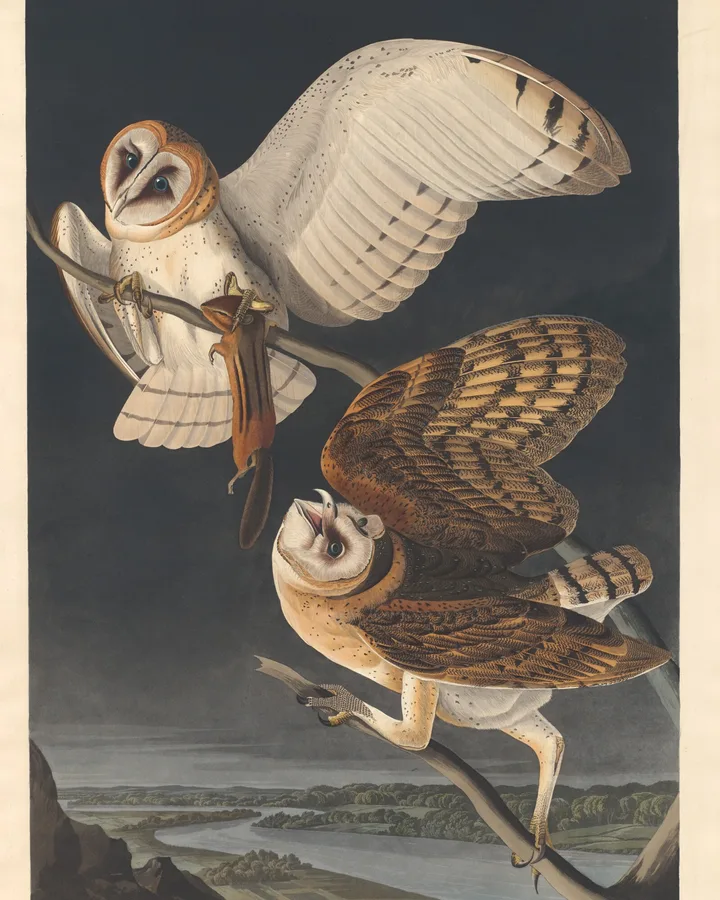
Barn Owl (Plate 171)
1833
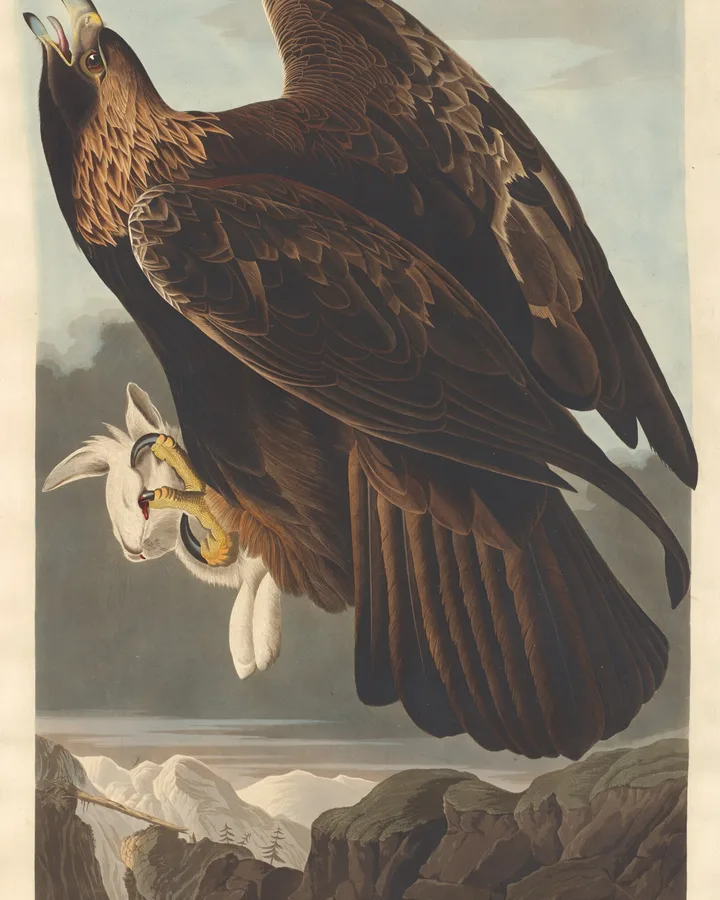
Golden Eagle (Plate 181)
1833
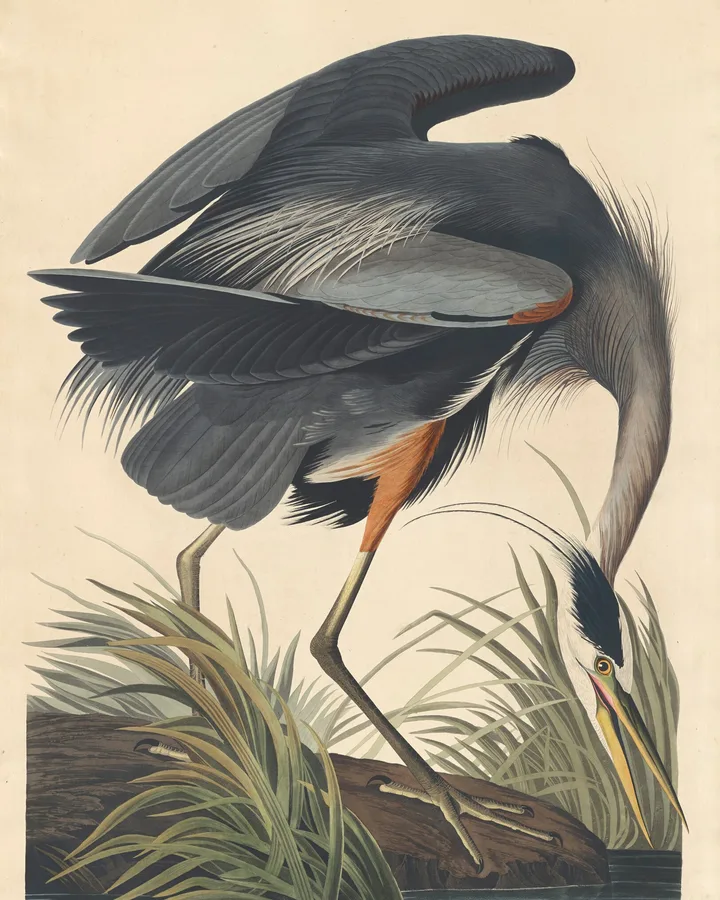
Great Blue Heron (Plate 211)
1834
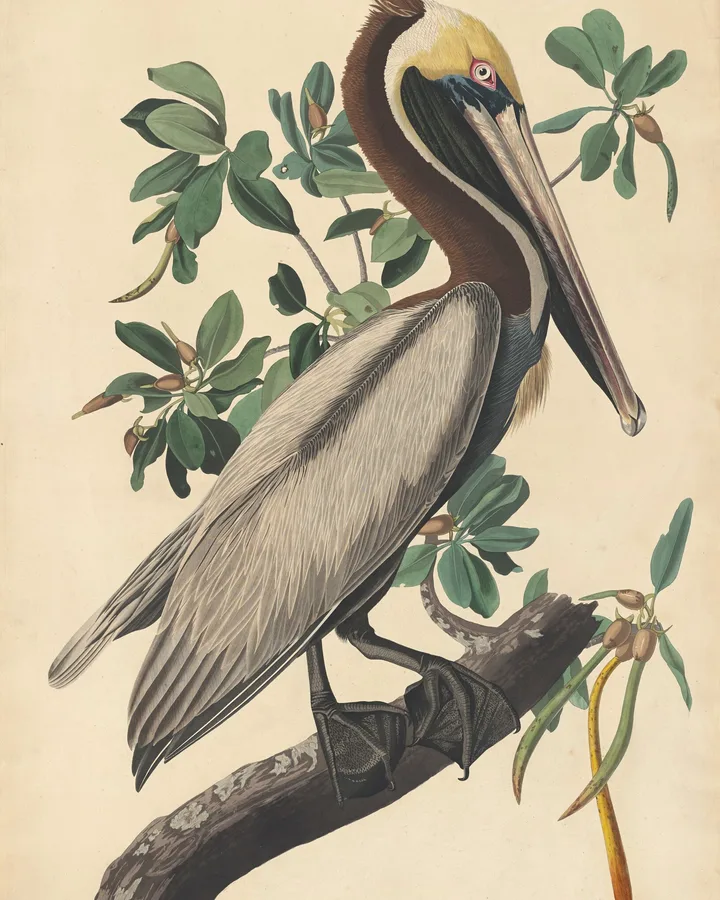
Brown Pelican (Plate 251)
1835
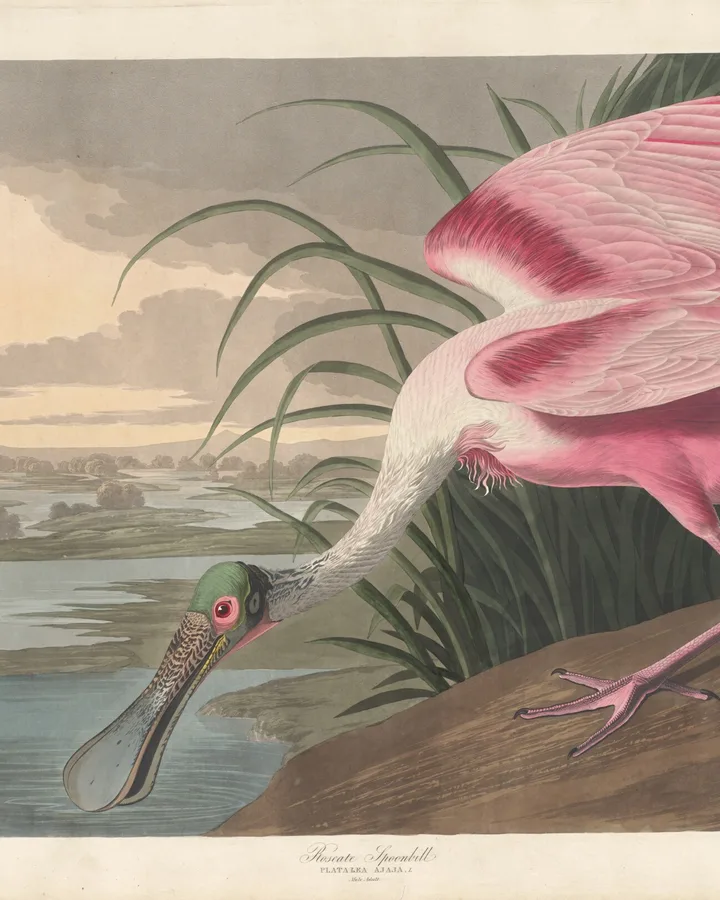
Roseate Spoonbill (Plate 321)
1836
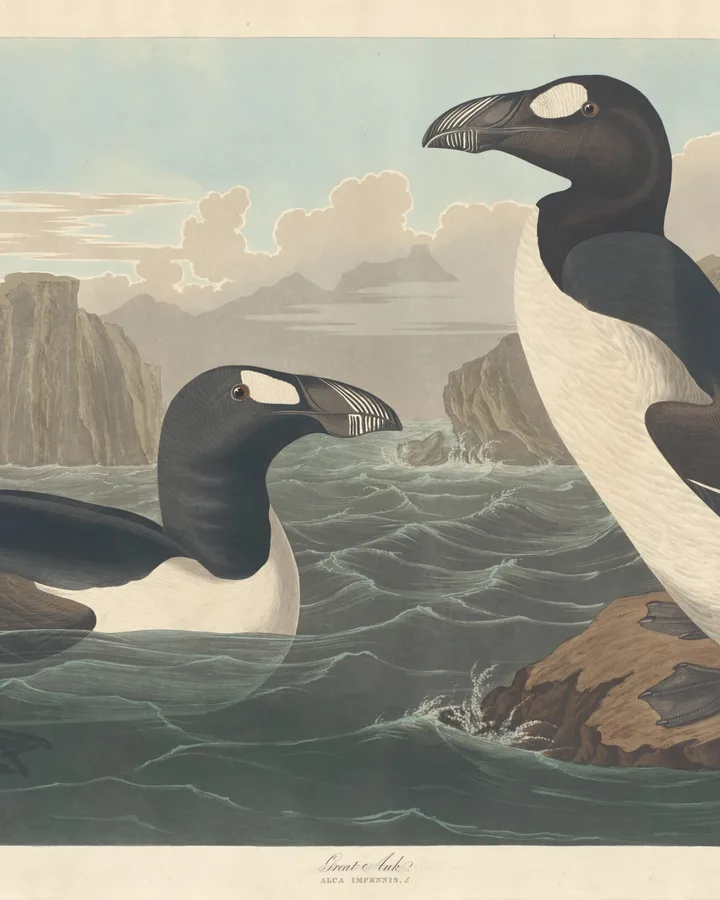
Great Auk (Plate 341)
1836
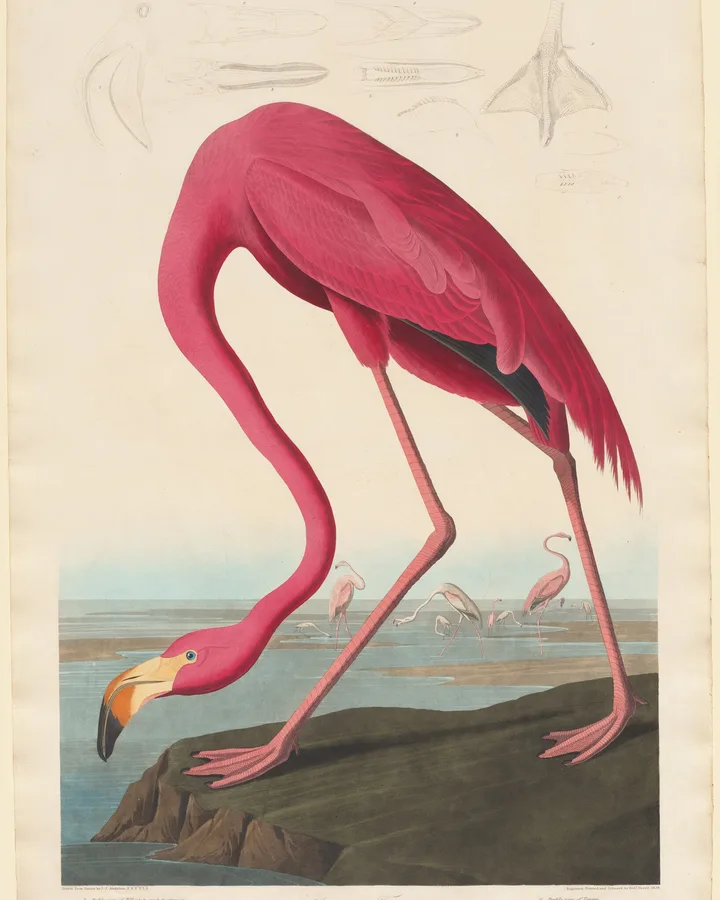
American Flamingo (Plate 431)
1838