Passenger Pigeon (Plate 62) (1829)
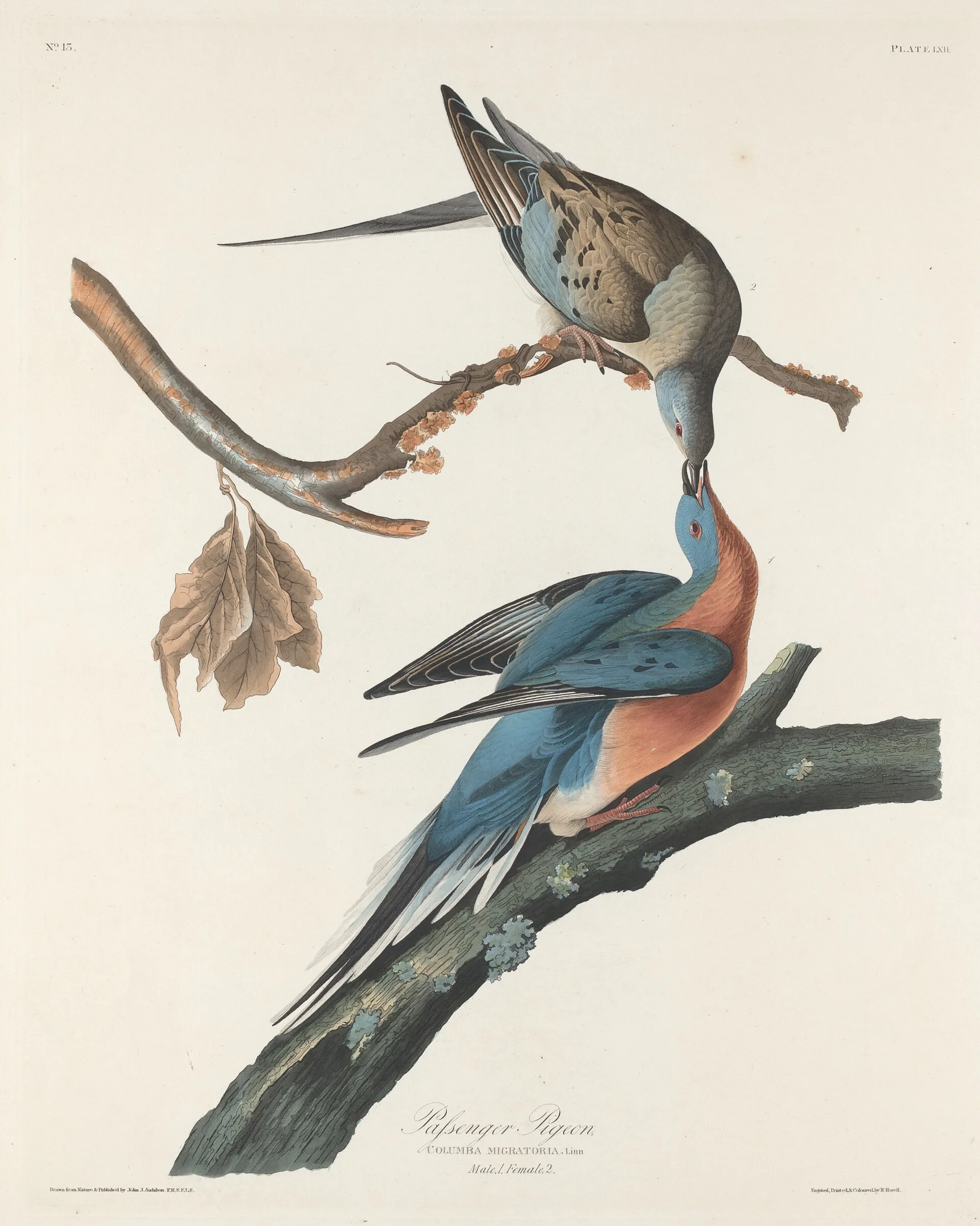
Plate 62 shows a pair of Passenger Pigeons touching bills on a branch. Audubon's text holds the most famous eyewitness account of the species' numbers, written less than a century before the last bird died in 1914.
- Plate
- 62 (LXII)
- Audubon's name
- Passenger Pigeon
- Modern name
- Passenger Pigeon (Ectopistes migratorius)
- Engraved by
- Robert Havell Jr., London
- Published
- 1829, Number 13, Volume I
- Watercolor
- New-York Historical Society
- Also known as
- Audubon passenger pigeon print; Wild pigeon
What the plate shows
A male and female sit on a branch, one leaning down to touch bills with the other in courtship feeding. The male has a slate-blue head and rosy breast. The female is browner and duller. The quiet, intimate pose is unusual for a bird known for vast flocks. It is the medium plate of Number 13, issued with the Great Horned Owl.
How Audubon made it
Audubon drew the pigeons from specimens, as he did most birds. The text that came with the plate is what made it famous. In autumn 1813, riding from Henderson to Louisville in Kentucky, he tried to count passing flocks. He made a dot for each flock and found that "163 had been made in twenty-one minutes" before he gave up. He wrote that the light of noon was obscured as by an eclipse, and that the birds kept passing for three days. Along the Ohio, people shot them from the banks, and for a week the town ate little else.
He explained that the movements followed food, mainly beech mast and acorns, and he described roosts and nesting colonies where the weight of birds broke branches. Writers on the species' extinction have quoted this chapter ever since.
The bird today
The Passenger Pigeon nested in huge colonies in eastern forests. Market hunting, organized by rail and telegraph, together with forest clearing, destroyed it within a few decades. The last wild birds were reported around 1900. The last known individual, a female named Martha, died at the Cincinnati Zoo on 1 September 1914. The species is listed as Extinct.
Audubon's account became a key text in the story of the species. When the bird was gone, his description of flocks lasting three days was quoted to show how quickly a very common animal could disappear. The plate is now as much a historical document as a natural history illustration. Many museum displays on extinction use it, and that exposure keeps demand for prints of this subject strong.
Prints and value
Because of its history, Plate 62 sells well above most medium plates. Buyers should check the full sheet, the Whatman watermark, and the engraved Havell line under the image. The rosy breast is a good place to judge whether the hand coloring is original and unfaded.
The octavo edition of 1840 to 1844 has the Passenger Pigeon as a small lithograph, which collectors of extinct birds often pair with the octavo Carolina Parakeet. Modern reproductions are very common. See Havell, octavo and Bien editions and how to tell an original Audubon print.
More famous plates
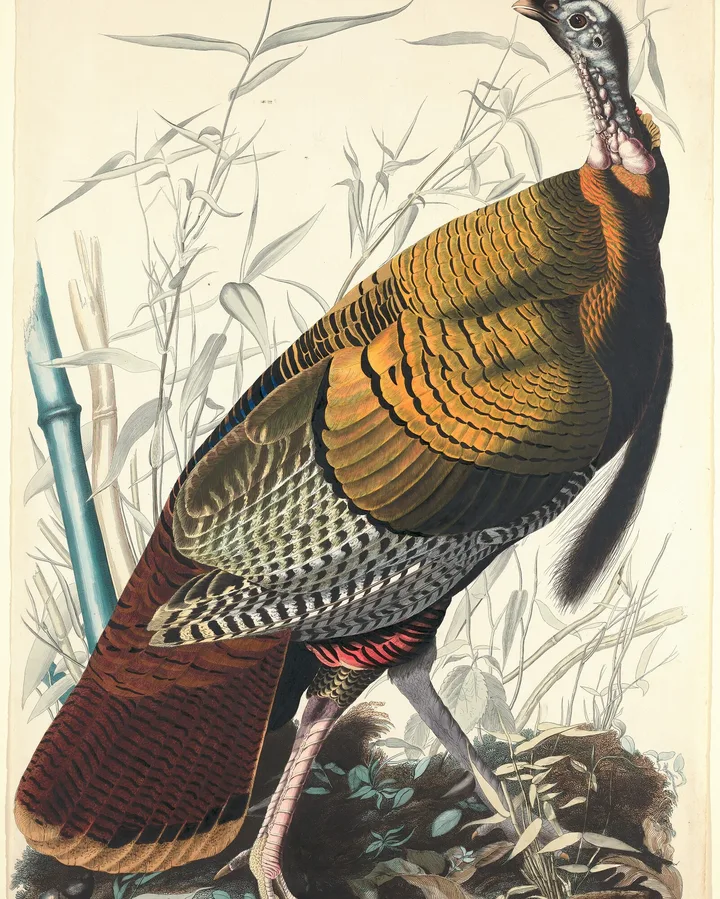
Wild Turkey (Plate 1)
1827
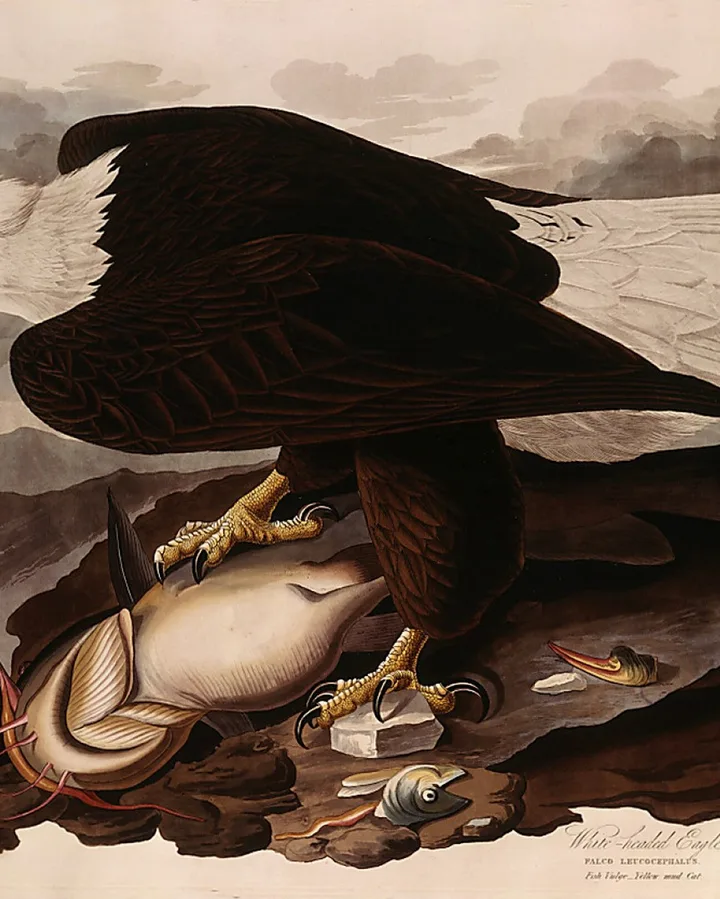
Bald Eagle (Plate 31)
1828
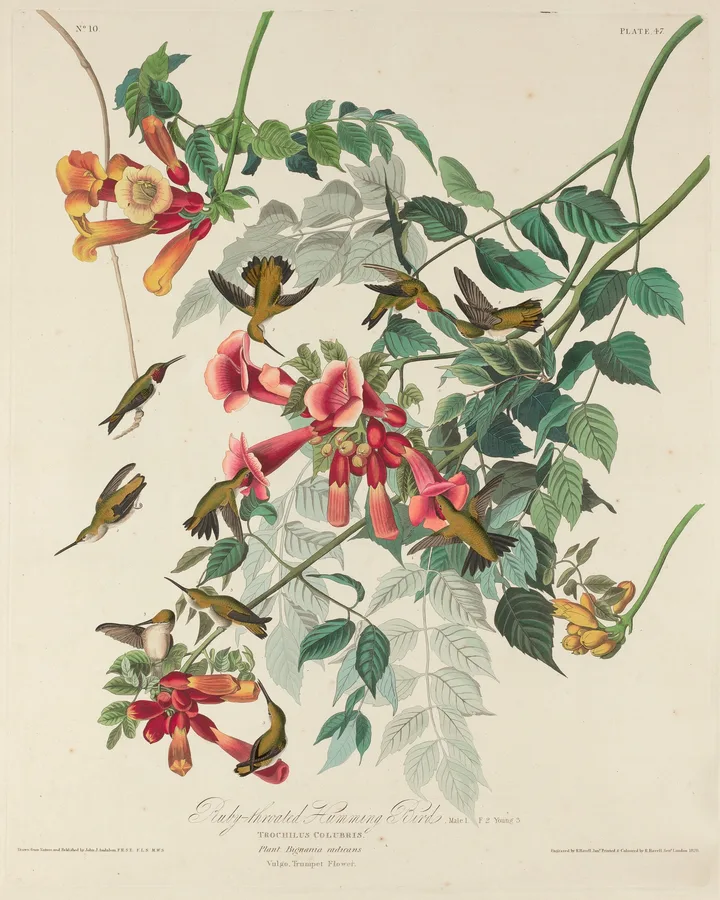
Ruby-throated Hummingbird (Plate 47)
1828
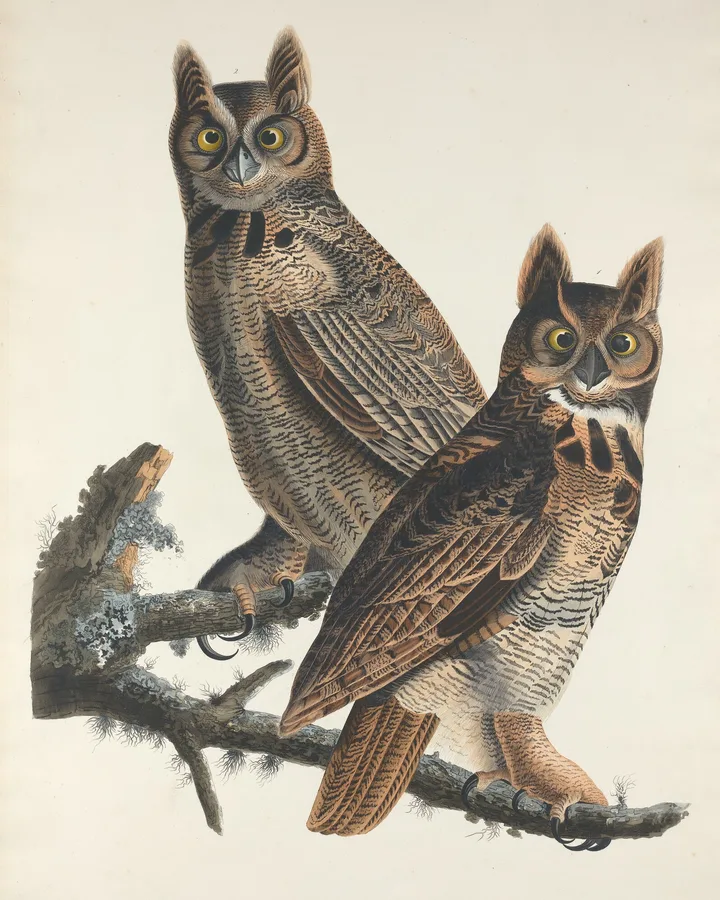
Great Horned Owl (Plate 61)
1829
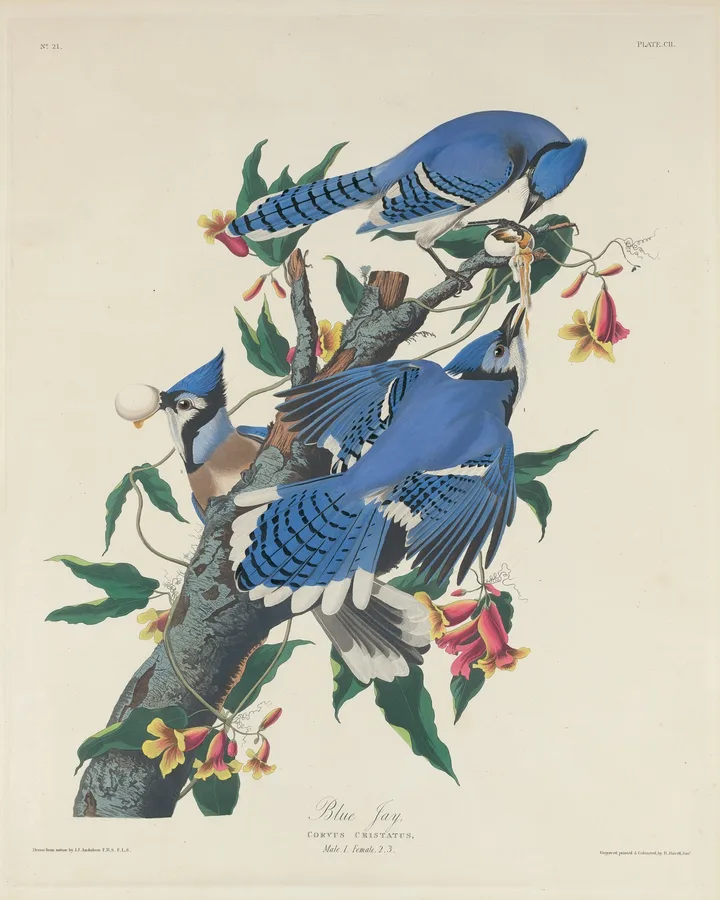
Blue Jay (Plate 102)
1831
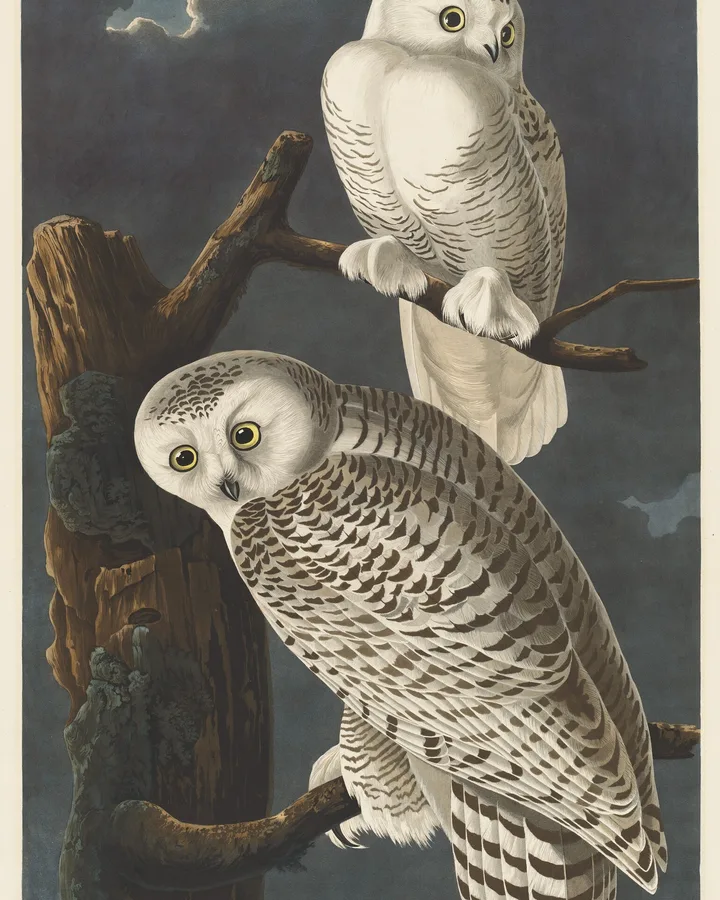
Snowy Owl (Plate 121)
1831
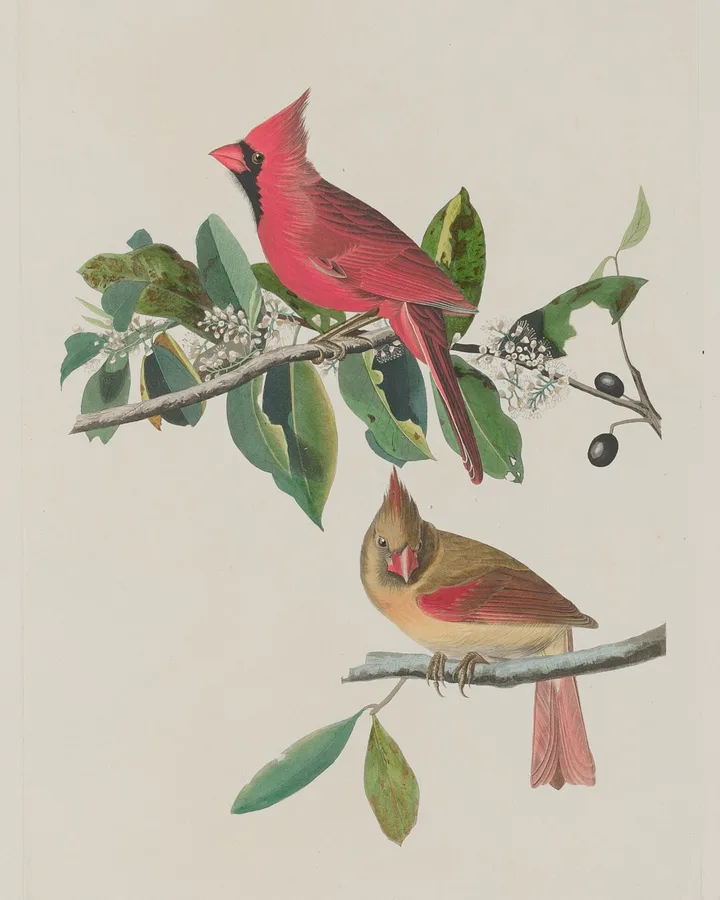
Northern Cardinal (Plate 159)
1833
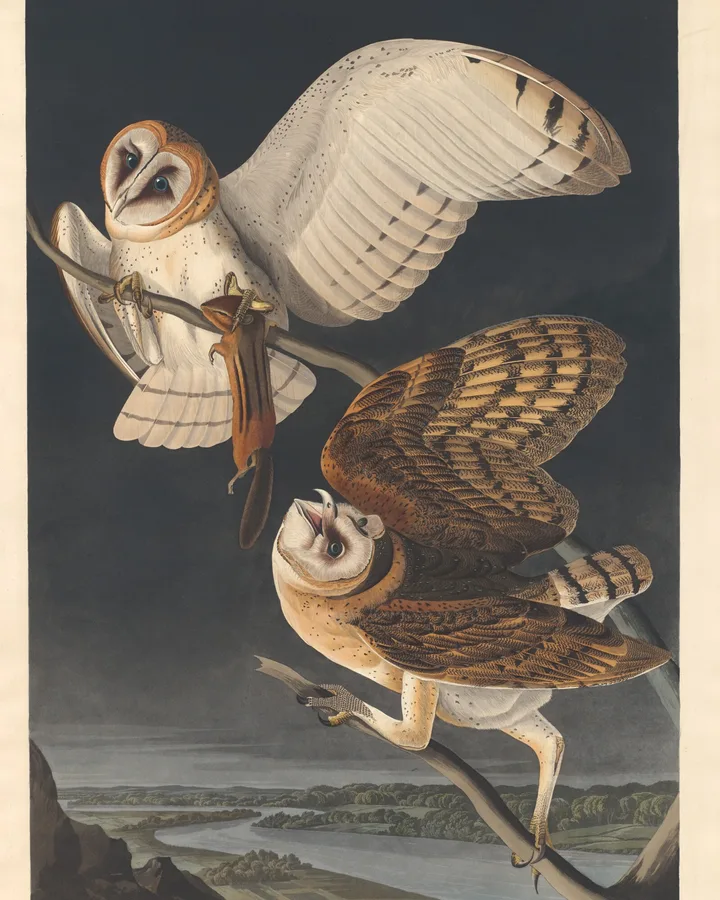
Barn Owl (Plate 171)
1833
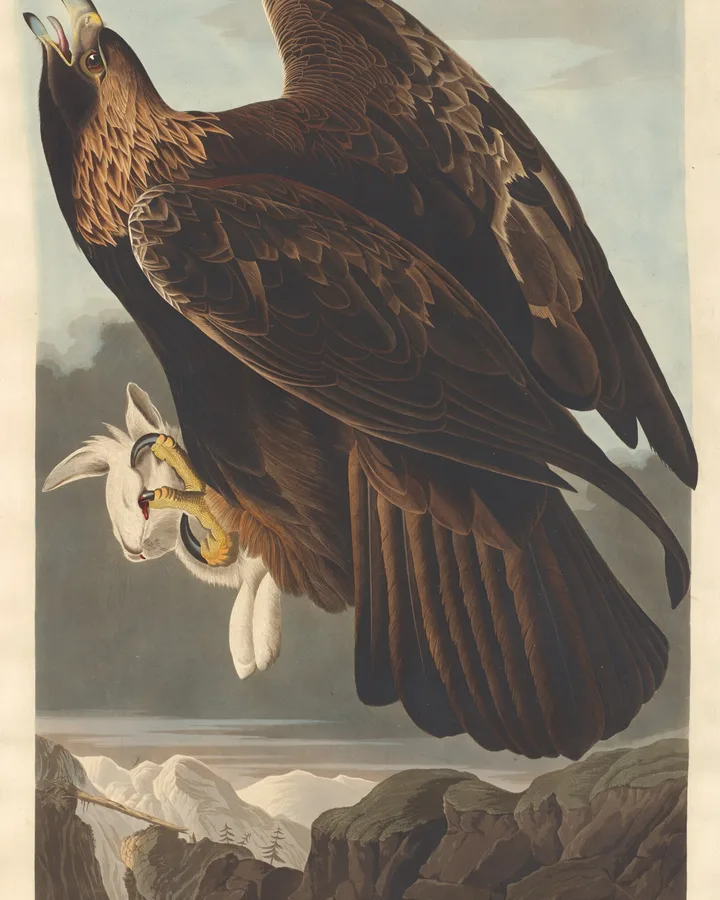
Golden Eagle (Plate 181)
1833
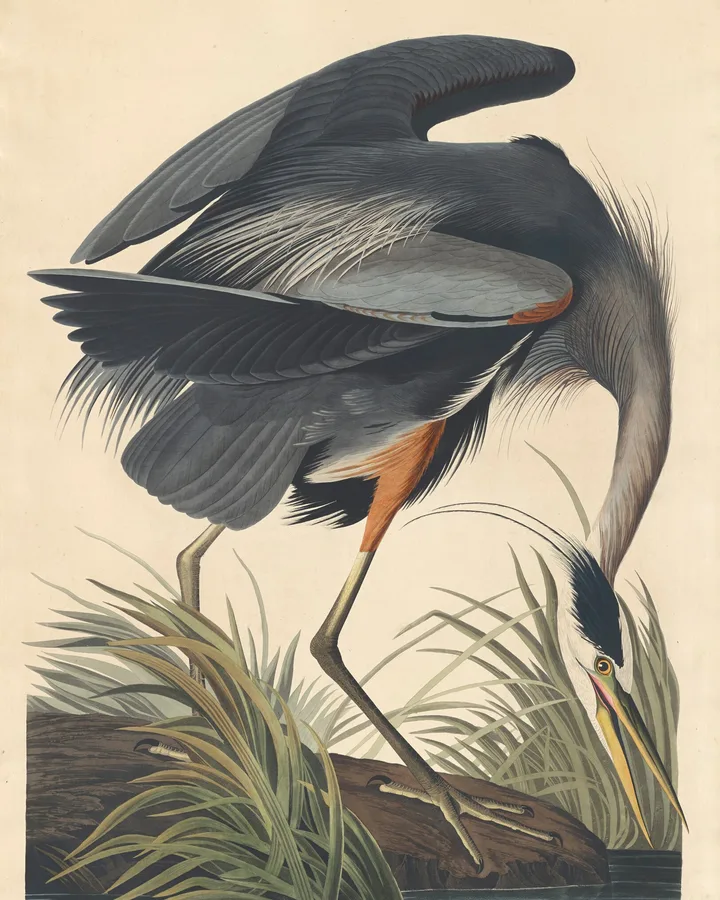
Great Blue Heron (Plate 211)
1834
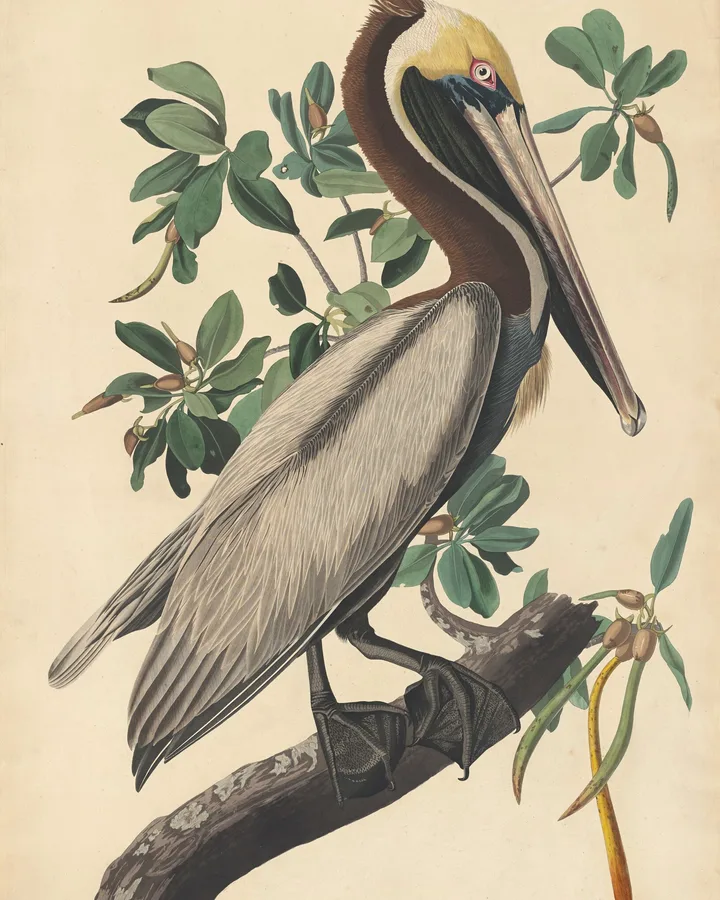
Brown Pelican (Plate 251)
1835
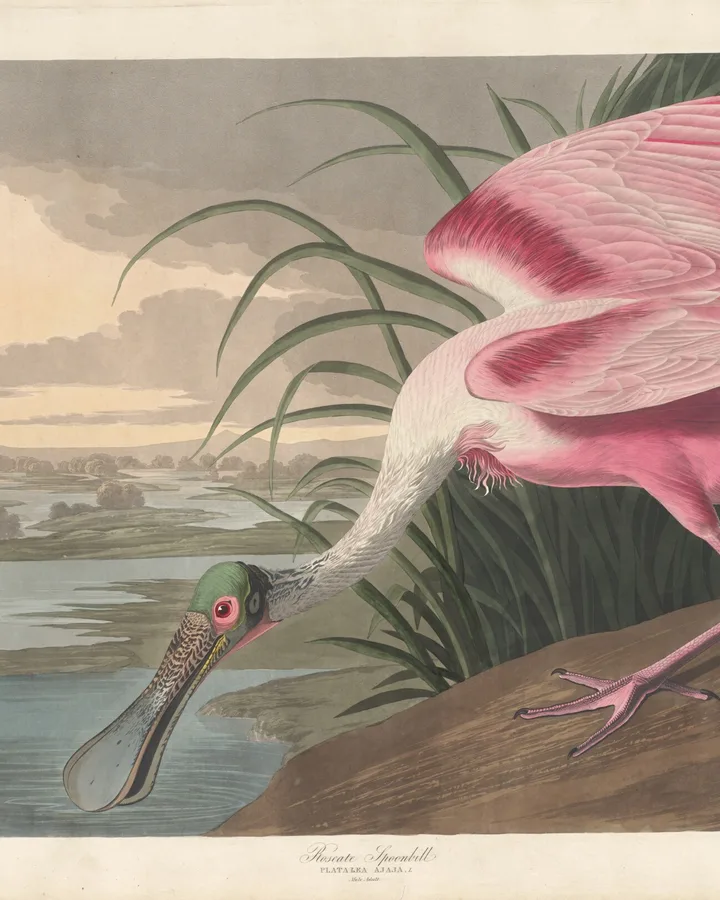
Roseate Spoonbill (Plate 321)
1836
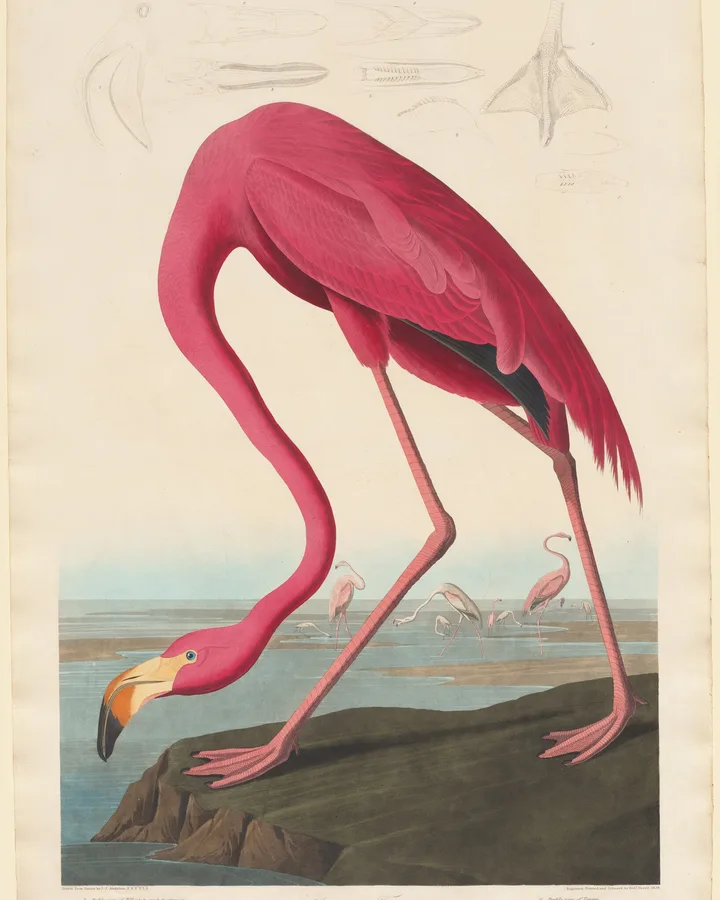
American Flamingo (Plate 431)
1838