Roseate Spoonbill (Plate 321) (1836)
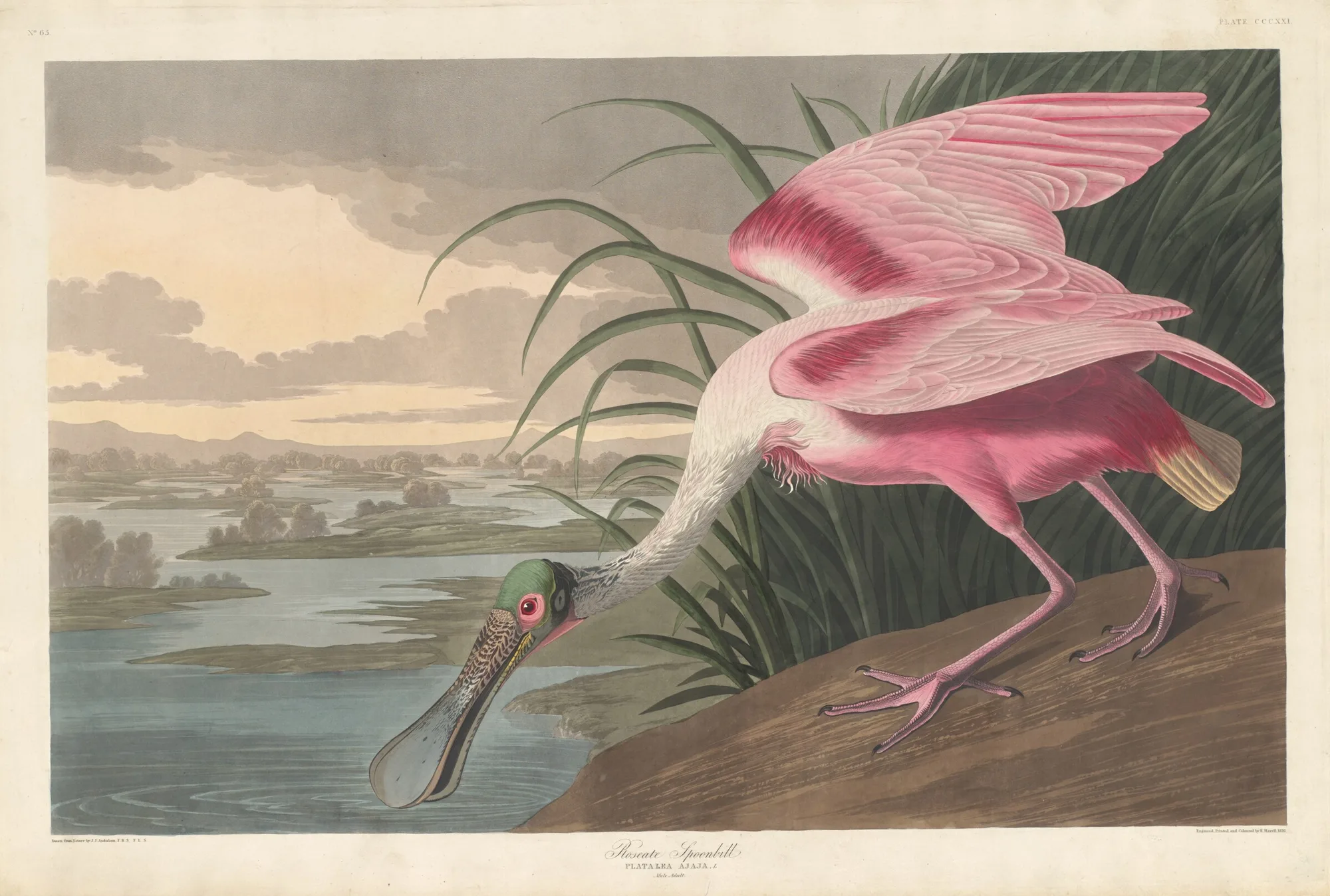
Plate 321 shows a single adult Roseate Spoonbill, pink with carmine shoulders and the flat spoon-tipped bill. Audubon found it in the Florida Keys and later on Galveston Bay, and plume hunters nearly wiped it out in Florida after his time.
- Plate
- 321 (CCCXXI)
- Audubon's name
- Roseate Spoonbill (Platalea ajaja)
- Modern name
- Roseate Spoonbill (Platalea ajaja)
- Engraved by
- Robert Havell Jr., London
- Published
- 1836, Number 65, Volume IV
- Also known as
- Audubon roseate spoonbill print; Platalea ajaja
What the plate shows
One adult male spoonbill stands with its body turned and its head lowered, so the long bill and its spoon tip are clear. It is pink with carmine shoulders and a bare greenish head. The sheet is used horizontally, which gives room for the bird's length. It is the large plate of Number 65, in the fourth and final volume.
How Audubon made it
Audubon met the spoonbill on his 1832 Florida trip, where birds wintered in the Keys near Cape Sable. He later found it more plentiful on Galveston Bay in Texas, which he visited in 1837, after this plate had appeared. His text reports that it was rarely seen inland and that John Bachman had seen only three in South Carolina in twenty years.
He described the habitat as "the marshy and muddy borders of estuaries, the mouths of rivers," and the salt-water bayous near the coast, where the birds bred in safety among abundant food. The feeding method he describes, sweeping the bill from side to side through shallow water and closing it on shrimp and small fish, is the reason for the bill's shape.
The bird today
The Roseate Spoonbill breeds in Florida, coastal Texas and Louisiana, the Caribbean and south to Argentina. Its pink color comes from carotenoid pigments in the crustaceans it eats. In the nineteenth century plume hunters, who sold the wings for fans, nearly wiped it out in Florida. Protection led to a recovery, though changes in Everglades water management have since shifted where Florida Bay birds nest. The scientific name Audubon used, Platalea ajaja, is in use again after a period when the bird had its own genus. It is listed as Least Concern.
Prints and value
The spoonbill's pink makes it a favorite for decorators, and Havell impressions sell well among the large water-bird plates. Pinks fade with light exposure, so compare the color under good light and ask about the print's display history. Check the full horizontal sheet, the Whatman watermark and the Havell lettering.
The octavo edition of 1840 to 1844 has the spoonbill as a small lithograph. See Havell, octavo and Bien editions and how to tell an original Audubon print.
Some early subscribers dropped out before the work was finished, so the late parts of the fourth volume reached fewer buyers than the first ones. A Havell spoonbill should carry the full engraved lettering and the Whatman watermark. The Bien edition of 1858 to 1860 stopped after about 105 sheets, so check any Bien attribution.
More famous plates
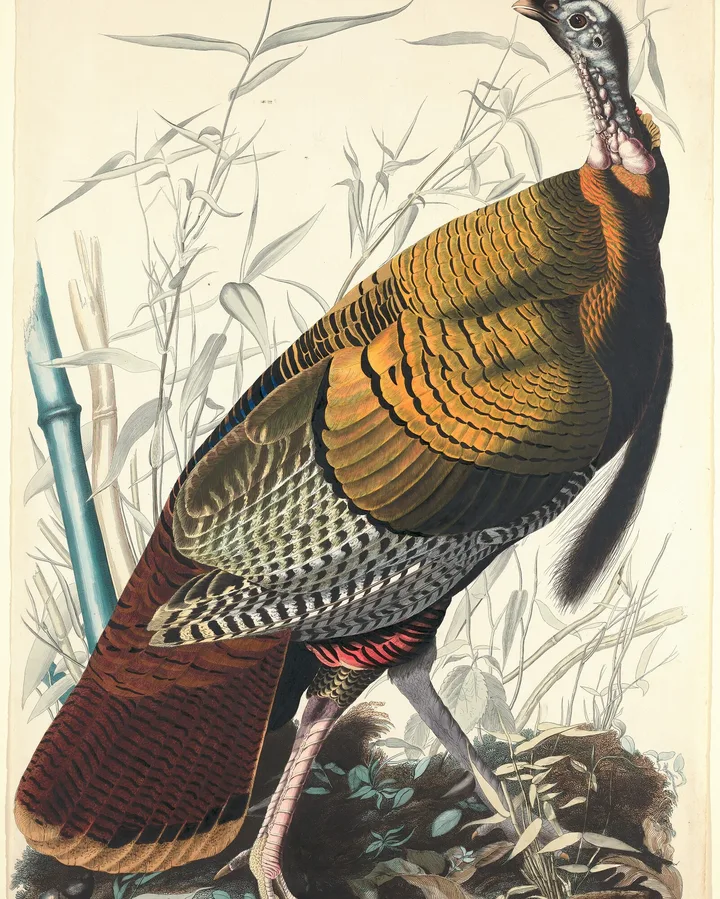
Wild Turkey (Plate 1)
1827
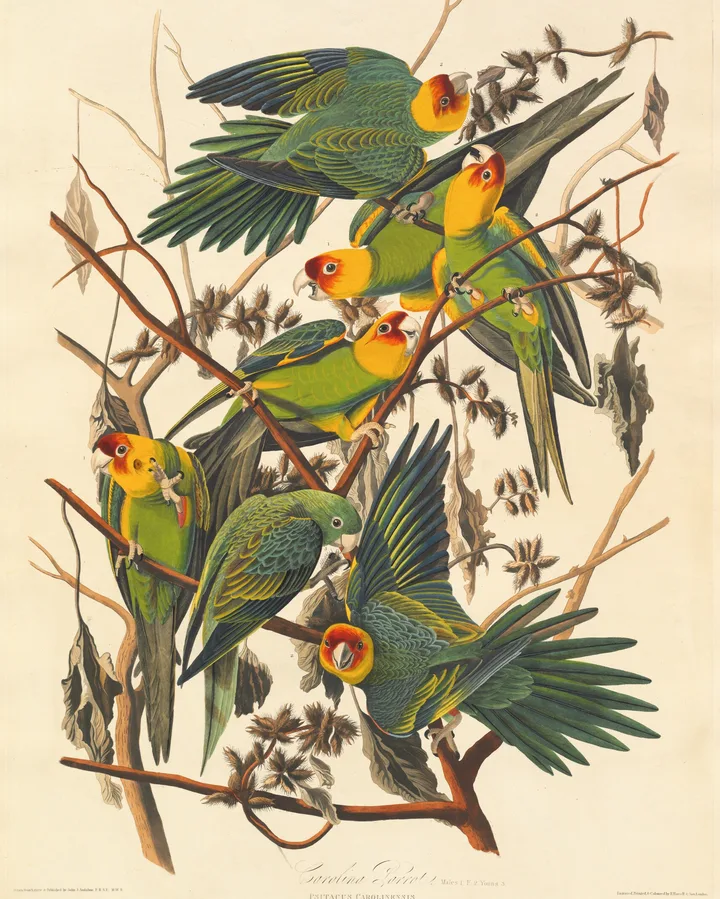
Carolina Parakeet (Plate 26)
1827
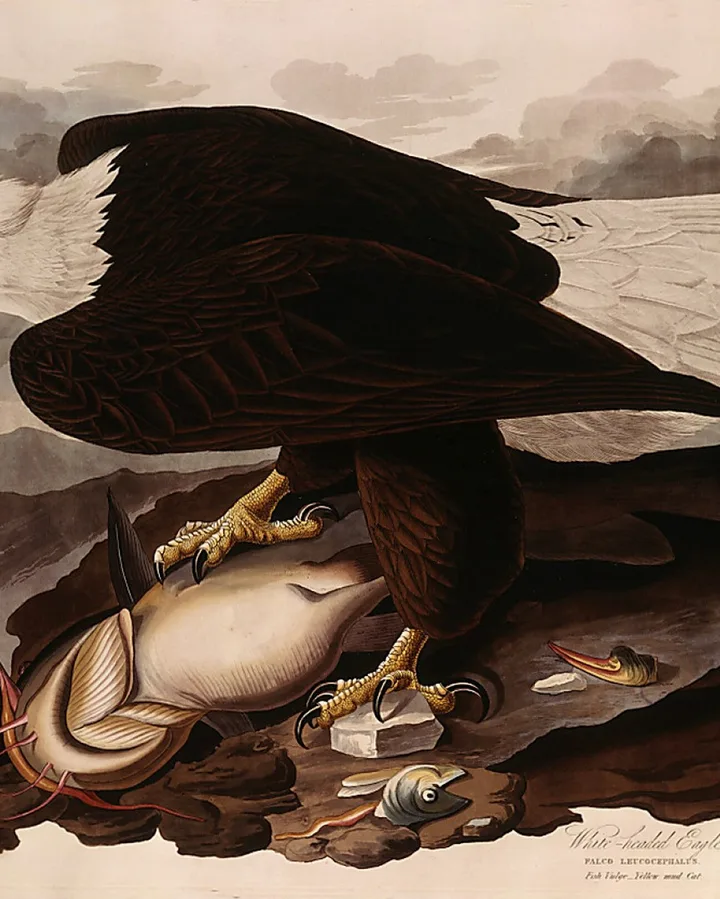
Bald Eagle (Plate 31)
1828
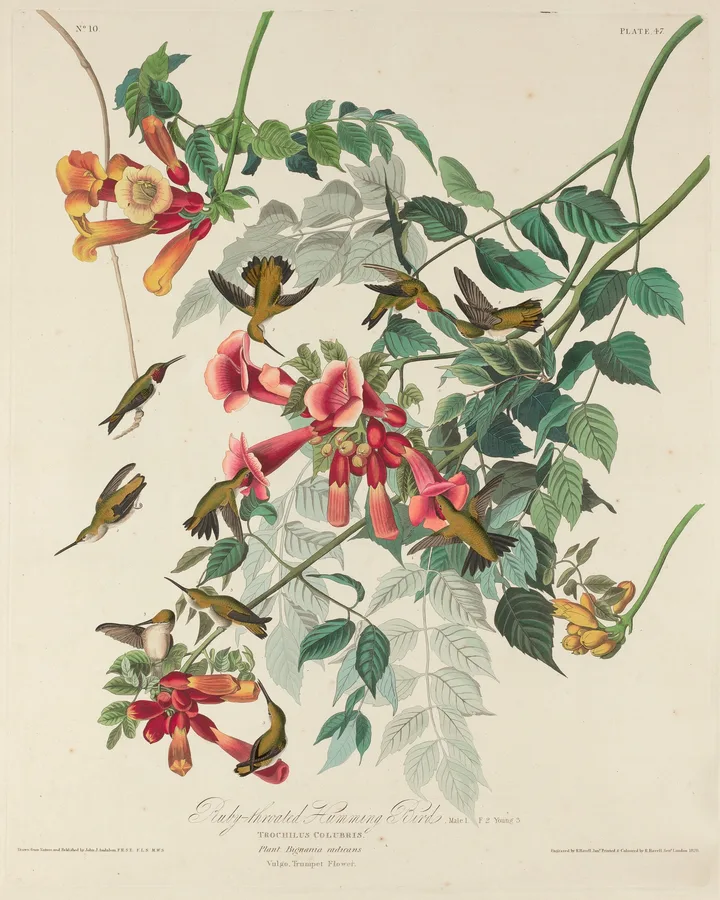
Ruby-throated Hummingbird (Plate 47)
1828
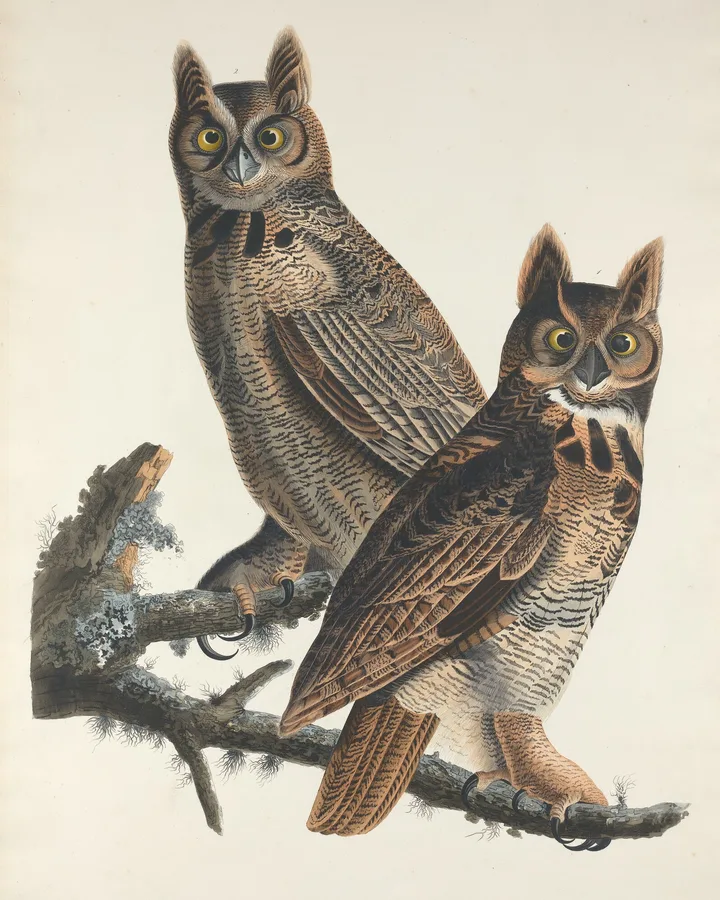
Great Horned Owl (Plate 61)
1829
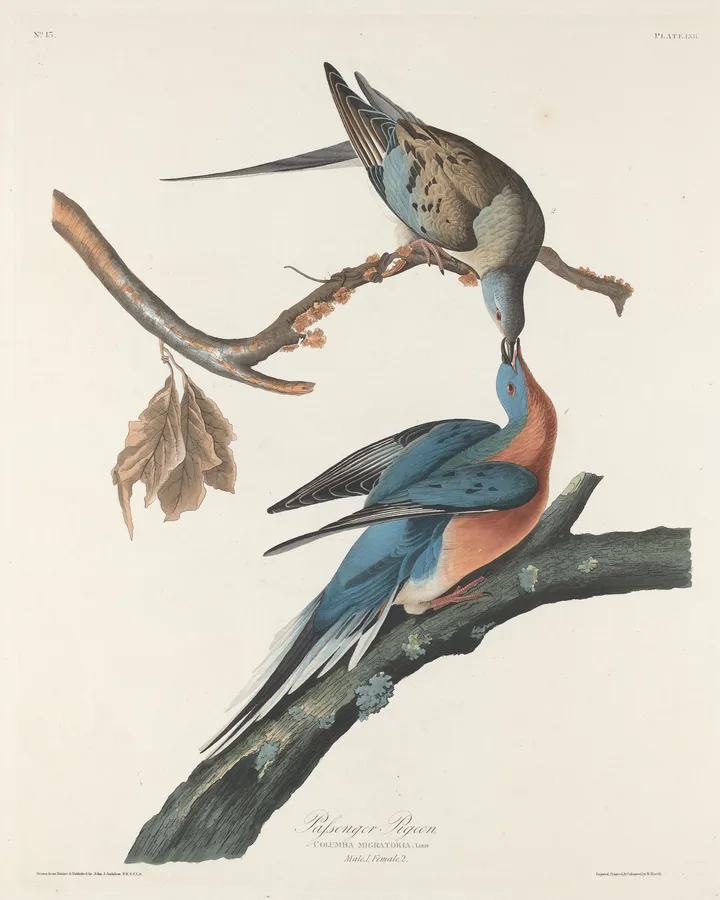
Passenger Pigeon (Plate 62)
1829
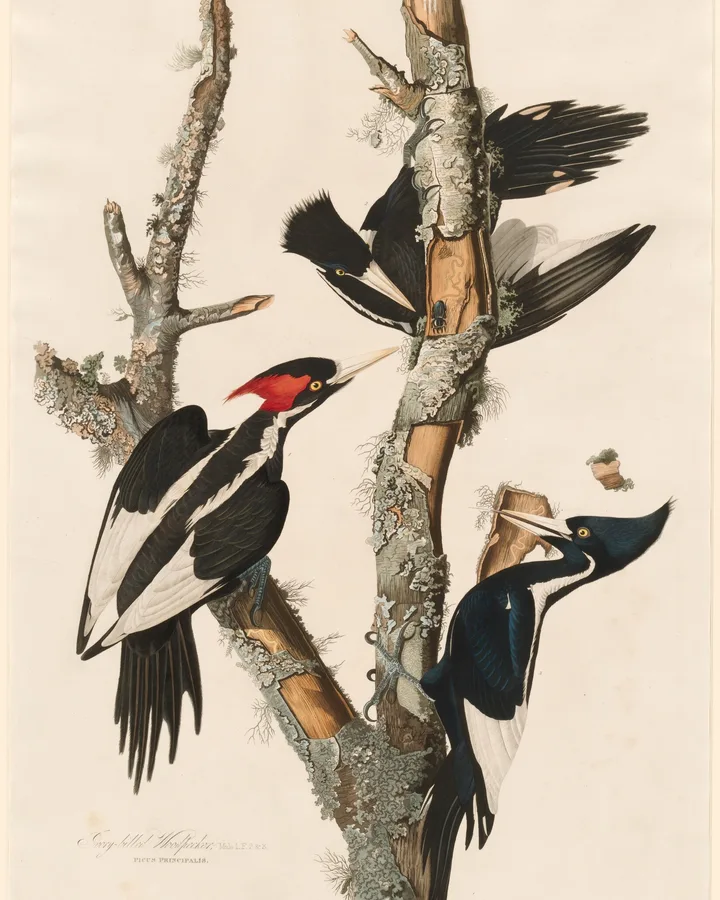
Ivory-billed Woodpecker (Plate 66)
1829
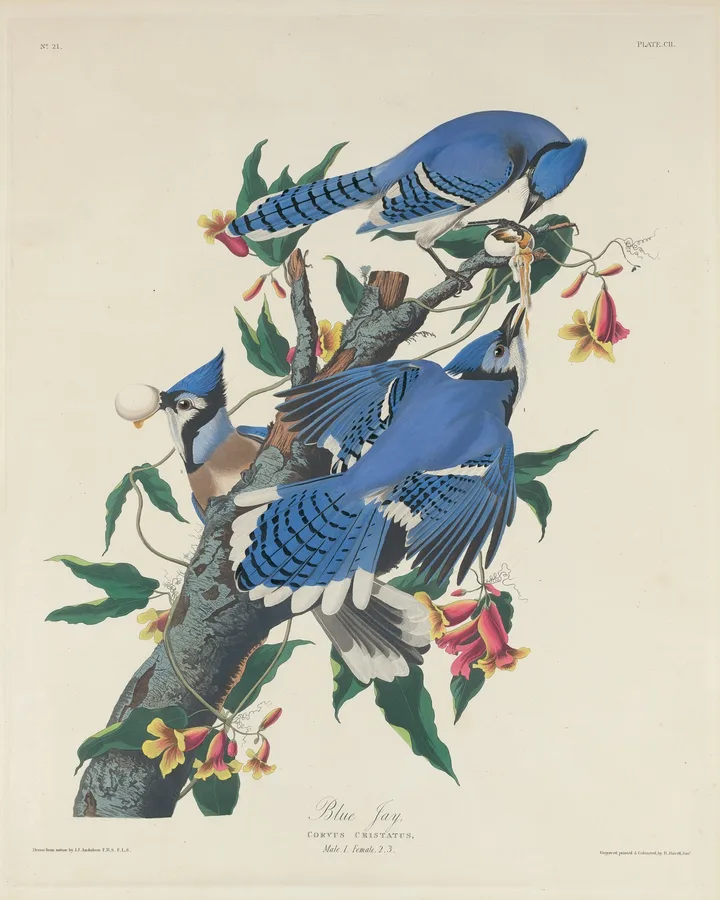
Blue Jay (Plate 102)
1831
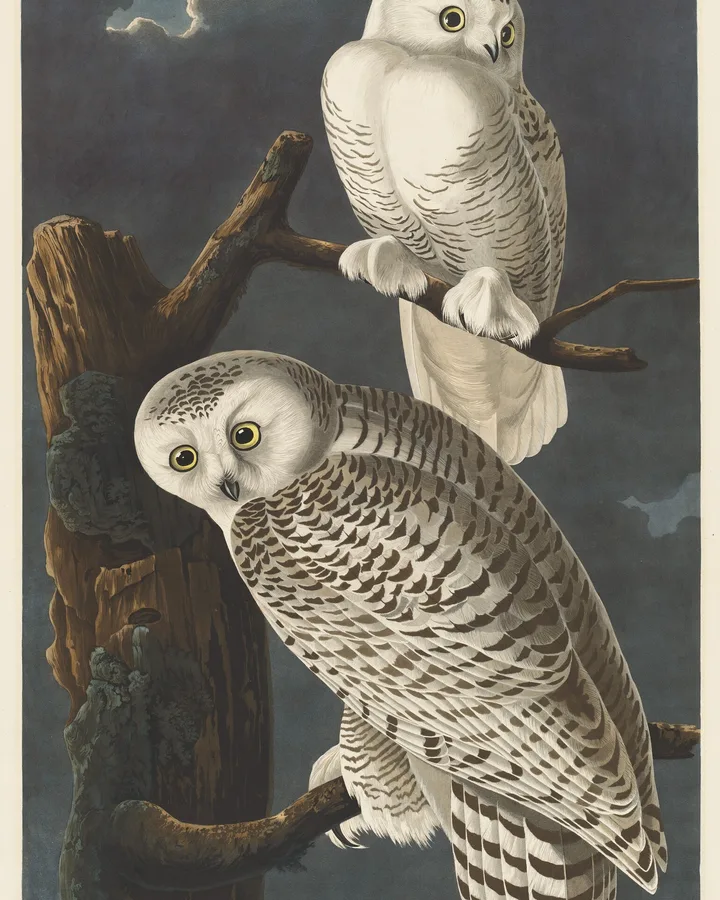
Snowy Owl (Plate 121)
1831
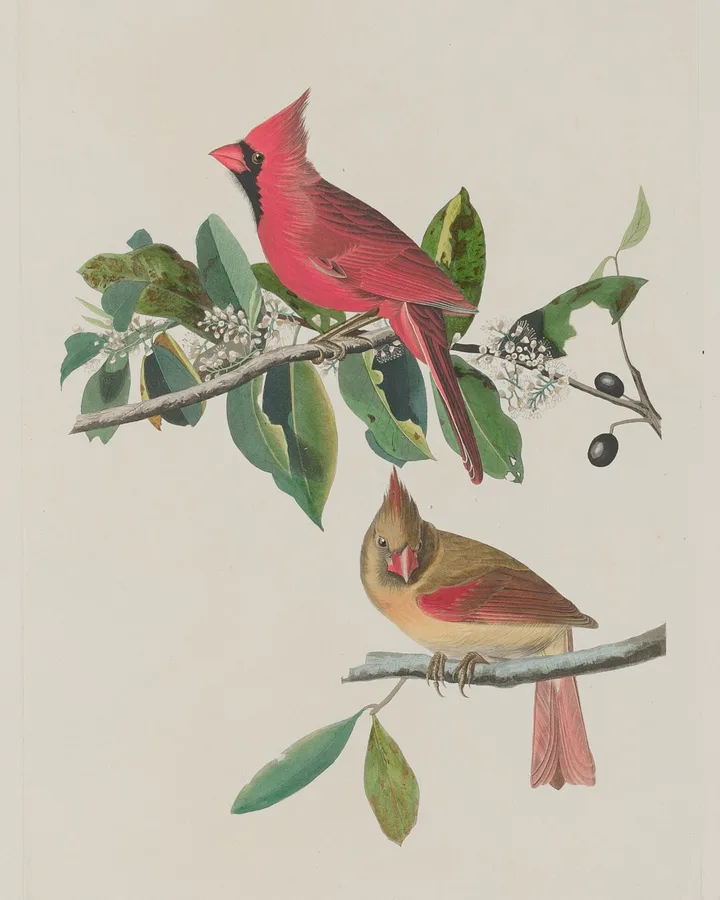
Northern Cardinal (Plate 159)
1833
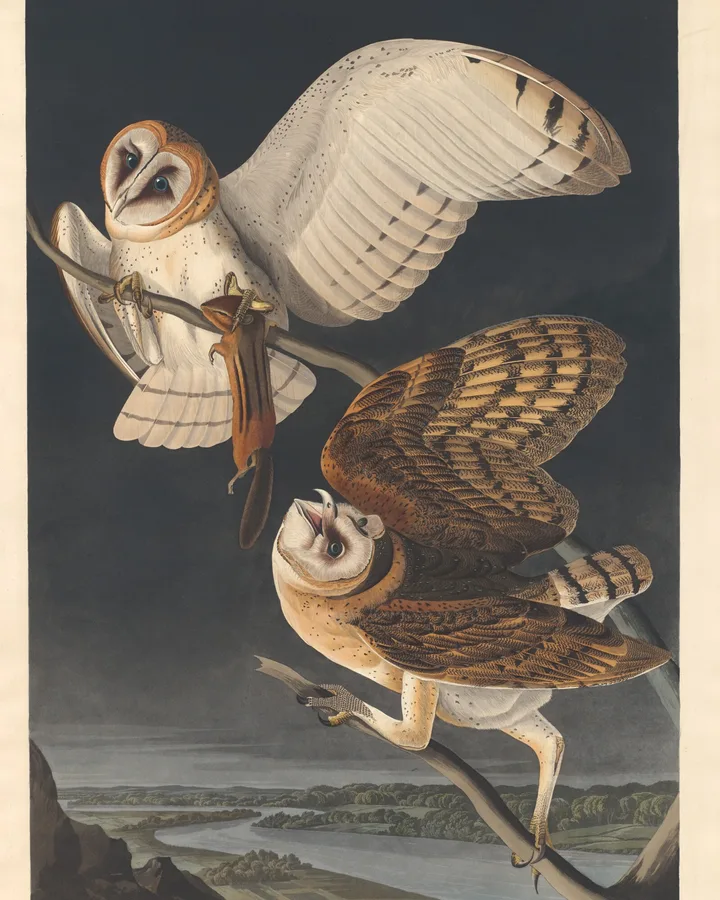
Barn Owl (Plate 171)
1833
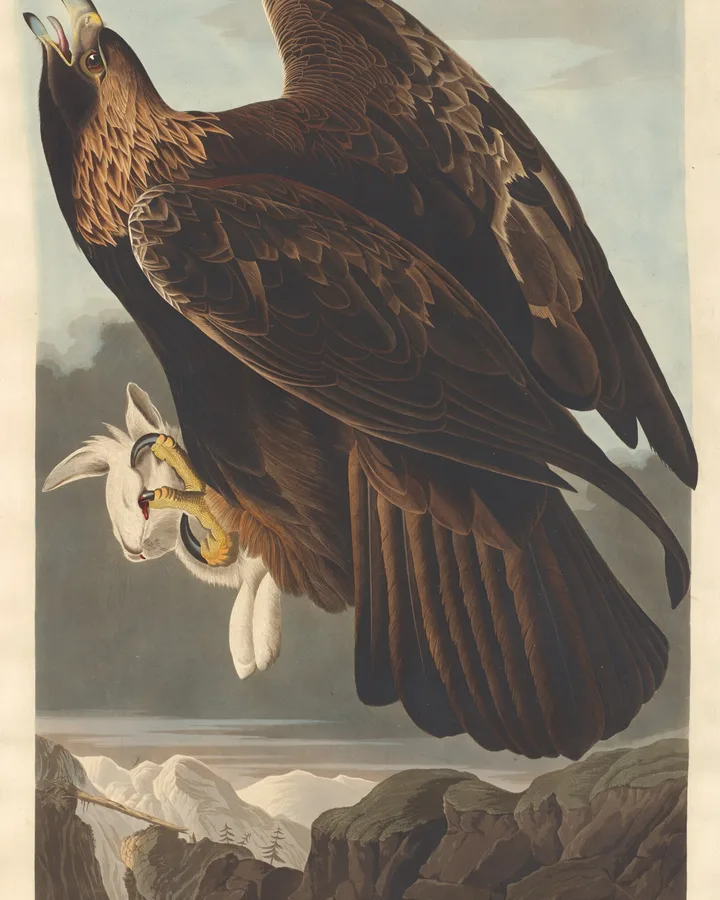
Golden Eagle (Plate 181)
1833
Great Auk (Plate 341)
1836