Wild Turkey (Plate 1) (1827)
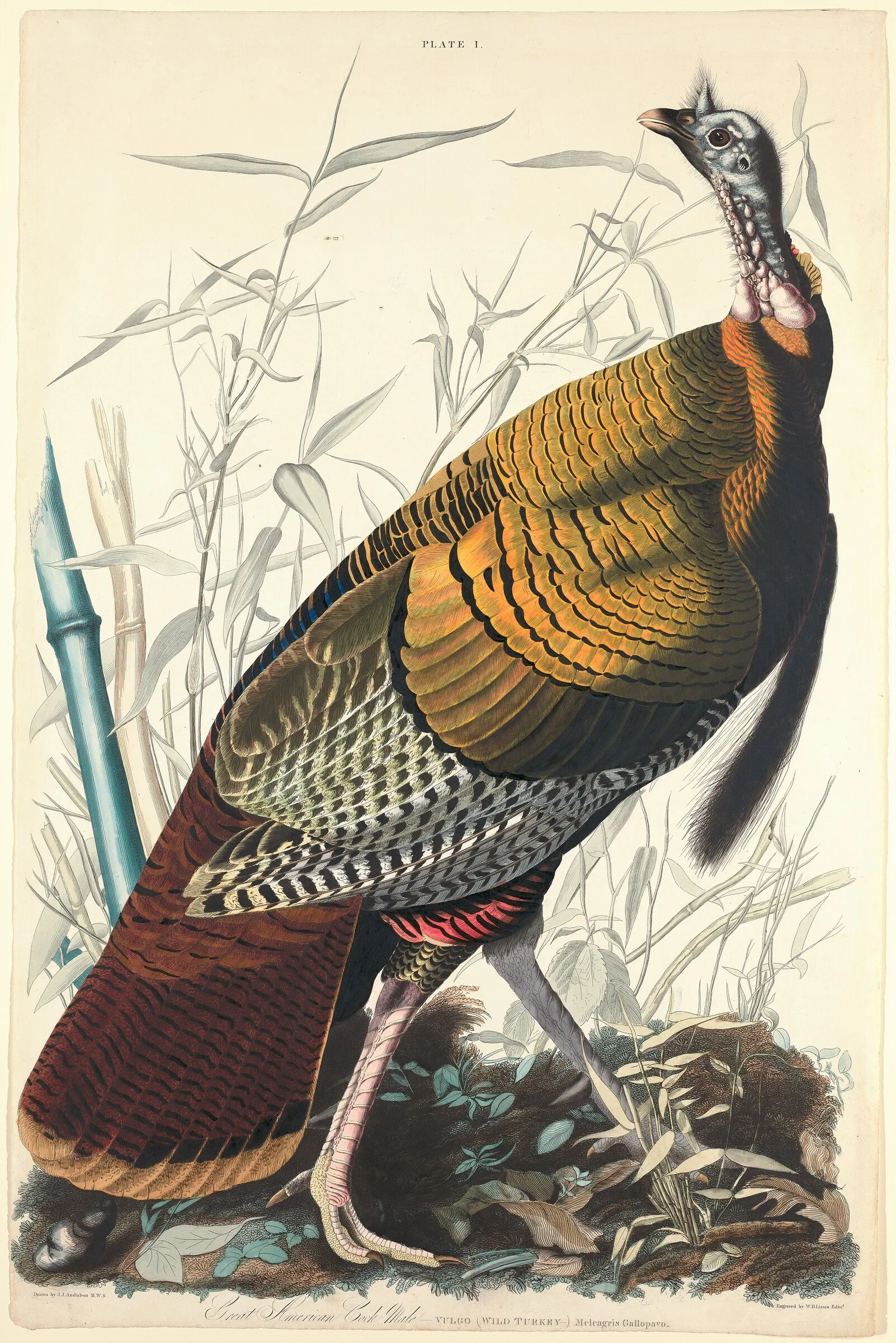
Plate 1 of The Birds of America is a life-size Wild Turkey cock walking through cane, the first image subscribers received in 1827. It was engraved in Edinburgh by William Home Lizars, then retouched by Robert Havell when production moved to London.
- Plate
- 1 (I)
- Audubon's name
- Great American Cock, Male
- Modern name
- Wild Turkey (Meleagris gallopavo)
- Engraved by
- William Home Lizars, Edinburgh; later retouched by Robert Havell Jr.
- Published
- 1827, Number 1, Volume I
- Watercolor
- New-York Historical Society
- Also known as
- Great American Cock; Great American Cock Male; Audubon turkey print
What the plate shows
A single adult gobbler fills almost the whole double elephant sheet. He steps forward through a stand of cane with his head low and turned back over his shoulder, so the bronze body, the barred wings and the bare red head all read at once. The bird is drawn at life size. In his description Audubon gave the specimen's length as 4 feet 1 inch and its wingspread as 5 feet 8 inches, and said these "were the dimensions of the individual represented in the plate."
The plate was meant to be seen first. Each part of the work contained one large plate and four smaller ones, and the turkey led Number 1. Its partner, the Great American Hen and Young, appeared as Plate 6 at the head of the second part.
How Audubon made it
Audubon drew the turkey in America before he sailed to Britain in 1826 to find an engraver. He later wrote that the only drawing he had ever worked at as hard as his Golden Eagle was the Wild Turkey.
In Edinburgh, William Home Lizars engraved the first ten plates, including this one. Lizars's colorists went on strike in 1827, and Audubon moved the project to Robert Havell Jr. in London, who engraved, printed and colored the rest. Havell reworked the Lizars copper plates, and later impressions of Plate 1 carry a line saying the plate was retouched by R. Havell Jr. This is why two states of Plate 1 exist.
The turkey also opens the Ornithological Biography, Audubon's text volumes. It is one of his longest chapters, covering the autumn movements of flocks toward the river bottoms of the Ohio and Mississippi, the strutting of males in spring, and the ways settlers called and trapped the birds.
The bird today
The Wild Turkey is the same species, Meleagris gallopavo, and the ancestor of the domestic turkey, which was domesticated in Mexico. Audubon already saw it vanishing from the East. He wrote that during his stay in the Great Pine Forest of Pennsylvania in 1829 he found only a single tail feather. Hunting and forest clearing kept numbers low into the twentieth century. Restocking programs and protection then brought it back to almost every state, and it is now listed as Least Concern.
Prints and value
A Havell edition Plate 1 is one of the most sought-after single sheets from the work and is among the most expensive Havell plates. Collectors distinguish impressions with the Lizars imprint alone from those retouched by Havell, so read the engraved lines below the image carefully. The sheet should be about 39 by 26 inches on Whatman paper.
The turkey also appears in the octavo edition of 1840 to 1844, a hand-colored lithograph about 10 by 7 inches with a different plate number. Most turkey prints on the market are modern reproductions. See Havell, octavo and Bien editions and how to tell an original Audubon print.
Subscribers paid two guineas for each part, and a full set of 87 parts took eleven years to arrive. A Havell Plate 1 therefore usually comes from a broken set, and its provenance can sometimes be traced to the original subscriber.
More famous plates
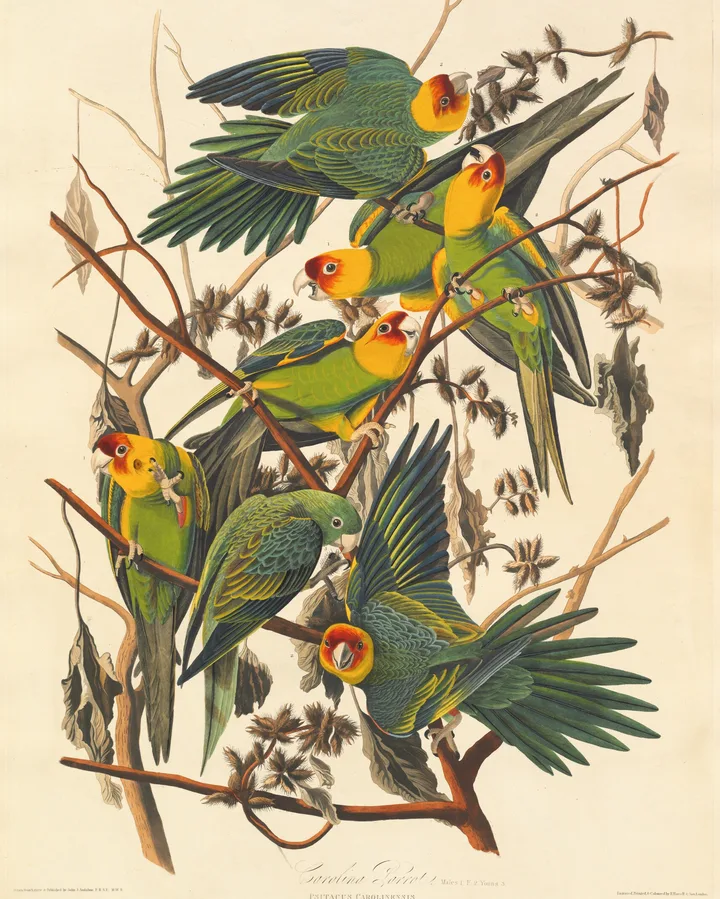
Carolina Parakeet (Plate 26)
1827
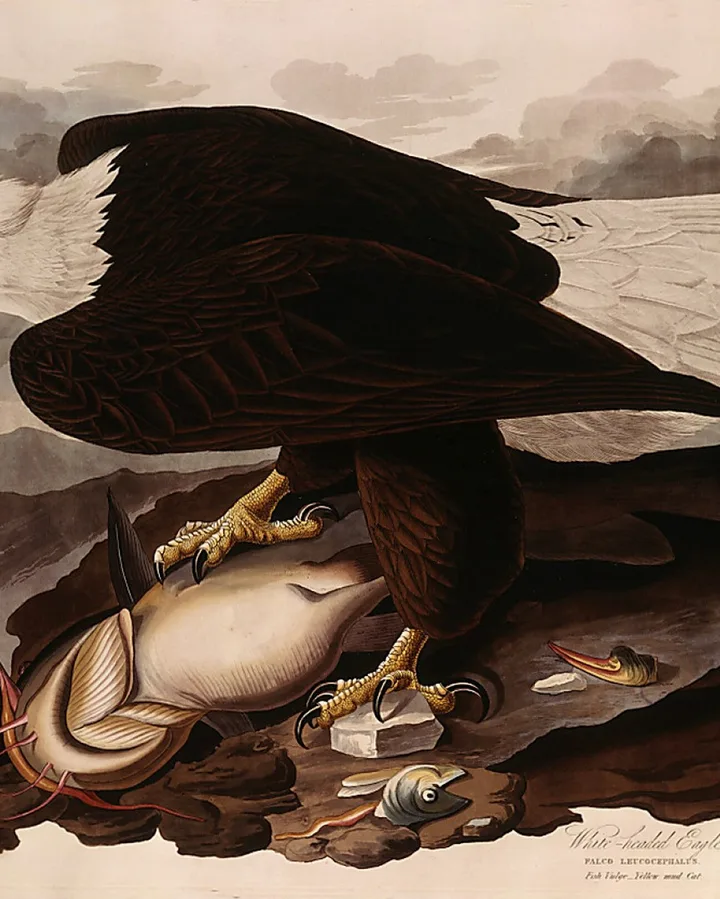
Bald Eagle (Plate 31)
1828
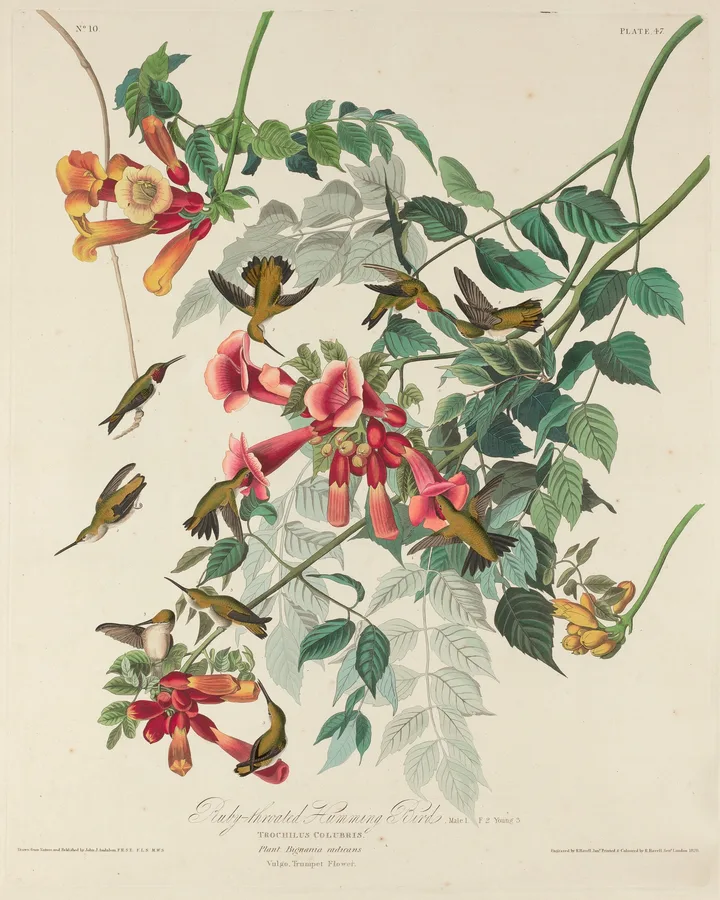
Ruby-throated Hummingbird (Plate 47)
1828
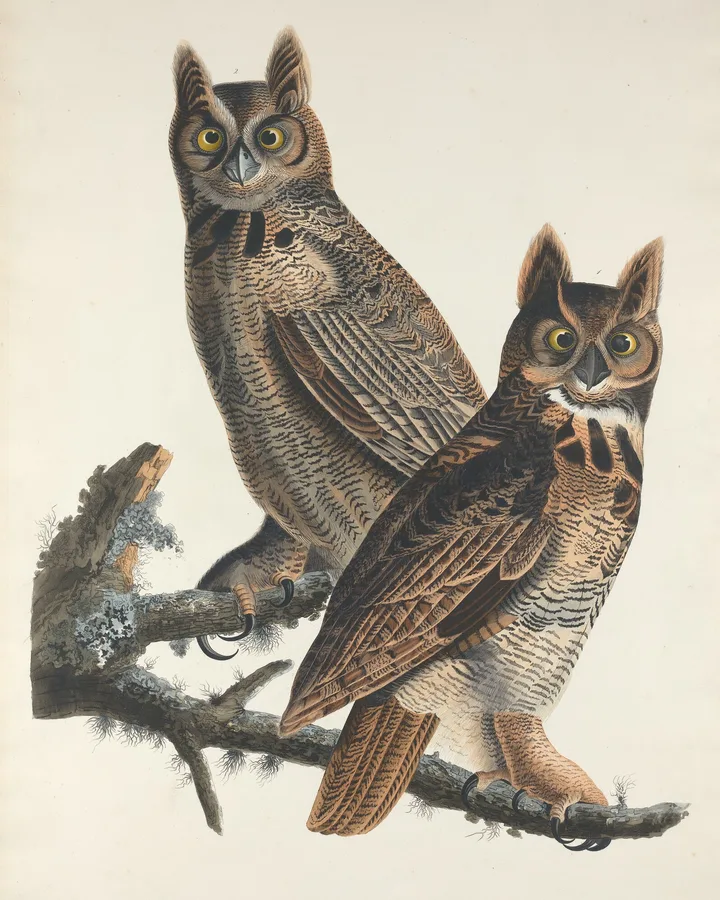
Great Horned Owl (Plate 61)
1829
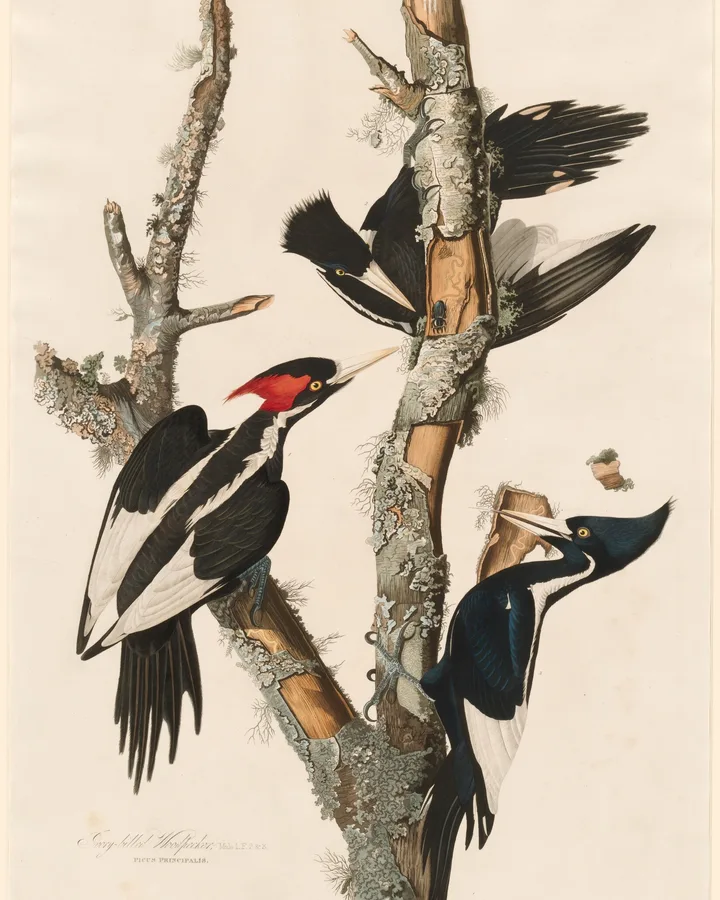
Ivory-billed Woodpecker (Plate 66)
1829
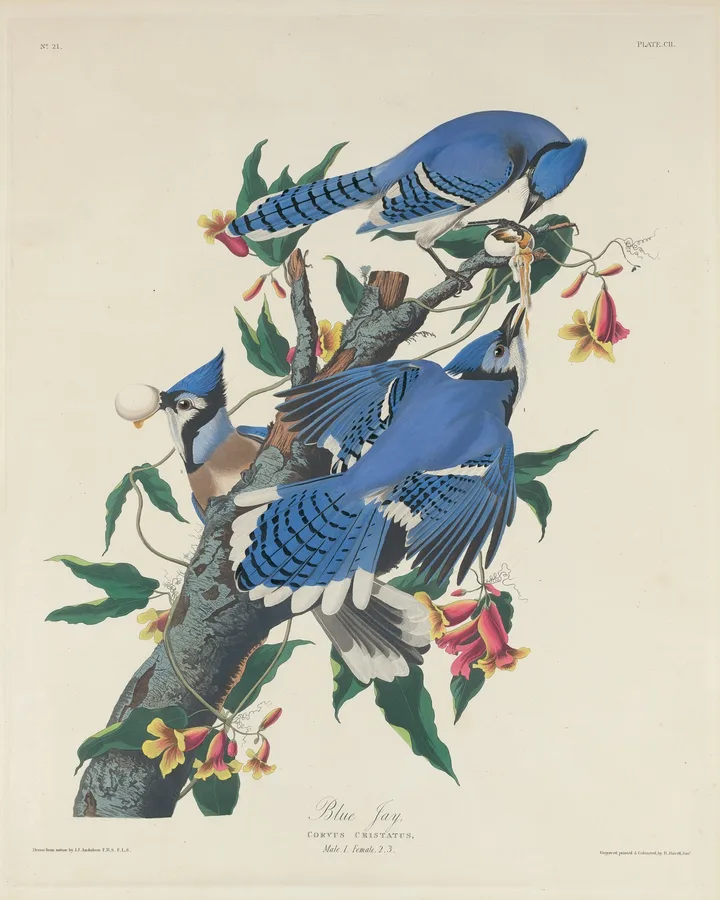
Blue Jay (Plate 102)
1831
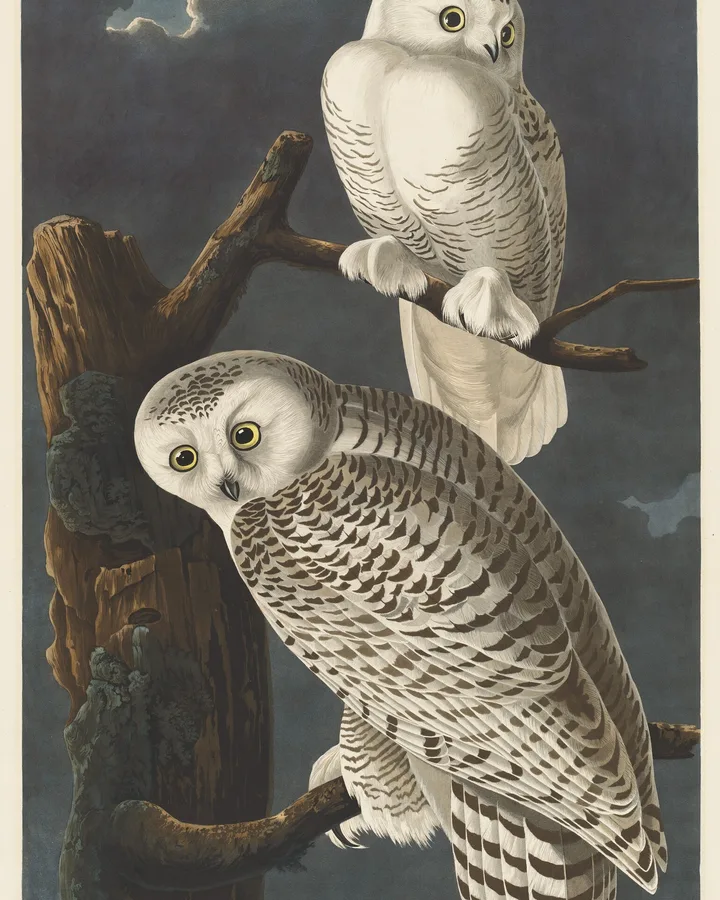
Snowy Owl (Plate 121)
1831
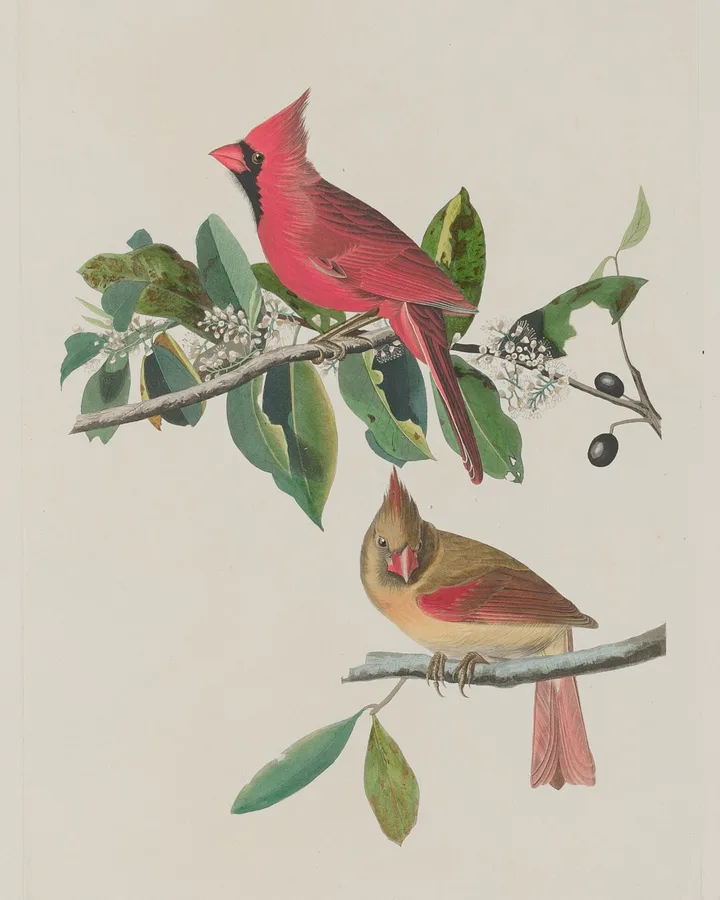
Northern Cardinal (Plate 159)
1833
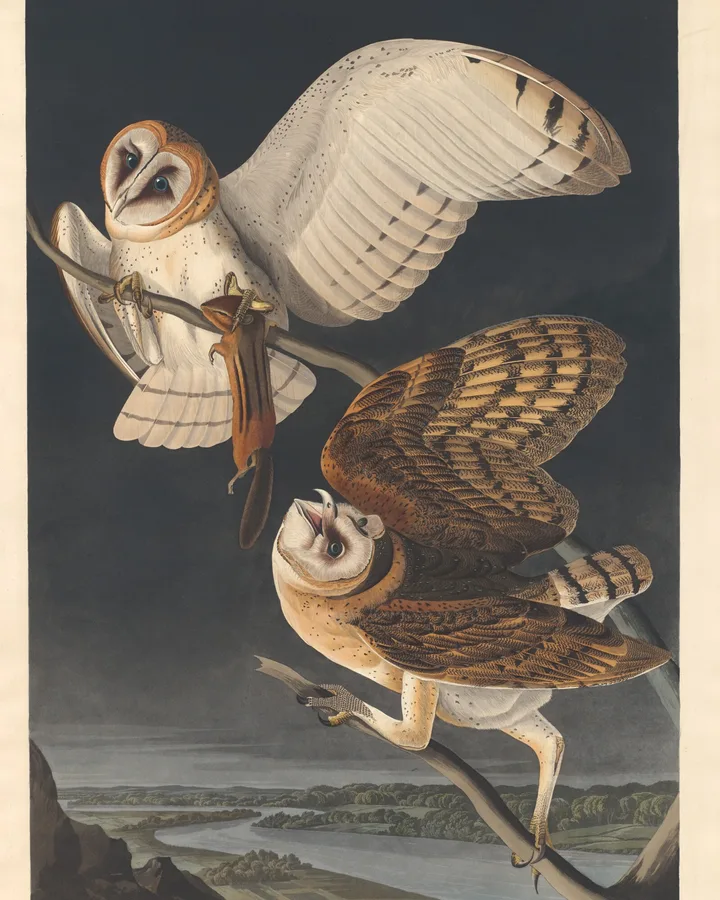
Barn Owl (Plate 171)
1833
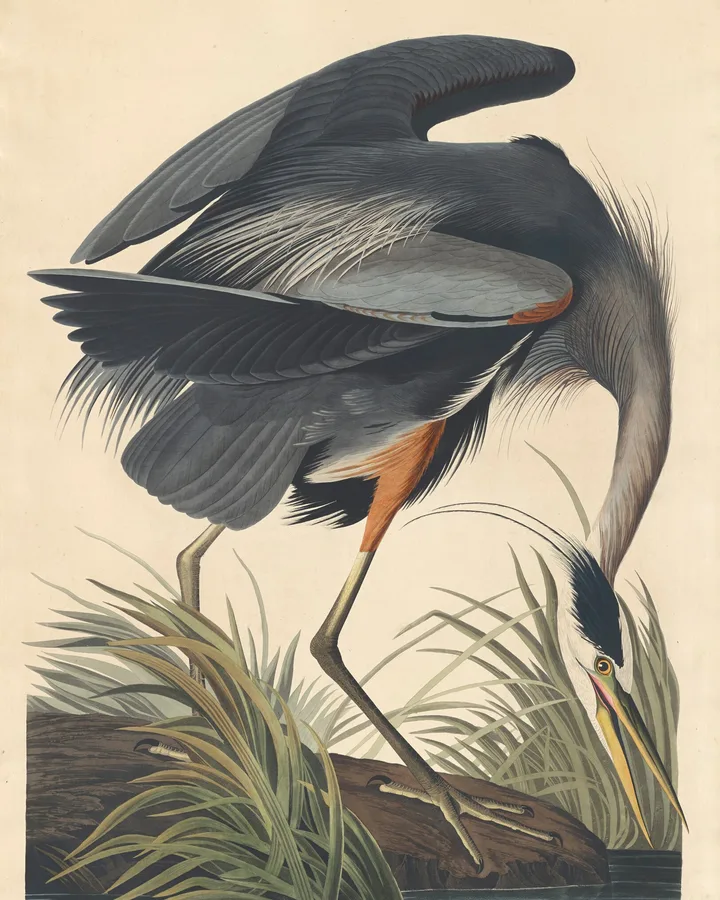
Great Blue Heron (Plate 211)
1834
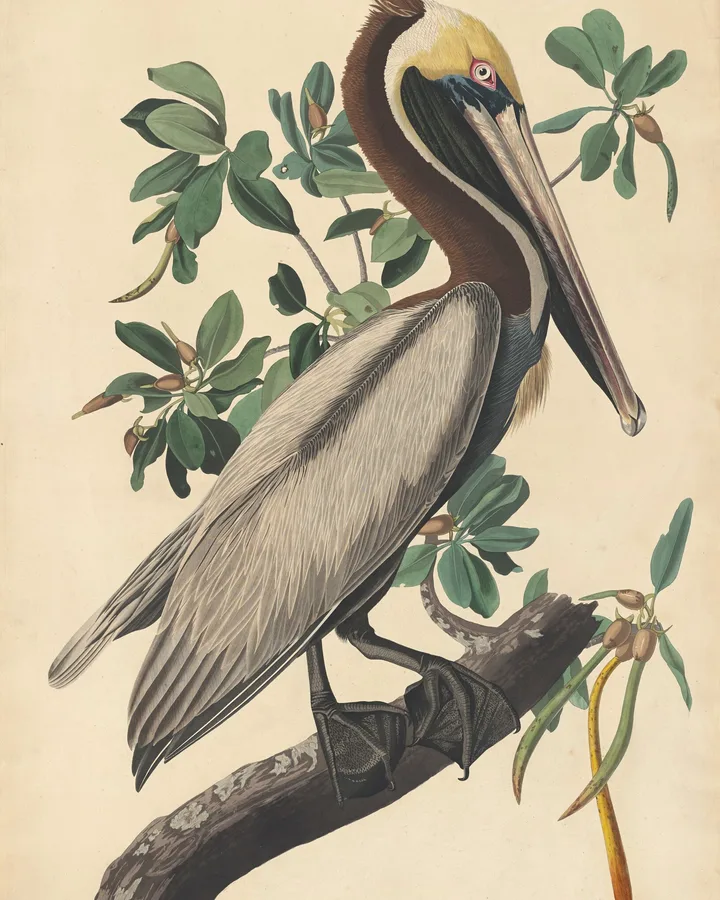
Brown Pelican (Plate 251)
1835
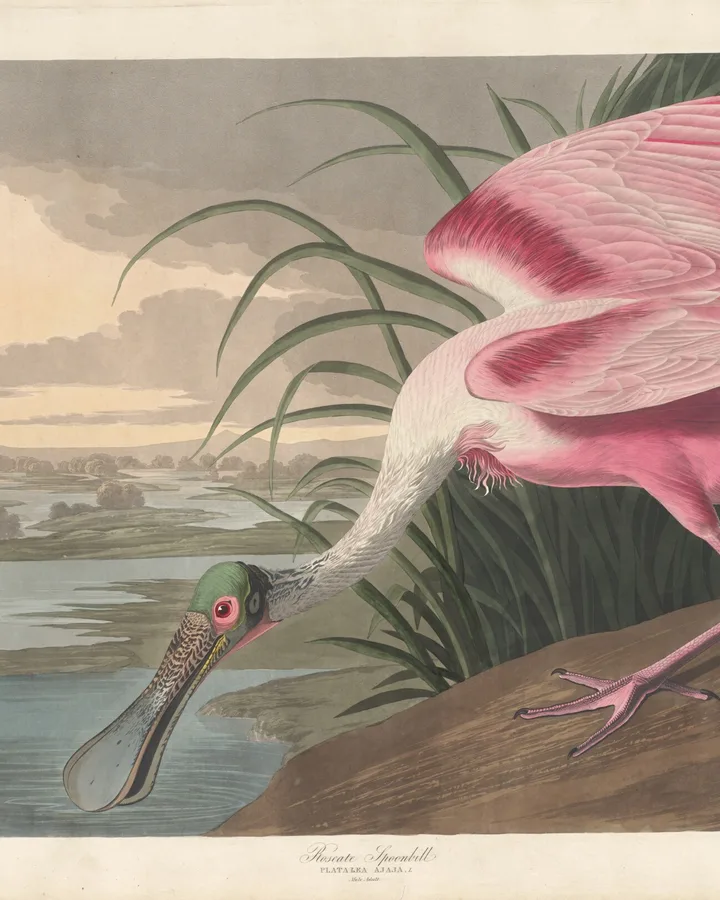
Roseate Spoonbill (Plate 321)
1836
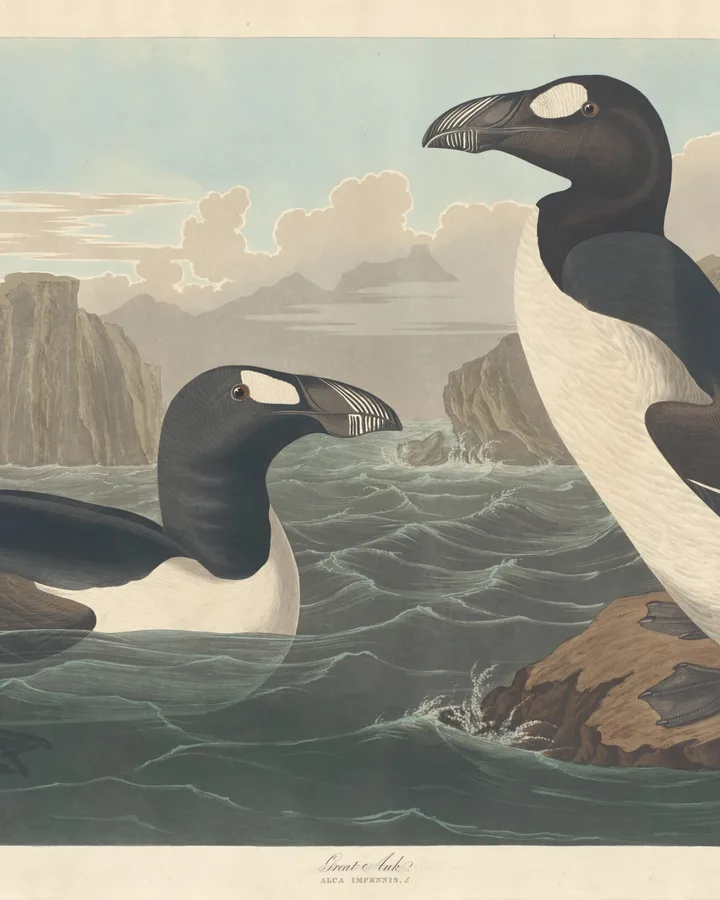
Great Auk (Plate 341)
1836