Snowy Owl (Plate 121) (1831)
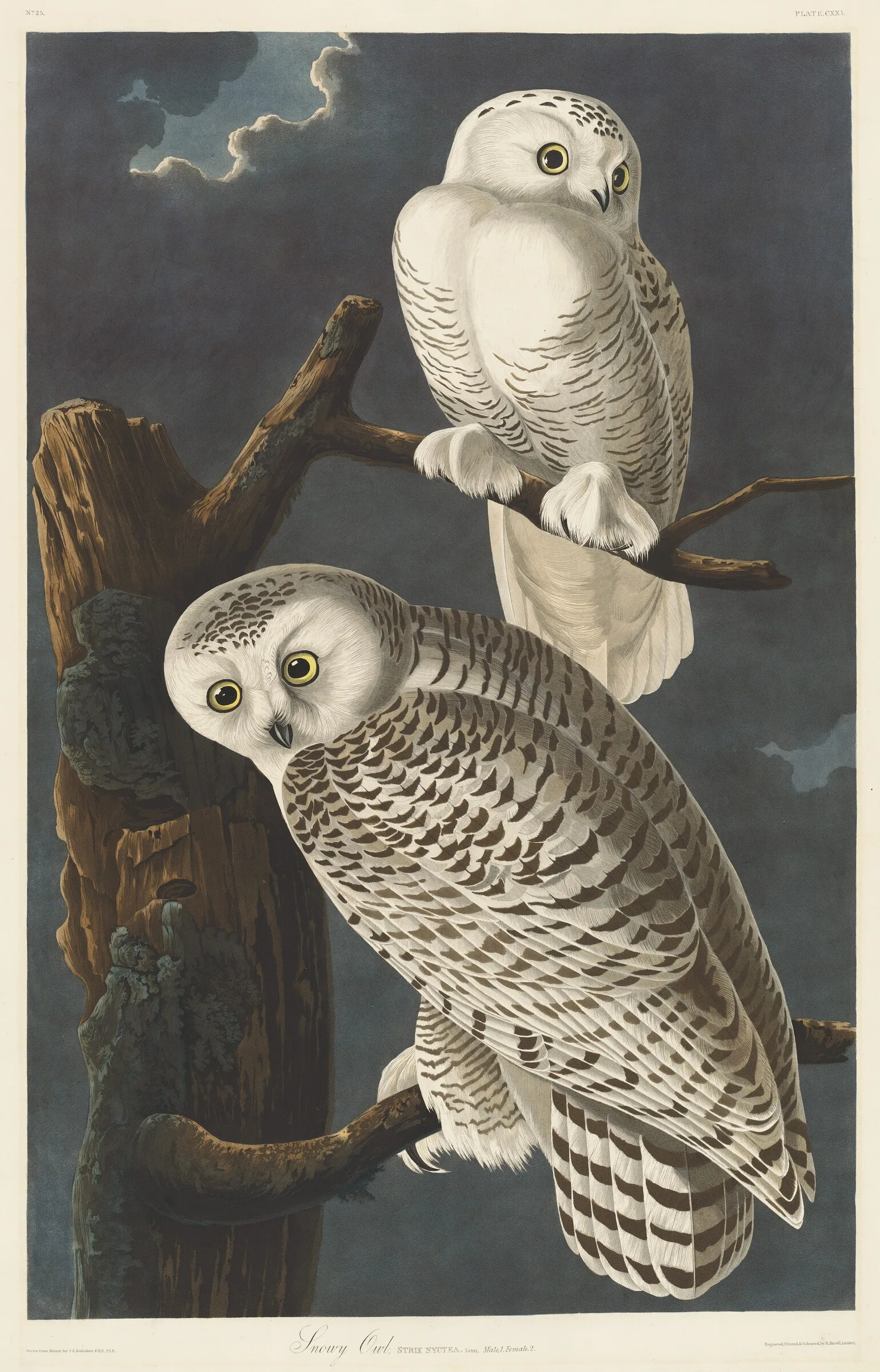
Plate 121 shows a male and female Snowy Owl on a dead tree against a dark night sky. The white male and the barred female are set against one of the few night backgrounds in the work, which is why the plate stands out on a wall.
- Plate
- 121 (CXXI)
- Audubon's name
- Snowy Owl (Strix nyctea)
- Modern name
- Snowy Owl (Bubo scandiacus)
- Engraved by
- Robert Havell Jr., London
- Published
- 1831, Number 25, Volume II
- Also known as
- Audubon snowy owl print; Strix nyctea
What the plate shows
Two Snowy Owls perch on a dead tree. The male is almost pure white. The larger female is heavily barred with dark brown. Behind them the sky is dark, so the white birds stand out sharply. Most plates in the work have a blank or pale background, so this one looks very different hung beside others. It is the large plate of Number 25.
How Audubon made it
Audubon met the Snowy Owl as a winter visitor, and his chapter is built from what he saw in the United States rather than on the Arctic breeding grounds. He wrote that it arrived about November and left by early February, and that it was most common in Massachusetts and Maine. He had also seen it in Kentucky and Ohio.
His most memorable observation came from the Ohio. He watched owls at the edge of rapids, lying still until a fish rose near the surface, then striking it with the foot nearest the water, in the manner, he said, of a cat. He also described them robbing muskrat traps and striking ducks and pigeons in flight. He wrote that the owl "hunts during the day, as well as in the dusk," which fits the evening setting of the plate.
The bird today
Snowy Owls breed on Arctic tundra around the world and feed largely on lemmings. In some winters large numbers move south into the northern United States. Audubon's genus name, Strix, gave way to Nyctea for much of the twentieth century. DNA studies then showed the bird belongs with the horned owls, and it is now Bubo scandiacus. In 2017 the IUCN listed it as Vulnerable after new estimates put the world population far lower than once thought.
Prints and value
The dark sky makes condition easy to judge and hard to fake. Look for even tone across the background, no rubbing on the white birds, and the Havell imprint below. Havell impressions are valued as large plates and sit among the more sought-after owls.
The octavo edition of 1840 to 1844 has the Snowy Owl as a small lithograph. Reproductions often lighten the sky or lose the female's barring. See Havell, octavo and Bien editions and how to tell an original Audubon print.
Because the dark background was laid in by hand over aquatint, Havell impressions vary in how deep the night sky appears. That variation is normal. A completely flat, even dark tone with no brush marks or grain is more typical of a modern print. The Bien edition of 1858 to 1860 stopped early, so check whether this subject exists in it before trusting a Bien attribution.
More famous plates
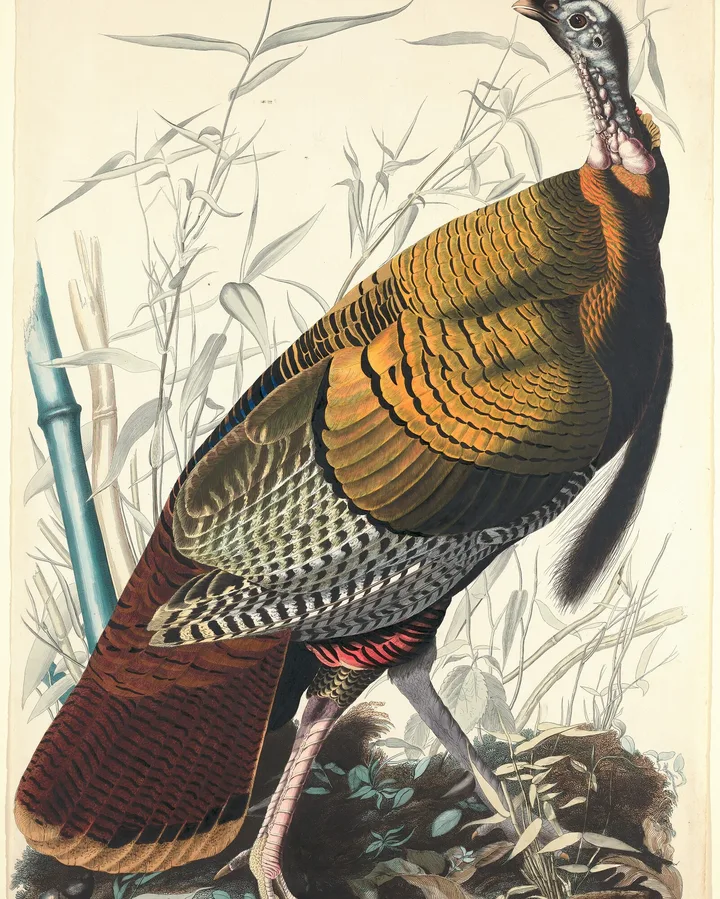
Wild Turkey (Plate 1)
1827
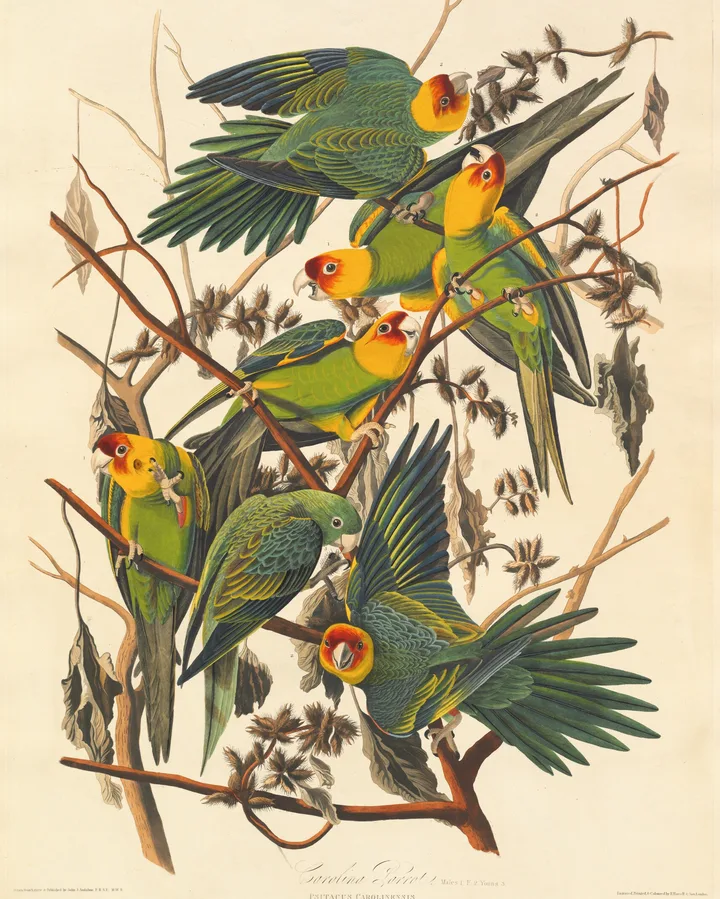
Carolina Parakeet (Plate 26)
1827
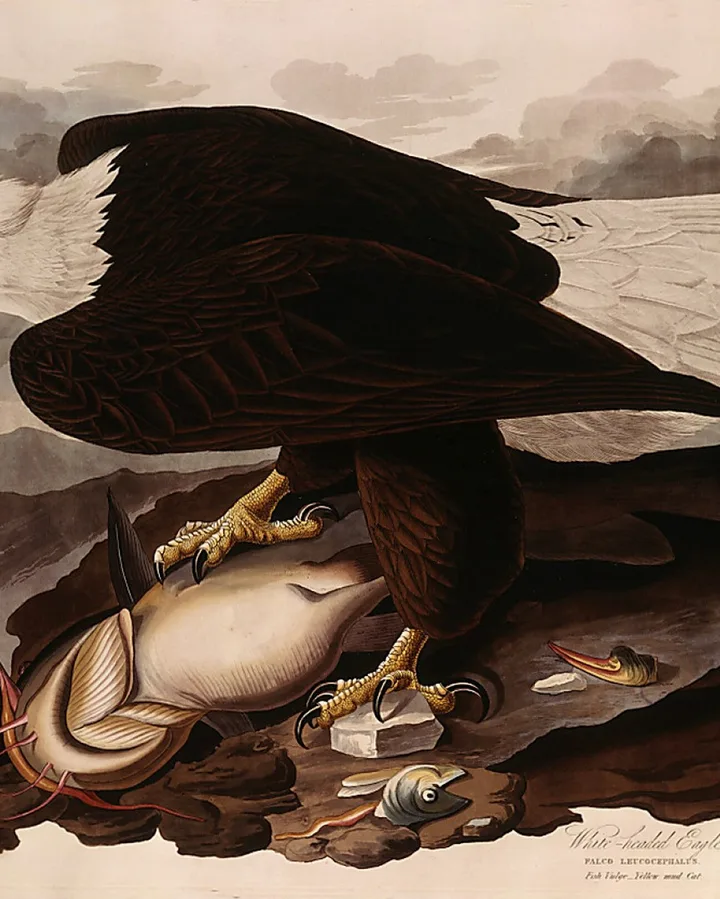
Bald Eagle (Plate 31)
1828
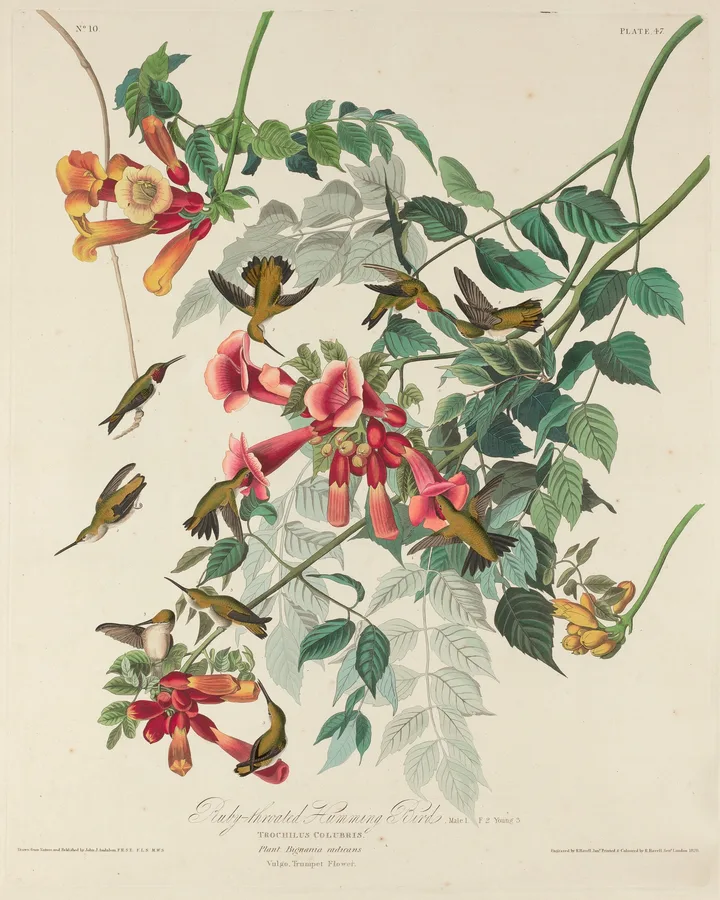
Ruby-throated Hummingbird (Plate 47)
1828
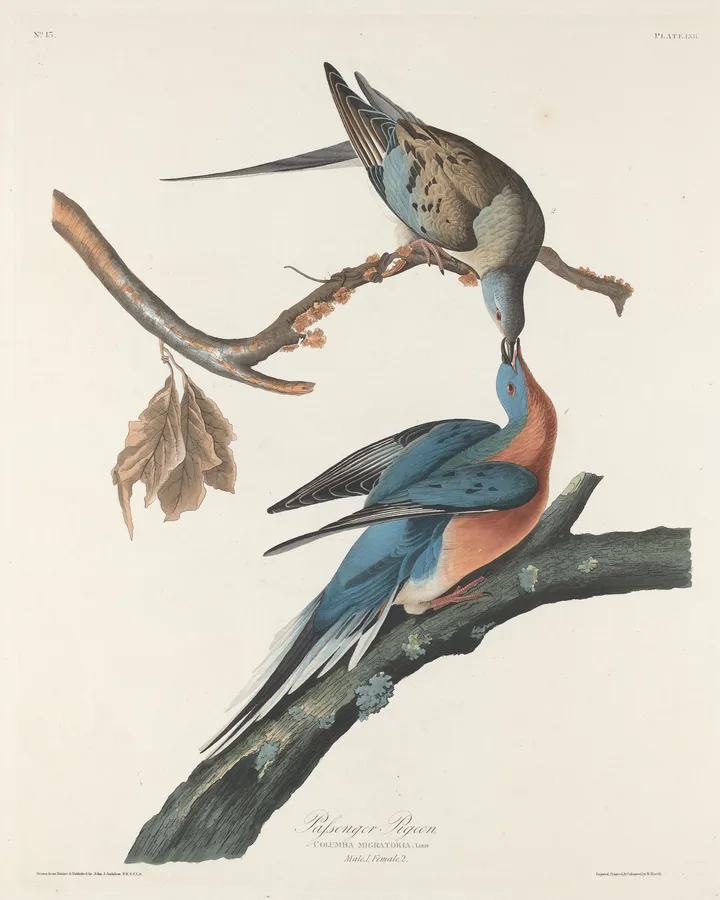
Passenger Pigeon (Plate 62)
1829
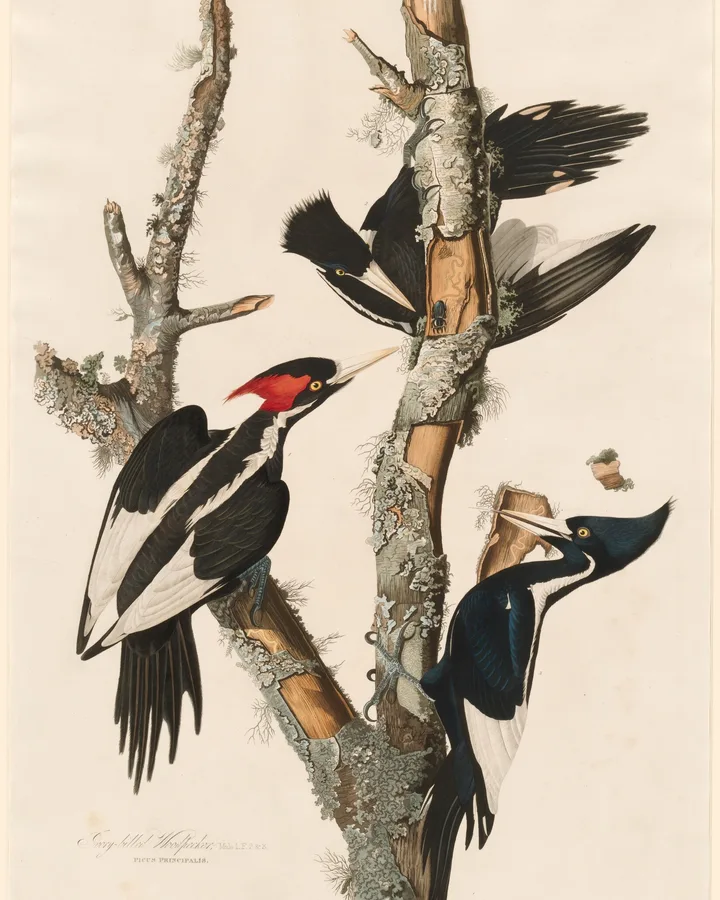
Ivory-billed Woodpecker (Plate 66)
1829
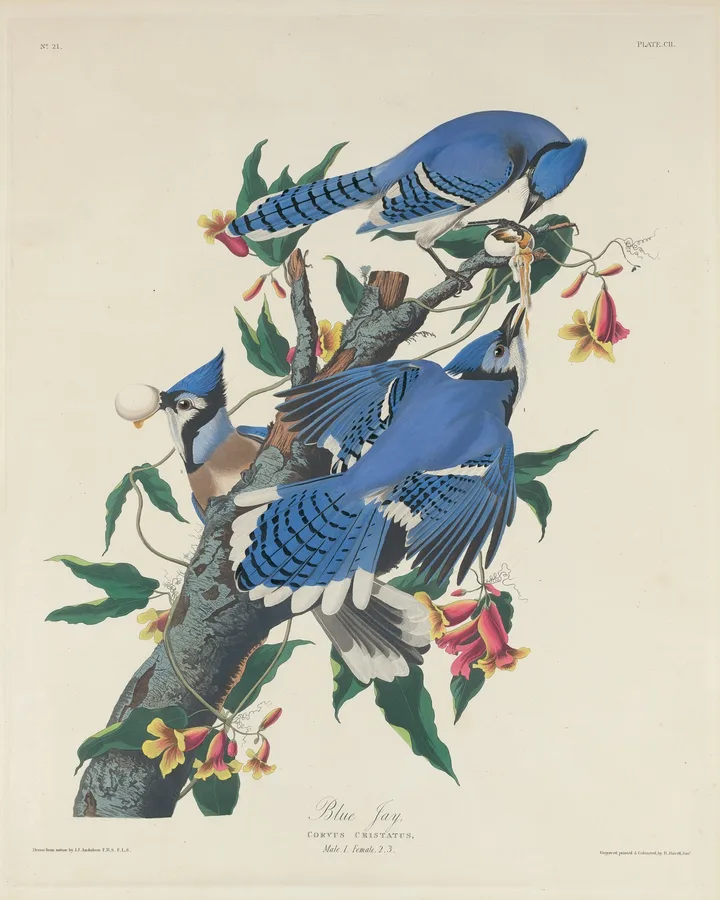
Blue Jay (Plate 102)
1831
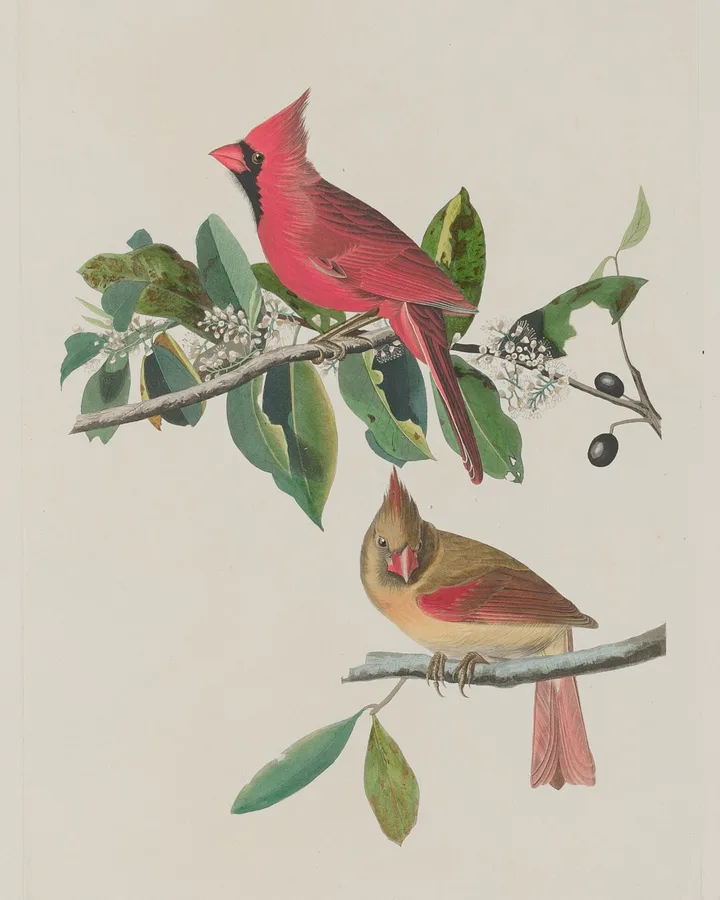
Northern Cardinal (Plate 159)
1833
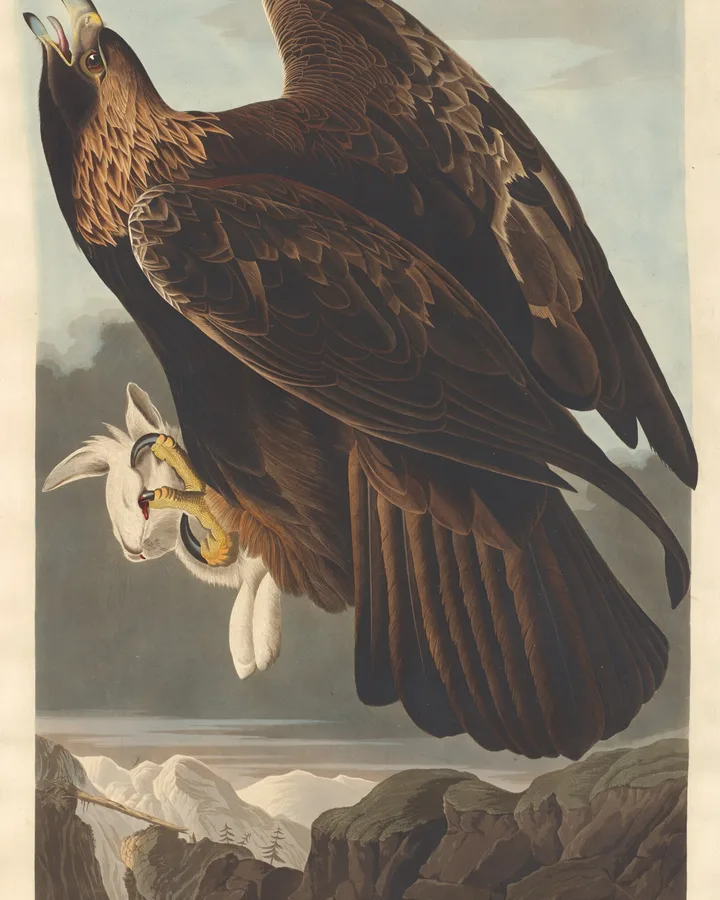
Golden Eagle (Plate 181)
1833
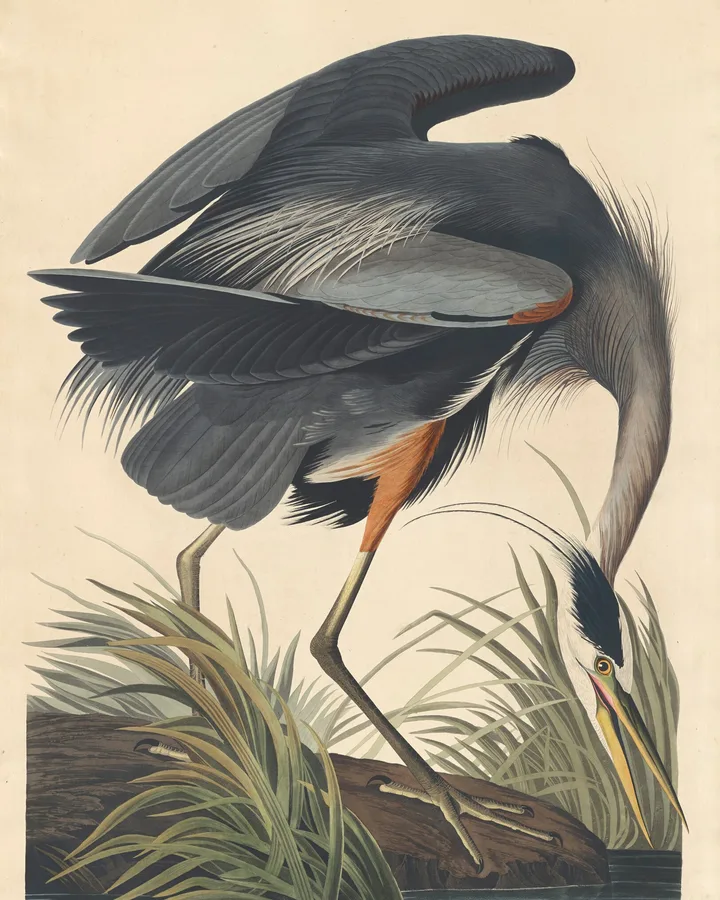
Great Blue Heron (Plate 211)
1834
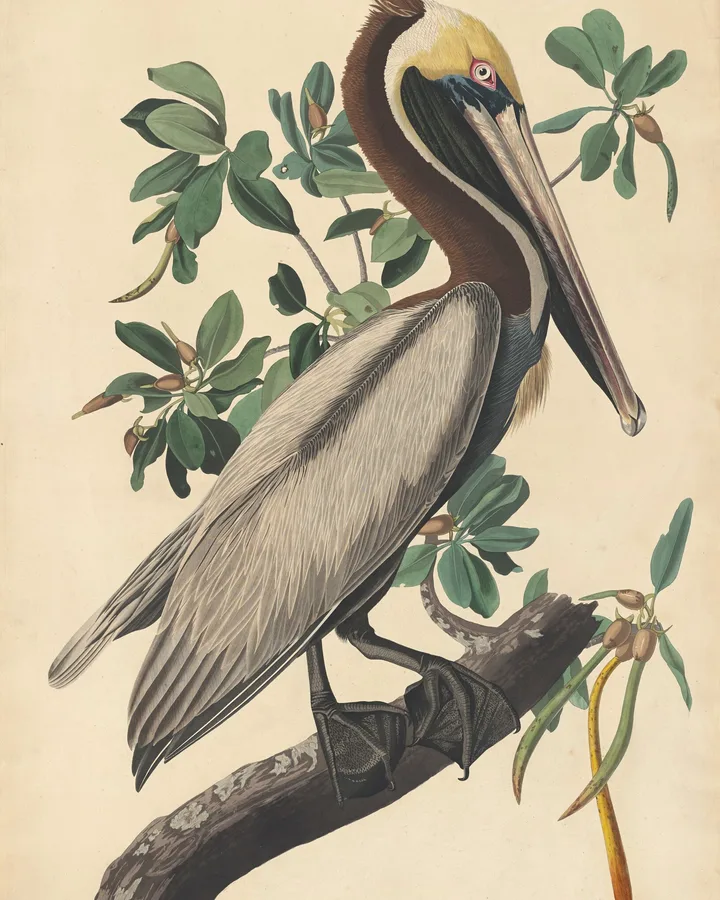
Brown Pelican (Plate 251)
1835
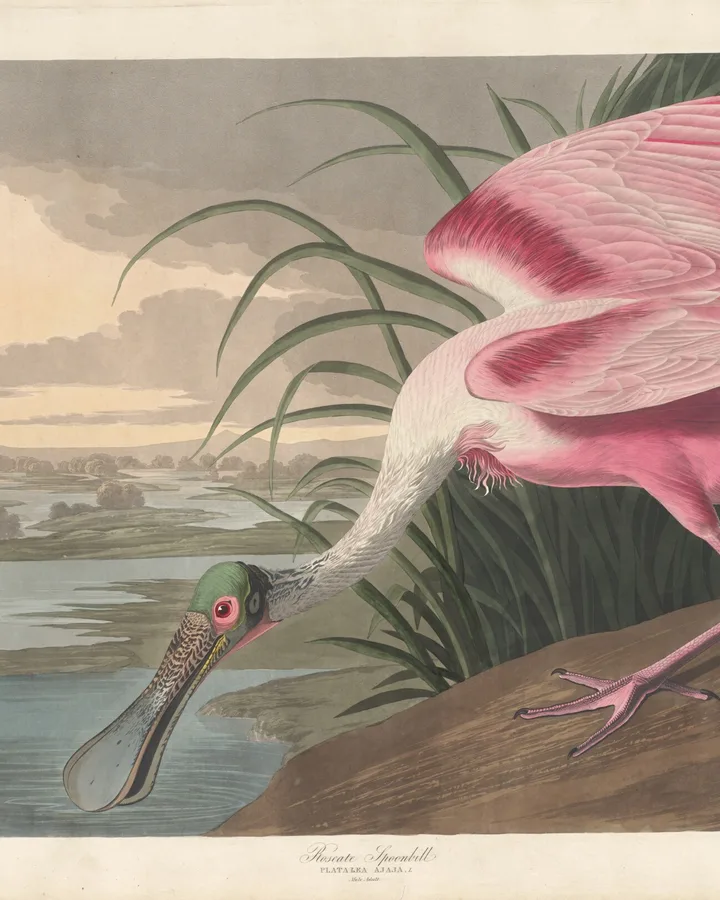
Roseate Spoonbill (Plate 321)
1836
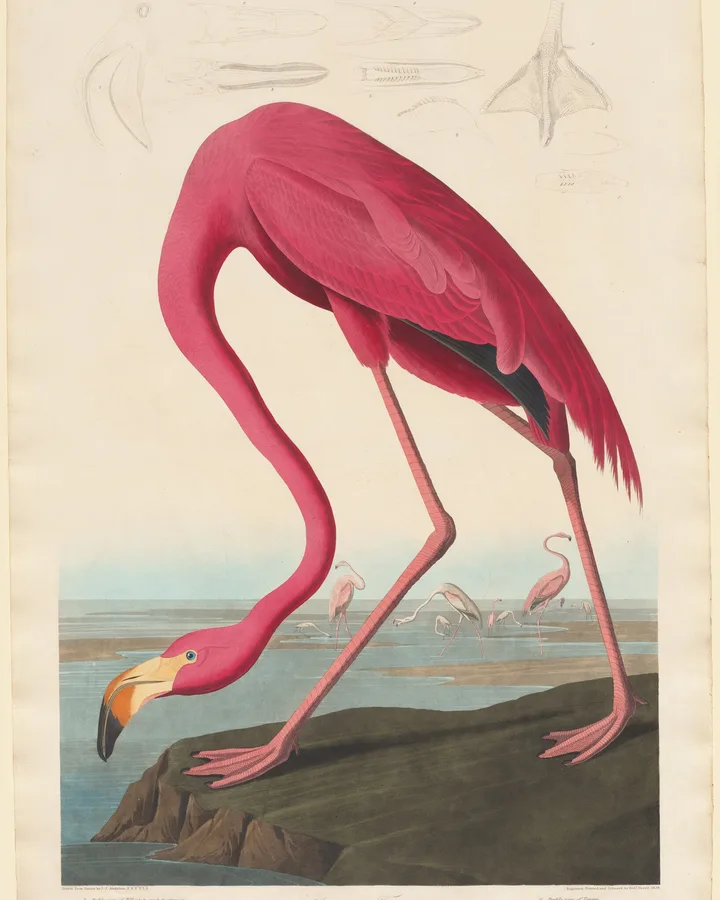
American Flamingo (Plate 431)
1838