Great Auk (Plate 341) (1836)
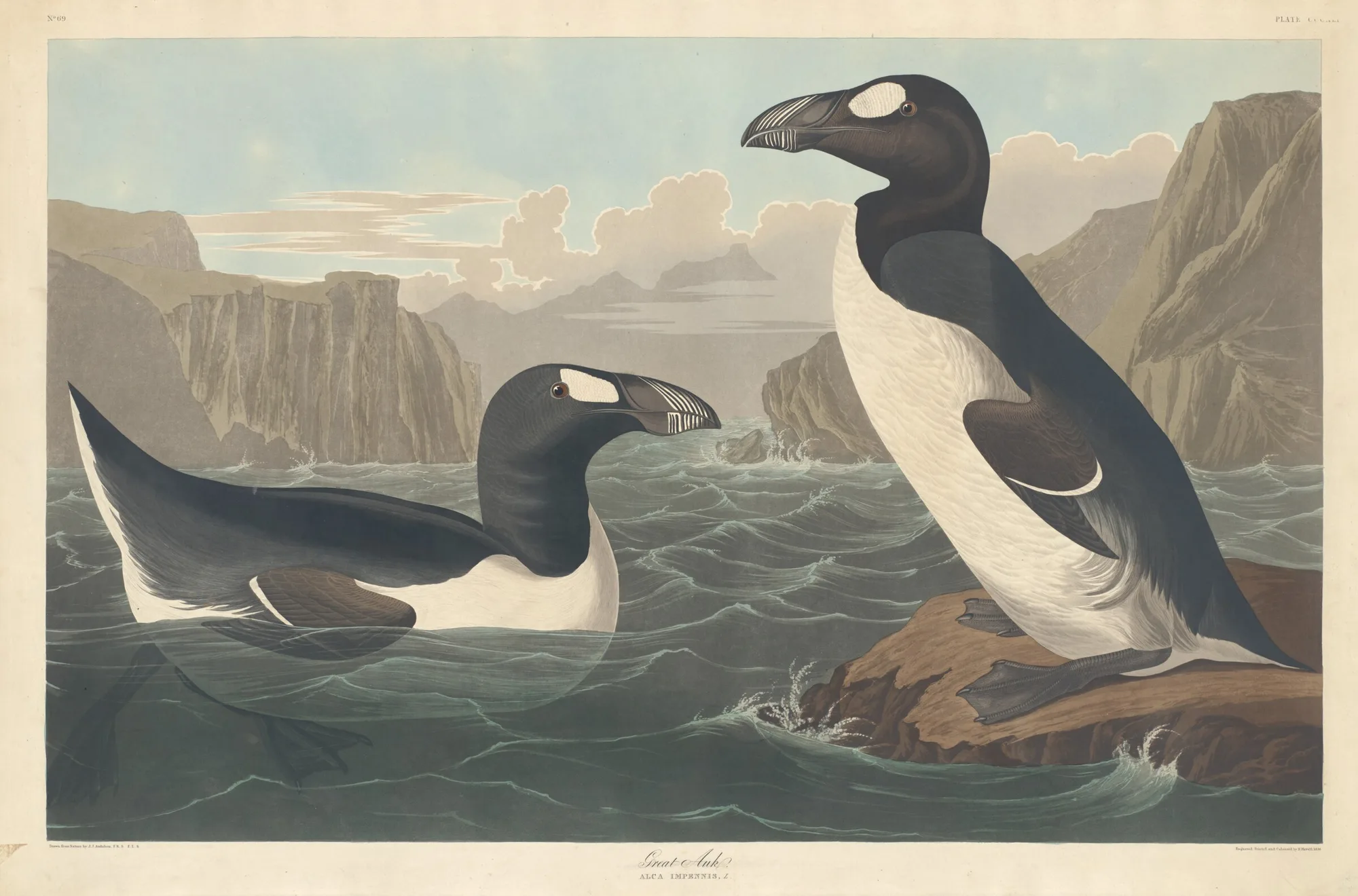
Plate 341 shows two Great Auks, the flightless seabird of the North Atlantic. Audubon never saw one alive, and the last known pair was killed off Iceland in 1844, only eight years after the plate was issued.
- Plate
- 341 (CCCXLI)
- Audubon's name
- Great Auk (Alca impennis)
- Modern name
- Great Auk (Pinguinus impennis)
- Engraved by
- Robert Havell Jr., London
- Published
- 1836, Number 69, Volume IV
- Also known as
- Audubon great auk print; Penguin (old name); Alca impennis
What the plate shows
Two adult Great Auks in summer plumage stand on rocks by the sea. They have black backs, white fronts, a white patch in front of each eye and a deep, grooved bill. Audubon's text describes them as figures 1 and 2 of the adult in summer. It is the large plate of Number 69. The upright stance and short wings show why sailors called the bird the Penguin, a name later given to the unrelated birds of the Southern Hemisphere.
How Audubon made it
Audubon never saw a living Great Auk, so the figures were drawn from preserved material. His chapter is short and honest about how little he knew. His only first-hand American account came from Henry Havell, brother of his engraver, who hooked one on the Newfoundland banks while crossing to England. On deck it walked awkwardly, often tumbling over, and "bit every one within reach of its powerful bill." It refused food, and after several days it was put back in the sea.
In Labrador, fishermen told Audubon the birds still bred on a low rocky island southeast of Newfoundland, where they killed the young for bait, but the season was too late for him to go. An old gunner near Boston remembered when they were plentiful around Nahant. Audubon also described an egg about five inches long.
The bird today
The Great Auk, Pinguinus impennis, stood about 75 to 85 centimetres tall and could not fly. It bred on a few rocky islands, including Funk Island off Newfoundland, St Kilda and islands off Iceland. Sailors killed it in huge numbers for food, bait and feathers. The last confirmed pair was killed on Eldey, off Iceland, in June 1844. The species is listed as Extinct.
Prints and value
As a portrait of an extinct bird made within its lifetime, Plate 341 has a specialist following, and Havell impressions are valued well above most seabird plates. Check the full sheet, the Whatman watermark and the engraved Havell lettering.
The octavo edition of 1840 to 1844 includes the Great Auk as a small lithograph. Many collectors of extinct birds pair it with the Passenger Pigeon and Carolina Parakeet. See Havell, octavo and Bien editions and how to tell an original Audubon print.
Some early subscribers dropped out before the fourth volume was finished, so the late parts reached fewer buyers. Prices still depend more on subject and condition than on scarcity, and the extinct-bird subjects are where that subject premium is clearest. The Bien edition of 1858 to 1860 stopped after about 105 sheets, so check whether this subject was included before trusting a Bien label.
More famous plates
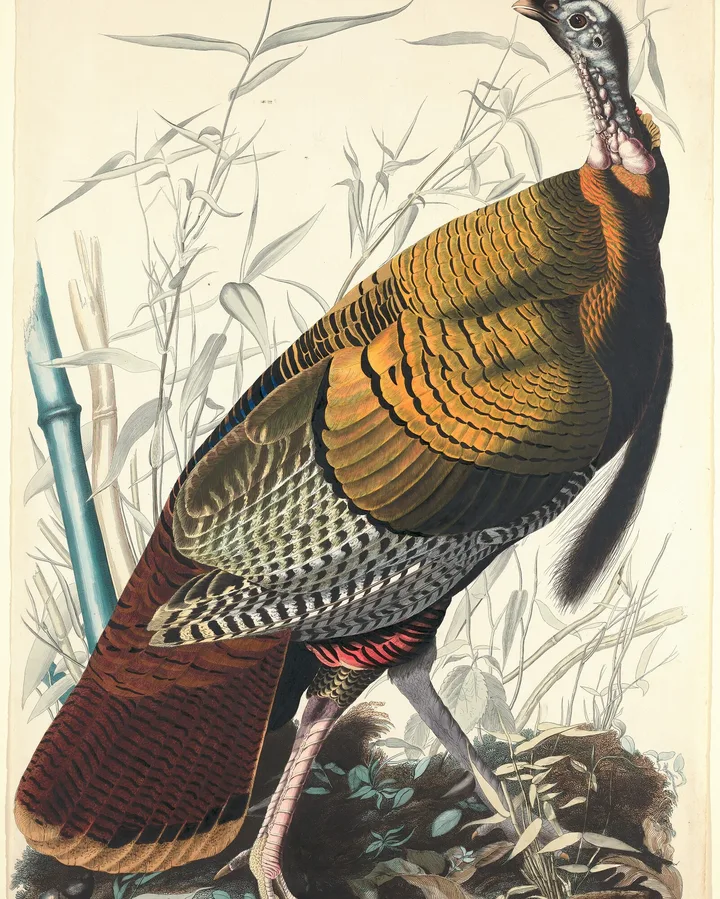
Wild Turkey (Plate 1)
1827
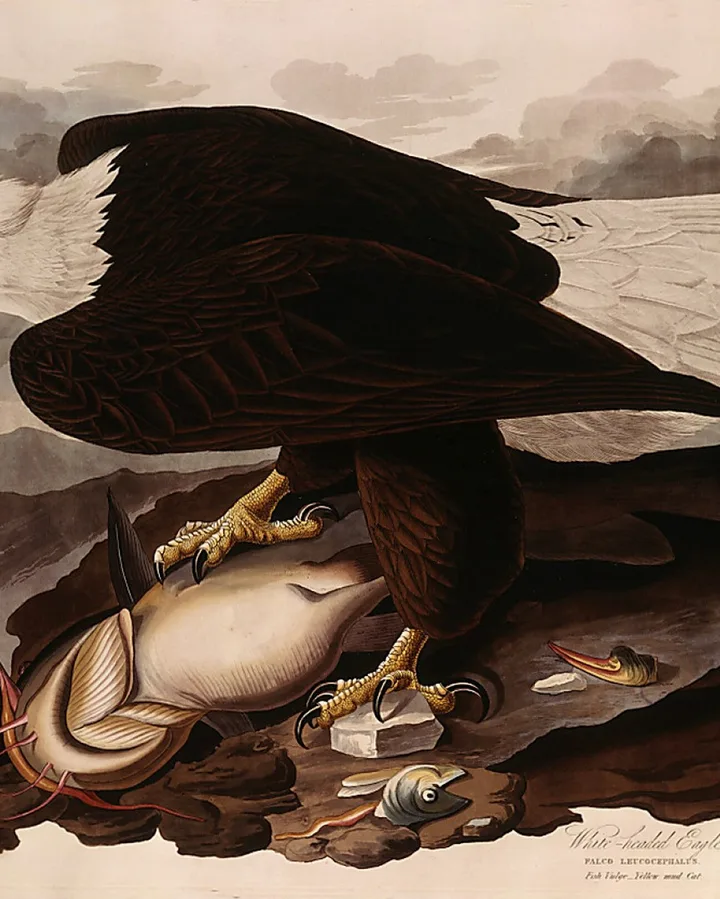
Bald Eagle (Plate 31)
1828
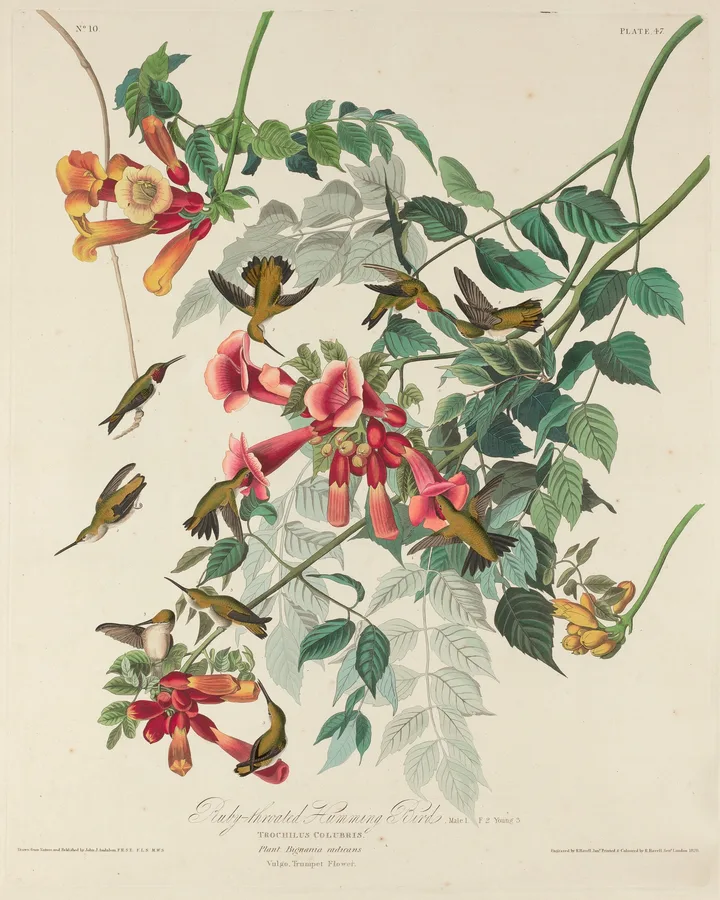
Ruby-throated Hummingbird (Plate 47)
1828
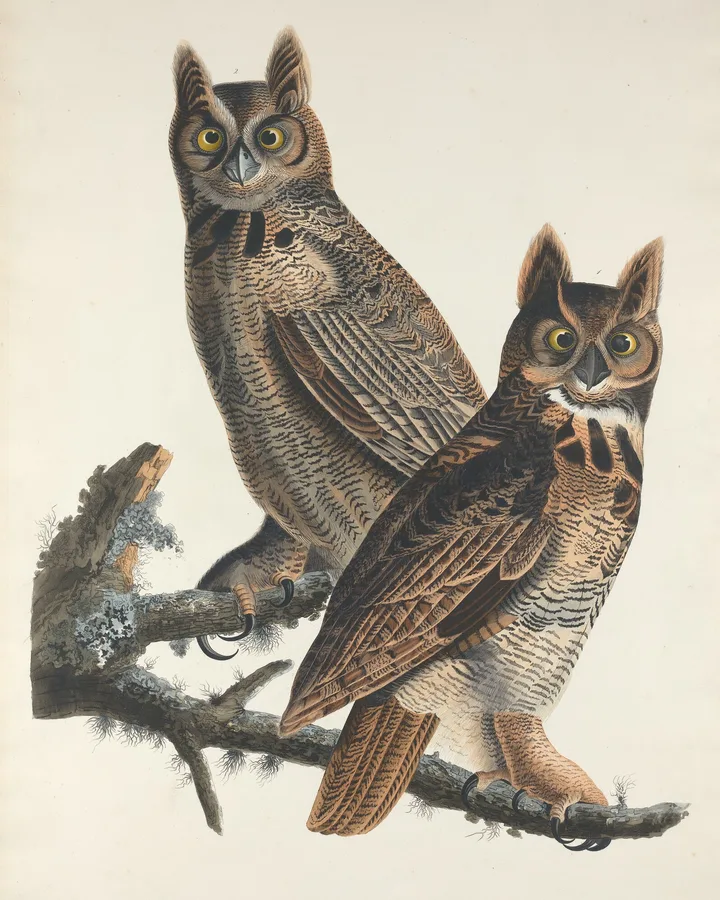
Great Horned Owl (Plate 61)
1829
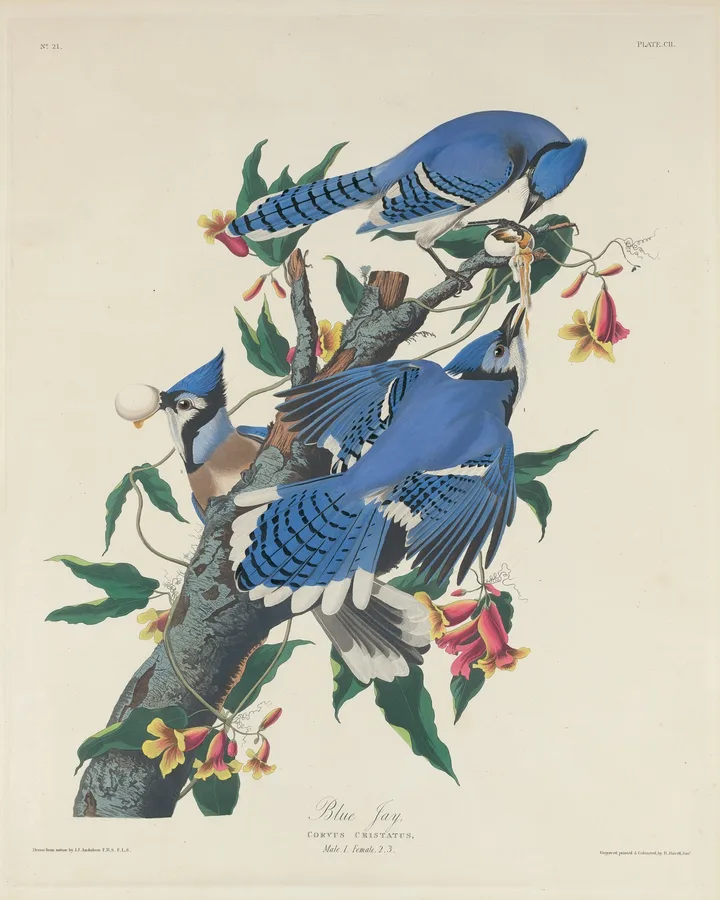
Blue Jay (Plate 102)
1831
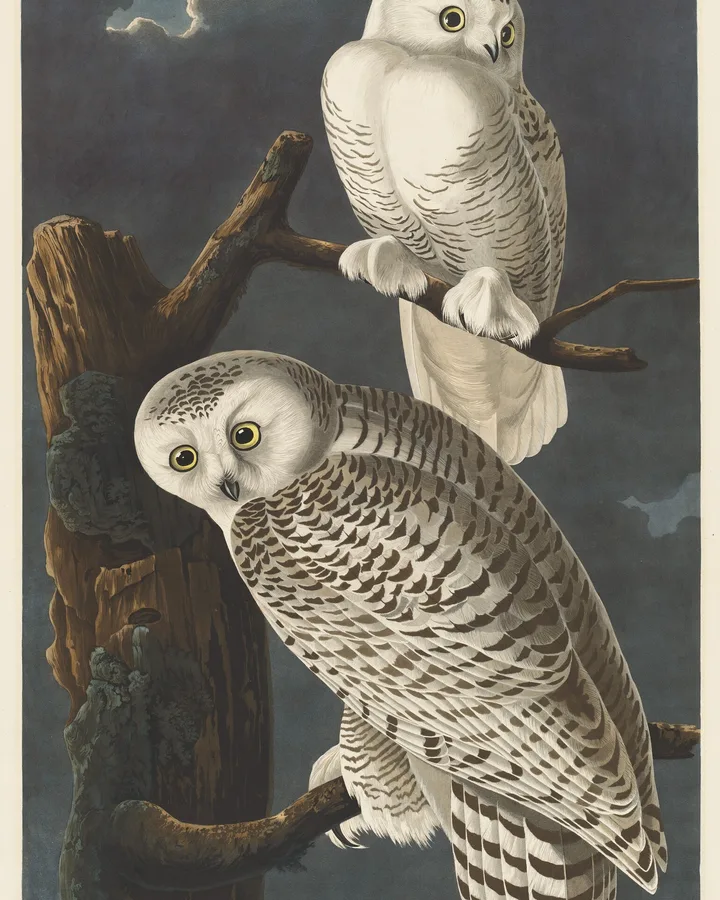
Snowy Owl (Plate 121)
1831
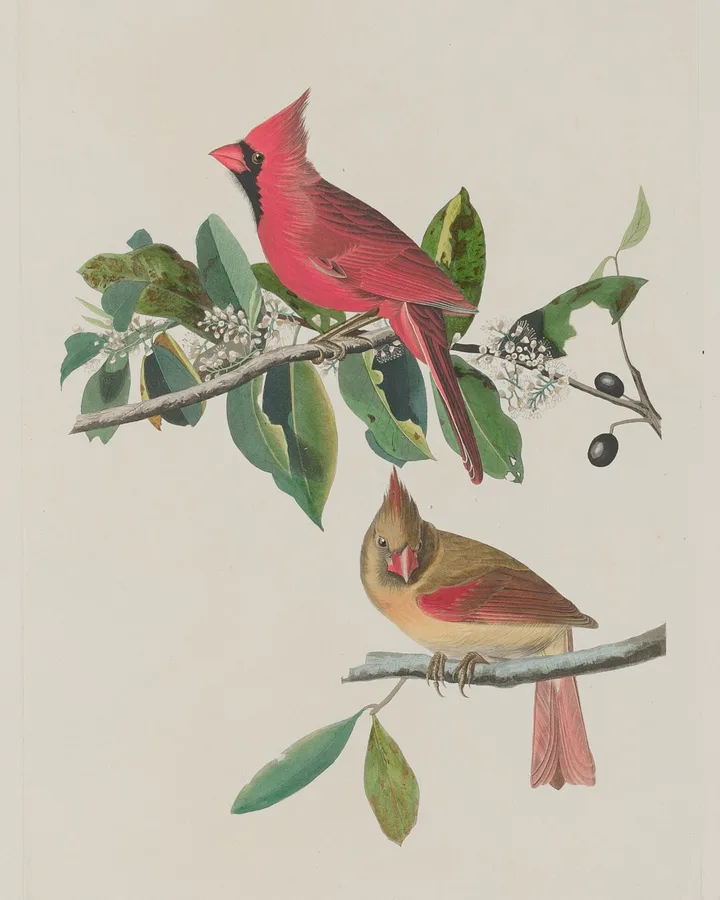
Northern Cardinal (Plate 159)
1833
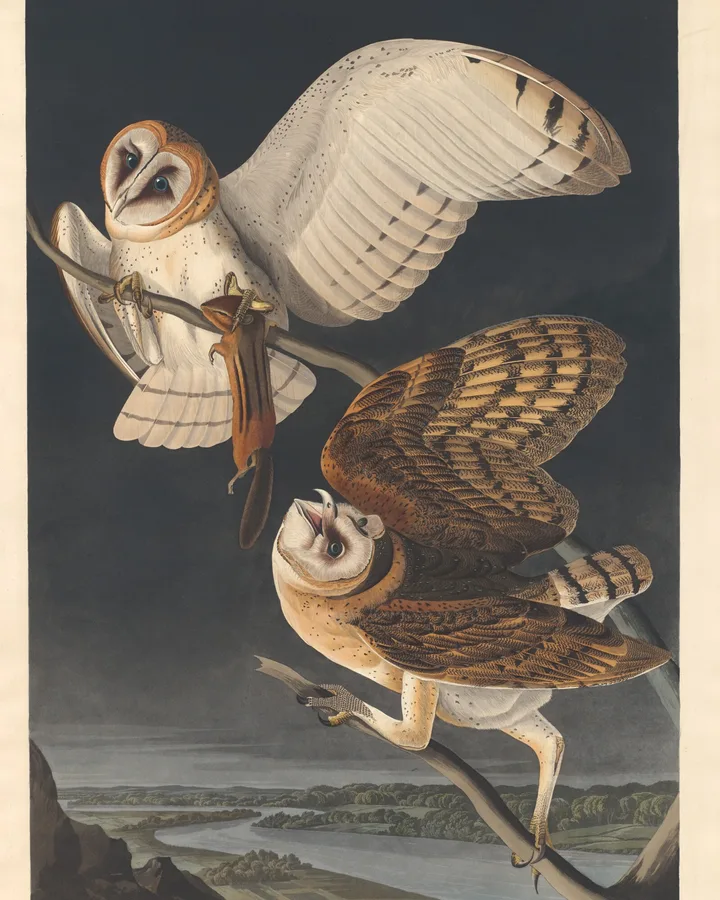
Barn Owl (Plate 171)
1833
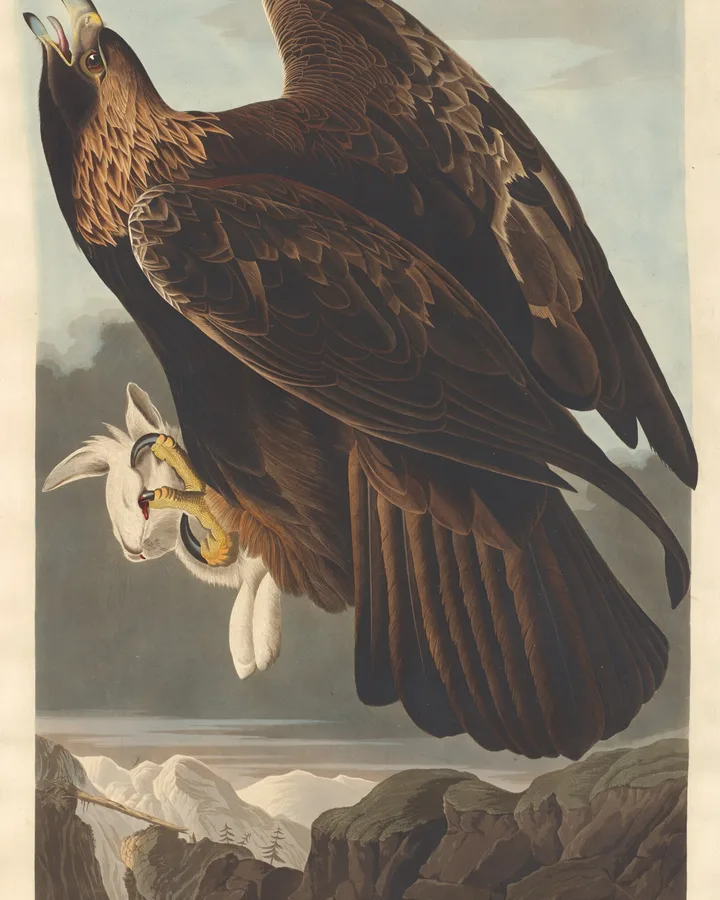
Golden Eagle (Plate 181)
1833
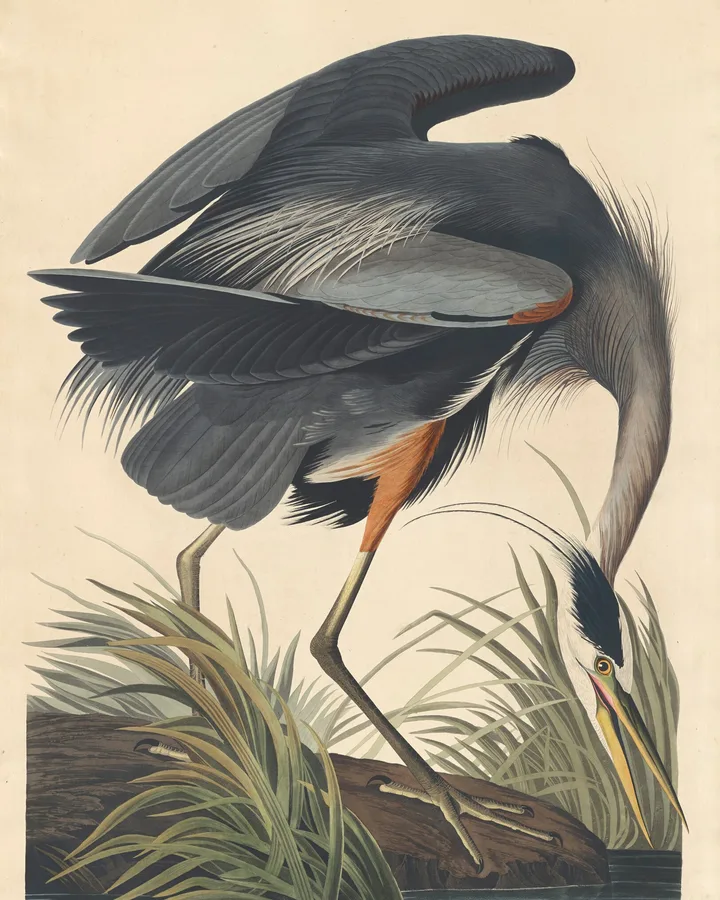
Great Blue Heron (Plate 211)
1834
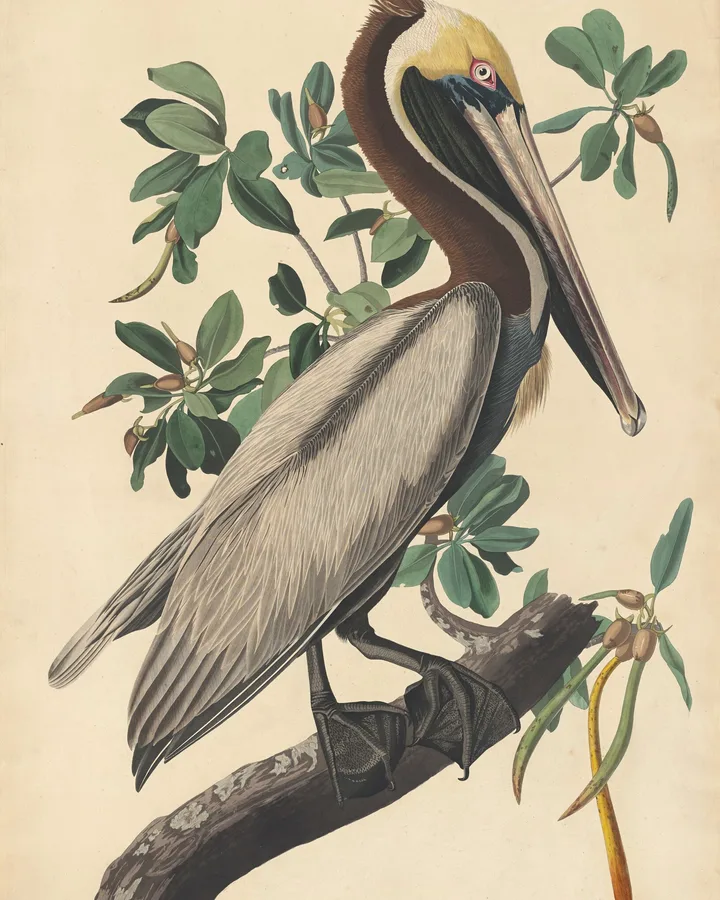
Brown Pelican (Plate 251)
1835
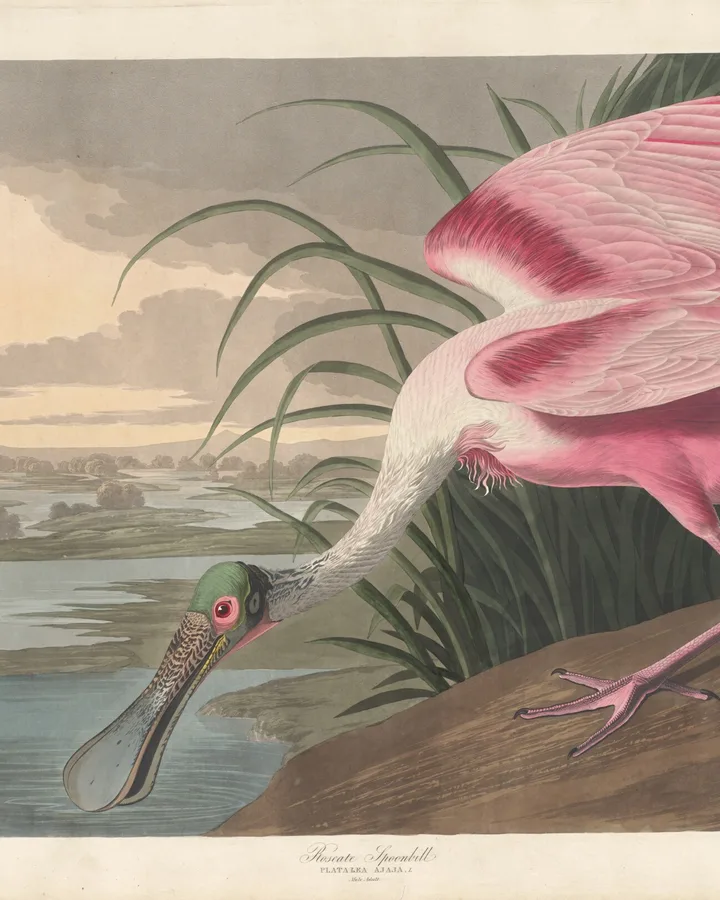
Roseate Spoonbill (Plate 321)
1836
American Flamingo (Plate 431)
1838