Barn Owl (Plate 171) (1833)
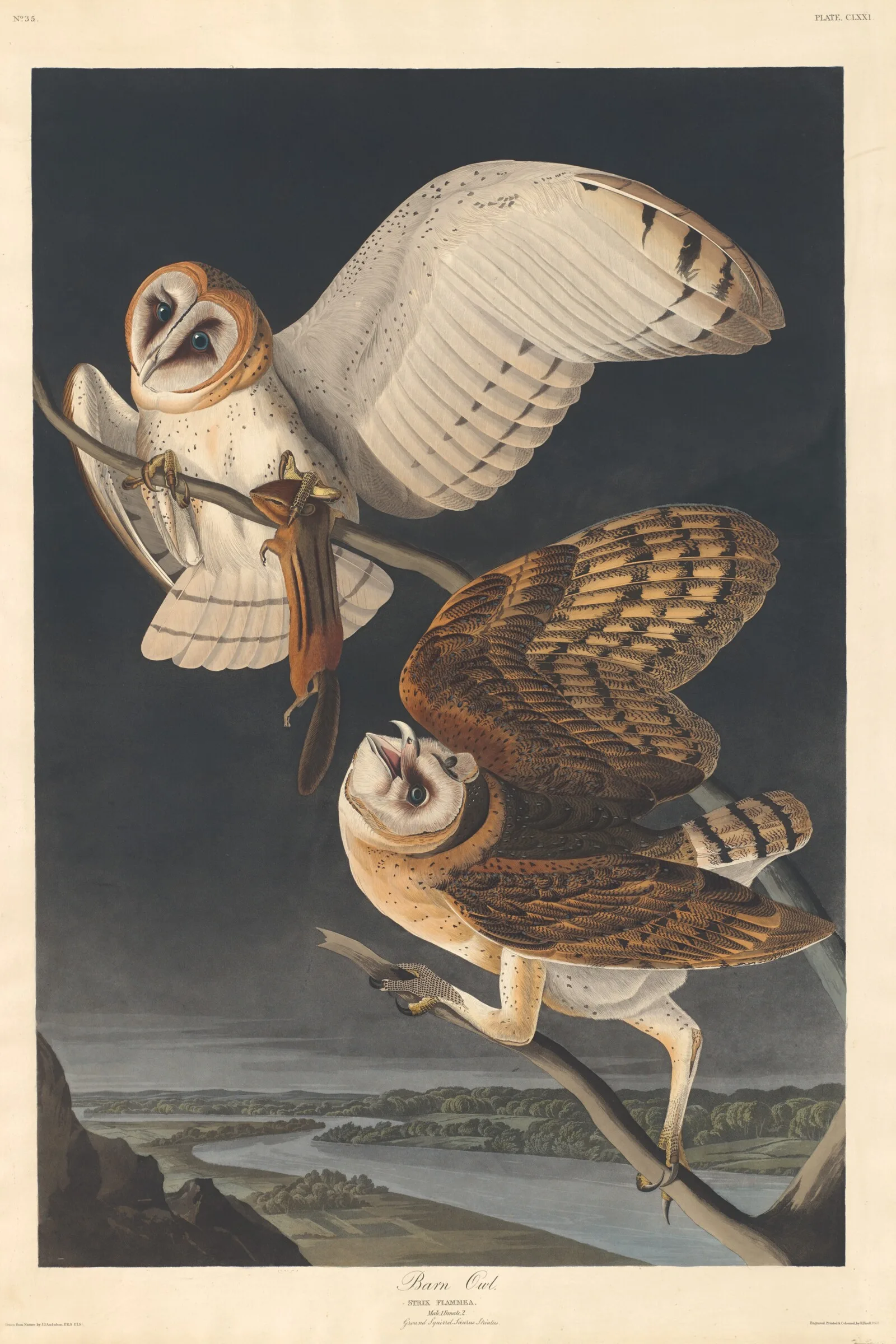
Plate 171 shows a male and female Barn Owl with pale heart-shaped faces. Audubon said earlier writers knew nothing of the bird's habits, and he built his chapter from his own journals in Florida and South Carolina.
- Plate
- 171 (CLXXI)
- Audubon's name
- Barn Owl (Strix flammea)
- Modern name
- Barn Owl (Tyto alba)
- Engraved by
- Robert Havell Jr., London
- Published
- 1833, Number 35, Volume II
- Also known as
- Audubon barn owl print; Strix flammea
What the plate shows
A pair of Barn Owls is shown at life size on a large sheet, the first plate of Number 35. Both birds show the pale heart-shaped facial disc, dark eyes, long legs and golden-buff upperparts dotted with grey and white. The pose gives a clear view of both the face and the patterned back, the two features a viewer looks for in this species.
How Audubon made it
Audubon opened the chapter by complaining that no earlier writer on American birds seemed to have studied this owl, and that what had been printed was at odds with what he had seen. He then quoted his journals.
At St Augustine, East Florida, on 8 November 1832, the keeper of the fort, a Mr Simmons whom he had known in Henderson, Kentucky, told him boys had taken five young owls from a chimney. Audubon climbed up with a ladder and found a single fresh egg on the bare stone, among pellets and bones. In October 1833, staying with John Bachman in Charleston, he watched a pair nesting in the upper story of an abandoned sugar-house.
He also kept a live owl. He wrote that a captive bird would stand on one leg for hours, and "in this position I watched one on my drawing table for six hours."
The bird today
Barn owls hunt rodents at night, mainly by sound, and nest in cavities, barns, church towers and other buildings. The American Ornithological Society treats the bird as Tyto alba, while the IOC list now treats the American birds as a separate species, the American Barn Owl, Tyto furcata. In North America it is most common in the South and West and has declined in parts of the Midwest and Northeast. It is listed as Least Concern.
Prints and value
The Barn Owl is one of the three owl plates most asked for, with Plates 61 and 121. Havell impressions are valued as large plates. The pale facial disc and buff plumage show staining and foxing easily, so condition has a strong effect on price. Confirm the full sheet and the engraved Havell lettering.
The octavo edition of 1840 to 1844 includes the Barn Owl as a small lithograph. Reproductions are common. See Havell, octavo and Bien editions and how to tell an original Audubon print.
Owls were drawn from birds Audubon had in hand, and the Barn Owl text shows him keeping a live captive in his workroom. Plates like this, where the artist could watch the posture for hours, tend to have a natural stance that reproductions often flatten. The Bien edition of 1858 to 1860 stopped after about 105 sheets, so check any Bien attribution against a list of the issued sheets.
More famous plates
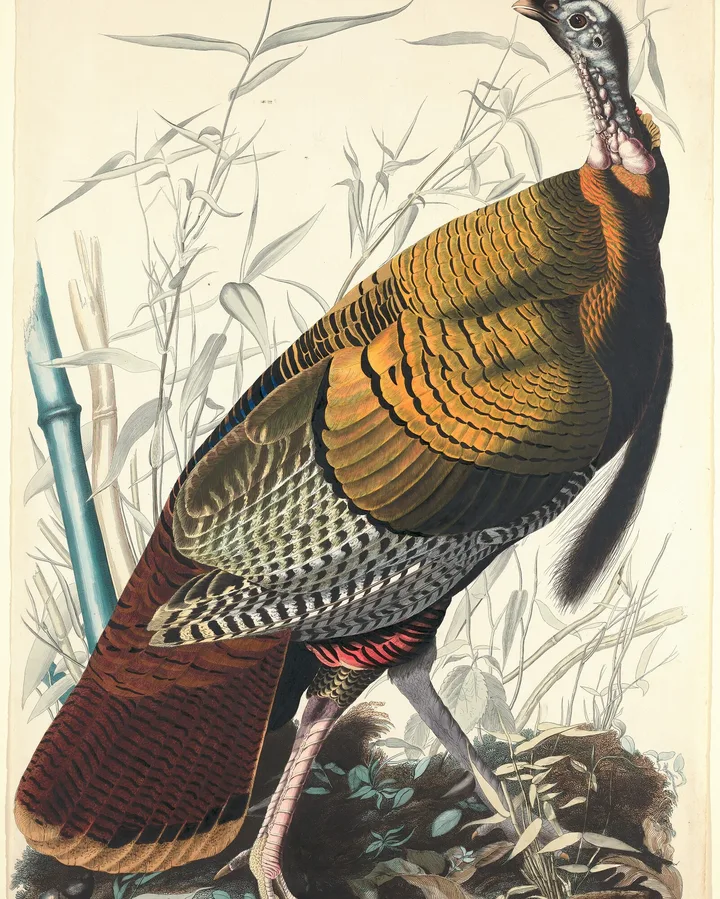
Wild Turkey (Plate 1)
1827
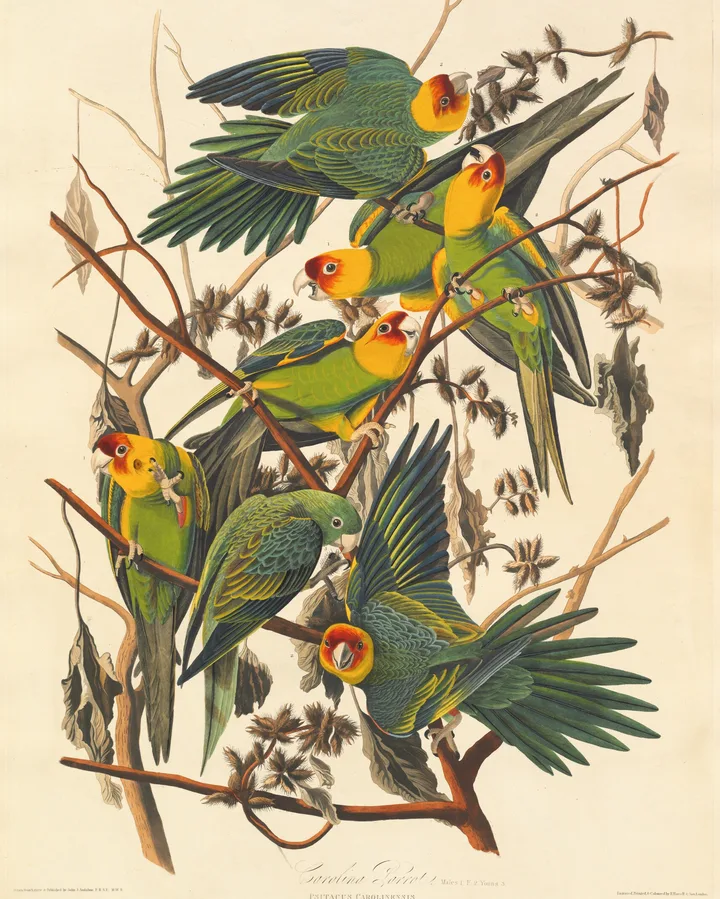
Carolina Parakeet (Plate 26)
1827
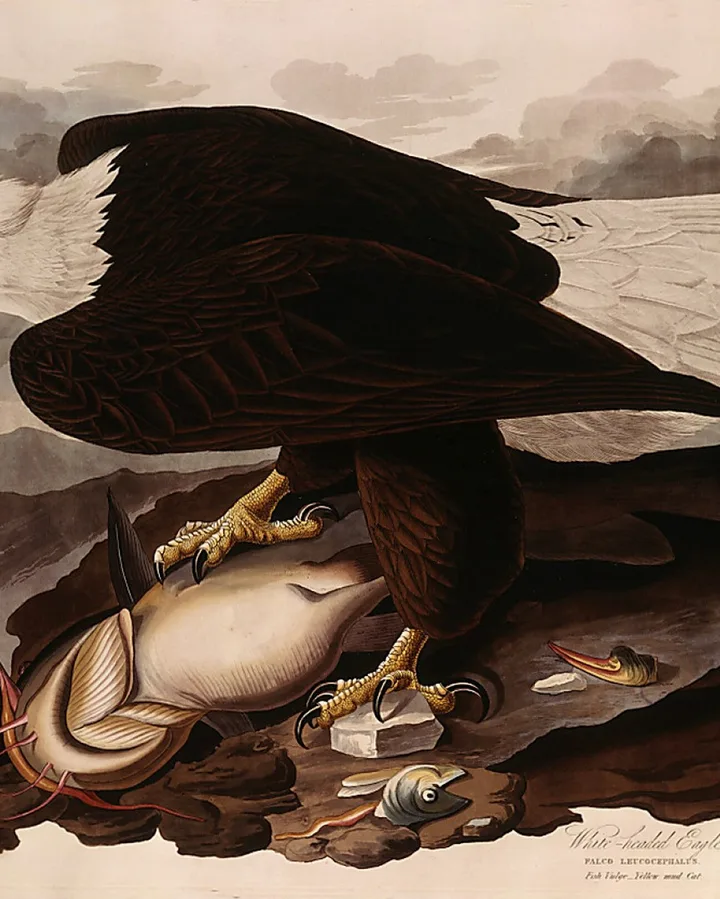
Bald Eagle (Plate 31)
1828
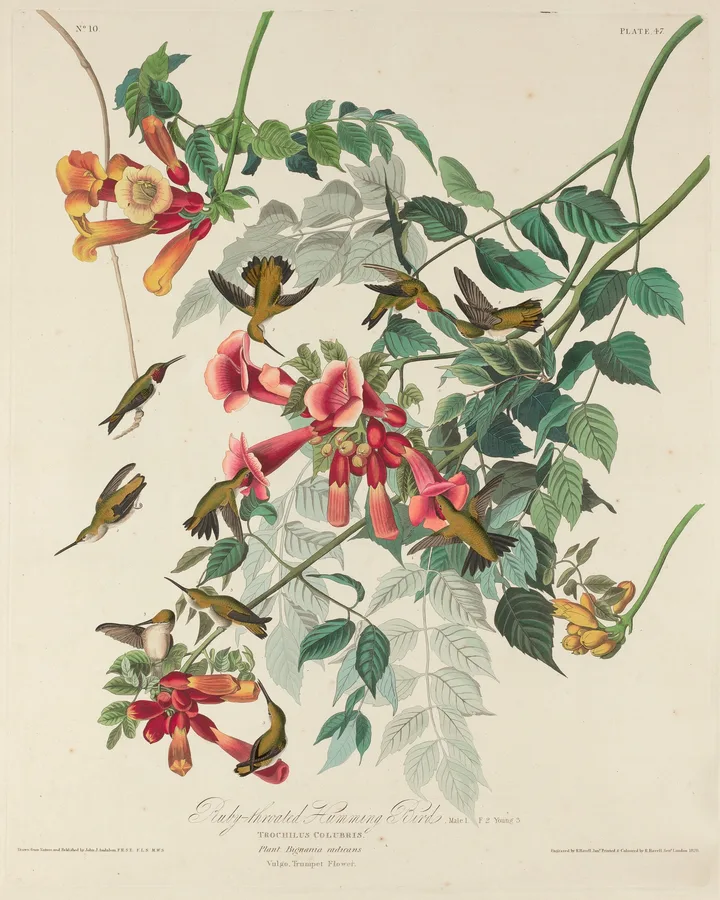
Ruby-throated Hummingbird (Plate 47)
1828
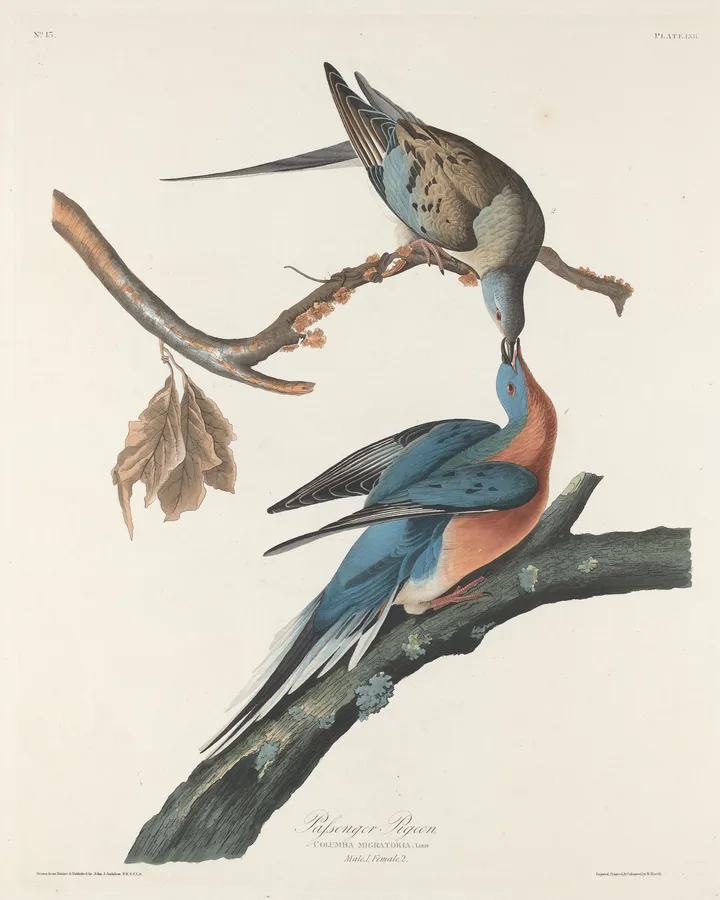
Passenger Pigeon (Plate 62)
1829
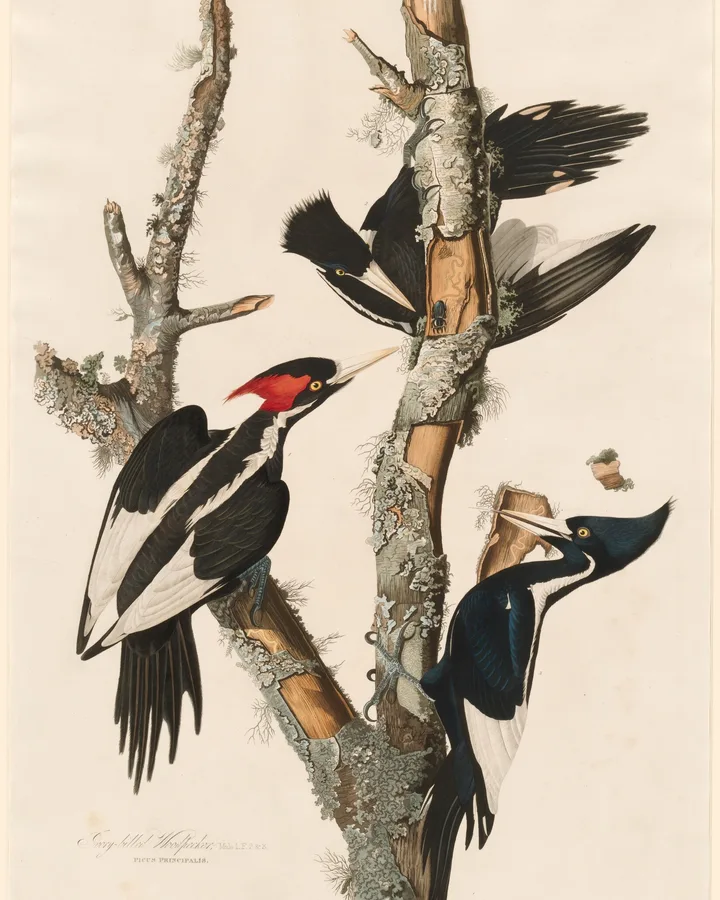
Ivory-billed Woodpecker (Plate 66)
1829
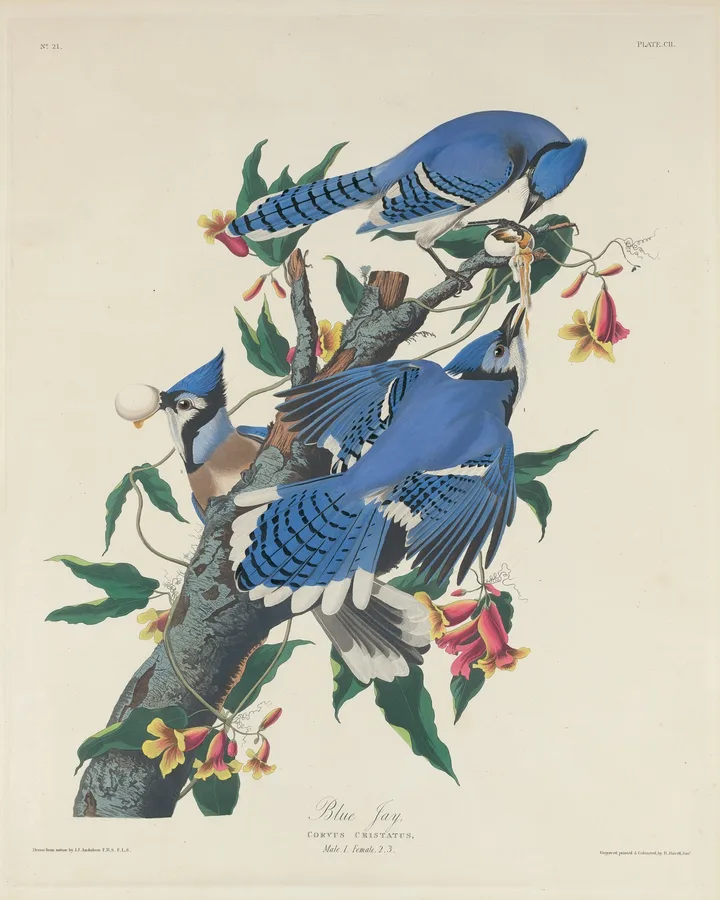
Blue Jay (Plate 102)
1831
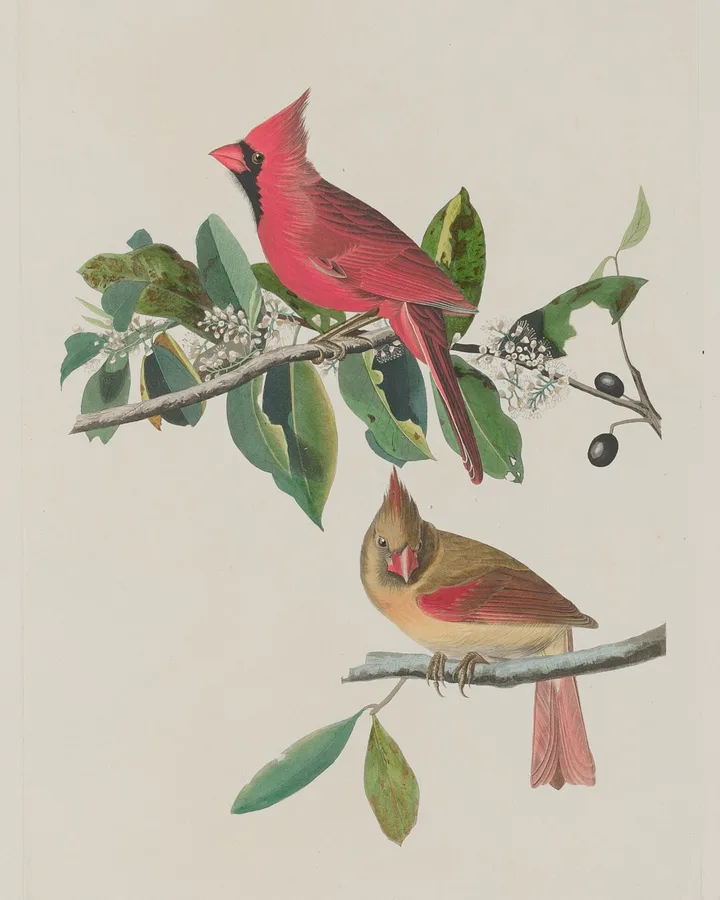
Northern Cardinal (Plate 159)
1833
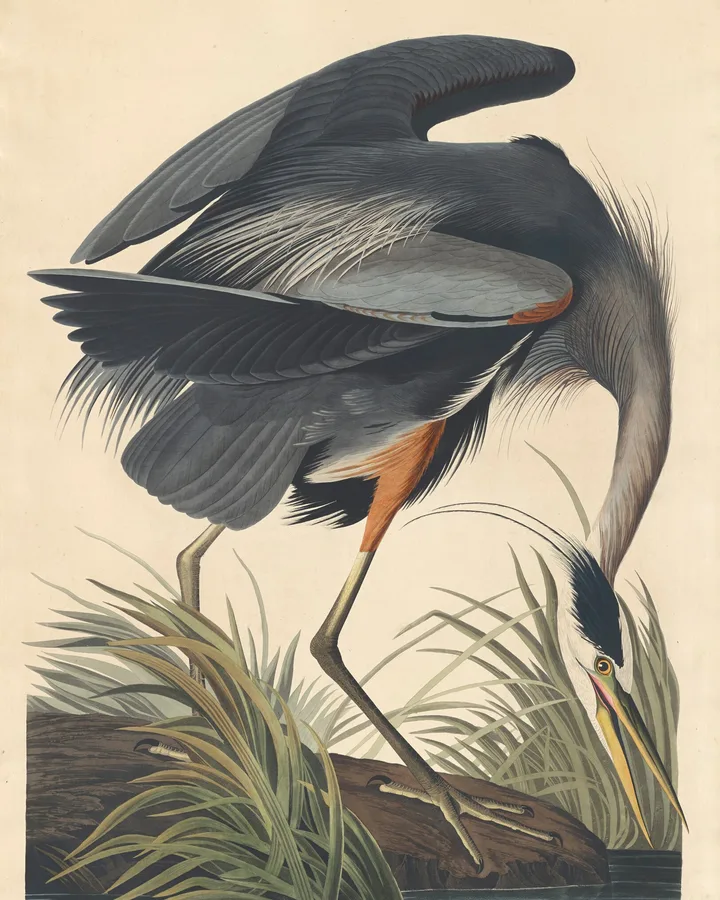
Great Blue Heron (Plate 211)
1834
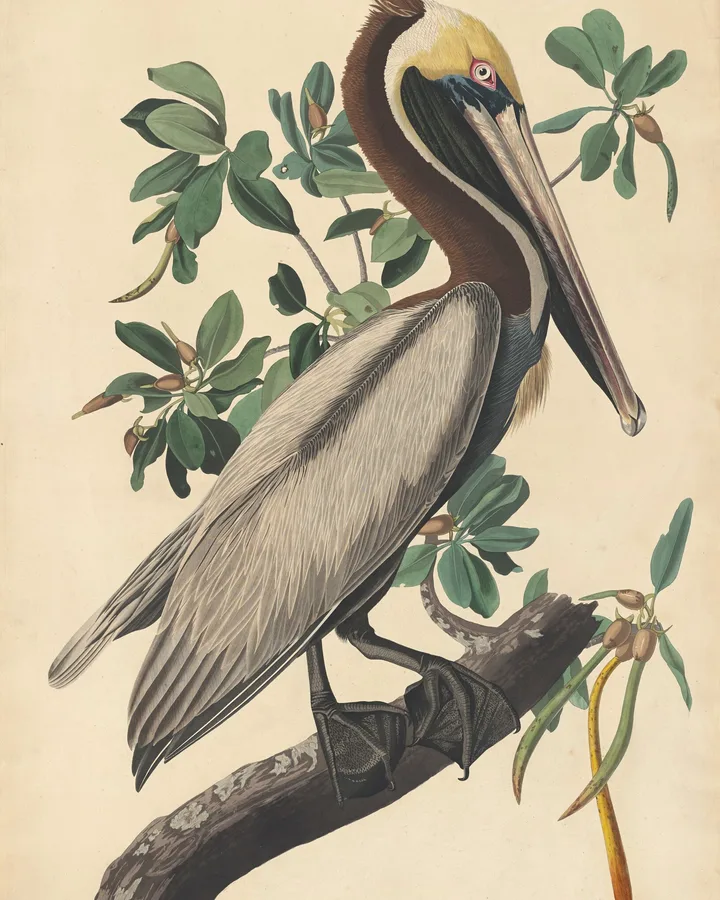
Brown Pelican (Plate 251)
1835
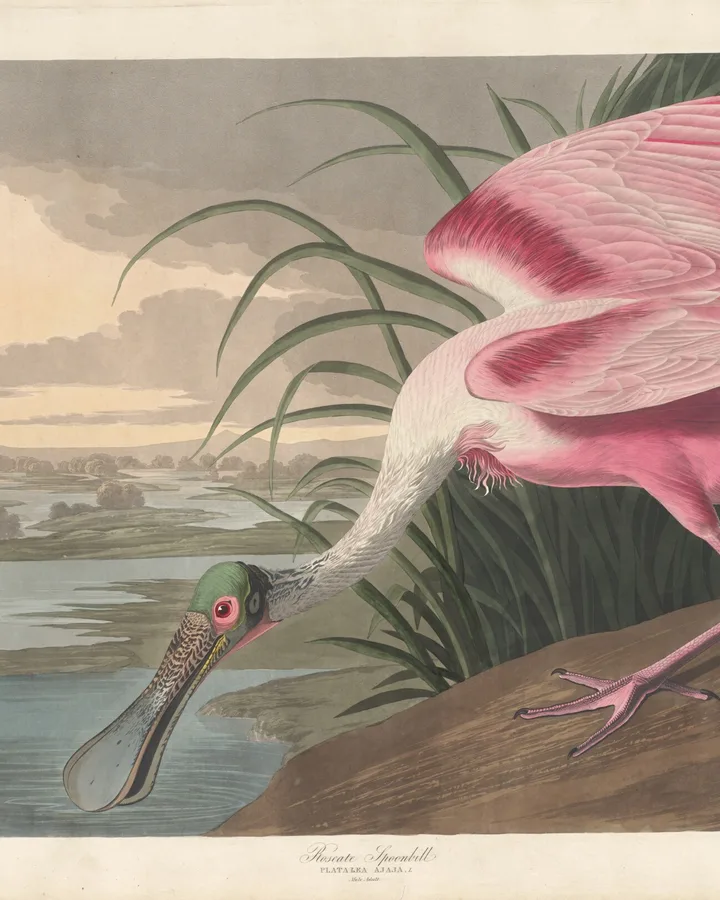
Roseate Spoonbill (Plate 321)
1836
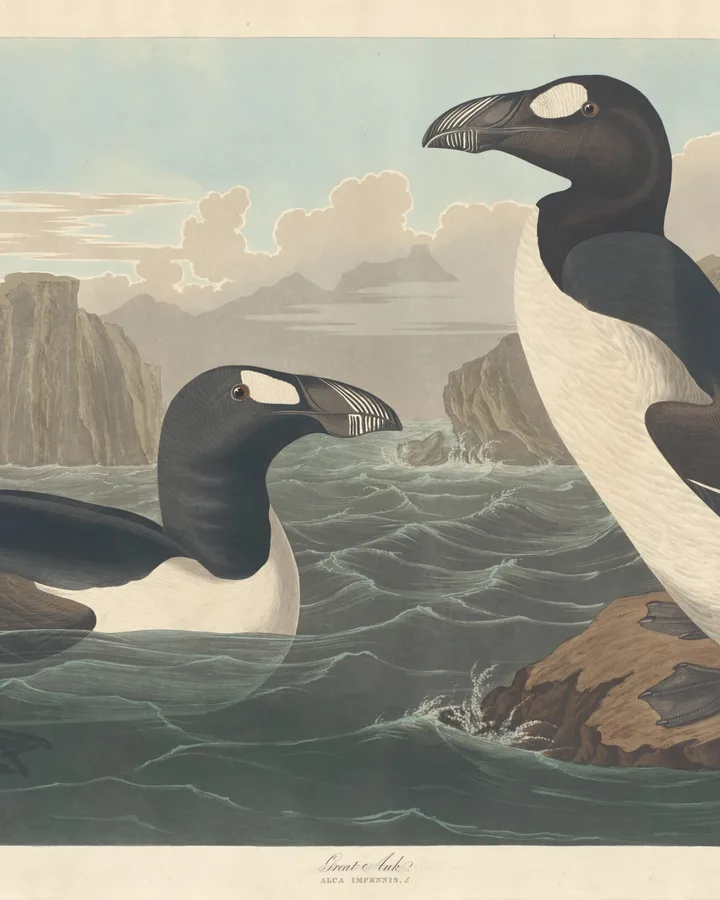
Great Auk (Plate 341)
1836
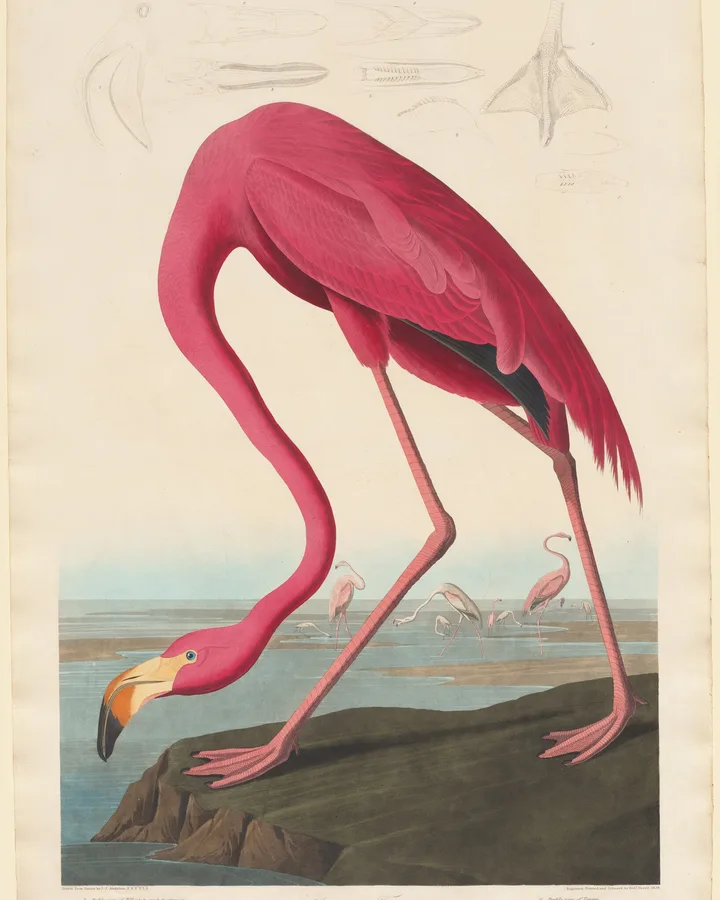
American Flamingo (Plate 431)
1838