Bald Eagle (Plate 31) (1828)
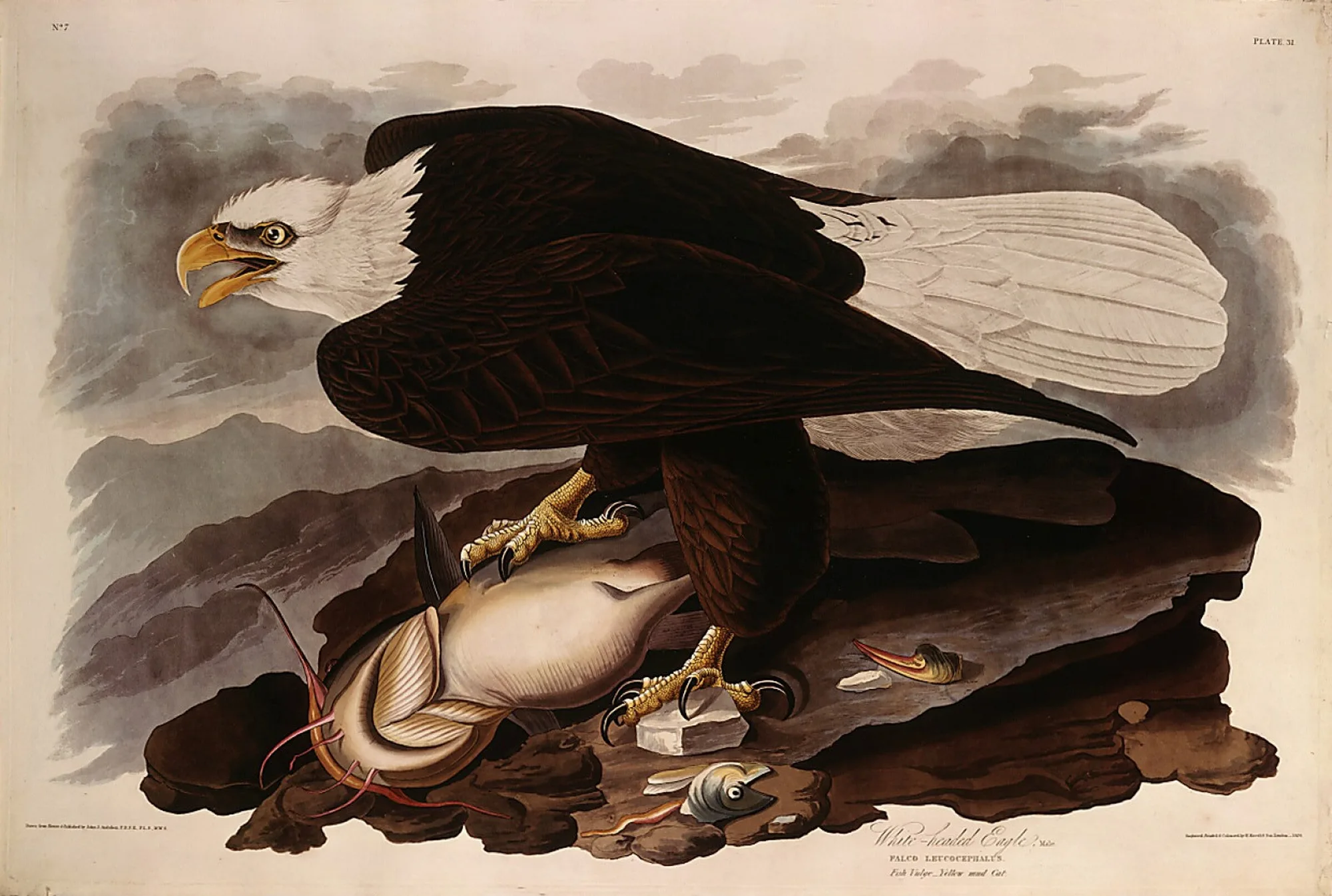
Plate 31 shows an adult Bald Eagle, which Audubon called the White-headed Eagle, standing on a catfish. Audubon admired the bird's power but agreed with Benjamin Franklin that it was a poor choice for the national emblem.
- Plate
- 31 (XXXI)
- Audubon's name
- White-headed Eagle
- Modern name
- Bald Eagle (Haliaeetus leucocephalus)
- Engraved by
- Robert Havell Jr., London
- Published
- 1828, Number 7, Volume I
- Watercolor
- New-York Historical Society
- Also known as
- White-headed Eagle; Audubon bald eagle print; Bald Eagle with catfish
What the plate shows
An adult eagle with white head and tail stands over a catfish, wings half raised, bill open as it tears at its prey. The sheet is used horizontally, which lets the bird be shown at full size with its wings partly spread. It was the large plate of Number 7.
Audubon's name, White-headed Eagle, describes what the modern name means. Bald once meant white. His Bird of Washington, Plate 11, was a separate and larger eagle he believed was a new species. It is now generally thought to have been an immature Bald Eagle.
How Audubon made it
Audubon worked from fresh specimens pinned on a gridded board so he could draw them at life size. The text he wrote for this plate is mostly about behavior. He set a scene on the Mississippi in winter, with a pair of eagles waiting on tall trees on opposite banks until a Trumpeter Swan flies past. The male then drops on the swan and drives it to shore, striking from below so it cannot escape by diving. He also described eagles robbing Ospreys of their fish.
He closed the chapter with a verdict on the emblem. He wrote that he grieved "that it should have been selected as the Emblem of my Country," and then quoted Franklin's letter calling it a bird of bad moral character that does not get its living honestly.
The bird today
The Bald Eagle lives near large lakes, rivers and coasts across North America. Shooting, habitat loss and the pesticide DDT reduced it to roughly 400 nesting pairs in the lower 48 states by the early 1960s. After DDT was banned in 1972 and the species was protected, it recovered strongly. It was removed from the federal endangered species list in 2007 and is listed as Least Concern.
Prints and value
As a national symbol, this plate has a wide buying audience, and Havell impressions sell well above typical plates of the same size. The horizontal format matters for framing: the sheet is about 26 by 39 inches. Look for the Havell imprint, a Whatman watermark and even, original color.
The eagle was also issued in the octavo edition of 1840 to 1844 as a small lithograph. Modern reproductions are common, and some are sold with misleading wording such as "Havell edition" when they are only photographic copies. See Havell, octavo and Bien editions and how to tell an original Audubon print.
A Havell sheet carries engraved lettering below the image: the plate number, the English name, the credit to Audubon as artist and the credit to Havell as engraver, printer and colorist. Missing or cropped lettering is a warning sign. The Bien chromolithograph edition of 1858 to 1860 was cut short by the Civil War, so not every subject exists in it.
More famous plates
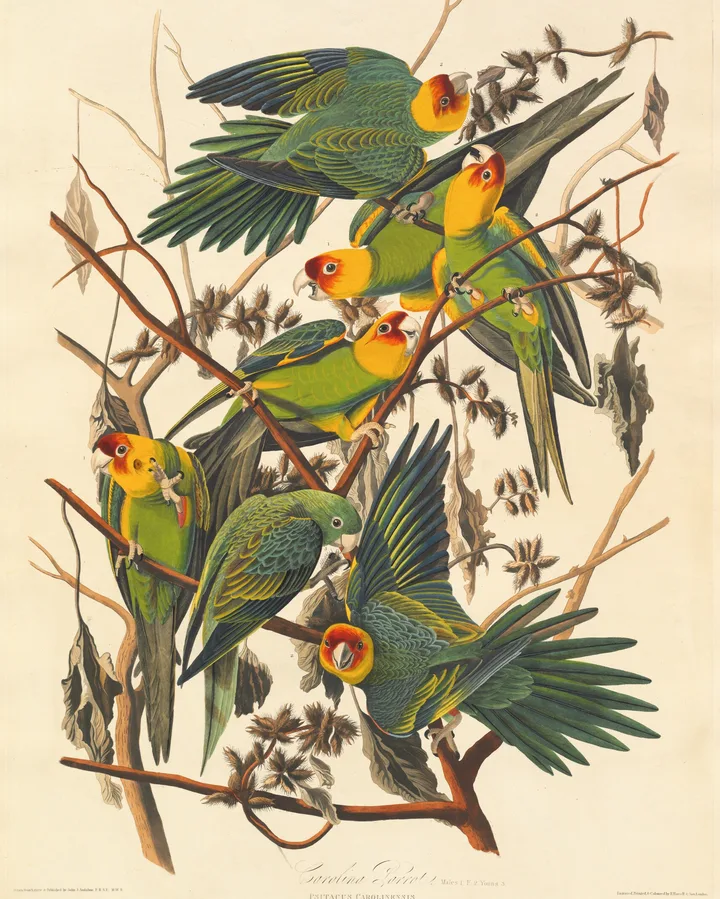
Carolina Parakeet (Plate 26)
1827
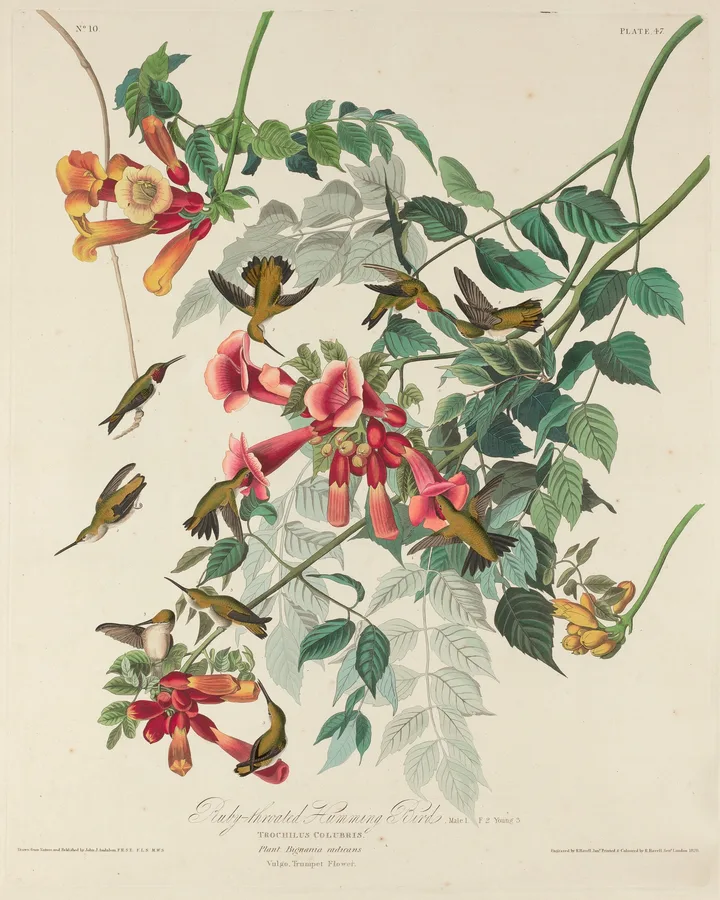
Ruby-throated Hummingbird (Plate 47)
1828
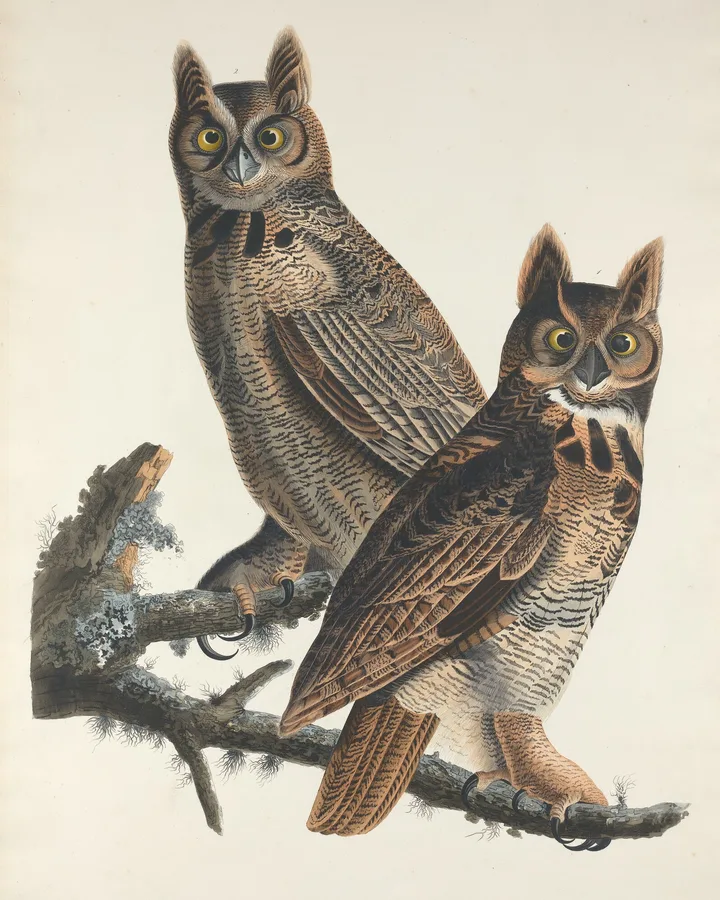
Great Horned Owl (Plate 61)
1829
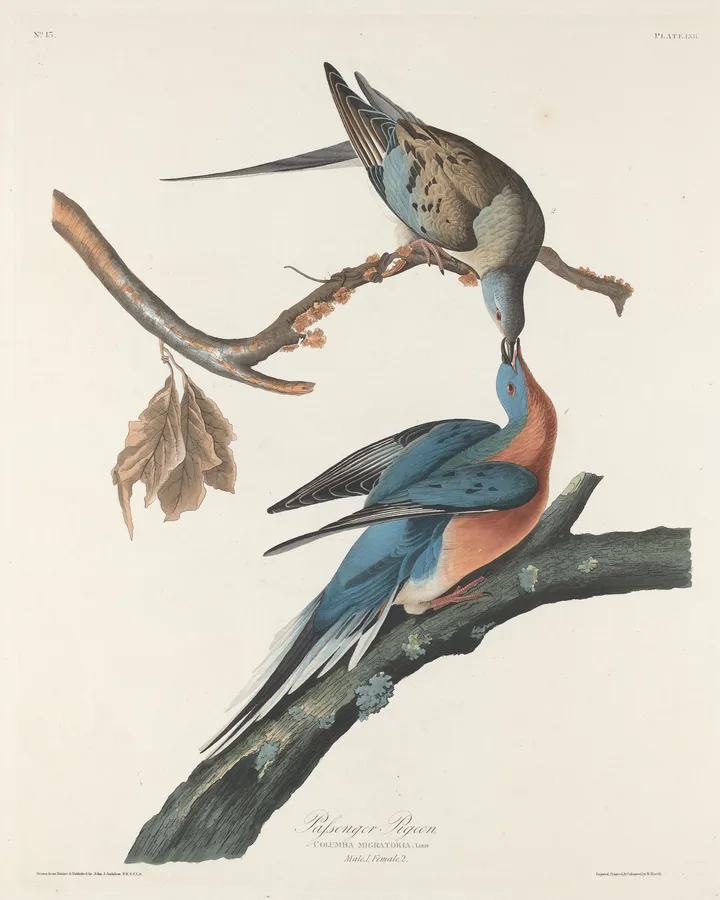
Passenger Pigeon (Plate 62)
1829
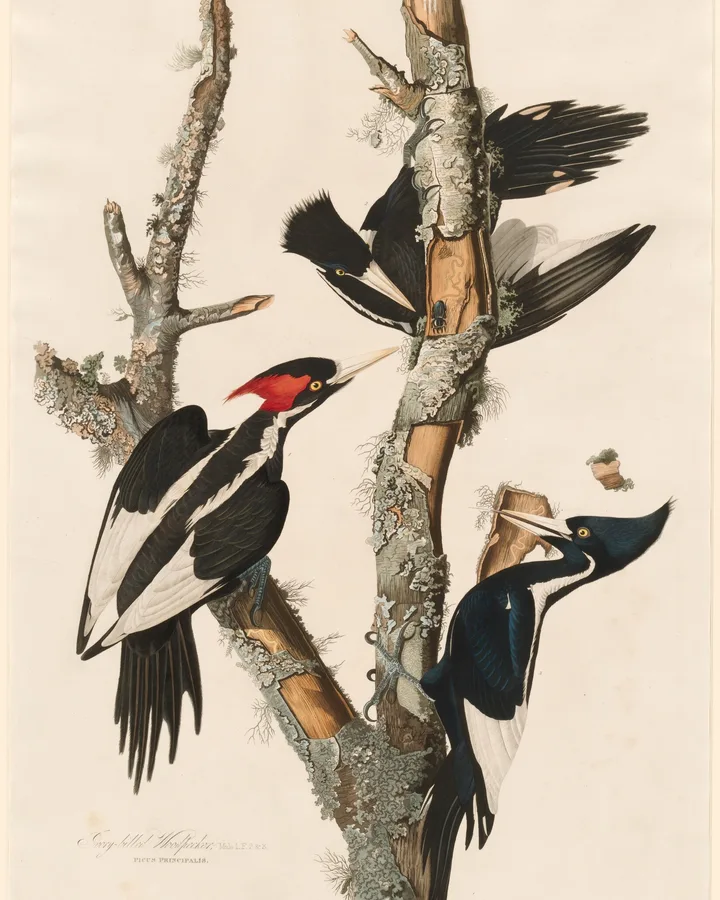
Ivory-billed Woodpecker (Plate 66)
1829
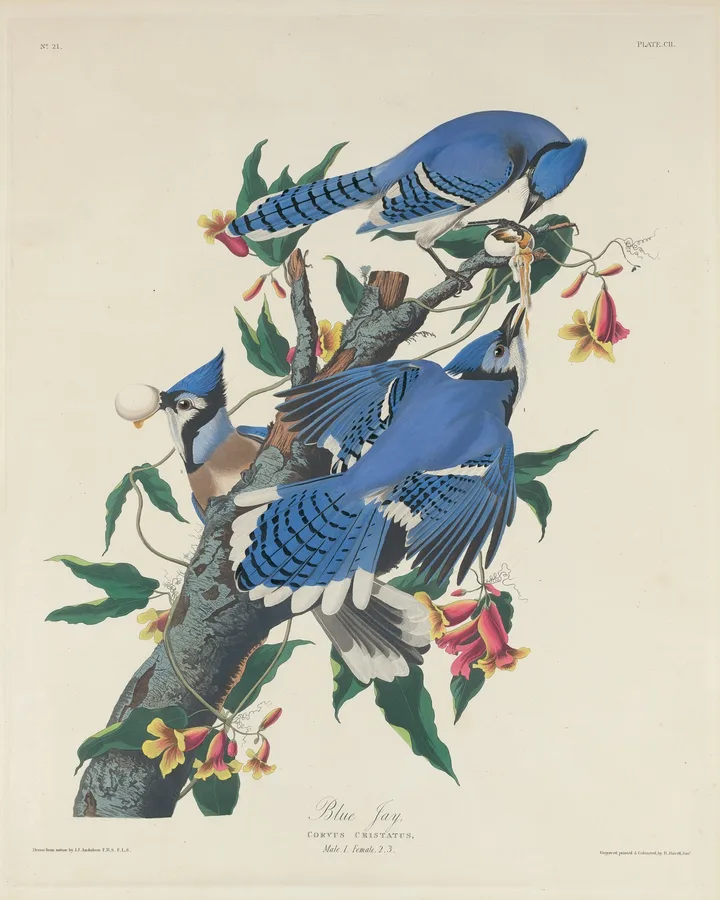
Blue Jay (Plate 102)
1831
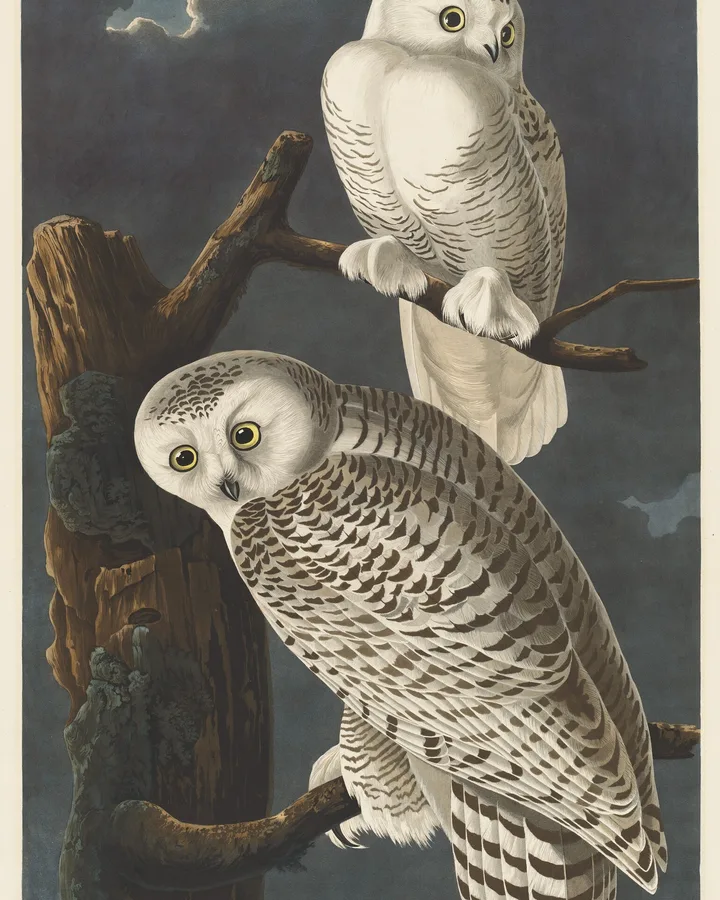
Snowy Owl (Plate 121)
1831
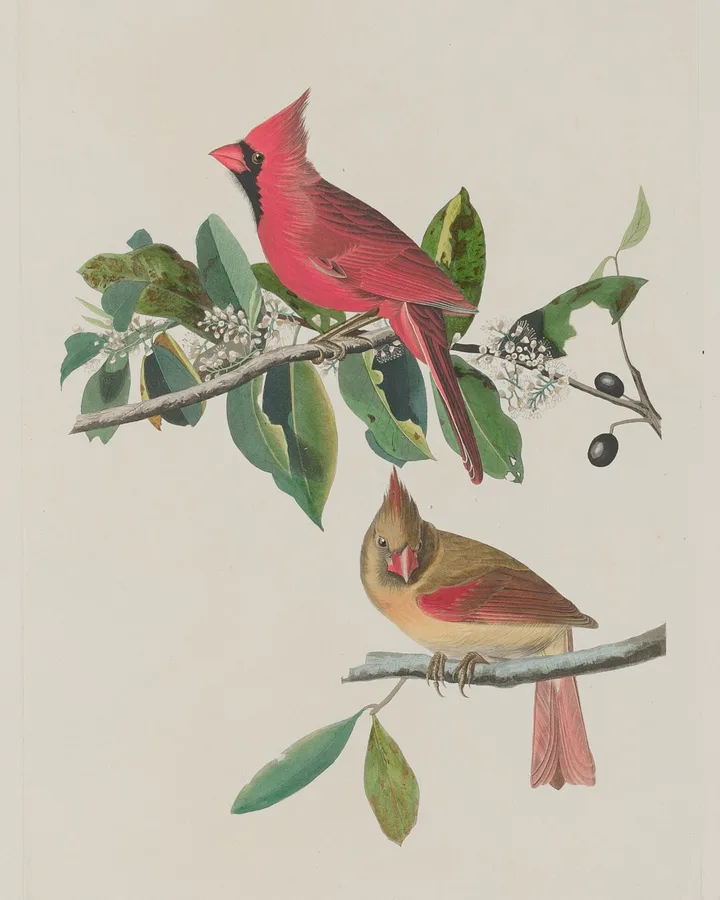
Northern Cardinal (Plate 159)
1833
Barn Owl (Plate 171)
1833
Great Blue Heron (Plate 211)
1834
Roseate Spoonbill (Plate 321)
1836
Great Auk (Plate 341)
1836
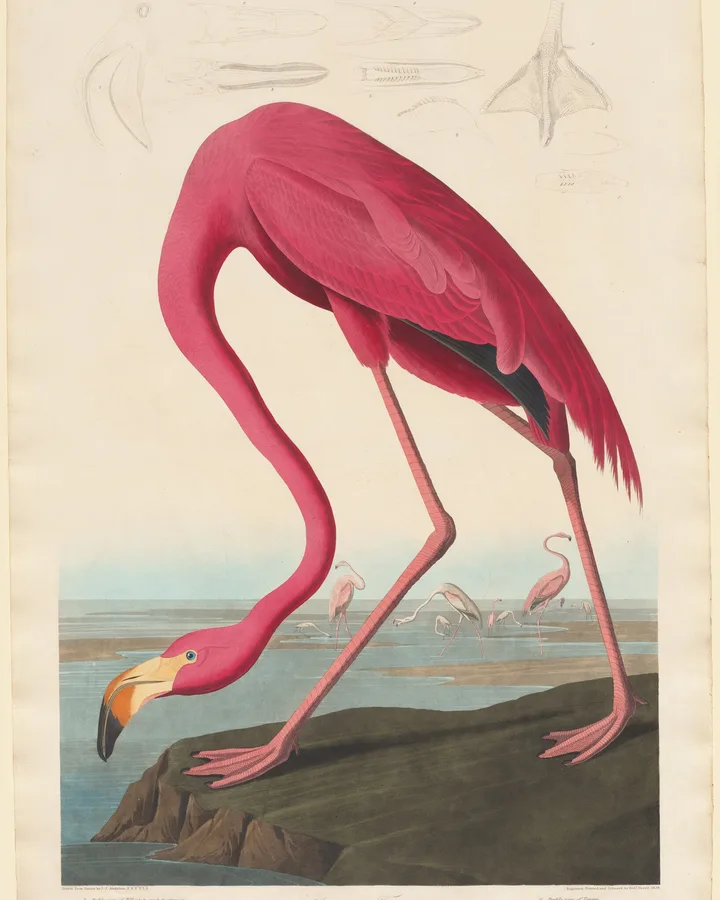
American Flamingo (Plate 431)
1838